


Has Guardiola Changed English Football?

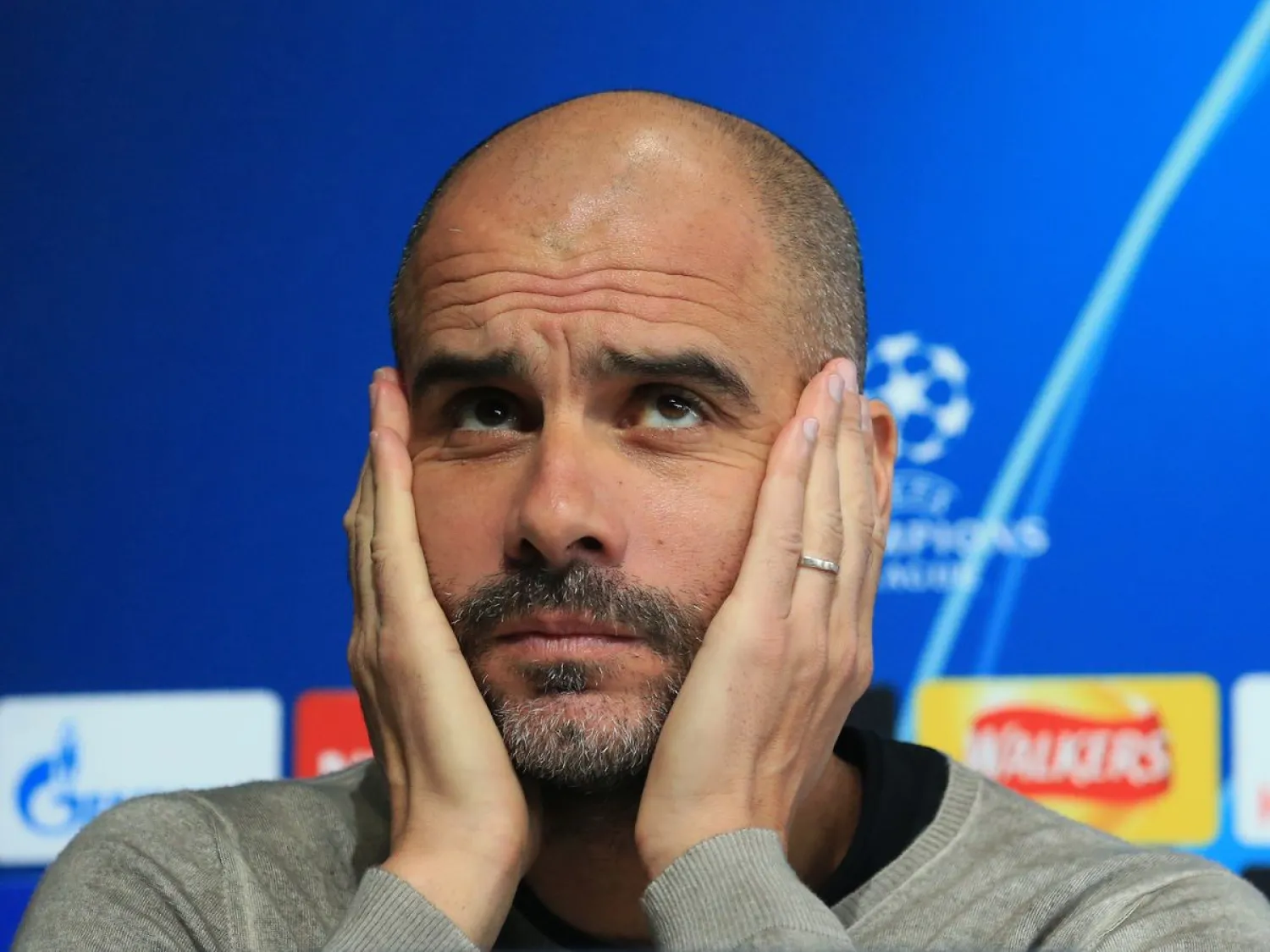
Manchester City manager Pep Guardiola. (Getty Images)
TT

Has Guardiola Changed English Football?

Manchester City manager Pep Guardiola. (Getty Images)

Last month, Rochdale scored a brilliant goal against Southend, working the ball from front to back in 16 rapid passes. As is the way of things these days, clips circulating on social media have not merely celebrated the artistry and the technical mastery of the goal, the courage to attempt it, but have rapidly followed football’s equivalent of Godwin’s Law and degenerated into deeply tedious rows about Pep Guardiola.

To parse these as briefly as possible: somebody invents an army of straw men and tweets something like: “Who says Guardiola isn’t having an influence on English football?” To which the correct answer, you would think, would be hardly anybody. Except then the straw army comes to life and social media convokes its usual symposium of sneeriness as everybody shouts that people passed the ball before, you know, and that the bald fraud hasn’t won the Champions League since 2011. Somewhere along the way the point is lost that although Guardiola has, admittedly, only done it with hugely rich clubs packed with talented players (almost as though, being at the top of the game, he wants to work with the best), Brian Barry-Murphy is somehow doing it with Rochdale.

Guardiola has been at the forefront of a revolution. He approaches 11-a-side as others once treated five-a-side. The game becomes about passing and possession, about technical skill and the generation of space, rather than about power and physique and aerial duels. The football his sides have played has demonstrated what is possible, changing perceptions, and that, allied to the unprecedented imbalance in resources in the modern game, has led to possession in games being dominated by one side in a way that was never possible before. But Guardiola could do that because the conditions were right.

Football changed in 2008. In the 14 years before that, the knockout stages of the Champions League featured an average of three goals per game twice; in the 11 years since, it has been below three once. 2008 happens to be the year Guardiola became a manager and he is responsible in part for that upswing. But he is not fully responsible. He couldn’t have imposed his football in an era when pitches were frequently mudbaths or when sports science and understanding of nutrition were too limited for players to press at full tilt for 90 minutes.

From the 1990 World Cup onwards, the laws had been tweaked to make the game more open, abolishing the back-pass to the goalkeeper’s arms, cracking down on the tackle from behind and liberalizing offside. By 2008, all those factors were in place and the game was ready for a visionary to lead the revolution.

While the top end of the game concerns itself with trying to match or thwart Guardiola’s style, leading to the increasing prevalence and sophistication of gegen-pressing, the environment that encouraged Guardiola’s radicalism still exists and is leading to innovation at all levels. The most startling, perhaps, is Sheffield United and their overlapping center-backs.

The notion of central defenders stepping out from the back is not new and has had numerous iterations, from the Danubian center-halves of the 1930s through liberos such as Franz Beckenbauer and Gaetano Scirea to Louis van Gaal’s observation in the 90s that one of his central defenders had to be a playmaker because it was the only position on the pitch that was regularly afforded time.

Similarly, the idea that full‑backs should effectively function as midfielders, providing width and allowing a sudden injection of pace into a move with a burst from deep, has in effect become the orthodoxy. But blending those two trends as Chris Wilder has done is something startling.

United essentially set up with a 3-5-2 formation. The central of the three defenders, John Egan, is a fixed point but the defenders flanking him – Chris Basham and Jack O’Connell – have license to make long diagonal runs that carry them outside the wing-backs, George Baldock and Enda Stevens, who in turn can then cut in off the flanks. Cover is offered by a trio of technically accomplished midfielders, Oliver Norwood supported by John Lundstram and John Fleck or the summer signing Luke Freeman. They are not merely a shield, though: Norwood and Fleck registered 18 assists between them last season.

The idea seems initially to have sprung from the mind of Wilder’s assistant, Alan Knill, who had hitherto perhaps been best known for having narrowly avoided serious injury after his bike collided with a squirrel when he was manager of Scunthorpe.

In League One in 2016-17, the Blades often came up against sides who packed players behind the ball against them. As the defenders had little defending to do it made sense for them, Knill reasoned, rather than being redundant, to be used to provide an overload. At the same time, having mobile center-backs makes it relatively straightforward to slip into 4-4-2 in the defensive phase if a wing-back is called out to shut down an attack from the flank.

There were teething problems, notably in a 4-1 defeat at Walsall, but the system was tweaked to prevent it becoming too open and it worked – at least in part because opponents, in looking to track a surge from an opposing central defender, ended up with no players upfield to spring a counter.

There will be further modifications. The central midfield has been notably more circumspect this season than last. Bournemouth’s 3-4-3 on the opening weekend restricted the movement of United’s center-backs, which may offer a clue as to how to combat them.

But the broader point is that Wilder and Knill’s solution to the issue of a massed defense would not in the past have been possible. Football is quicker than ever and yet it has become increasingly a game less of power than of strategy. The environment that emboldened Guardiola to seek an approach based almost entirely on positional control similarly inspired Wilder and Knill to redeploy their pieces.

Has Guardiola changed football? Yes, but football was ripe for the changing.

The Guardian Sport


Real Coach Alonso Looking for Team to Bounce Back Against Man City 

Real Madrid's Spanish coach Xabi Alonso gestures to players during the Spanish league football match between Real Madrid CF and RC Celta de Vigo at the Santiago Bernabeu Stadium in Madrid on December 7, 2025. (AFP)
TT

Real Coach Alonso Looking for Team to Bounce Back Against Man City 

Real Madrid's Spanish coach Xabi Alonso gestures to players during the Spanish league football match between Real Madrid CF and RC Celta de Vigo at the Santiago Bernabeu Stadium in Madrid on December 7, 2025. (AFP)

Real Madrid go into Wednesday’s Champions League clash against Manchester City reeling from a surprise home setback at the weekend and a lengthy injury list, but coach Xabi Alonso says they need to bounce back quickly.

Real lost their 100% home record in the Spanish league on Sunday in a shock 2-0 defeat to Celta Vigo, and fell four points behind leaders Barcelona, but have little time to reflect on the setback before their Champions League assignment.

“We need to turn the page as quickly as possible,” Alonso said as Monday’s Spanish sports press speculated on the state of his relationship with his players.

“There's a long way to go in La Liga. And we have the Champions League match against City to react and get rid of this bad taste in our mouths.”

With Real winning only one of their last five LaLiga fixtures, Alonso has come under scrutiny for his relationship with players, system of playing and tactical decisions, while injuries have suddenly piled up again.

“We're struggling with injuries. It was hard for us to react,” added Alonso, whose side finished Sunday’s game with two red cards.

“It hurts, we're angry, and we understand why people are angry."

Defender Eder Militao hobbled off the Estadio Santiago Bernabeu pitch in the first half on Sunday and joins David Alaba, Trent Alexander-Arnold, Dani Carvajal, Dean Huijsen and Ferland Mendy on the injury list. Jude Bellingham also suffered a cut above the eye but is expected to feature against Manchester City.

“The situation is tight due to injuries. We have to make adjustments for each match, and we'll see how things go for Wednesday,” added the coach, who took over from Carlo Ancelotti at the start of the season.

Sports newspaper AS said Alonso was unable to motivate his team while Marca claimed he would not be able to fix things.

But the coach offered a different outlook: “We're all united and know that we can turn things around. There's still a long way to go, and you can have a bad game at home. We know what the demands are at this club. Defeats hurt a lot, but we have to look ahead.”


Tearful Norris Takes F1 Title as Verstappen Wins Abu Dhabi Race

 McLaren driver Lando Norris of Britain reacts after becoming a world champion after the Abu Dhabi Formula One Grand Prix in Abu Dhabi, United Arab Emirates, Sunday, Dec. 7, 2025. (AP)
McLaren driver Lando Norris of Britain reacts after becoming a world champion after the Abu Dhabi Formula One Grand Prix in Abu Dhabi, United Arab Emirates, Sunday, Dec. 7, 2025. (AP)
TT

Tearful Norris Takes F1 Title as Verstappen Wins Abu Dhabi Race

 McLaren driver Lando Norris of Britain reacts after becoming a world champion after the Abu Dhabi Formula One Grand Prix in Abu Dhabi, United Arab Emirates, Sunday, Dec. 7, 2025. (AP)
McLaren driver Lando Norris of Britain reacts after becoming a world champion after the Abu Dhabi Formula One Grand Prix in Abu Dhabi, United Arab Emirates, Sunday, Dec. 7, 2025. (AP)

McLaren's Lando Norris sobbed tears of joy and relief as he won the Formula One championship for the first time and ended Max Verstappen's four-year reign with a nervy third place at the Abu Dhabi Grand Prix on Sunday.

Red Bull's Verstappen, who ended the campaign with more wins (eight) than any driver, triumphed in the season-ender with McLaren's Oscar Piastri second and 12.5 seconds behind at the chequered flag.

Norris, Britain's 11th Formula One world champion, took his points tally to 423 with Verstappen on 421 and Piastri third with 410.

McLaren, who secured the constructors' championship in October for the second year in a row, won both titles in the same season for the first time since 1998.

"I've not cried in a while. I didn't think I would cry but I did," said an emotional Norris in a post-race interview, after also shedding tears inside his helmet.

"It feels amazing. I now know what Max feels like a little bit.

"I want to congratulate Max and Oscar, my two biggest competitors the whole season. It's been a pleasure to race against both of them. It's been an honor, I've learned a lot from both," he added.

Norris's mother Cisca gave Piastri a consoling hug while both Verstappen and the Australian congratulated the new champion in a show of sportsmanship.

The victory denied Verstappen the achievement of five titles in a row, something only Ferrari great Michael Schumacher has managed so far.

Charles Leclerc finished fourth in Sunday's race for Ferrari with George Russell fifth for Mercedes and Fernando Alonso sixth for Aston Martin.

Esteban Ocon was seventh for Haas, ahead of Ferrari's seven-times world champion Lewis Hamilton -- who failed to stand on the podium all year in a career low for the 40-year-old who joined the Italian team this year from Mercedes.

Sauber's Nico Hulkenberg was ninth in the German's 250th race and Lance Stroll 10th for Aston Martin.


Chelsea’s Maresca Says Delap Shoulder Injury Looks Bad

Football - Premier League - Leeds United v Chelsea - Elland Road, Leeds, Britain - December 3, 2025 Chelsea's Liam Delap on the pitch before the match. (Reuters)
TT

Chelsea’s Maresca Says Delap Shoulder Injury Looks Bad

Football - Premier League - Leeds United v Chelsea - Elland Road, Leeds, Britain - December 3, 2025 Chelsea's Liam Delap on the pitch before the match. (Reuters)

Chelsea forward Liam Delap may face another spell on the sidelines with a shoulder injury after being forced off in the first half of Saturday’s 0-0 Premier League draw at Bournemouth, manager Enzo Maresca said.

Delap, who moved to Stamford Bridge from Ipswich Town in June, had also picked up a hamstring injury early on in the season and returned to the side only last month.

"He has been unlucky. We are also a bit unlucky because we need that kind of a No. 9," Maresca told reporters after the match.

"Unfortunately, he has already been out for two months and he has to be out again. We don't know for how long, but it looks quite bad, his shoulder."

Chelsea, who played to their first goalless draw since a home clash with Crystal Palace in August, were left in fourth place in the league table with 25 points from their 15 games.

"I think it was a game where we lacked and we missed a little bit of quality in the last third," Maresca said.

"For me, there were many mistakes. We missed some passes in the last third, some moments that we could shoot and didn’t."

Chelsea will next face Atalanta in a Champions League clash on Tuesday before hosting Everton on Saturday.
