

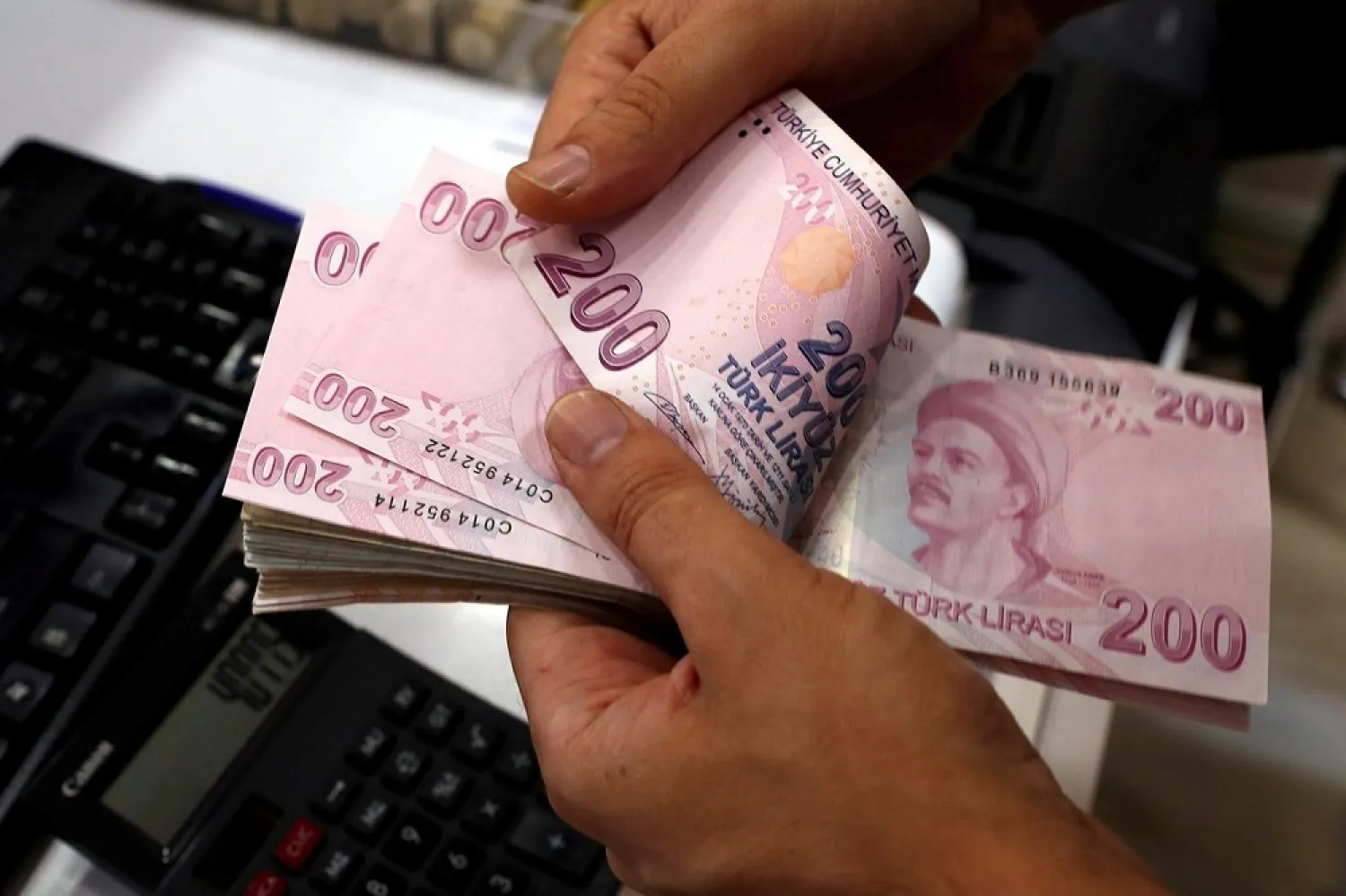

Turkish Lira Tumbles through Key Level as Syria Push Begins

The Turkish lira tumbles through key level as Syria offensive begins. (Reuters)
TT

Turkish Lira Tumbles through Key Level as Syria Push Begins

The Turkish lira tumbles through key level as Syria offensive begins. (Reuters)

Turkey’s lira slid 0.5% on Wednesday, breaking through what traders called a key support level of 5.85 against the dollar, after Turkey launched a military operation targeting Kurdish fighters in northeast Syrian.

The lira traded at 5.8660 at 1542 GMT, its weakest intraday level since August as worries grew about the fallout from the conflict and any reaction from Washington including possible sanctions.

The currency was on track for its weakest close since June.

The lira, which closed on Tuesday at 5.8350, has come under heavy pressure this week since the White House announced US troops would begin withdrawing from the Syrian region near Turkey’s border.

Just days after US troops pulled back from the area, Turkey on Wednesday launched aerial and artillery strikes targeting Kurdish YPG positions around the border town of Ras al Ain.

Risks

S&P Global Ratings said the military deployment raised risks for the lira and Turkey’s balance of payments, which has improved markedly since a currency crisis last year tipped its economy into recession.

Traders told Reuters that Turkish state banks had been selling dollars over the last three days to stop the lira from sliding beyond 5.85, a level it approached but did not breach this week until President Recep Tayyip Erdogan announced the incursion.

One trader estimated that the banks may have sold a total of $3.5 billion this week, including $1 billion on Wednesday alone, to support the lira.

“5.85 is the level,” said another trader, before it was breached on Wednesday.

The Treasury could not be immediately reached for comment about any possible interventions.

Last year’s crisis chopped some 30% off the value of the lira, which is down another 10.8% this year.

In the days before nationwide local elections on March 31 this year, Turkey directed its state banks to withhold lira liquidity from London’s overnight swap market, sources said at the time.

“State-owned banks have been allegedly selling dollars around 5.85/84, but they have not been able to prevent a break higher amid rising geopolitical risk,” said Piotr Matys, Rabobank’s emerging markets strategist, adding that the next key technical level was around 6.00.

“The response from Washington will be critical,” and Turkey’s central bank may eventually have to “seriously consider” raising interest rates to defend the lira, he added.

The lira weakened as far as 5.8465 on Tuesday before closing slightly stronger. On Monday it again approached 5.85, weakening as far as 5.8440.

The currency has been pulled in both directions this week by comments from US President Donald Trump.

A day after warning he could “obliterate” Turkey’s economy if it went too far in its Syria operation, Trump tweeted on Tuesday that Ankara was a “big trading partner” of the United States and had been “good to deal with”.

The extensive area of Ankara’s planned incursion into Syria could lead to months of military activity that raises concern in the markets, dealers say.

Turkey’s sovereign dollar bonds declined, with longer-dated issues suffering the most. The 2045 bond slipped 1.1 cents to a two-week low, Tradeweb data showed.



Israel Instructs Karish Offshore Natgas Platform to Reopen After Ceasefire

London-based Energean's drill ship begins drilling at the Karish natural gas field offshore Israel in the east Mediterranean May 9, 2022. REUTERS/Ari Rabinovitch/File Photo
TT

Israel Instructs Karish Offshore Natgas Platform to Reopen After Ceasefire

London-based Energean's drill ship begins drilling at the Karish natural gas field offshore Israel in the east Mediterranean May 9, 2022. REUTERS/Ari Rabinovitch/File Photo

Israel's energy ministry said on Thursday that it had ⁠instructed Energean to begin ⁠resuming operations ⁠at the Karish natural gas platform off Israel's Mediterranean coast following the ⁠ceasefire with ⁠Iran.

The ministry ordered partial, temporary closures in February of the country's gas reservoirs, in line with security assessments.

Iran, Israel and the United States are now in an uneasy, two-week ceasefire ahead of possible negotiations in Islamabad.

Tehran and Washington have offered vastly different explanations of the ceasefire’s initial terms.


Oil Prices Rise again and Asian Stocks Retreat on the Fragile Iran Ceasefire

A currency trader works near a screen showing international oil prices at the foreign exchange dealing room of the Hana Bank headquarters in Seoul, South Korea, Thursday, April 9, 2026. (AP Photo/Ahn Young-joon)
TT

Oil Prices Rise again and Asian Stocks Retreat on the Fragile Iran Ceasefire

A currency trader works near a screen showing international oil prices at the foreign exchange dealing room of the Hana Bank headquarters in Seoul, South Korea, Thursday, April 9, 2026. (AP Photo/Ahn Young-joon)

Oil rose again to above $97 a barrel and Asian stocks were trading lower Thursday on skepticism over a fragile ceasefire between the US and Iran.

Investors were closely watching whether a two-week ceasefire between the United States and Iran was already slipping after a round of deadly Israeli strikes on Lebanon that killed and injured hundreds. Iran again closed the Strait of Hormuz, in response to the attacks in Lebanon, said Reuters.

Tokyo’s Nikkei 225 dropped 0.9% to 55,824.30, while South Korea’s Kospi lost 1.6% to 5,776.03.

Hong Kong’s Hang Seng fell 0.4% to 25,801.87. The Shanghai Composite index was down 0.7% to 3,965.70.

Australia’s S&P/ASX 200 edged down 0.1%, while Taiwan’s Taiex was also 0.1% lower.

US futures were down more than 0.1%.

Oil prices were up Thursday, reversing an earlier plunge on optimism over the temporary ceasefire agreement. Brent crude, the international standard, was up 2.4% to $97.02 per barrel. It previously fell briefly to below $92 a barrel following the temporary ceasefire announcement.

Benchmark US crude was 3.3% higher on Thursday at $97.50 a barrel.

Uncertainties over global energy supply remained. The Strait of Hormuz, a chokepoint for energy transport where a fifth of the world’s oil typically passes, was largely closed even though the US repeatedly demanded that the strait must be reopened.

Talks to pursue a permanent end to the war could be taking place as soon as Friday in Pakistan, and US Vice President JD Vance is expected to be leading the negotiating team for the United States.

Wall Street closed higher Wednesday following US President Donald Trump’s announcement of a two-week ceasefire with Iran late Tuesday.

The S&P 500 jumped 2.5% to 6,782.81. The Dow Jones Industrial Average rose 2.9% to 47,909.92. The Nasdaq composite was up 2.8% to 22,635.00.

Following renewed hopes over deescalation of the war, shares of United Airlines surged 7.9% on Wednesday, American Airlines was up 5.6%, while cruise ship operator Carnival jumped 11.2%, trimming losses since the Iran war began on concerns over rising fuel costs.

In other dealings, gold and silver prices fell. Gold’s price dropped 0.7% to $4,743.20 an ounce. The price of silver fell 1.6% to $74.18 per ounce.

The US dollar rose to 158.66 Japanese yen from 158.57 yen. The euro was trading at $1.1668, up from $1.1663.


World Bank Slashes 2026 Middle East Growth Forecast, Saudi Arabia Absorbs Shock

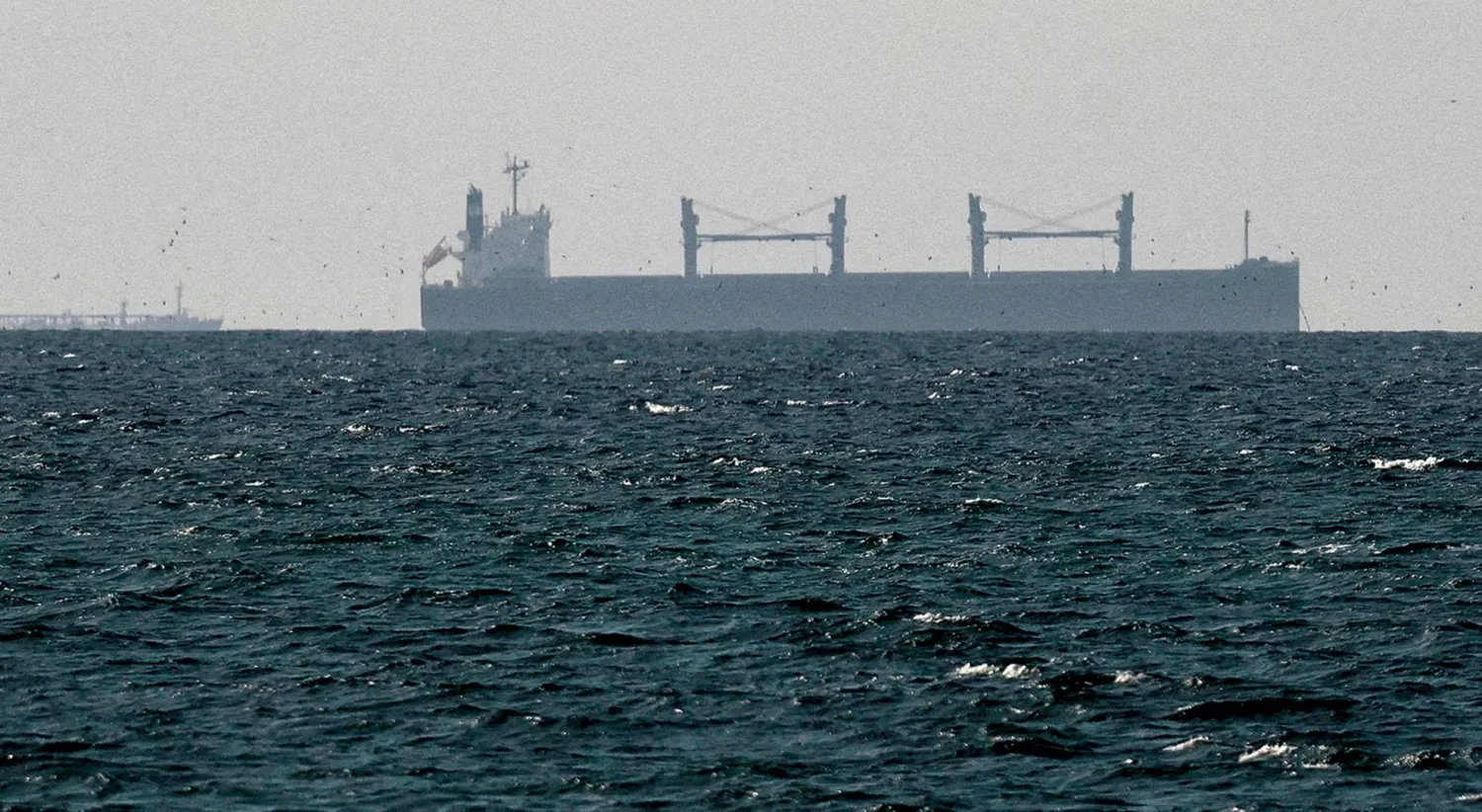
A cargo ship in the Arabian Gulf near the Strait of Hormuz (Reuters)
TT

World Bank Slashes 2026 Middle East Growth Forecast, Saudi Arabia Absorbs Shock

A cargo ship in the Arabian Gulf near the Strait of Hormuz (Reuters)

The World Bank has slashed its 2026 growth forecast for Middle East economies, saying overall GDP growth in ⁠the region is expected to slow from an estimated 3.6% in January to 1.8% for 2026.

The closure of the strategic ⁠Strait of Hormuz, and destruction ⁠of energy and public infrastructure, had disrupted markets, increased financial volatility, and weakened the 2026 growth outlook, the World Bank Group said in its Economic Update for the Middle East, North Africa, Afghanistan and Pakistan.

The report was published as US President Donald Trump late on Tuesday announced a two-week ceasefire in the conflict with Iran after he had threatened to wipe out “a whole civilization.”

According to the World Bank, the conflict comes as an additional shock to a region already suffering from low productivity growth, limited private sector dynamism and persistent labor market challenges – underscoring the urgent need to strengthen governance and macroeconomic fundamentals and take action to boost long-term job creation and resilience.

The April 2026 World Bank’s Macro Poverty Outlook forecasts that the region’s aggregate (excluding the Iran) GDP growth will decelerate to 1.8 percent in 2026, down from 4.0 percent estimated for 2025. The 2026 forecast has been downgraded by 2.4 percentage points since the January projections, reflecting the adverse effects of the ongoing conflict.

GCC states

Growth in the Gulf Cooperation Council and Iraq, among the most heavily affected by the impact of the conflict, is expected to slow to 1.3% for 2026, down 3.1 percentage points from its January projection, and driven mainly by lower projected hydrocarbon revenues due to disruptions caused ⁠by the ⁠conflict.

Saudi Arabia: Forecast was downgraded by 1.2 percentage points since January. Growth is now expected to slow from 4.3% in 2025 to 3.1% in 2026, noting that Saudi Arabia’s outlook remains the strongest among Gulf economies.

United Arab Emirates: Growth forecast for the UAE has fallen by 2.7 percentage points since January. Growth is now expected to slow from 5% in 2025 to 2.4% in 2026.

Qatar: Notably, growth forecast for the Qatari economy has seen a sharp decline of 11.0 percentage points since January. The economy is now expected to record a contraction of 5.7%, down from an estimated growth of 5.3%, due to severe obstruction to liquefied gas supplies. Qatar is a key player in the global energy market, with a global market share of liquefied natural gas (LNG) supplies ranging between 20% and 21%.

Kuwait: Likewise, Kuwait’s economy is expected to register a significant contraction of 6.4%, compared to growth of 2.6% expected in January. Kuwait relies entirely (100%) on the Strait of Hormuz to export its crude oil and derivatives. Consequently, closing the strait would mean a complete shutdown of the country’s financial lifeline, immediately halting revenue inflows to the state budget.

Bahrain: Growth forecast for Bahrain’s economy has declined by 1.8 percentage points since January. Growth is now expected to slow from 3.1% in 2025 to 1.3% in 2026.

Sultanate of Oman: Growth forecast for Oman’s economy has decreased by 1.2 percentage points since January. Growth is now expected to slow from 3.6% in 2025 to 2.4% in 2026.
Iraq

The greatest shock in the World Bank report lies in the free fall of the Iraqi economy, as its growth forecast dropped from 6.5 percent to a staggering contraction of 8.6 percent.

This alarming figure reflects the situation faced by Iraq following the closure of the Strait of Hormuz.

Iraq — the second-largest producer within the Organization of the Petroleum Exporting Countries (OPEC) — experienced the largest drop in production, estimated at nearly 70 percent, dropping to about 800,000 barrels per day from 4.3 million barrels prior to the Strait of Hormuz crisis.

Egypt

Egypt’s situation in the World Bank report differs from that of some countries in the region that saw sharp contractions; the bank maintained its forecast for Egypt’s economic growth at 4.3%.

The World Bank said that “risks are tilted to the downside.”

It added that “in the event of a prolonged conflict, the current impacts on the region will be compounded–through elevated energy and food prices, declining trade, tourism and remittances, increased fiscal pressures, and displacement.”

Peace is a precondition for the region’s durable development

“The current crisis is a stark reminder of the work ahead for the region: not only to weather shocks, but to rebuild more resilient economies with stronger macroeconomic fundamentals, innovate and improve governance, invest in infrastructure, and boost employment-creating sectors,” Ousmane Dione, the World Bank's Vice President for the region said in a statement.

"Peace and stability are preconditions for the region’s durable development. With peace and the right action, countries can build the institutions, capabilities and competitive sectors that create opportunities for people,” he added.

As for Roberta Gatti, World Bank Group Chief Economist for the Middle East, North Africa, Afghanistan and Pakistan, she said: "As countries face the heavy toll of the present conflict, it is important to also not lose sight of the work needed for long-lasting peace and prosperity.”