


‘The Romário-Fication of Raheem’: How Manchester City Transformed Sterling

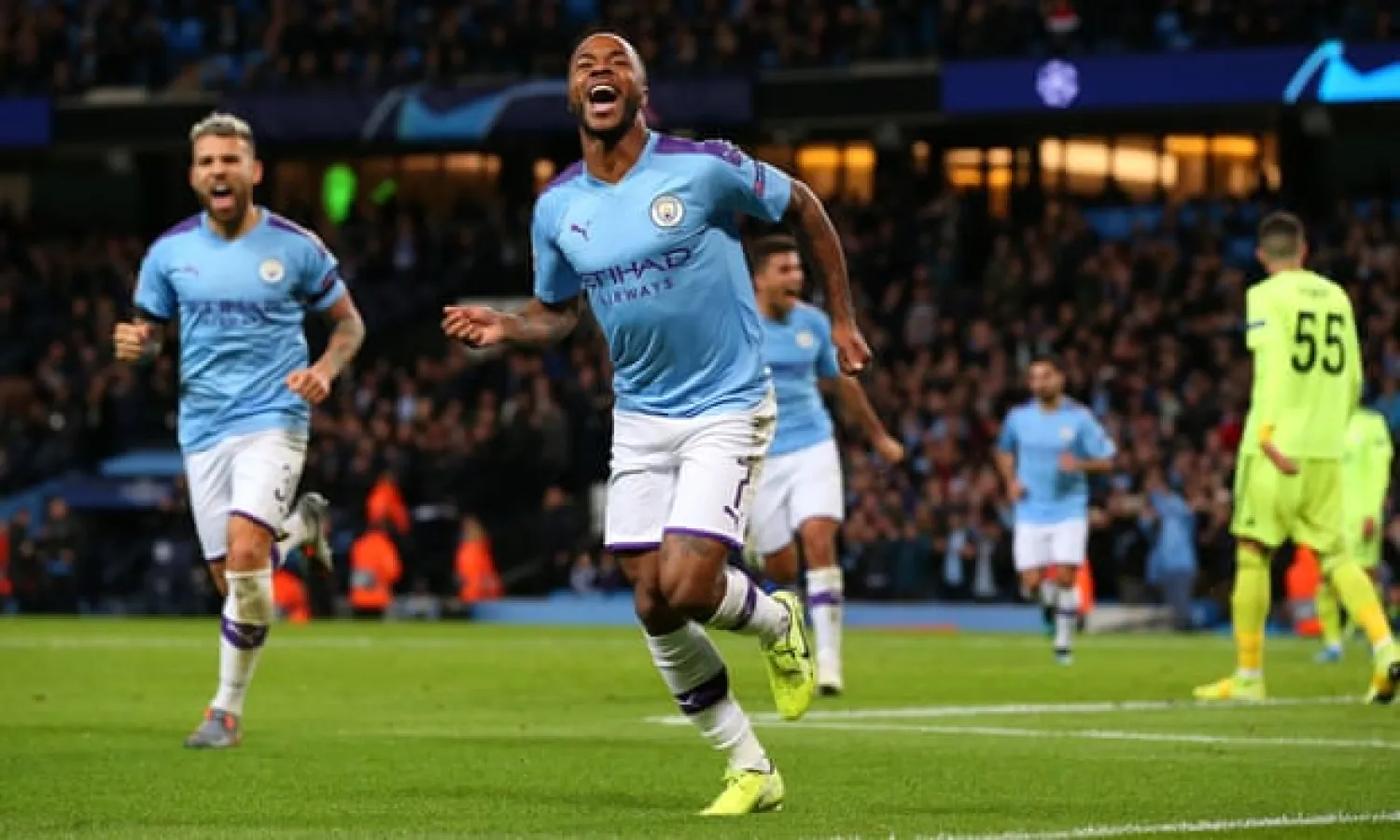
 Raheem Sterling celebrates after scoring for Manchester City against Dinamo Zagreb this season. Photograph: Alex Livesey - Danehouse/Getty Images
Raheem Sterling celebrates after scoring for Manchester City against Dinamo Zagreb this season. Photograph: Alex Livesey - Danehouse/Getty Images
TT

‘The Romário-Fication of Raheem’: How Manchester City Transformed Sterling

 Raheem Sterling celebrates after scoring for Manchester City against Dinamo Zagreb this season. Photograph: Alex Livesey - Danehouse/Getty Images
Raheem Sterling celebrates after scoring for Manchester City against Dinamo Zagreb this season. Photograph: Alex Livesey - Danehouse/Getty Images

Raheem Sterling joined City the year before Pep Guardiola left Bayern Munich, in July 2015, for a record £50m – at that time the highest fee paid for an English player. After a lacklustre first season, he joined England for their disastrous 2016 Euro campaign which saw them knocked out by Iceland in the last 16.

A disappointing first year followed by a disastrous summer. Enter Pep. City’s football director, Txiki Begiristain, had signed Sterling specifically in anticipation of Pep taking over.

“He had a spark, a capacity to shake off markers. He’s explosive and above all he’s got that burst of pace which takes effective wide players to the goalline. Even then, it was also clear that he was a guy who loved to cut in, too.”

Begiristain’s football instincts were correct. Under the guidance of Pep and his team, Sterling has become a truly world-class player. In his first season under Manuel Pellegrini, Sterling managed only six league goals and by the second half of the campaign had lost his place as a regular starter.

“The huge transfer fee was actually pretty detrimental in terms of his self-confidence, which is so important for any player. As things didn’t come off for him you could almost see Raz fading away,” explains Mikel Arteta, who was still playing for Arsenal at the time. The following year, Arteta joined Pep and Domènec Torrent at City and he began to work closely with Sterling.

“We wanted him much closer to the penalty area. It was like he was a bit scared of the goal. We wanted him to become the kind of player who would get us a goal every game, or even just missing two or three big chances. We wanted him constantly generating goal threat. And we wanted him to lose the fear. He needed to believe in himself, to believe that he could be the best.”

The new regime had an almost immediate impact. Suddenly his head was up, he was running more than ever and, by Pep’s second season, had formed one of the most lethal attacking forces in the history of the Premier League with Leroy Sané and Sergio Agüero, between them scoring 67 of the team’s total of 140 goals.

First, however, the coaching team had to realign Sterling for his role on the right of Guardiola’s trident. Mikel Arteta: “He’d picked up a few bad habits along the way. He’d played on the inside a lot or out on the left wing. When you move to the right wing, the direction and angle of possession coming to you is very different. When the ball reached him he really had his gaze fixed on it – rather than half-touch instinctive control and the vision of what’s around him.”

Sterling was static when he got the ball. Guardiola’s solution was to try to turn him into City’s version of Romário, the coach’s old Barcelona teammate and a World Cup winner with Brazil in 1994.

Pep Guardiola: “In that Dream Team era, whenever I saw Romário with his back to the centre-halves I’d never give him the ball. But the instant I saw him on the half-turn with his shoulder dipping as if he wanted the ball fed into his right or left foot, I knew he thought he could explode away from his marker. In that instance I always hit the pass immediately. Every time. I’d learned that his vision meant he’d had one eye on the distance between him and the opposition goal and the other eye on where the ball was. If he opened up his body shape like that and I fed him the ball, the defender was automatically done for.”

The key to this strategy was Sterling’s acceleration. Guardiola’s analysis staff compare their forward’s explosive first steps to those of Leo Messi. While the Barcelona player doesn’t possess a sprinter’s speed over distance, his acceleration – combined with an intuitive sense of when to make his move – leaves defenders in his wake. Thus began the Romário-fication of Raheem.

The plan was that Sterling should make a habit of dropping slightly further away from his marker, or nearest opponent, when looking to receive possession, his body turned towards the goal. In that position, if he then gunned his extraordinary accelerator, the sprint was always to the danger area. Arteta: “If he’s found a space about three metres off his defender but he’s half-turned towards the goal then his sprint takes him much more quickly to a space where he can shoot and that’s going to cause the rival much more damage. It’s also a tactic, dropping off a little, so that your defender gets drawn into a position he mightn’t want to be in. It leaves space behind him and Raheem can attack that space. If it’s close to, or in the penalty area, they also have to hesitate before putting in a challenge.”

Arteta is drawing on facts with his assessment. For example, in the 1-0 Champions League victory over Feyenoord in November 2017, Sterling pulled all of this together. He dropped off at the edge of the box, drawing his defender, Renato Tapia, with him and, with his back to goal, shunted a quick pass backwards to Gundogan. The instant he released the ball, he swivelled and burst into one of his 0-60 sprints, into the space where Tapia had been. Gundogan read the move, slid the one-two pass into that space. One-v-one with the keeper, Sterling lofted it over Brad Jones for City’s winning goal.

Sterling played increasingly on the left wing in season 2018-19, although Guardiola continued to move him around a lot. His partnership with Bernardo Silva went from strength to strength, meaning that Sané figured much less in the starting XI. The PFA Young Player of the Year won by Sané in 2018 went to Sterling in 2019, after he finished the season with a personal best of 25 goals and 18 assists from 51 games. By November 2018 City had seen enough to extend Sterling’s contract through season 2022-23.

Yet Guardiola continues to see room for improvement. Take the coach’s critique of him after the home game against Watford on 9 March 2019, in which he had scored a hat-trick by the 64th minute. “Sterling could do better. He didn’t follow his full-back two times. He lost two, three or four balls which he has to avoid because he conceded counterattacks. Of course, I am so glad in terms of what he has done, scoring three goals. The first half was not the best Raheem has done this season and we will work on that.”

The Guardian Sport


Iran Threatens to Stop World Cup Games if Faced with Unauthorized Flags or Slogans

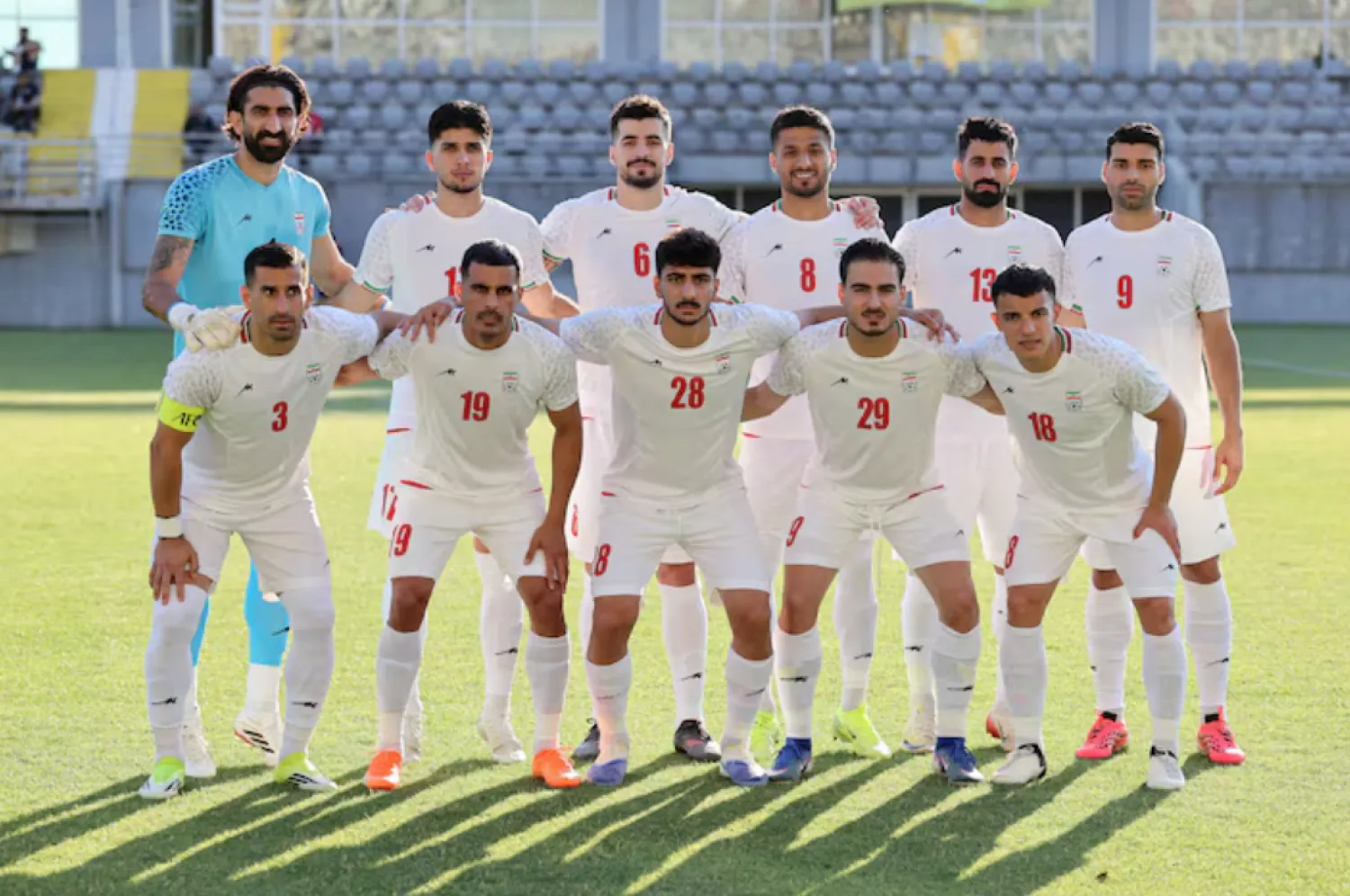
Soccer Football - International Friendly - Iran v Gambia - Mardan Sports Complex, Antalya, Türkiye - May 29, 2026 Iran players pose for a team group photo before the match REUTERS/Umit Bektas/File Photo
TT

Iran Threatens to Stop World Cup Games if Faced with Unauthorized Flags or Slogans

Soccer Football - International Friendly - Iran v Gambia - Mardan Sports Complex, Antalya, Türkiye - May 29, 2026 Iran players pose for a team group photo before the match REUTERS/Umit Bektas/File Photo

Iran threatened to halt its matches at the World Cup if unauthorized flags are displayed or slogans targeting the national team are chanted at stadiums, Iranian media reported, citing Sports Minister Ahmad Donyamali, following criticism of the team’s presence at the tournament.

The World Cup begins on Thursday, with Iran opening their Group G campaign against New Zealand in Los Angeles on June 15. They next face Belgium at the same venue on June 21 before taking on Egypt in Seattle on June 26.

"We have informed FIFA that if unofficial flags are brought or slogans against the national team are chanted in the stadiums where Iran plays in the World Cup, the team manager will definitely be responsible for stopping the match," Donyamali said on Tuesday, according to Iranian media, Reuters reported.

"We have been assured that no disruptive incidents will occur in the stadium during the match against Egypt."

In April, protesters gathered outside the FIFA Congress in Vancouver called for Iran to be banned from the tournament, saying the team represents the Iran's Revolutionary Guard Corps rather than the Iranian people.

The Iranian team has also faced organizational challenges, with Iran’s football federation saying its ticket allocation was withdrawn days before the tournament, leaving supporters who had already made travel plans unable to attend their team’s matches.

The team, currently training in Tijuana, Mexico, will be able to enter the US the day before each match, the Department of Homeland Security said, amid a conflict that has added a geopolitical dimension to the tournament.


Soccer Offers West Bank Palestinians an Escape as the World Cup Kicks Off

File: Palestinian players leave the field after an Asian Group B World Cup qualifying soccer match against Oman at the King Abdullah II Stadium in Amman, Jordan on June 12, 2025. (AP Photo/John Duerden)
TT

Soccer Offers West Bank Palestinians an Escape as the World Cup Kicks Off

File: Palestinian players leave the field after an Asian Group B World Cup qualifying soccer match against Oman at the King Abdullah II Stadium in Amman, Jordan on June 12, 2025. (AP Photo/John Duerden)

As the FIFA World Cup gets underway on June 11, with Egypt, Iraq, Jordan, Qatar and Saudi Arabia among the Arab nations set to compete, soccer remains both a passion and a struggle for many Palestinians in the Israeli- occupied West Bank.

The Palestinian national team came agonizingly close to qualifying for the tournament but fell just short of reaching the 48-team field. Still, the World Cup will be closely watched in the West Bank, where, for many young Palestinians, the game offers both an escape from daily pressures and the realities that surround them.

In the Bedouin village of Umm al-Khair, in the Masafer Yatta region south of Hebron, children play on a small soccer pitch bordered by barbed wire erected by Israeli settlers from the nearby Carmel settlement. During a recent game, a ball kicked toward the goal landed beyond the fence as young settlers passed by. The settlers took the ball away, ending the match.

Residents say such incidents are common. The community has lost dozens of soccer balls. Attempting to retrieve them can risk confrontation with settlers and, at times, Israeli soldiers.

Further north, in Nablus, children and teenagers from a local soccer academy train on a municipal stadium pitch that has fallen into disrepair. Along the sidelines, Palestinians from Gaza who held permits to work in Israel before the war watch the sessions as they hang clothes to dry. Stranded in the West Bank since the war broke out in October 2023, many have created makeshift homes in the stadium’s locker rooms, the facility's manager says, fearing they could be forced to return to Gaza.

The Palestinian Football Federation has halted league matches throughout the war, citing the precarious security situation in the West Bank, where the Israeli military frequently conducts arrest raids and has erected scores of checkpoints. Once-rowdy soccer stadiums are largely empty, with some neglected.

At Faisal Al-Husseini International Stadium in Al-Ram, home to the Palestinian national team, amateur players gather for training sessions. In Tulkarem, young players, some wearing national team jerseys, do the same. FIFA offered some funding to the Palestinian Football Association, but moved the national team's “home” matches to other countries, including Jordan, Qatar and Malaysia, due to security concerns.

In the absence of regular league play, training sessions have become one of the few remaining spaces for exercise, social interaction and a sense of normality.

As the world’s attention turns toward soccer’s biggest tournament, the game continues to provide moments of community, resilience and hope for Palestinians across the West Bank.


Adidas, Real Madrid Extend Partnership for 8 Years

FILE PHOTO: An Adidas logo is seen at the new Futurecraft shoe unveiling event in New York City, New York, US April 6, 2017. REUTERS/Joe Penney/File Photo
TT

Adidas, Real Madrid Extend Partnership for 8 Years

FILE PHOTO: An Adidas logo is seen at the new Futurecraft shoe unveiling event in New York City, New York, US April 6, 2017. REUTERS/Joe Penney/File Photo

Germany's Adidas said on Wednesday it signed ⁠an eight-year ⁠extension ⁠of its sponsoring partnership with Real Madrid, covering soccer and basketball.

“First formalized in 1980 and then re-established after a short break from the 1998/1999 season, the Adidas and Real Madrid partnership has seen the club become the most successful on the European stage, delivering eight UEFA MEN’S CHAMPIONS LEAGUE™ trophies in this period while wearing the Three Stripes,” it said in a statement.

“From best-in-class technical performance wear that has supported athletes like Zinedine Zidane, Toni Kroos, David Beckham and Jude Bellingham on the field of play, to culture-wear that enables fans to carry their support through all parts of life, the partnership has created some of the game’s most famous sportswear,” it added.

“The new agreement follows shortly after the release of the new Real Madrid Home jersey, a design that brings the finer details of the club’s crest to the fore with deep green and bold pink details,” the statement said.

“The strategic alliance between Real Madrid and Adidas has helped us, over these three decades, to experience one of the most wonderful periods in our history. It has also enabled us to continue nurturing this universal feeling known as madridismo,” the statement quoted Florentino Pérez, president of Real Madrid, as saying.

Adidas CEO Bjørn Gulden expressed pride that “the Three Stripes will continue to be part of this extraordinary success story.”
