


Breaking Lebanon's FX Peg Could Be Ruinous for Hugely Indebted Country

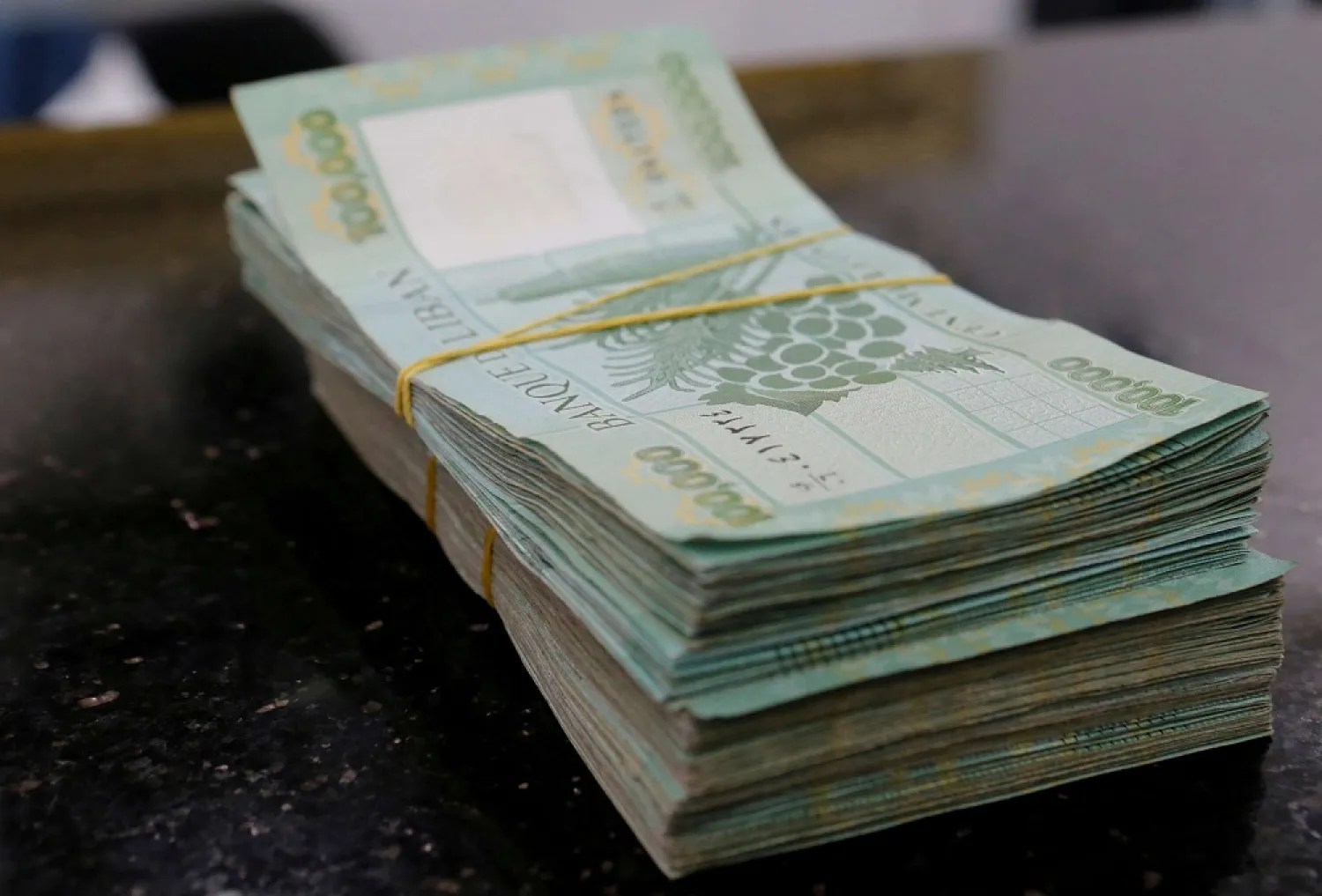
Lebanese pound banknotes on display at a money exchange shop in Beirut. (Reuters)
TT

Breaking Lebanon's FX Peg Could Be Ruinous for Hugely Indebted Country

Lebanese pound banknotes on display at a money exchange shop in Beirut. (Reuters)

Lebanon’s political and banking crisis has put growing pressure on its 22-year-old currency peg to the US dollar and foreign funds fear a devaluation now could be disastrous for a country with one of the world’s biggest foreign debt burdens.

The risk of devaluation has risen as Lebanon grapples with its most severe economic pressures since the 1975-90 civil war, with widespread protests that have toppled the coalition government of Saad Hariri.

Central Bank Governor Riad Salameh governor once again ruled out a break in the long-standing peg on Monday, saying the government had the means to maintain it.

But with the black market exchange rate indicating a discount to the peg of more than 20%, observers say a double-digit devaluation has become increasingly likely, especially in the wake of Hariri’s resignation on Tuesday.

Unlike many other economies with such currency pegs, Lebanon has huge overseas liabilities, burdened by a debt to GDP ratio of around 150%, the third highest in the world.

That ratio would soar further under a devaluation, making Beirut’s ability to repay its debt tougher still.

“The fixed exchange rate and banking sector model have simply not been working for the wider economy,” said Timothy Ash, senior emerging markets strategist at BlueBay Asset Management, which was underweight heading into the crisis.

“Some combination of debt restructuring and a more flexible and competitive exchange rate seems likely,” he said, according to Reuters.

Lebanon has long been a comfortable part of many foreign funds’ portfolios and despite bouts of volatility, such as in 2008, when Hezbollah fighters briefly seized control of the capital, it has never defaulted on its external debt.

BlackRock, JPMorgan, Amundi, Credit Suisse and Invesco are among the world’s big international players holding Lebanese debt as of Sept. 30, according to Morningstar and EPFR Global data.

But the latest crisis threatens that dynamic - and the peg, which has helped provide an anchor of stability since its introduction in 1997. The peg has remained fixed at 1,507.5 pounds per dollar.

High levels of US dollar denominated debt, which makes up nearly half of Lebanon’s total liabilities, is one reason why a devaluation could be more painful than those experienced by other emerging markets, including Thailand, Indonesia and South Korea during the Asia financial crisis in 1997.

“Having such large FX liabilities is the original sin of emerging markets,” said Brett Diment, head of global emerging market debt at Aberdeen Standard Investments, which sold all its Lebanon positions over a month ago.

“During the 1997-98 Asia crisis most of the debt was local currency debt, not dollar debt. Most other emerging markets have most of their debt as local so it doesn’t cause so many problems in a situation like Lebanon is in.”

Middle East models

Unlike Gulf states, which have in the past provided financial support for Beirut, Lebanon does not have the enormous riches from oil revenues to help prop up its peg.

Instead, it has relied on huge inflows from its sizeable diaspora to fill the deposits in its banks, which in turn helped finance its deficit and towering debt burden. But as those flows have faltered recently, the problems for Lebanon’s economy have mounted.

Even so, Lebanon had “comfortable” levels of gross official reserves of around $38 billion as of mid October - on the face of it equivalent to about 12 months of imports, estimated Garbis Iradian, chief economist for Middle East and North Africa at Institute of International Finance.

He put the risk of a devaluation at less than 50% in the short-term, but admitted a protracted political hiatus could yet see a devaluation of more than 10%.

The question is how much of those reserves are available - some estimate usable reserves could be as little as a quarter of that - and how much of those have been used up in the past few weeks of turmoil, during which the country’s banks have been closed for 11 straight days. The banks partly reopen on Thursday to assess the damage to their deposit bases and aim to fully reopen on Friday.

Those reserves are measured against a heavy redemption schedule, starting with a $1.5 billion dollar bond due at the end of November, and secondary market bond yields indicating a two-year cost of borrowing in excess of 30%.

Another Middle East neighbor, Egypt, was among the latest to devalue its currency when it cut the value of its pound by about half in late 2016 in return for a $12 billion loan program from the IMF.

Despite initial pain caused by a spike in inflation, which analysts say would happen in Lebanon too, Egypt netted hefty inflows of foreign investment in subsequent years.

Lebanon is badly in need of such flows to help build its tiny industrial sector and bolster tourism, which had been on course for its best season since 2010 until protests hit two weeks ago.

Lebanon has so far not asked for support from the IMF and Hariri has previously expressed reservations about IMF proposals which he said included floating the pound.

But with Hariri gone, investors are still waiting to see if any new government might take a different view on the peg and IMF support.

“If uncertainty prevails for a long time a devaluation becomes more likely and that could exceed 15%,” said Iradian.



Dammam Airport Launches Saudi Arabia’s First Category III Automatic Landing System  

Prince Saud bin Naif bin Abdulaziz, Governor of the Eastern Region, inaugurates the General Aviation Terminal and the upgraded automatic landing system at King Fahd International Airport in Dammam. (SPA)
TT

Dammam Airport Launches Saudi Arabia’s First Category III Automatic Landing System  

Prince Saud bin Naif bin Abdulaziz, Governor of the Eastern Region, inaugurates the General Aviation Terminal and the upgraded automatic landing system at King Fahd International Airport in Dammam. (SPA)

Prince Saud bin Naif bin Abdulaziz, Governor of Saudi Arabia’s Eastern Region, inaugurated on Monday two major aviation projects at King Fahd International Airport in Dammam: a dedicated General Aviation Terminal for private flights and the Kingdom’s first Category III Instrument Landing System (ILS), which enables fully automatic aircraft landings in low-visibility conditions.

The ceremony was attended by Minister of Transport and Logistics Services and Chairman of the General Authority of Civil Aviation (GACA) Saleh bin Nasser Al-Jasser and President of GACA and Chairman of the Saudi Airports Holding Company Abdulaziz bin Abdullah Al-Duailej.

Prince Saud said the projects represent a qualitative leap in strengthening the aviation ecosystem in the Eastern Region, boosting the airport’s operational readiness and its regional and international competitiveness.

The introduction of a Category III automatic landing system for the first time in Saudi Arabia reflects the advanced technological progress achieved by the national aviation sector and its commitment to the highest international standards, he stressed.

The General Aviation Terminal marks a significant upgrade to airport infrastructure. Spanning more than 23,000 square meters, the facility is designed to ensure efficient operations and fast passenger processing.

The main terminal covers 3,935 square meters, while aircraft parking areas extend over 12,415 square meters with capacity to accommodate four aircraft simultaneously. An additional 6,665 square meters are allocated to support services and car parking, improving traffic flow and delivering a premium travel experience for private aviation users.

The upgraded Category III ILS, considered among the world’s most advanced air navigation systems, allows aircraft to land automatically during poor visibility, ensuring flight continuity while enhancing safety and operational efficiency.

The project includes rehabilitation of the western runway, extending 4,000 meters, along with a further 4,000 meters of aircraft service roads. More than 3,200 lighting units have been installed under an integrated advanced system to meet modern operational requirements and support all aircraft types.

Al-Jasser said the inauguration of the two projects translates the objectives of the Aviation Program under the National Transport and Logistics Strategy into concrete achievements.

The developments bolster airport capacity and efficiency, support the sustainability of the aviation sector, and strengthen the competitiveness of Saudi airports, he added.

Al-Duailej, for his part, said the initiatives align with Saudi Vision 2030 by positioning the Kingdom as a global logistics hub and a leading aviation center in the Middle East.

The new terminal reflects high standards of privacy and efficiency for general aviation users, he remarked, noting the selection of Universal Aviation as operator of the general aviation terminals in Dammam and Jeddah.

Dammam Airports Company operates three airports in the Eastern Region: King Fahd International Airport, Al-Ahsa International Airport, and Qaisumah International Airport.


Saudi Arabia to Launch Real Estate Indicators, Expand ‘Market Balance’ Program Nationwide

The Minister of Municipalities and Housing addresses attendees during the government press conference (Asharq Al-Awsat). 
TT

Saudi Arabia to Launch Real Estate Indicators, Expand ‘Market Balance’ Program Nationwide

The Minister of Municipalities and Housing addresses attendees during the government press conference (Asharq Al-Awsat). 

Saudi Arabia will roll out real estate market indicators in the first quarter of this year and expand the Real Estate Market Balance program to all regions of the Kingdom, following its initial implementation in Riyadh, Minister of Municipalities and Housing Majed Al-Hogail announced on Monday.

Al-Hogail, who also chairs the General Real Estate Authority, made the remarks during a government press conference in Riyadh attended by Minister of Media Salman Al-Dossary, President of the Saudi Data and Artificial Intelligence Authority (SDAIA) Abdullah Alghamdi, and other senior officials.

Al-Hogail said the housing and social ecosystem now includes more than 313 non-profit organizations supported by over 345,000 volunteers working alongside the public and private sectors.

He highlighted tangible outcomes, including housing assistance for 106,000 social security beneficiaries and the prevention of housing loss in 200,000 cases.

Development Initiatives

He noted that the non-profit sector is driving impact through more than 300 development initiatives and over 1,000 services, while empowering 100 non-profit entities and activating supervisory units across 17 municipalities.

Among key programs, Al-Hogail highlighted the Rental Support Program, which assisted more than 6,600 families last year, expanding the reach of housing aid.

He also traced the growth of the “Jood Eskan” initiative, which began by supporting 100 families and has since evolved into a nationwide program that has provided homes to more than 50,000 families across the Kingdom.

Since its launch, the initiative has attracted more than 4.5 million donors, with total contributions exceeding SAR 5 billion ($1.3 billion) since 2021.

Al-Hogail added that the introduction of electronic signatures has reduced the homeownership process from 14 days to just two.

In 2025 alone, more than 150,000 digital transactions were completed, and the needs of over 400,000 beneficiary families were assessed through integrated national databases. A mobile application for “Jood Eskan” is currently being deployed to further streamline services.

International Support and Economic Growth

Minister of Media Salman Al-Dossary said the Saudi Program for the Development and Reconstruction of Yemen launched 28 new development projects and initiatives worth SAR 1.9 billion ($506.6 million), including fuel grants for power generation and support for health, energy, education, and transport sectors across Yemeni governorates.

He also reported strong growth in the communications and information technology sector, which created more than 406,000 jobs by the end of 2025, up from 250,000 in 2018, an 80 percent cumulative increase. The sector’s market size reached nearly SAR 190 billion ($50.6 billion) in 2025.

Industry, Localization, and Philanthropy

In the industrial sector, investments exceeded SAR 9 billion ($2.4 billion), alongside five new renewable energy projects signed under the sixth phase of the National Renewable Energy Program.

Industrial and logistics investments worth more than SAR 8.8 billion ($2.34 billion) were also signed by the Saudi Authority for Industrial Cities and Technology Zones.

Al-Dossary said the Kingdom now hosts nearly 30,000 operating industrial facilities with total investments of about SAR 1.2 trillion ($320 billion), while the Saudi Export-Import Bank has provided SAR 115 billion ($30.6 billion) in credit facilities since its establishment.

On workforce development, nearly 100,000 social security beneficiaries were empowered through employment, training, and productive projects by late 2025, with localization rates in several specialized professions reaching as high as 70 percent.

Alghamdi said total donations through the “Ehsan” platform have reached SAR 14 billion ($3.7 billion) across 330 million transactions, reflecting the rapid growth of digital philanthropy in the Kingdom.


China's Russian Oil Imports to Hit New Record in February as India Cuts Back

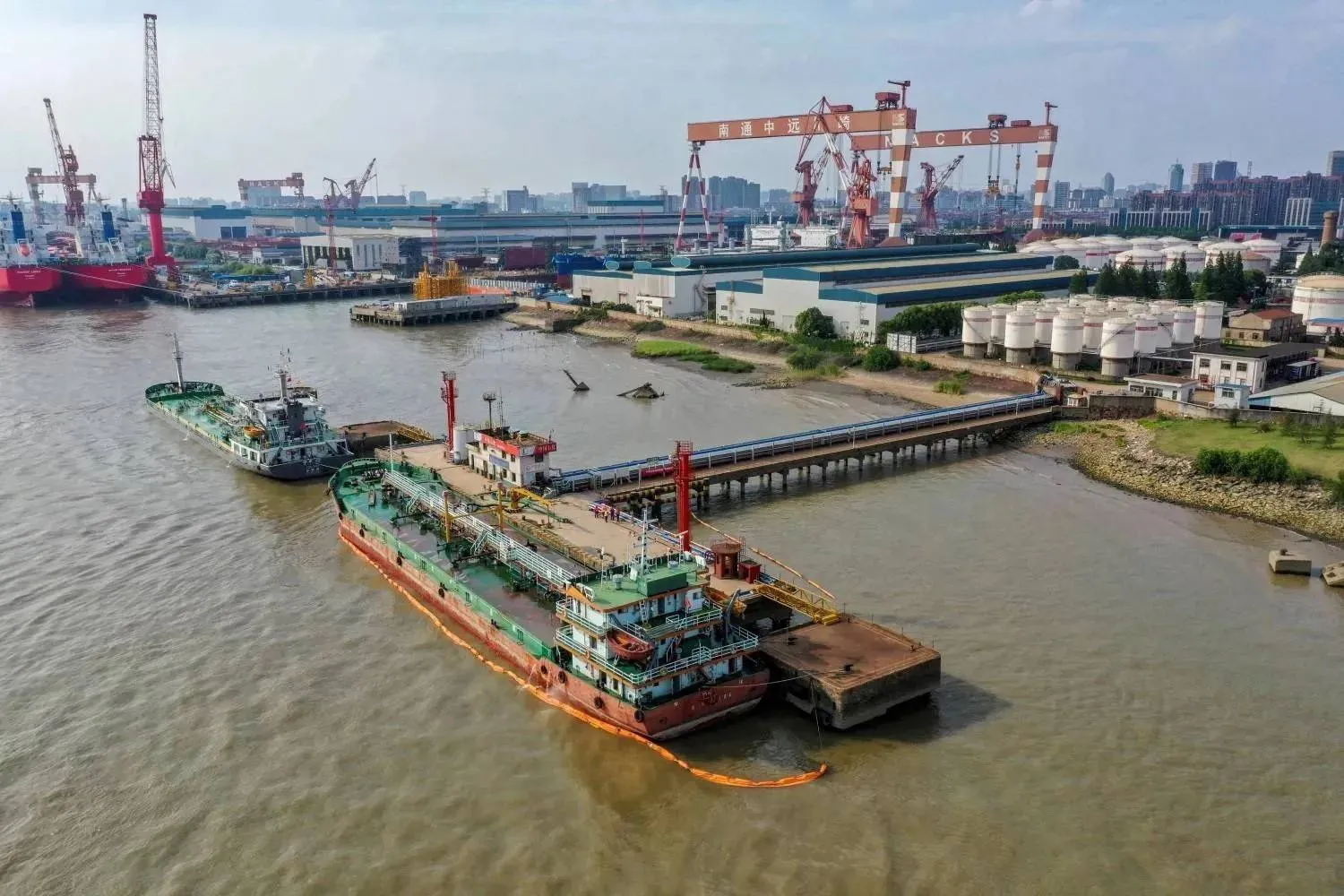
Oil tankers are seen at a terminal of Sinopec Yaogang oil depot in Nantong, Jiangsu province, China (Reuters) 
TT

China's Russian Oil Imports to Hit New Record in February as India Cuts Back

Oil tankers are seen at a terminal of Sinopec Yaogang oil depot in Nantong, Jiangsu province, China (Reuters) 

China's Russian oil imports are set to climb for a third straight month to a new record high in February as independent refiners snapped up deeply discounted cargoes after India slashed purchases, according to traders and ship-tracking data.

Russian crude shipments are estimated to amount to 2.07 million barrels per day for February deliveries into China, surpassing January's estimated rate of 1.7 million bpd, an early assessment by Vortexa Analytics shows.

Kpler's provisional data showed February imports at 2.083 million bpd, up from 1.718 million bpd in January, according to Reuters.

China has since November replaced India as Moscow's top client for seaborne shipments as Western sanctions over the war in Ukraine and pressure to clinch a trade deal with the US forced New Delhi to scale back Russian oil imports to a two-year low in December.

India's Russian crude imports are estimated to fall further to 1.159 million bpd in February, Kpler data showed.

Independent Chinese refiners, known as teapots, are the world's largest consumers of US sanctioned oil from Russia, Iran and Venezuela.

“For the quality you get from processing Russian oil versus Iranian, Russian supplies have become relatively more competitive,” said a senior Chinese trader who regularly deals with teapots.

ESPO blend last traded at $8 to $9 a barrel discounts to ICE Brent for March deliveries, while Iranian Light, a grade of similar quality, was last assessed at $10 to $11 below ICE Brent, the trader added.

Uncertainty since January over whether the US would launch military strikes on Iran if negotiations for a nuclear deal failed to yield Washington's desired results curbed buying from Chinese teapots and traders, said Emma Li, Vortexa's China analyst.

“For teapots, Russian oil looks more reliable now as people are worried about loadings of Iranian oil in case of a military confrontation,” Li said.

Part of the elevated Russian oil purchases came from larger independent refiners outside the teapot hub of Shandong, Li added.

Vortexa estimated Iranian oil deliveries into China – often banded by traders as Malaysian to circumvent US sanctions - eased to 1.03 million bpd this month, down from January's 1.25 million bpd.