Pochettino Pays Price for Spurs’ Failure of Renewal but Mourinho Is a Big Gamble

 Mauricio Pochettino built a hard-pressing Tottenham side stylistically at odds with the methods of his successor, José Mourinho. Photograph: Peter Powell/EPA-EFE
Mauricio Pochettino built a hard-pressing Tottenham side stylistically at odds with the methods of his successor, José Mourinho. Photograph: Peter Powell/EPA-EFE
TT

Pochettino Pays Price for Spurs’ Failure of Renewal but Mourinho Is a Big Gamble

 Mauricio Pochettino built a hard-pressing Tottenham side stylistically at odds with the methods of his successor, José Mourinho. Photograph: Peter Powell/EPA-EFE
Mauricio Pochettino built a hard-pressing Tottenham side stylistically at odds with the methods of his successor, José Mourinho. Photograph: Peter Powell/EPA-EFE

Fifty years ago this season Liverpool went to Watford, then struggling near the bottom of the Second Division, in the sixth round of the FA Cup. On a dreadful pitch, its central third rutted and bare, they lost 1-0 to a diving header from Barry Endean. Bill Shankly called Watford “the worst team that ever beat us”. He was aware the upset could be as epochal as the defeat to Worcester City that had led to him replacing Phil Taylor as manager in 1959 and was provoked into action. “I knew I had to do my job and change my team,” he said. “It had to be done and if I didn’t do it I was shirking my obligations.”

Although Liverpool had finished second the previous season, they were enduring a major stutter, having won only five of their previous 18 in the league. He raged in the Vicarage Road dressing room, telling a number of players they were finished. Over the following weeks Tommy Lawrence, Ian St John, Ron Yeats and Geoff Strong were all discarded. Peter Thompson, struggling with cartilage problems, departed a few months later. The players changed, but the method did not. “The policy of the new team was the same as that of the old,” Shankly explained. “We played to our strengths. We pressurised everybody and made them run.”

There was a time when managers were not sacked as soon as they faced a bump in the road. Three years later Liverpool won the league and the Uefa Cup. A year after that they produced arguably the greatest performance of Shankly’s reign in demolishing Newcastle in the FA Cup final. He promptly retired.

As Mauricio Pochettino has found, that is not how modern football works. Modern football likes nothing more than to identify a crisis and to respond to it with sacrifice. Perhaps that is simple economics – it is cheaper to replace a manager than half the squad – but there is also something ritualistic about it, the elders leading the designated scapegoat sadly to the altar. Sir Alex Ferguson identified football’s lust for blood with reality TV and the idea that somebody must be voted off each week, but the urge perhaps lies deeper than that: Isaac, Jephthah’s daughter, Iphigenia, Jesus, Sydney Carton, Edward Woodward’s police officer in The Wicker Man – they all pre-date the X Factor.

Football operates in cycles. Coaches as different as Béla Guttmann and Gordon Strachan have identified the third year as fatal, the moment when a critical mass of players tire of the techniques and idiosyncrasies of their manager, when one or other has to change. Managers such as Ferguson and Valeriy Lobanovskyi were able to sustain their success for so long because they were ruthless in refreshing their squads. Shankly acknowledged he had waited too long but was given time to enact a second revolution. Pochettino was not afforded that luxury.

The Argentinian, having been at Tottenham since 2014, had identified the problem. He knew it was not just about building a good squad and letting it run. For two years he has been urging rejuvenation but when it came last summer with three signings, two of whom have struggled with injury, it was too little too late. What has happened to Tottenham this season – 14th in the table after three wins in 12 games – is the price of last season, when they did not make a single senior signing.

Two factors have exacerbated the problem. First, that Pochettino’s way of playing is particularly exhausting. A hard pressing style is hugely demanding. When belief goes, the downturn can be dramatic. It happened, for instance, to Borussia Dortmund in Jürgen Klopp’s final season and, more pertinently, it happened to Pochettino as a player at his first club. Newell’s Old Boys claimed the Apertura in 1990-91 and the Clausura in 1991-92, also reaching the final of the 1992 Copa Libertadores, but the manager Marcelo Bielsa then left and form collapsed; they finished bottom of the 1992-93 Apertura.

Pochettino is not an inflexible disciple of Bielsa, is not as close to his methods as, say, Jorge Sampaoli, but the influence is clear and that can create problems. “It’s a method that provokes a certain level of tiredness,” said the former Newell’s full-back Juan Manuel Llop. “Not just physical tiredness, but also mental, emotional. Because the competitive level is so high, it’s difficult to keep up with it … there comes a time that the human being relaxes. It’s not that you abandon it, but you let something go because you feel worn out.”

If the 7-2 home defeat to Bayern Munich is accepted as something of a freak, Tottenham’s worst performance of the season came in the 3-0 loss at Brighton. Nine of the 11 who started that game have been at the club four years or more. It is hardly surprising if they have begun to feel fatigued, and that perhaps explains why Tottenham’s pressing has been so obviously less intense this season.

As a rough measure of that, in every previous season under Pochettino, Spurs have been one of the top six sides in the league for winning the ball back within 40 metres of their opponents’ goal; this season they are 15th. Any disillusionment will hardly be assuaged by the knowledge they could have been earning significantly higher wages elsewhere.

Tottenham being in the Champions League may have come to seem familiar, but by most financial metrics they remain the sixth-biggest club in the Premier League. And that is why something feels so self-defeating about Pochettino’s departure. For all their struggles this season, they remain one win off fifth. There was no threat of relegation such as that which prompted Middlesbrough to dismiss Gareth Southgate or West Brom Roberto Di Matteo. Nor was there the sense of insoluble toxicity that characterised José Mourinho’s final weeks at Chelsea. Even with four key players running down their contracts, this was salvageable.

But instead Tottenham have chosen the familiar route of replacing the manager. Perhaps the situation was irresolvable. Perhaps Pochettino, as his increasingly regular hints about leaving suggested, had lost patience with the project. But Spurs have paid £12.5m to release from his contract a well-respected and in-demand manager with a proven record of working on a budget and developing young players, and replaced him with Mourinho, who habitually complains about a lack of funding and, for all his protestations, has a limited record of youth development.

Where Pochettino’s sides at their best pressed hard, Mourinho essentially eschewed pressing as part of his rejection of Barcelona in 2008; his Manchester United side had the lowest running stats in the league when he was sacked a year ago. Perhaps weary players will relish the change, but this represents a major shift in approach and, as such, is a major gamble.

Sometimes the logic of football does not feel like logic at all.

The Guardian Sport


IOC Boss Coventry Hails Milano Cortina Games a Success

 20 February 2026, Italy, Milan: President of the International Olympic Committee (IOC) Kirsty Coventry holds a press conference. (dpa)
20 February 2026, Italy, Milan: President of the International Olympic Committee (IOC) Kirsty Coventry holds a press conference. (dpa)
TT

IOC Boss Coventry Hails Milano Cortina Games a Success

 20 February 2026, Italy, Milan: President of the International Olympic Committee (IOC) Kirsty Coventry holds a press conference. (dpa)
20 February 2026, Italy, Milan: President of the International Olympic Committee (IOC) Kirsty Coventry holds a press conference. (dpa)

The Milano Cortina Olympics exceeded expectations despite a shaky build-up, IOC President Kirsty Coventry said on Friday, hailing the first spread-out Winter Games a success.

"These Games are truly ... successful in a new way of doing things, in a sustainable way of doing things, in a way that I think many people thought maybe we couldn't do, or couldn't be done well, and it's been done extremely well, and it's surpassed everyone's expectations," Coventry told a press conference.

It was the International Olympic Committee chief's clearest endorsement yet of a format that split events across several Alpine clusters rather than concentrating them in one host city.

Her assessment came after two weeks in which organizers sought to prove that a geographically dispersed Games could still deliver a consistent athlete experience.

The smooth delivery ‌comes after years ‌of logistical and political challenges, including construction delays at Milan’s Santagiulia Arena ‌and ⁠controversy over building ⁠a new sliding center in Cortina against IOC advice.

Organizers have also faced isolated disruptions during the Games, such as suspected sabotage on rail lines and protests in Milan over housing and environmental issues.

Transport concerns across the dispersed venues have been mitigated by limited cross-regional travel among spectators, though some competitors had to walk to the Cortina Curling Olympic Stadium in heavy snowfall that stopped traffic.

Central to the success of the Games, Coventry argued, was the effort to standardize conditions across multiple athlete villages despite the distances separating venues from Cortina d’Ampezzo to ⁠Livigno and Bormio.

Italian athletes’ performances also helped ticket sales, which amounted to ‌about 1.4 million.

"And the athletes are extremely happy. And they're happy ‌because the experiences that the MiCo (Milano Cortina) team and my team delivered to them have been the same," she ‌said.

Mixed relay silver medalist Tommaso Giacomel did, however, lament the fact there was no Olympic village near ‌the Antholz-Anterselva Biathlon Arena and that competitors were dotted around different hotels near the venue instead of in one place.

TWO OPENING CEREMONIES

Two opening ceremonies were held - the main one at Milan’s San Siro stadium and a more low-key parade on Cortina d’Ampezzo's Corso Italia, where athletes and spectators were within touching distance.

Feedback from competitors suggested the more intimate ‌settings had in some cases enhanced the Olympic atmosphere, Coventry said, taking the Cortina opening ceremony as an example.

The Zimbabwean, presiding over her first Games ⁠as IOC chief after elections in ⁠2025, framed Milano Cortina as proof of concept for future hosts grappling with rising costs and climate constraints, while acknowledging adjustments would follow.

"It allows us to really look at ourselves and look at the things that we have in place and how we're then going to make certain adjustments for the future," she said.

Beyond logistics, Coventry pointed to the broader impact of the Games, highlighting gender balance - with women making up 47% of competitors - and global engagement as marks of progress.

"But it's been an incredible experience and we're all very proud to have gender equity playing a big role in the delivery of the Games," she said, describing a "tremendous Games" in which athletes have "come together and shared in their passion".

With the closing ceremony in Verona approaching, Coventry said the focus would soon shift to a formal evaluation process, but insisted the headline conclusion was already clear.

"So we look forward to doing that and to learning from all the incredible experiences that I think all of the stakeholders have had across these Games, across these past two weeks," she said.


‘A Huge Mistake.’ Kompany Hits Out at Mourinho for Vinícius Júnior Comments

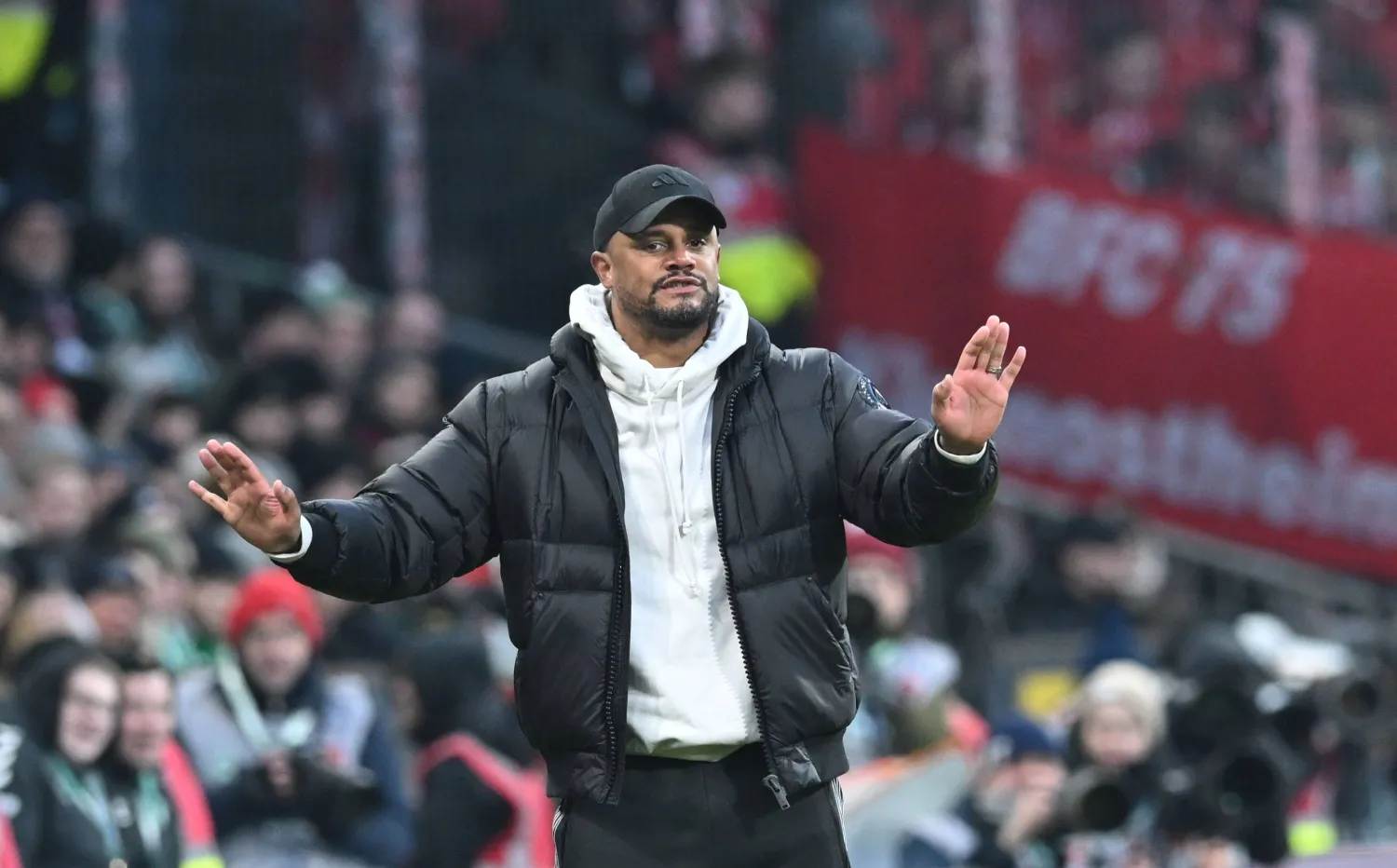
14 February 2026, Bremen: Bayern Munich coach Vincent Kompany gestures during the German Bundesliga soccer match between Werder Bremen and Bayern Munich at Weserstation. (dpa)
TT

‘A Huge Mistake.’ Kompany Hits Out at Mourinho for Vinícius Júnior Comments

14 February 2026, Bremen: Bayern Munich coach Vincent Kompany gestures during the German Bundesliga soccer match between Werder Bremen and Bayern Munich at Weserstation. (dpa)

Bayern Munich coach Vincent Kompany has criticized José Mourinho for attacking the character of Vinícius Júnior after the Real Madrid star accused an opponent of racially insulting him during a Champions League match.

Benfica coach Mourinho suggested that Brazil forward Vinícius had incited Benfica's players with his celebrations after scoring the only goal in Tuesday's playoff match.

Vinícius accused Benfica's Gianluca Prestianni of calling him "monkey" during a confrontation after his goal.

Mourinho also questioned why Vinícius, who is Black and has been subjected to repeated racist insults in Spain, was so frequently targeted.

"There is something wrong because it happens in every stadium," Mourinho said. "The stadium where Vinícius played something happened. Always."

Speaking on Friday, Kompany condemned Mourinho's comments.

"So after the game you have the leader of an organization, José Mourinho, who attacks the character of Vinícius Júnior by bringing in the type of celebration to discredit what Vinícius is doing in this moment," Kompany said. "And for me in terms of leadership, it’s a huge mistake and it’s something that we should not accept."

Mourinho’s celebrations

UEFA appointed a special investigator on Wednesday to gather evidence about what happened in Lisbon in Madrid’s 1-0 win in the first leg of the Champions League playoffs. Madrid said it had sent "all available evidence" of the alleged incident to European soccer's governing body.

Referring to Vinícius' celebrations after curling a shot into the top corner, Mourinho said he should "celebrate in a respectful way."

Kompany pointed out Mourinho's own history of exuberant celebrations — such as when he ran down the sideline to cheer when his Porto team beat Manchester United in the Champions League.

Kompany said Mourinho's former players "love him" and added "I know he’s a good person."

"I don’t need to judge him as a person, but I know what I’ve heard. I understand maybe what he’s done, but he’s made a mistake and it’s something that hopefully in the future won’t happen like this again," he said.

Prestianni denied racially insulting Vinícius. Benfica said the Argentine player was the victim of a "defamation campaign."

‘Right thing to do’

Kompany said Vinícius' reaction "cannot be faked."

"You can see it — his reaction is an emotional reaction. I don’t see any benefit for him to go to the referee and put all this misery on his shoulders," he said. "There is absolutely no reason for Vini Junior to go and do this.

"I think in his mind he’s doing it more because it’s the right thing to do in that moment."

Kompany added: "You have a player who’s complaining. You have a player who says he didn’t do it. And I think unless the player himself comes forward, it’s difficult. It’s a difficult case."


FIFA to Lead $75m Palestinian Soccer Rebuilding Fund

President of FIFA Gianni Infantino attended the inaugural meeting of US President Donald Trump's 'Board of Peace'. CHIP SOMODEVILLA / GETTY IMAGES NORTH AMERICA/AFP
TT

FIFA to Lead $75m Palestinian Soccer Rebuilding Fund

President of FIFA Gianni Infantino attended the inaugural meeting of US President Donald Trump's 'Board of Peace'. CHIP SOMODEVILLA / GETTY IMAGES NORTH AMERICA/AFP

FIFA will spearhead a $75 million fund to rebuild soccer facilities in Gaza that were destroyed by the war between Israel and Hamas, President Donald Trump and the sport's governing body said Thursday.

Trump made the announcement in Washington at the first meeting of his "Board of Peace," an amorphous institution that features two dozen of the US president's close allies and is initially focused on rebuilding the Gaza strip, said AFP.

"I'm also pleased to announce that FIFA will be helping to raise a total of $75 million for projects in Gaza," said Trump.

"And I think they're soccer related, where you're doing fields and you're getting the greatest stars in the world to go there -- people that are bigger stars than you and I, Gianni," he added, referring to FIFA president Gianni Infantino, who was present at the event.

"So it's really something. We'll soon be detailing the announcement, and if I can do I'll get over there with you," Trump said.

Later Thursday, FIFA issued a statement providing more details, including plans to construct a football academy, a new 20,000-seat national stadium and dozens of pitches.

The FIFA communique did not mention Trump's $75 million figure, and said funds would be raised "from international leaders and institutions."

Infantino has fostered close ties with Trump, awarding him an inaugural FIFA "Peace Prize" at the World Cup draw in December.

At Thursday's meeting, the FIFA president donned a red baseball cap emblazoned with "USA" and "45-47," the latter a reference to Trump's two terms in the White House.

In FIFA's statement, Infantino hailed "a landmark partnership agreement that will foster investment into football for the purpose of helping the recovery process in post conflict areas."

The "Board of Peace" came together after the Trump administration, teaming up with Qatar and Egypt, negotiated a ceasefire in October to halt two years of devastating war in Gaza.

The United States says it is now focused on disarming Hamas -- the Palestinian group whose unprecedented October 7, 2023, attack on Israel triggered the massive offensive.