


Refugees Rebuild after Devastating South Sudan Floods

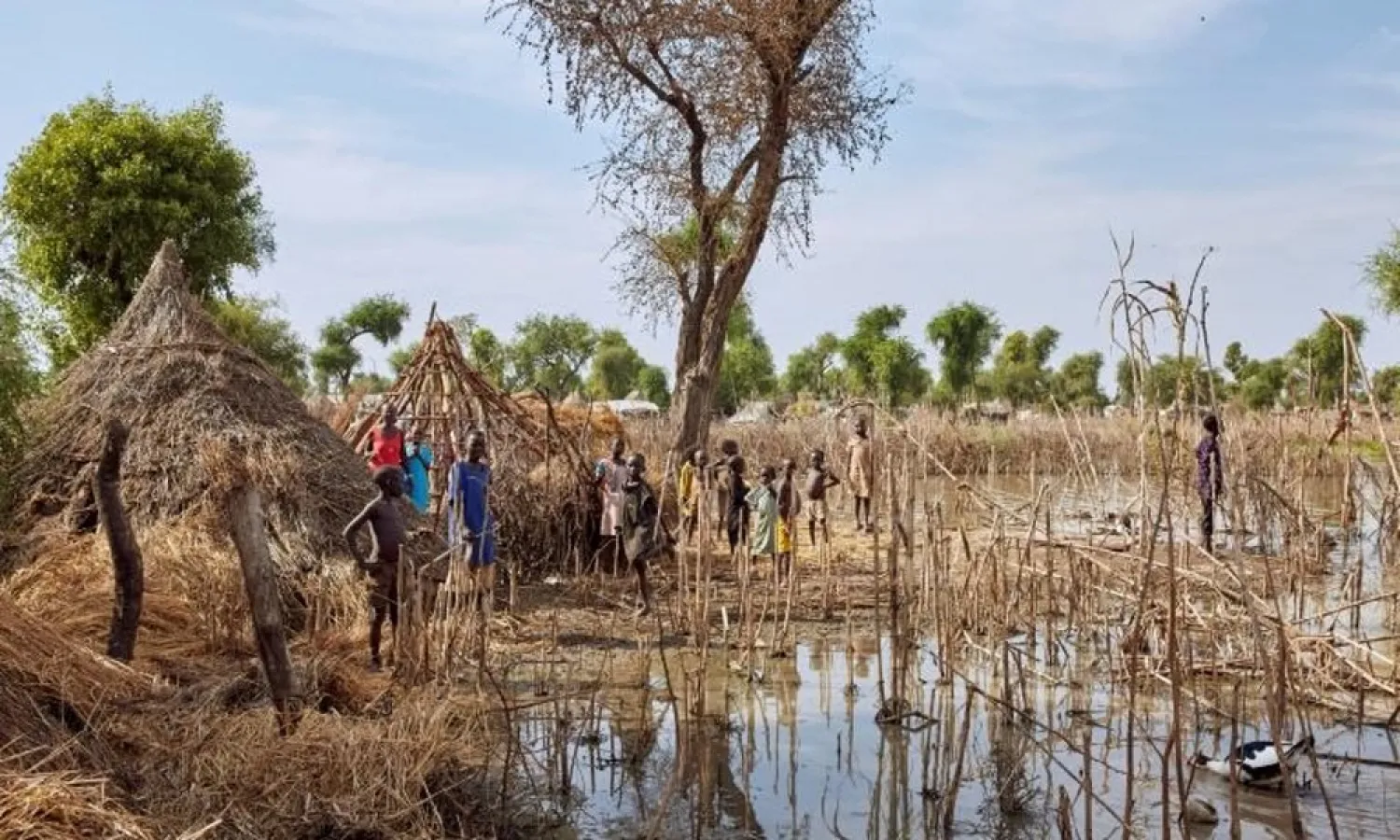
Children stand among the rooftops of homes after the Yusuf Batir refugee camp in South Sudan was hit by flooding. (AFP)
TT

Refugees Rebuild after Devastating South Sudan Floods

Children stand among the rooftops of homes after the Yusuf Batir refugee camp in South Sudan was hit by flooding. (AFP)

Visibly exhausted, Ali Fonj sets to chopping wooden poles to make a shelter for his wife and four children after their ramshackle home was swept away in raging floodwaters in South Sudan.

Fonj, 45, is one of around 150,000 refugees from Sudan's troubled Blue Nile region who had fled to Maban, in neighboring northeastern South Sudan.

Their precarious lives have now received a second blow -- the region's worst floods in a generation.

Fierce rains across East Africa have had deadly consequences in Somalia, Kenya, Tanzania and Ethiopia. The UN refugee agency UNHCR says nearly a million people have been affected in South Sudan.

In Maban, the floodwaters are slowly receding but submerged homes and damaged crops bear testament to the devastation.

"When the water came, I took all my children and sought refuge at a nearby school," a dejected Fonj told AFP.

The family were told to leave when classes resumed.

"We are trying to build shelters and we can cover them using the plastic sheets distributed to us by the UNHCR until the water dries up, so we can then be able to go out and get some thatch to build a better shelter for our children to stay in."

Worst floods in decades

Fonj lives in one of four refugee camps in Maban, housing people who fled violence in the Blue Nile region where fighters continued their campaign against Khartoum after being excluded from an independent South Sudan in 2011.

A host community of around 50,000 people in Maban have also been badly hit by the floods, which the UNHCR says has left six dead locally.

"They have never seen this magnitude of floods since 1984," a senior UNHCR official in Maban, Malar Maharajah Smith, told AFP.

The refugee agency estimates that across the country, which was already facing one of the world's worst humanitarian crises due to over five years of war, some 600,000 people are in need of immediate assistance.

Floodwaters also destroyed latrines and contaminated sources of drinking water, raising fears of waterborne diseases.

According to the UN, some $61 million (55 million euros) is needed to respond to the aftermath.

No firewood

Another camp resident, Mukbulah Saleh, 25, clasps her shoes in one hand and a saucepan containing food items in another as she wades through floodwaters.

"We have nothing to use to cook the little food I got because it is still not safe for us to go to the bush to collect firewood since there is still water all over," she said.

Some flood victims are waking up at dawn, armed with mosquito nets, spears and sticks, to try and catch the unexpected bounty of fish that have shown up in floodwaters.

"This flood came to kill us but God was in our favor, it brought for us fish instead," said Mabanese resident Abdul Gasim Dafala, holding up his catch.



Iran Eyes Limited US Deal to Relieve Economic Strain and Buy Time

 A drone view shows vessels at the Strait of Hormuz, as seen from Musandam, Oman, June 1, 2026. (Reuters)
A drone view shows vessels at the Strait of Hormuz, as seen from Musandam, Oman, June 1, 2026. (Reuters)
TT

Iran Eyes Limited US Deal to Relieve Economic Strain and Buy Time

 A drone view shows vessels at the Strait of Hormuz, as seen from Musandam, Oman, June 1, 2026. (Reuters)
A drone view shows vessels at the Strait of Hormuz, as seen from Musandam, Oman, June 1, 2026. (Reuters)

Iran is pushing for a limited interim agreement with the United States in a bid to ease mounting economic pressure and stabilize the situation at home, while avoiding major concessions on its nuclear program, according to sources and analysts.

The approach reflects a familiar playbook for the Iranian regime: absorb pressure, avoid irreversible compromises and keep negotiations alive without shifting core positions, three Iranian sources close to decision-makers said, according to Reuters.

But the latest push is also driven by more immediate concerns. Officials see a narrow deal as a way to buy time, unlock financial relief and contain rising domestic risks over a deteriorating economy without addressing the most contentious issues.

The diplomatic maneuvering follows weeks of escalation after US-Israeli strikes in late February spiraled into a broader regional conflict. Iranian attacks across the Gulf heightened fears over the security of the Strait of Hormuz, a chokepoint for roughly a fifth of global oil and liquefied natural gas supplies.

Three months on, and ‌despite a fragile ‌ceasefire in early April, the conflict has hardened into a stalemate. A US blockade on ‌Iranian ⁠ports and Tehran's ⁠grip on the Strait have sustained mutual pressure, driving up economic costs while leaving the risk of renewed fighting unresolved.

Against that backdrop, both sides have lowered expectations of a comprehensive settlement. Instead, they are exploring what officials describe as a temporary memorandum — effectively an interim deal — aimed at preventing a return to open conflict, while deferring core disputes over Iran's nuclear activities.

TEHRAN SEEKS BREATHING SPACE

For Tehran, such an arrangement is primarily a means of converting military and economic pressure into liquidity, breathing space and de-escalation, without curbing sensitive nuclear work.

Iran is seeking an end to hostilities across all fronts, including Lebanon, access to billions of dollars in oil revenues, waivers on crude ⁠exports, a lifting of the US port blockade and continued leverage over the strait, ‌while postponing decisions on the most contentious issues.

The framework would center on temporary ‌easing and phased access through the waterway, leaving unresolved questions over enrichment capacity and Tehran's stockpile of highly enriched uranium, including material enriched to ‌60%.

Alex Vatanka, a senior fellow at the Middle East Institute in Washington, said Tehran's calculation is shaped less by battlefield ‌risks than by economic pressure and uncertainty.

"Iranian leaders understand that time is not necessarily on their side... their calculation appears to be that dialogue, even limited dialogue, is preferable to entering an open-ended period of economic attrition and uncertainty that could gradually weaken its ability to govern at home and project influence abroad."

TEHRAN FEARS PROTEST REVIVAL

Much rests on the success of negotiations. President Donald Trump is under pressure to reopen ‌the Strait of Hormuz and curb US fuel prices, while fending off criticism from Iran hawks in his own Republican party over any concessions to Tehran.

Iran's leadership also ⁠faces domestic pressures. Years of sanctions, ⁠economic mismanagement and conflict have fueled inflation, currency depreciation and a sharp decline in living standards.

Short-term financial inflows are therefore crucial to Tehran's interest in a preliminary deal, the sources said, as they could keep the economy running, ease immediate pressures and stave off a resurgence of unrest.

In January, Iran's clerical establishment and the Revolutionary Guards killed thousands while suppressing nationwide protests sparked by economic grievances.

Hamidreza Azizi, a visiting fellow at the German Institute for International and Security Affairs (SWP) in Berlin, said a memorandum could also address mounting concerns about the long-term resilience of the system.

"By ending the conflict, reducing economic strain, removing US military pressure around Iran, and creating space for reconstruction, an MoU could help prevent a gradual erosion of state capacity and governance," Azizi said.

STRAIT REMAINS IRAN'S LEVERAGE

The Strait of Hormuz remains central to Iran's leverage. Within the clerical establishment, it is increasingly seen less as a bargaining chip than as a durable strategic asset.

Any arrangement that restores shipping while preserving that leverage would leave Tehran's influence over the chokepoint intact, the sources said, allowing flows to resume while stability remains tied to political negotiation.

One source said a limited deal would effectively restore prewar conditions without forcing Iran to yield to Washington’s demands, adding: "With the start of the war, Trump gave Iran the gift of control over the Strait."


In Finland, Radioactive Spent Nuclear Fuel Soon to Be Buried Underground

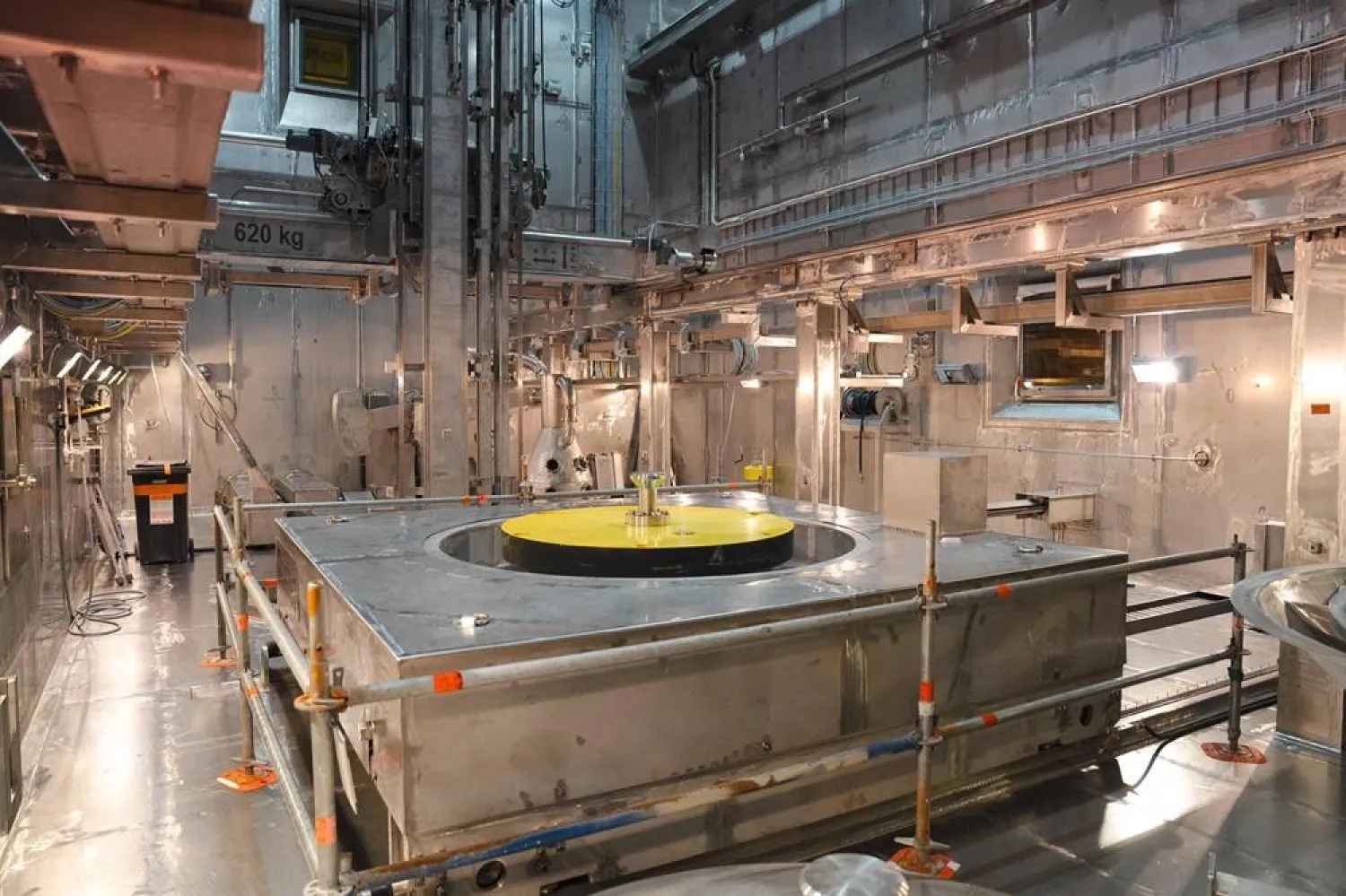
Picture taken on May 18, 2026 shows the "hot cell" fuel handling chamber at the encapsulation plant of nuclear waste management company Posiva at the site of what is expected to be the world's first permanent repository for radioactive spent nuclear fuel at the Onkalo nuclear repository in Eurajoki, southwestern Finland. (AFP)
TT

In Finland, Radioactive Spent Nuclear Fuel Soon to Be Buried Underground

Picture taken on May 18, 2026 shows the "hot cell" fuel handling chamber at the encapsulation plant of nuclear waste management company Posiva at the site of what is expected to be the world's first permanent repository for radioactive spent nuclear fuel at the Onkalo nuclear repository in Eurajoki, southwestern Finland. (AFP)

The elevator display reads "433", the number of meters below ground. The doors slide open, revealing the entrance to what is expected to be the world's first permanent repository for radioactive spent nuclear fuel.

Blasted into 1.9 billion-year-old stable bedrock in Eurajoki, southwest Finland, the geological repository for spent nuclear waste -- dubbed Onkalo which means "cave" in Finnish -- is nearly ready to start operations.

Countries have been wrestling with what to do with dangerous nuclear by-products since the first plants were built in the 1950s. Currently, most of it is in temporary storage.

Final repositories are being built in other countries, including neighboring Sweden and France, but Finland is expected to be first to open an underground storage solution.

The Finnish Radiation and Nuclear Safety Authority (STUK) is due to give approval in its final assessment in June, after which an operating license can be granted.

"We hope we can start the operation either at the end of this year or most probably at the beginning of next year," said Philippe Bordarier, chief executive of nuclear operator Teollisuuden Voima Oyj (TVO).

His voice echoed in the damp tunnel where the spent nuclear fuel will be buried in holes drilled into the bedrock, where it will remain harmfully radioactive for thousands of years.

The waste currently cooled in water pools at an interim storage site, at the nearby Olkiluoto power plant next to the Baltic Sea, will be first to be deposited, Bordarier said.

With space for 6,500 tons of uranium, Onkalo is aimed at providing permanent storage for spent fuel from Finland's five nuclear reactors -- three of them located in Olkiluoto.

Nuclear waste management company Posiva began building the site in 2004, with the cost now estimated at one billion euros ($1.16 billion).

- 'Forever'-

Spent fuel is planned to be deposited in Onkalo's massive network of tunnels for 100 years, but operations may be extended if new nuclear reactors are built.

Subsequently, the vault will be sealed to provide safe storage for at least 100,000 years.

"Basically, it needs to be safe forever," noted Lauri Parviainen, a Posiva chemist who showed reporters around the facilities.

The fuel will be highly radioactive for "tens of thousands of years", he said.

After 100,000 years, they will be "about the same level as the uranium ore of which the fuel is made."

Above ground, the spent nuclear fuel will be encapsulated in highly corrosion-resistant copper canisters.

The canisters will be lowered into holes drilled in the tunnels, before the holes are filled with bentonite clay to seal them, Parviainen explained.

"So if the bentonite stays in place, we are safe," he said.

Once each 300-meter-long disposal tunnel is filled, it will be sealed with a steel-reinforced concrete plug.

- Long-term risks -

Jarkko Kyllonen, an expert on nuclear safety at Finland's nuclear regulator STUK, has assessed risk scenarios for the Onkalo project stretching up to a million years into the future.

Considering the "hazard potential of the waste, the first 10,000 years are very important for keeping the capsules intact," he told AFP.

The main long-term risks are corrosion of the copper canisters or earthquakes during future ice ages, which could potentially damage the capsules and cause radioactive fuel to leak, Kyllonen said.

But the results of various risk assessments conducted over the years have been "positive".

While France's plans for a similar underground nuclear tomb have met with strong opposition, Onkalo has received broader backing in Finland.

There was some opposition locally when the plans were first introduced in the 1970s, but "people have gotten used to it, and they trust the assessments made by STUK", Matti Kojo, social sciences professor at Lut University, told AFP.

"At the moment, support for nuclear power is at a historically high level in Finland," he noted.

The Finnish Association for Nature Conservation remains critical of the project, however, insisting that nuclear waste poses a long-term, serious risk.

"No one can guarantee the safety of Onkalo for thousands of years," director Tapani Veistola told AFP in an e-mail.

- Finland's nuclear push -

Under Finnish law, nuclear waste produced in Finland has to be deposited in the country, Climate and Environment Minister Sari Multala told AFP.

"Before the legal change in 1994, the spent nuclear fuel was exported to, for example, Russia," she said.

Increasing nuclear power in Finland has been a priority for the right-wing government, and the country is considering building so-called small modular reactors (SMRs).

How the spent nuclear fuel from future SMRs would be managed "has not been decided yet," Multala said. An assessment should be completed by March next year, she added.


Iran's Strongest Card in Nuclear Talks: Its Highly Enriched Uranium

Centrifuges at the Fordow nuclear facility before the June 2025 attacks (Reuters)
TT

Iran's Strongest Card in Nuclear Talks: Its Highly Enriched Uranium

Centrifuges at the Fordow nuclear facility before the June 2025 attacks (Reuters)

Iran and the United States are in discussions to extend ‌their ceasefire so as to start negotiations on issues including Tehran's nuclear program, where Washington insists Iran must not be able to make a nuclear weapon.

While much of Iran's uranium enrichment infrastructure was destroyed or badly damaged when Israel and the US bombed it in June, a large part of the highly enriched uranium it amassed is thought to have survived. That is the biggest US concern ahead of nuclear talks.

On Friday Trump said in a social media post that Iran must agree that the enriched uranium buried underground after earlier US strikes be "unearthed" and destroyed in coordination with Iran and the UN nuclear watchdog.

WHAT IS HIGHLY ENRICHED URANIUM?

One of two fissile materials, along with plutonium, with which one can make the core of a nuclear bomb. While plutonium is usually extracted from the spent fuel of a nuclear reactor, requiring large and highly visible infrastructure, uranium can be enriched using centrifuges that have a much smaller footprint. Two of Iran's three enrichment sites that are known to have been operating when Israel and the ‌US attacked in ‌June were underground. The above-ground one was clearly destroyed.

Uranium is highly enriched when it ‌has ⁠reached 20% purity, and ⁠weapons-grade as of around 90%.

Modern reactors generally use fuel enriched to up to 5%, but some use fuel enriched to higher levels. The ones that power US nuclear submarines reportedly use fuel enriched beyond 90%.

HOW MUCH DOES IRAN HAVE?

Iran has not informed the UN nuclear watchdog of the fate of its enriched uranium since the June attacks or let its inspectors return to the sites where it was stored.

The International Atomic Energy Agency estimates Iran had these amounts when the first Israeli bombs fell on June 13:

- 440.9 kg enriched to up to 60%

- 184.1 kg enriched to up to 20%

- 6,024.4 kg enriched to ⁠up to 5%

- 2,391.1 kg enriched to up to 2%

According to an IAEA yardstick, ‌the amount at 60% is enough, if enriched further, for 10 nuclear weapons. ‌The 20% stock would be enough for one and the 5% could produce 12. How much has survived is unclear. IAEA chief ‌Rafael Grossi has said his agency believes "a bit more than 200 kg" of the 60% stock is stored at a ‌tunnel complex in Isfahan that appears to have been largely unharmed by the June attacks. Some was also at the Natanz nuclear site, he said.

WHY THE CONCERN? US concern has been focused on the 60% material because that would be easiest and thus quickest to make a bomb with. Washington wants it gone. Iran denies seeking nuclear weapons.

As the enrichment level of uranium increases, it becomes exponentially easier to enrich ‌further. Getting from 60% to 90% is easier than getting from unenriched to 5%.

President Donald Trump pulled the United States out of a nuclear deal between Iran and ⁠major powers that kept Tehran ⁠at a far greater distance from being able to produce an atom bomb than it is at now. The US withdrawal in 2018 caused the deal to unravel, and Iran quickly expanded its atomic program.

Under that 2015 deal, Iran did not enrich beyond 3.67%.

Even at 90%, however, it takes more steps to produce the core of a bomb. When it is enriched, the uranium is in gas form. It must then be turned into metal for use in a weapon.

CAN YOU MOVE IT?

Yes. Iran moved enriched material between sites under IAEA monitoring before the June attacks.

Under the 2015 deal and a precursor to it, Iran's stocks of uranium enriched to up to 20% were diluted or turned into reactor fuel plates and shipped out of the country.

Moving nuclear material like highly enriched uranium internationally is a sensitive but relatively routine procedure.

"It requires some precaution but it can be moved," Grossi told PBS in March when asked about the 60% material.

WILL IRAN GIVE IT UP? Iran's supreme leader has issued a directive that the 60% material should not be sent abroad, two senior Iranian sources said last week.

Iranian sources say Tehran might agree to send half of it to a third country, receiving uranium enriched to 5% in return, and dilute the other half inside Iran.