


Unai Emery’s Broken Kaleidoscope Was a Small Part of Arsenal’s Problem

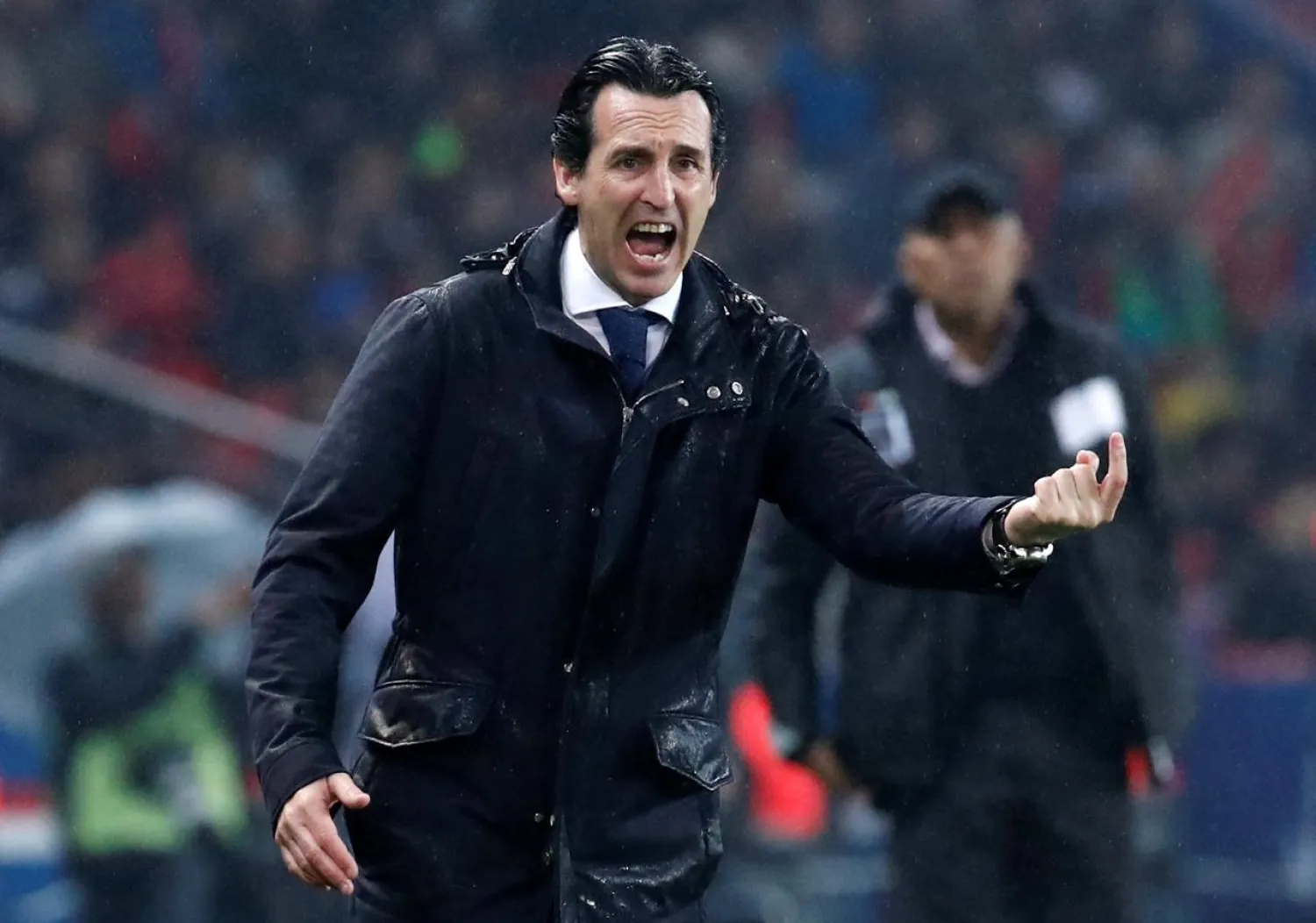
Unai Emery | REUTERS/Christian Hartmann
TT

Unai Emery’s Broken Kaleidoscope Was a Small Part of Arsenal’s Problem

Unai Emery | REUTERS/Christian Hartmann

And so the grumbling of results and offers has claimed another victim. By the end, Unai Emery cut a hapless figure, mumbling incoherently after defeat to Eintracht Frankfurt as the world collapsed around him. He was a scapegoat, as managers always are, barely less a patsy in his role as Arsène Wenger’s successor than he had been as Neymar’s minder at Paris Saint-Germain. He certainly should not be immune from criticism, but equally nobody should think his replacement will bring about improvement merely by not being Emery.

Emery joined as a Europa League manager for a Europa League club; he will leave as somebody who has struggled in three jobs outside Spain, compromised, despite his best efforts to speak English, by an inability to communicate.

Whatever conviction may once have underlain his actions had vanished by the end, replaced by a desperate shaking of the tactical kaleidoscope, hoping beyond hope that it might turn up something that worked. It never did.

Last season, Emery portrayed himself as a pressing coach, but this season Arsenal have defended much deeper, perhaps because of the arrival of David Luiz, whose relative lack of pace makes a high line impractical.

Emery wanted to play out from the back, but Bernd Leno increasingly came to kick long. A month ago, Emery revealed that he and the board had taken a collective decision to omit Mesut Özil to try to force him to leave and relieve the club of the burden of his extraordinary salary. Yet after impressing in the 5-5 League Cup game at Liverpool, he has started the past three Premier League games.

Emery had Arsenal line up with a back three in 13 of last season’s 38 league games but this season the plan was clearly for a back four until two games ago, when suddenly the back three emerged again. While it is true there is no sense sticking stubbornly to a plan that isn’t working, equally it felt as though Emery was blowing with the wind.

It may be that a 3-4-1-2 is the way to get the best out of this group of players. David Luiz has always looked more comfortable as part of a back three rather than as one of two central defenders. With a player either side of him, his lack of positional discipline and instinct to go looking for the ball can be accommodated. He can then step into space and make the most of his long‑passing ability.

All four full-backs at the club (if you include Ainsley Maitland‑Niles but not Calum Chambers, which is being only slightly generous with the definitions) are naturally attackers.

Fielding Matteo Guendouzi and Lucas Torreira – or Granit Xhaka if his ostracism is over – at the back of midfield provides a platform for Özil, and allowed Emery to field Pierre-Emerick Aubameyang and Alexandre Lacazette, probably the two most gifted players in the squad, as a front two.

All of that made sense, but there is one obvious issue: where does it leave Nicolas Pépé, the wide forward who arrived to such excitement for £72m in the summer? On a similar, if slightly less dramatic theme, where does it leave Dani Ceballos, on loan from Real Madrid, who looked so impressive when he made his first start at home to Burnley on the opening day of the season? Ceballos, perhaps, would be a third midfielder, a more attacking option in place of one of the two holders, or a less creative alternative to Özil. Pépé, though, would seem to have no obvious role in that structure.

There is always something a little unseemly about the rush to judgment on players taking their first steps in a new league and it may be that Pépé proves himself a very useful acquisition. So far, though, the impression has been of a very one-footed player who essentially has to start wide on the right and cut in on to his left foot. In itself that is not hugely problematic but it does limit a manager’s tactical options. The hope in the summer was that Pépé could play on the right of a front three with Aubameyang cutting in from the left but that risks not getting the best out of the Gabon international, whose preference for playing through the middle is clear.

That hints at something more fundamental. What exactly was the thinking behind the signing of Pépé? Did anybody at Arsenal, whether Emery or the head of football, Raul Sanllehi, or the technical director, Edu (who was appointed three weeks before Pépé signed), or anybody else on the board sit down and work out how the team might fit together?

Perhaps there was a belief that Aubameyang could shift to the left but if there was, it soon evaporated: the three of Pépé, Aubameyang and Lacazette have started two games together, the draws against Tottenham and Palace.

Increasingly, Pépé feels like a trophy signing. He is an exciting player and Arsenal could get him and so they did, sating the demand from fans for a glitzy acquisition – even though the talk at the time was that the fee represented the transfer budget not only for this season but for a couple of years into the future as well.

How Pépé might fit into the team appears to have been a secondary consideration, one that comes to appear negligent given the deficiencies elsewhere in the squad – in central defence and central midfield most obviously.

That is not Pépé’s fault and it wasn’t really Emery’s. He is far from blameless but, as so often when big clubs go bad, the manager is only part of the problem. As at Manchester United, this is an issue of structure and leadership and, as at United, it is in part the result of the difficulty of replacing a long-serving overarching genius. Absentee owners who lack football expertise and seem more concerned with dividends than trophies probably don’t help.

It was Emery who paid the price. His replacement may bring an upturn in form, as blood-letting often does, but the deeper structural issues remain.

(The Guardian)


Sinner Sees off Popyrin to Reach Doha Quarters

 Italy's Jannik Sinner greets the fans after defeating Australia's Alexei Popyrin in their men's singles match at the Qatar Open tennis tournament in Doha on February 18, 2026. (AFP)
Italy's Jannik Sinner greets the fans after defeating Australia's Alexei Popyrin in their men's singles match at the Qatar Open tennis tournament in Doha on February 18, 2026. (AFP)
TT

Sinner Sees off Popyrin to Reach Doha Quarters

 Italy's Jannik Sinner greets the fans after defeating Australia's Alexei Popyrin in their men's singles match at the Qatar Open tennis tournament in Doha on February 18, 2026. (AFP)
Italy's Jannik Sinner greets the fans after defeating Australia's Alexei Popyrin in their men's singles match at the Qatar Open tennis tournament in Doha on February 18, 2026. (AFP)

Jannik Sinner powered past Alexei Popyrin in straight sets on Wednesday to reach the last eight of the Qatar Open and edge closer to a possible final meeting with Carlos Alcaraz.

The Italian, playing his first tournament since losing to Novak Djokovic in the Australian Open semi-finals last month, eased to a 6-3, 7-5 second-round win in Doha.

Sinner will play Jakub Mensik in Thursday's quarter-finals.

Australian world number 53 Popyrin battled gamely but failed to create a break-point opportunity against his clinical opponent.

Sinner dropped just three points on serve in an excellent first set which he took courtesy of a break in the sixth game.

Popyrin fought hard in the second but could not force a tie-break as Sinner broke to grab a 6-5 lead before confidently serving it out.

World number one Alcaraz takes on Frenchman Valentin Royer in his second-round match later.


Ukraine's Officials to Boycott Paralympics over Russian Flag Decision

Milano Cortina 2026 Winter Olympics - Skeleton - Interview with Ukraine Youth and Sports minister Matvii Bidnyi - N H Hotel, Milan, Italy - February 12, 2026 Ukraine Youth and Sports Minister Matvii Bidnyi speaks after the disqualification of Ukrainian skeleton racer Vladyslav Heraskevych from the Winter Games. REUTERS/Kevin Coombs
TT

Ukraine's Officials to Boycott Paralympics over Russian Flag Decision

Milano Cortina 2026 Winter Olympics - Skeleton - Interview with Ukraine Youth and Sports minister Matvii Bidnyi - N H Hotel, Milan, Italy - February 12, 2026 Ukraine Youth and Sports Minister Matvii Bidnyi speaks after the disqualification of Ukrainian skeleton racer Vladyslav Heraskevych from the Winter Games. REUTERS/Kevin Coombs

Ukrainian officials will boycott the Paralympic Winter Games, Kyiv said Wednesday, after the International Paralympic Committee allowed Russian athletes to compete under their national flag.

Ukraine also urged other countries to shun next month's Opening Ceremony in Verona on March 6, in part of a growing standoff between Kyiv and international sporting federations four years after Russia invaded.

Six Russians and four Belarusians will be allowed to take part under their own flags at the Milan-Cortina Paralympics rather than as neutral athletes, the Games' governing body confirmed to AFP on Tuesday.

Russia has been mostly banned from international sport since Moscow invaded Ukraine. The IPC's decision triggered fury in Ukraine.

Ukraine's sports minister Matviy Bidny called the decision "outrageous", and accused Russia and Belarus of turning "sport into a tool of war, lies, and contempt."

"Ukrainian public officials will not attend the Paralympic Games. We will not be present at the opening ceremony," he said on social media.

"We will not take part in any other official Paralympic events," he added.

Ukrainian Foreign Minister Andriy Sybiga said he had instructed Kyiv's ambassadors to urge other countries to also shun the opening ceremony.

"Allowing the flags of aggressor states to be raised at the Paralympic Games while Russia's war against Ukraine rages on is wrong -- morally and politically," Sybiga said on social media.

The EU's sports commissioner Glenn Micallef said he would also skip the opening ceremony.

- Kyiv demands apology -

The IPC's decision comes amid already heightened tensions between Ukraine and the International Olympic Committee, overseeing the Winter Olympics currently underway.

The IOC banned Ukrainian skeleton racer Vladyslav Heraskevych for refusing to ditch a helmet depicting victims of the war with Russia.

Ukraine was further angered that the woman chosen to carry the "Ukraine" name card and lead its team out during the Opening Ceremony of the Games was revealed to be Russian.

Media reports called the woman an anti-Kremlin Russian woman living in Milan for years.

"Picking a Russian person to carry the nameplate is despicable," Kyiv's foreign ministry spokesman Georgiy Tykhy said at a briefing in response to a question by AFP.

He called it a "severe violation of the Olympic Charter" and demanded an apology.

And Kyiv also riled earlier this month at FIFA boss Gianni Infantino saying he believed it was time to reinstate Russia in international football.

- 'War, lies and contempt' -

Valeriy Sushkevych, president of the Ukrainian Paralympic Committee told AFP on Tuesday that Kyiv's athletes would not boycott the Paralympics.

Ukraine traditionally performs strongly at the Winter Paralympics, coming second in the medals table four years ago in Beijing.

"If we do not go, it would mean allowing Putin to claim a victory over Ukrainian Paralympians and over Ukraine by excluding us from the Games," said the 71-year-old in an interview.

"That will not happen!"

Russia was awarded two slots in alpine skiing, two in cross-country skiing and two in snowboarding. The four Belarusian slots are all in cross-country skiing.

The International Paralympic Committee (IPC) said earlier those athletes would be "treated like (those from) any other country".

The IPC unexpectedly lifted its suspension on Russian and Belarusian athletes at the organisation's general assembly in September.


'Not Here for Medals', Nakai Says after Leading Japanese Charge at Olympics

Ami Nakai of Japan competes during the women's short program figure skating at the 2026 Winter Olympics, in Milan, Italy, Tuesday, Feb. 17, 2026. (AP Photo/Ashley Landis)
TT

'Not Here for Medals', Nakai Says after Leading Japanese Charge at Olympics

Ami Nakai of Japan competes during the women's short program figure skating at the 2026 Winter Olympics, in Milan, Italy, Tuesday, Feb. 17, 2026. (AP Photo/Ashley Landis)

Ami Nakai entered her first Olympics insisting she was not here for medals — but after the short program at the Milano Cortina Games, the 17-year-old figure skater found herself at the top, ahead of national icon Kaori Sakamoto and rising star Mone Chiba.

Japan finished first, second, and fourth on Tuesday, cementing a formidable presence heading into the free skate on Thursday. American Alysa Liu finished third.

Nakai's clean, confident skate was anchored by a soaring triple Axel. She approached the moment with an ease unusual for an Olympic debut.

"I'm not here at this Olympics with the goal of achieving a high result, I'm really looking forward to enjoying this Olympics as much as I can, till the very last moment," she said.

"Since this is my first Olympics, I had nothing to lose, and that mindset definitely translated into my results," she said.

Her carefree confidence has unexpectedly put her in medal contention, though she cannot imagine herself surpassing Sakamoto, the three-time world champion who is skating the final chapter of her competitive career. Nakai scored 78.71 points in the short program, ahead of Sakamoto's 77.23.

"There's no way I stand a chance against Kaori right now," Nakai said. "I'm just enjoying these Olympics and trying my best."

Sakamoto, 25, who has said she will retire after these Games, is chasing the one accolade missing from her resume: Olympic gold.

Having already secured a bronze in Beijing in 2022 and team silvers in both Beijing and Milan, she now aims to cap her career with an individual title.

She delivered a polished short program to "Time to Say Goodbye," earning a standing ovation.

Sakamoto later said she managed her nerves well and felt satisfied, adding that having three Japanese skaters in the top four spots "really proves that Japan is getting stronger". She did not feel unnerved about finishing behind Nakai, who also bested her at the Grand Prix de France in October.

"I expected to be surpassed after she landed a triple Axel ... but the most important thing is how much I can concentrate on my own performance, do my best, stay focused for the free skate," she said.

Chiba placed fourth and said she felt energised heading into the free skate, especially after choosing to perform to music from the soundtrack of "Romeo and Juliet" in Italy.

"The rankings are really decided in the free program, so I'll just try to stay calm and focused in the free program and perform my own style without any mistakes," said the 20-year-old, widely regarded as the rising all-rounder whose steady ascent has made her one of Japan's most promising skaters.

All three skaters mentioned how seeing Japanese pair Riku Miura and Ryuichi Kihara deliver a stunning comeback, storming from fifth place after a shaky short program to capture Japan's first Olympic figure skating pairs gold medal, inspired them.

"I was really moved by Riku and Ryuichi last night," Chiba said. "The three of us girls talked about trying to live up to that standard."
