Former La Liga President: El Clásico Must Always Be for People in Asia or the US

Former La Liga president says el clásico must always be for people in Asia or the US. (Reuters)
TT

Former La Liga President: El Clásico Must Always Be for People in Asia or the US

Former La Liga president says el clásico must always be for people in Asia or the US. (Reuters)

“We broke the traditions of football in Spain,” Javier Tebas says in a manner so matter-of-fact that it is genuinely startling. But then the former president of La Liga has long been unafraid to speak his mind and, as such, it is not overly surprising he is so forthright during a discussion centered on his desire to see the country’s top division become the most popular in the world. The ambition is clear and if that means radical change than so be it. Tebas resigned on Monday “so that a new electoral process starts.” He added that he intends to run for re-election.

Under Tebas, who took charge of Spain’s top flight in April 2013, every fixture is now staggered to ensure they can be screened live on television, at home and abroad. At one stage this had the effect of stretching each set of La Liga fixtures across four days, from Friday to Monday, with some on Saturday and Sunday kicking off late morning, a significant adjustment in a country where for so long matches took place solely at the weekend and later in the day.

“We always have to think about traditions but we have been working for the past five years to change the schedule so there are no overlapping matches,” says Tebas. “People said that would mean less spectators going to the stadium but instead more are – 25 percent more. Why? Because there were times before that didn’t allow families to watch football in the stadium but now there are many family-friendly times. The schedule is more flexible.”

That may be true but Tebas’ tinkering has also been controversial, specifically in regards to the scheduling of games on Monday evenings. The move proved so unpopular that it led to protests, among them the mock funeral put on by Alavés supporters during their home win over Levante in February. Spectators carried a coffin into the Mendizorroza and proceeded to hold up a banner that read ‘RIP Football’.

It required legal intervention from the Spanish Football Federation for Monday evening games to be scrapped before this season and if Luis Rubiales, the federation’s president, had had his way Friday evening games would have gone as well. However, the judge denied that, providing Tebas with a victory of sorts. But it was not long before he was again railing against the governing body in regards to scheduling.

Last month it was decided the first clásico of the season would move from Saturday, October 26, to Wednesday, December 18, because of political protests in Catalonia. The change, approved by Barcelona, Real Madrid and the federation, means the game at the Camp Nou will take place at 8pm local time, great for viewers in Spain but less so for those hoping to watch in Asia given a time difference of up to eight hours.

Hence Tebas’s ire and threat of legal action. He dropped that but remains adamant Spain’s outstanding club fixture must be scheduled with an overseas rather than domestic audience in mind. “Of the two clásicos there are in a season, one should always be so people in Asia can watch without being asleep and the other should always be so people in the US can watch without being asleep,” he says.

“It is important to recognize that the followers of Spanish football are not just people who live in Spain. We must also respect the fans who are in Asia and the Americas – they are also contributing because they pay for their TV subscriptions, which in turn allows the clubs to pay big stars and helps turns La Liga into a global product.”

Tebas’s desire to see La Liga’s international standing grow is undeniable. He speaks of it being a “key objective” and the 57-year-old is clearly prepared to become unpopular in order to get as many overseas viewers as possible, which is not a shock given that since he became head of La Liga he has regularly and spectacularly clashed with Rubiales – most recently over Tebas’s desire to play a La Liga fixture abroad – and on more than one occasion demanded Manchester City and Paris Saint-Germain be kicked out of European competition. The Costa Rica-born Spaniard is as fearless as he is brash.

To Tebas’s credit, he has taken a modern and forward-thinking approach to making La Liga more appealing to a global audience, establishing a partnership with Microsoft that means many decisions made by him and his team are, and have been, based on data collected by the tech giant. This has even included the use of sunlight readings to decide where best to base TV cameras inside stadiums for the clearest and sharpest pictures.

There have also been strategies such as allowing people on the Indian subcontinent to watch La Liga content for free on Facebook and streaming live coverage of Segunda Division games on YouTube, with the aim of “boosting the brand” and increasing revenues. Recent forecasts suggest global TV income for Spain’s top two leagues will exceed €2bn (£1.7bn) at the end of this campaign.

That figure is dwarfed by the £9bn that the Premier League is reportedly set to generate from its current three-year broadcast deal and puts into context the challenge Tebas faces to make Spain’s top flight bigger and more lucrative than England’s. He insists he is “not obsessed” with the Premier League, partly because such are the changes in the way people are consuming football content that, long term, La Liga may be better placed to dominate international markets.

“Our cumulative global audience figure is more than 3.2 billion but what that means is hard to say given the concept of an audience is changing,” says Tebas, speaking to the Guardian at the recent Web Summit in Lisbon. “Now it is also about ‘users’ and the minutes they are consuming your content. It could be people who are watching La Liga matches but it could also be people who are watching highlights on another device. This is a growing trend and why, as well as working to grow our audience, we are working towards having more users. I’m convinced in 10 years nobody will be taking about audience figures – instead we’ll be taking about users.”

That is for the future. For now TV audience figures remain relevant and, in that regard, it is a boost to La Liga’s presence in the UK that a recently-signed deal means games from Spain’s top flight will continue to be broadcast there via Premier Sports until the end of the 2021-22 season, as well as on LaLigaTV, a 24-hour channel scheduled to launch on Sky TV early next year.

However, it remains a source of frustration for Tebas that La Liga games which kick off on Saturday afternoons in Spain cannot be broadcast live in the UK because of the longstanding blackout policy. Asked what he thinks about that, he offers a typically blunt reply: “It’s a mistake”.

The Guardian Sport


IOC Boss Coventry Hails Milano Cortina Games a Success

 20 February 2026, Italy, Milan: President of the International Olympic Committee (IOC) Kirsty Coventry holds a press conference. (dpa)
20 February 2026, Italy, Milan: President of the International Olympic Committee (IOC) Kirsty Coventry holds a press conference. (dpa)
TT

IOC Boss Coventry Hails Milano Cortina Games a Success

 20 February 2026, Italy, Milan: President of the International Olympic Committee (IOC) Kirsty Coventry holds a press conference. (dpa)
20 February 2026, Italy, Milan: President of the International Olympic Committee (IOC) Kirsty Coventry holds a press conference. (dpa)

The Milano Cortina Olympics exceeded expectations despite a shaky build-up, IOC President Kirsty Coventry said on Friday, hailing the first spread-out Winter Games a success.

"These Games are truly ... successful in a new way of doing things, in a sustainable way of doing things, in a way that I think many people thought maybe we couldn't do, or couldn't be done well, and it's been done extremely well, and it's surpassed everyone's expectations," Coventry told a press conference.

It was the International Olympic Committee chief's clearest endorsement yet of a format that split events across several Alpine clusters rather than concentrating them in one host city.

Her assessment came after two weeks in which organizers sought to prove that a geographically dispersed Games could still deliver a consistent athlete experience.

The smooth delivery ‌comes after years ‌of logistical and political challenges, including construction delays at Milan’s Santagiulia Arena ‌and ⁠controversy over building ⁠a new sliding center in Cortina against IOC advice.

Organizers have also faced isolated disruptions during the Games, such as suspected sabotage on rail lines and protests in Milan over housing and environmental issues.

Transport concerns across the dispersed venues have been mitigated by limited cross-regional travel among spectators, though some competitors had to walk to the Cortina Curling Olympic Stadium in heavy snowfall that stopped traffic.

Central to the success of the Games, Coventry argued, was the effort to standardize conditions across multiple athlete villages despite the distances separating venues from Cortina d’Ampezzo to ⁠Livigno and Bormio.

Italian athletes’ performances also helped ticket sales, which amounted to ‌about 1.4 million.

"And the athletes are extremely happy. And they're happy ‌because the experiences that the MiCo (Milano Cortina) team and my team delivered to them have been the same," she ‌said.

Mixed relay silver medalist Tommaso Giacomel did, however, lament the fact there was no Olympic village near ‌the Antholz-Anterselva Biathlon Arena and that competitors were dotted around different hotels near the venue instead of in one place.

TWO OPENING CEREMONIES

Two opening ceremonies were held - the main one at Milan’s San Siro stadium and a more low-key parade on Cortina d’Ampezzo's Corso Italia, where athletes and spectators were within touching distance.

Feedback from competitors suggested the more intimate ‌settings had in some cases enhanced the Olympic atmosphere, Coventry said, taking the Cortina opening ceremony as an example.

The Zimbabwean, presiding over her first Games ⁠as IOC chief after elections in ⁠2025, framed Milano Cortina as proof of concept for future hosts grappling with rising costs and climate constraints, while acknowledging adjustments would follow.

"It allows us to really look at ourselves and look at the things that we have in place and how we're then going to make certain adjustments for the future," she said.

Beyond logistics, Coventry pointed to the broader impact of the Games, highlighting gender balance - with women making up 47% of competitors - and global engagement as marks of progress.

"But it's been an incredible experience and we're all very proud to have gender equity playing a big role in the delivery of the Games," she said, describing a "tremendous Games" in which athletes have "come together and shared in their passion".

With the closing ceremony in Verona approaching, Coventry said the focus would soon shift to a formal evaluation process, but insisted the headline conclusion was already clear.

"So we look forward to doing that and to learning from all the incredible experiences that I think all of the stakeholders have had across these Games, across these past two weeks," she said.


‘A Huge Mistake.’ Kompany Hits Out at Mourinho for Vinícius Júnior Comments

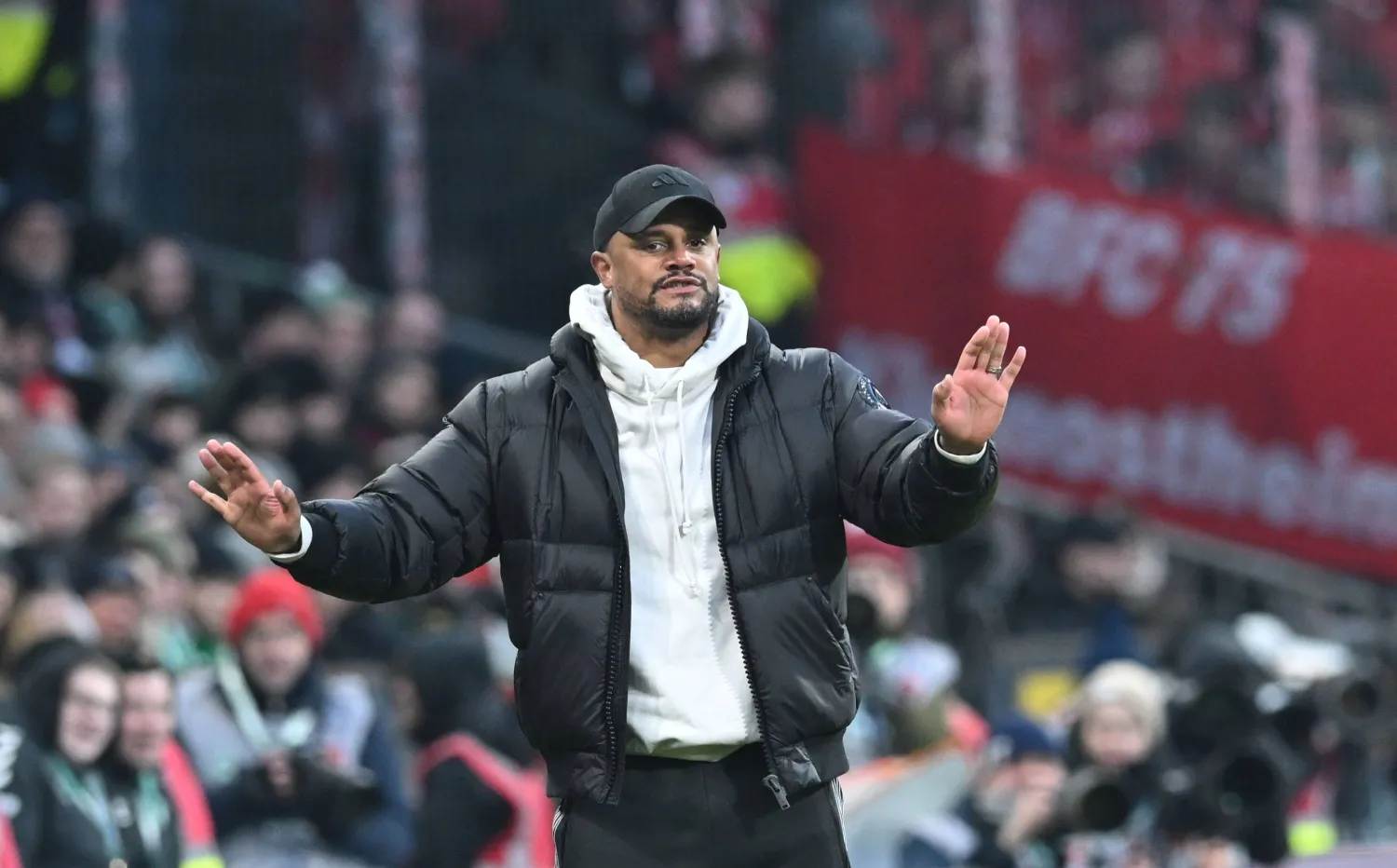
14 February 2026, Bremen: Bayern Munich coach Vincent Kompany gestures during the German Bundesliga soccer match between Werder Bremen and Bayern Munich at Weserstation. (dpa)
TT

‘A Huge Mistake.’ Kompany Hits Out at Mourinho for Vinícius Júnior Comments

14 February 2026, Bremen: Bayern Munich coach Vincent Kompany gestures during the German Bundesliga soccer match between Werder Bremen and Bayern Munich at Weserstation. (dpa)

Bayern Munich coach Vincent Kompany has criticized José Mourinho for attacking the character of Vinícius Júnior after the Real Madrid star accused an opponent of racially insulting him during a Champions League match.

Benfica coach Mourinho suggested that Brazil forward Vinícius had incited Benfica's players with his celebrations after scoring the only goal in Tuesday's playoff match.

Vinícius accused Benfica's Gianluca Prestianni of calling him "monkey" during a confrontation after his goal.

Mourinho also questioned why Vinícius, who is Black and has been subjected to repeated racist insults in Spain, was so frequently targeted.

"There is something wrong because it happens in every stadium," Mourinho said. "The stadium where Vinícius played something happened. Always."

Speaking on Friday, Kompany condemned Mourinho's comments.

"So after the game you have the leader of an organization, José Mourinho, who attacks the character of Vinícius Júnior by bringing in the type of celebration to discredit what Vinícius is doing in this moment," Kompany said. "And for me in terms of leadership, it’s a huge mistake and it’s something that we should not accept."

Mourinho’s celebrations

UEFA appointed a special investigator on Wednesday to gather evidence about what happened in Lisbon in Madrid’s 1-0 win in the first leg of the Champions League playoffs. Madrid said it had sent "all available evidence" of the alleged incident to European soccer's governing body.

Referring to Vinícius' celebrations after curling a shot into the top corner, Mourinho said he should "celebrate in a respectful way."

Kompany pointed out Mourinho's own history of exuberant celebrations — such as when he ran down the sideline to cheer when his Porto team beat Manchester United in the Champions League.

Kompany said Mourinho's former players "love him" and added "I know he’s a good person."

"I don’t need to judge him as a person, but I know what I’ve heard. I understand maybe what he’s done, but he’s made a mistake and it’s something that hopefully in the future won’t happen like this again," he said.

Prestianni denied racially insulting Vinícius. Benfica said the Argentine player was the victim of a "defamation campaign."

‘Right thing to do’

Kompany said Vinícius' reaction "cannot be faked."

"You can see it — his reaction is an emotional reaction. I don’t see any benefit for him to go to the referee and put all this misery on his shoulders," he said. "There is absolutely no reason for Vini Junior to go and do this.

"I think in his mind he’s doing it more because it’s the right thing to do in that moment."

Kompany added: "You have a player who’s complaining. You have a player who says he didn’t do it. And I think unless the player himself comes forward, it’s difficult. It’s a difficult case."


FIFA to Lead $75m Palestinian Soccer Rebuilding Fund

President of FIFA Gianni Infantino attended the inaugural meeting of US President Donald Trump's 'Board of Peace'. CHIP SOMODEVILLA / GETTY IMAGES NORTH AMERICA/AFP
TT

FIFA to Lead $75m Palestinian Soccer Rebuilding Fund

President of FIFA Gianni Infantino attended the inaugural meeting of US President Donald Trump's 'Board of Peace'. CHIP SOMODEVILLA / GETTY IMAGES NORTH AMERICA/AFP

FIFA will spearhead a $75 million fund to rebuild soccer facilities in Gaza that were destroyed by the war between Israel and Hamas, President Donald Trump and the sport's governing body said Thursday.

Trump made the announcement in Washington at the first meeting of his "Board of Peace," an amorphous institution that features two dozen of the US president's close allies and is initially focused on rebuilding the Gaza strip, said AFP.

"I'm also pleased to announce that FIFA will be helping to raise a total of $75 million for projects in Gaza," said Trump.

"And I think they're soccer related, where you're doing fields and you're getting the greatest stars in the world to go there -- people that are bigger stars than you and I, Gianni," he added, referring to FIFA president Gianni Infantino, who was present at the event.

"So it's really something. We'll soon be detailing the announcement, and if I can do I'll get over there with you," Trump said.

Later Thursday, FIFA issued a statement providing more details, including plans to construct a football academy, a new 20,000-seat national stadium and dozens of pitches.

The FIFA communique did not mention Trump's $75 million figure, and said funds would be raised "from international leaders and institutions."

Infantino has fostered close ties with Trump, awarding him an inaugural FIFA "Peace Prize" at the World Cup draw in December.

At Thursday's meeting, the FIFA president donned a red baseball cap emblazoned with "USA" and "45-47," the latter a reference to Trump's two terms in the White House.

In FIFA's statement, Infantino hailed "a landmark partnership agreement that will foster investment into football for the purpose of helping the recovery process in post conflict areas."

The "Board of Peace" came together after the Trump administration, teaming up with Qatar and Egypt, negotiated a ceasefire in October to halt two years of devastating war in Gaza.

The United States says it is now focused on disarming Hamas -- the Palestinian group whose unprecedented October 7, 2023, attack on Israel triggered the massive offensive.