


Are Supporter Liaison Officers Giving Fans a Say in their Football Clubs?

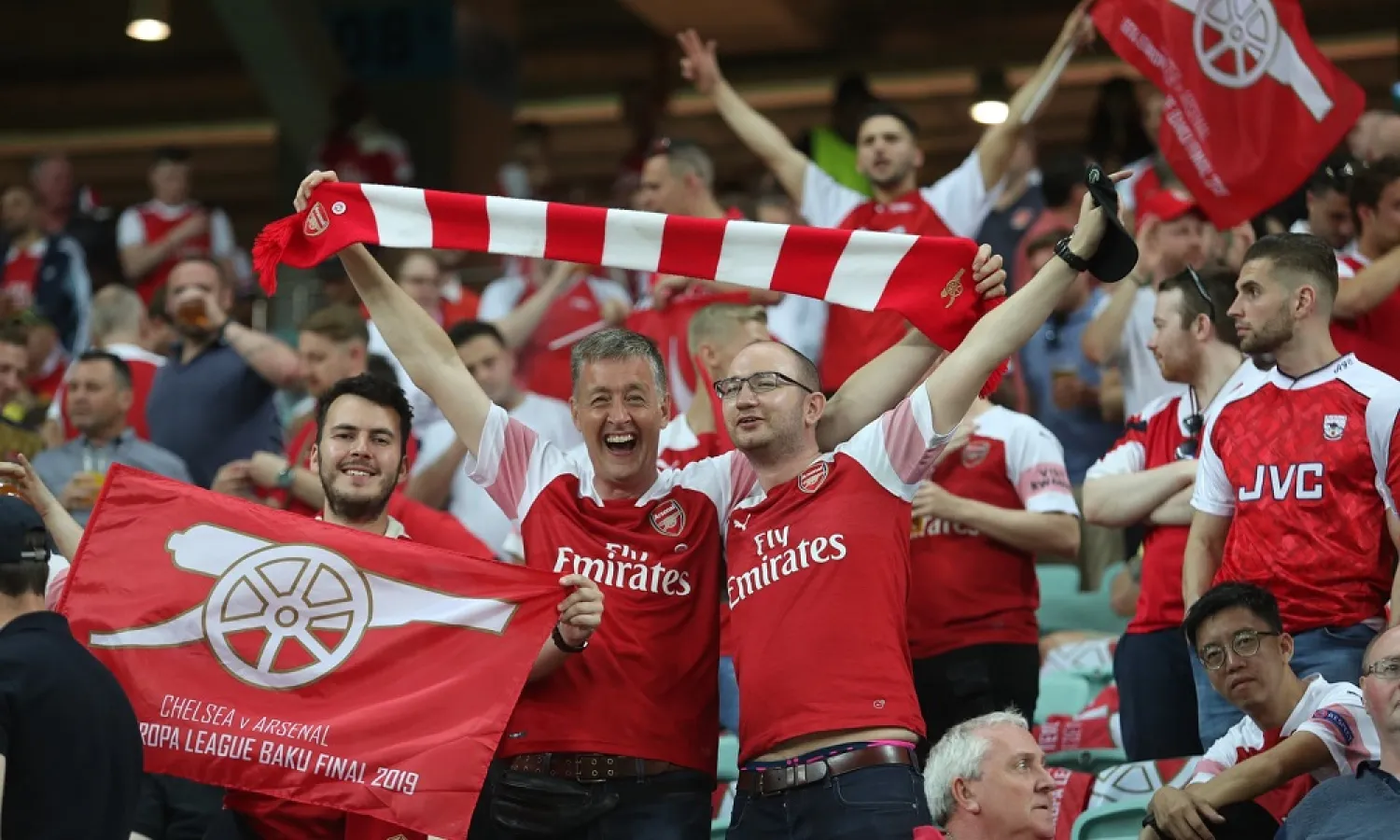
Arsenal’s supporter liaison officer Mark Brindle helped fans who were traveling to Baku for the Europa League final. (Getty Images)
TT

Are Supporter Liaison Officers Giving Fans a Say in their Football Clubs?

Arsenal’s supporter liaison officer Mark Brindle helped fans who were traveling to Baku for the Europa League final. (Getty Images)

Jock Stein once said that football is nothing without fans, but it does not always feel that way. With clubs so focused on driving up revenues, the concerns of supporters are often forgotten. However, supporters should have a voice. Seven years ago, Uefa made it mandatory for clubs playing in their competitions to employ a supporter liaison officer to act as a bridge between clubs and fans, helping to improve dialogue between the two sides. English clubs have followed suit. All 91 clubs in the Premier League and Football League now have liaison officers.

As with many positive aspects of supporter engagement, the origins of the role are in Germany. Borussia Mönchengladbach became the first club in the world to appoint an SLO in 1989. Seven years later, they made the position full-time and now every Bundesliga club has at least three full-time staff in place to work with fans.

Liaison officers inform clubs about supporters’ concerns and they work closely with the police, stewards and each other to improve security around games. The Swedish League attributed a 20% decrease in crowd trouble as being partly down to the collaborative work between the SLOs and the police.

Arsenal were the first British club to appoint a supporter liaison officer, when they gave die-hard fan Jill Smith the job of dealing with her fellow supporters. Mark Brindle succeeded Smith in the job five years ago. He is a full-time employee at the club and goes to every game. Brindle is one of the few SLOs in England who travels to all the club’s away matches, although this is common practice in most of Europe.

“I act as the bridge between the club and the supporters and, significantly, I am now recognized by most fans as well as those within the club,” says Brindle. “SLOs are viewed differently at each club so, for example, we report into different people. My manager is in charge of the travel and events department, whereas many of the others report directly into the stadium management team.”

Brindle’s day-to-day focus is primarily on arrangements for the next game, which can vary from organizing displays at the Emirates to helping organize away travel for fans traveling to Baku for the Europa League final in May.

“I run all our supporters’ groups dotted around the world, of which there are 250 branches,” says Brindle. “In England those groups tend to be very ticket-based, which is not my idea of what a supporters’ group should be about, but the overseas clubs are a lot more interactive – looking after their members, providing them with information and news, and building a strong rapport with the club itself.”

Brindle’s job is not just about matchdays. “One of the more recent projects that has come to fruition is running a couple of food banks in Islington,” he says. “I also organize regular fan forums throughout the year, where they can raise any issues or problems that I then present to the club to be addressed. I am partly seen by the club as someone who can deliver ‘bad news’ in being able to soften it down a bit for the fans so they are more receptive. By going to all the supporters’ trust meetings I am in a position to put across the clubs views and vice versa.”

The job has also given Brindle some surprises. “One of the issues that struck me when I took over is that I would have to work with opposition clubs who I didn’t particularly like. But you soon fall into the realization that they are all football fans and we can share ideas. Even though they can be bitter rivals, we have a common goal to improve the experience of supporters. There’s a bigger picture.”

One of the people Brindle works closely with is Dave Messenger, the SLO at Watford. “On the Monday before our home game with Arsenal,” Messenger says. “I will talk to Mark and send him the visitors’ stadium guide as well as information about disabled access, any likely transport issues and even which pubs the away fans can go to. We will then meet at the game to check that everything is OK. On the following Monday we will have a quick debrief on what went well and what didn’t.”

Brindle say most supporters are realistic about what can be achieved, although a minority border on the idealistic. “Arsenal are such a big club that I am quite a long way down the pecking order. But, if there is an issue I want to raise with those at the top of the club, I can speak to Vinai [Venkatesham, the club’s managing director] and, as long as he’s available, he will listen and respond.”

The majority of SLOs in the UK do not have the luxury of such access. The view across Europe is that British clubs are still playing catch-up when it comes to engaging with fans, which is partly a result of the different ownership structures. While supporters are given a stake in German clubs under the 50+1 rule, fans in England are usually on the outside. As Kevin Rye, who spent 11 years working at Supporters Direct, points out: “English clubs are mostly controlled privately and the culture defined by the shareholder model.”

“Quite a few clubs in the UK are merely going through a box ticking exercise,” says Antonia Hagemann, the CEO of Supporters Direct Europe. Her colleague, Stuart Dykes, agrees: “Many English clubs view the role as an extension of customer service, which is fine as there is an element of that involved, but they are already very good at customer service and it isn’t helpful to confuse the two roles. There is a misconception that in continental Europe the role is solely linked to that of the safety officer, but there is a much broader remit in building reciprocal relationships between supporters and the clubs by encouraging an open and continuous dialogue.”

When more SLOs in the UK are given better access to the people who wield power at football clubs, then they will start to have the sort of influence enjoyed by their counterparts in Europe.

The Guardian Sport


FIFA Fines Israeli FA for Anti-discrimination Rules Breaches

Pedestrians pass the FIFA World Cup 2026 countdown clock in Boston, Massachusetts, US, March 18, 2026. REUTERS/Brian Snyder
TT

FIFA Fines Israeli FA for Anti-discrimination Rules Breaches

Pedestrians pass the FIFA World Cup 2026 countdown clock in Boston, Massachusetts, US, March 18, 2026. REUTERS/Brian Snyder

FIFA fined the Israeli Football Association (IFA) 150,000 Swiss francs ($190,700) on Thursday for "multiple breaches" of its anti-discrimination obligations.

A report by the disciplinary committee of world football's governing body found the IFA "failed to take meaningful action against Beitar Jerusalem" for "persistent and well-documented racist behavior".

In October 2024, the Palestine Football Association reported allegations of discrimination by the IFA to FIFA, which began an investigation.

FIFA did not opt for the sanction requested by the Palestinian FA, which argued that the IFA should be suspended.

But the IFA was found to have failed to "abide by FIFA's statutory objectives", in a lengthy decision published by its disciplinary committee, which listed several racist incidents in Israeli football, AFP reported.

The disciplinary committee highlighted "deficient and substantively inadequate" sanctions against Beitar for racist and discriminatory behavior.

Supporters of the club "have engaged in persistent and well-documented racist behavior," the report said.

"The club's use of slogans such as 'forever pure', and the repeated chanting of ethnic slurs such as 'terrorist' directed at Arab players are not isolated incidents but rather form part of a systemic pattern of conduct that offends the basic rules of decent behavior and brings the sport into disrepute.

FIFA said the committee had stressed that Beitar Jerusalem were "only a small example of a general failure by the IFA."

The IFA was issued with a warning and was ordered to display a "significant and highly visible banner" at its next three FIFA competition home matches, stating "Football Unites the World -- No to Discrimination".

The IFA will also have to invest one-third of the fine towards implementing a plan to "ensure action against discrimination and to prevent repeated incidents".

The report also said that the IFA's failure to respond to "political and militaristic messaging" by the CEO of the Israeli professional league and by Maccabi Netanya "further compounds its breach".

"The IFA has made no public statements condemning racism, has not launched any Anti Discrimination campaigns, and has not taken steps to foster inclusion of Arab or Palestinian players," the report continued.

"It has not used its platform to promote peace or to counteract the politicization of football by affiliated clubs and officials."

- 'No action' over Israeli teams in West Bank -

After a separate investigation, FIFA announced no action would be taken against the IFA over allegations that Israeli clubs based in the occupied West Bank were taking part in Israel's leagues.

FIFA's governance, audit and compliance committee based its judgement on the fact that "the final legal status of the West Bank remains an unresolved and highly complex matter under public international law".

The Palestinian Football Association (PFA) welcomed FIFA's ruling, saying "it was a step in the right direction".

However it added: "The PFA observes that the findings do not fully address the scope and gravity of the violations raised in its original proposal."

In 2024, United Nations experts -- mandated by the Human Rights Council but not speaking on behalf of the UN -- said at least eight football clubs had been identified as playing in "Israeli colonial settlements" and called on FIFA to "fulfil its responsibility to respect human rights".

"The autonomy and self-regulation in sport must not be detrimental to fundamental human rights," the experts said.

In addition to roughly three million Palestinians, more than 500,000 Israelis live in settlements and outposts in the West Bank, which are illegal under international law.


AFC Halts Bidding Process for 2031, 2035 Asian Cup Finals

Asian Football Confederation (AFC) general‑secretary Windsor John speaks during a press conference at the Football Association of Malaysia headquarters in Petaling Jaya, outside Kuala Lumpur, Malaysia, 16 March 2026. EPA/FAZRY ISMAIL 112526
TT

AFC Halts Bidding Process for 2031, 2035 Asian Cup Finals

Asian Football Confederation (AFC) general‑secretary Windsor John speaks during a press conference at the Football Association of Malaysia headquarters in Petaling Jaya, outside Kuala Lumpur, Malaysia, 16 March 2026. EPA/FAZRY ISMAIL 112526

The bidding process for the 2031 and 2035 Asian Cup tournaments has been halted due to pending changes in the global football calendar, the Asian Football Confederation announced on Friday.

The Malaysia-based regional body said the move had come after discussions with FIFA regarding a possible switch in the international match calendar that would see the Asian Cup played in even-numbered years.

"Given the far-reaching implications such a change would have on the scheduling and strategic planning of its premier national ⁠team competition, the ⁠AFC has initiated a broader review of its competitions calendar," Reuters quoted it as saying in a statement.

"As part of this process, it has been deemed appropriate to halt the current bidding cycles to provide greater clarity and ensure a more structured approach to future ⁠host selections."

Six bids had been submitted for the men's 2031 finals with Australia, India, Indonesia, Kuwait, South Korea and a joint offering from Kyrgyzstan, Tajikistan and Uzbekistan seeking to organize the 24-team event.

Australia, Kuwait and South Korea were also bidding to host the 2035 tournament alongside Japan.

The quadrennial Asian Cup was previously played in even-numbered years from its inception in 1956 but was moved for the 2007 edition, ⁠which was ⁠hosted by Vietnam, Malaysia, Thailand and Indonesia.

The tournament has been played in odd-numbered years since, with the exception of the most recent edition, which was hosted in Qatar in January 2024.

The Gulf state stepped in as a replacement for China, who had been slated to organize the tournament in June 2023 but gave up hosting rights due to the country's COVID-19 restrictions.

The next edition of the Asian Cup will be played in Saudi Arabia in January 2027, with Qatar the defending champions.


Morocco Fans Celebrate ‘Justice’ After AFCON Title Decision, but Appeal Worries Linger

A man holds a Moroccan newspapers following CAF’s decision to strip Senegal of its Africa Cup of Nations (AFCON) title in Rabat on March 18, 2026. (AFP)
TT

Morocco Fans Celebrate ‘Justice’ After AFCON Title Decision, but Appeal Worries Linger

A man holds a Moroccan newspapers following CAF’s decision to strip Senegal of its Africa Cup of Nations (AFCON) title in Rabat on March 18, 2026. (AFP)

Moroccan fans have welcomed their team's ‌controversial coronation as Africa Cup of Nations champions, though some urged caution as Senegal prepare to challenge the ruling that has sent shockwaves through African football.

The Confederation of African Football (CAF) declared Morocco champions on Tuesday after ruling Senegal forfeited the January 18 final in Rabat by walking off the pitch for 14 minutes in protest at a potentially decisive penalty awarded against them.

Although Senegal later returned and secured a 1-0 extra-time victory, CAF's Appeal Board reversed the result, awarding Morocco a 3-0 victory.

The Senegalese Football Federation said it would appeal the "unprecedented and unacceptable" ruling to the Court of Arbitration for Sport (CAS), while the Royal Moroccan Football Federation said the "strict application" of the rules ‌would help African ‌football.

Reactions within Morocco were largely positive, with supporters hailing the ‌ruling ⁠as overdue justice.

"The ⁠surprise was that a fair decision was actually made, but if we look at the reasoning behind it, it is logical and does justice to the team that truly deserved the title. It also sets a precedent - walking off the pitch because a match is slipping away is not acceptable," said Abdelmalek Hamza, a fan in Casablanca.

"The decision was taken firmly, and the national team and the Moroccan people deserve this victory and ⁠this title."

Rabat-based Oussama Ouaddich, who attended the tournament, welcomed the ‌verdict, saying: "I am overjoyed. We deserved this trophy. After ‌a brutal injustice, justice is finally rendered to Morocco."

CAUTION AMID LEGAL CHALLENGE

However, some fans remained ‌cautious with a potential appeal to CAS still pending.

"Honestly, I am not happy yet. ‌We need to wait and see what happens with the appeal. The decision is not final," said Imane Fakhir, a university student.

Omar Fallouji, a football fan in Casablanca, added: "Thankfully, CAF was fair to us, and I hope the trophy will be given to us after the ‌Senegalese team appeal to CAS."

Others expressed little concern over the appeal.

"The Cup was stolen from us. CAF's decision corrected the situation ⁠and made justice ⁠to the Moroccan people," said Mohammed Akherraz, a lawyer in Rabat.

"Appealing the decision... is only to gain time but it is a right that would not alter the result."

Some Moroccans highlighted the need to avoid escalating tensions with Senegal.

"As a Moroccan, yes I am proud. But what I want even more is for this not to become a wound between our peoples," said Bilal Jouahri, an entrepreneur in Rabat.

"Let the lawyers, the committees, the institutions do their work. The anger and insults serve nobody. Football lives on emotion, but emotions pass. It is just a game and should not fuel hate," he added.

CAF President Patrice Motsepe defended the ruling on Wednesday, saying it was important that decisions by the organization's disciplinary and appeals bodies were respected while Senegal's players ridiculed the decision on social media.
