

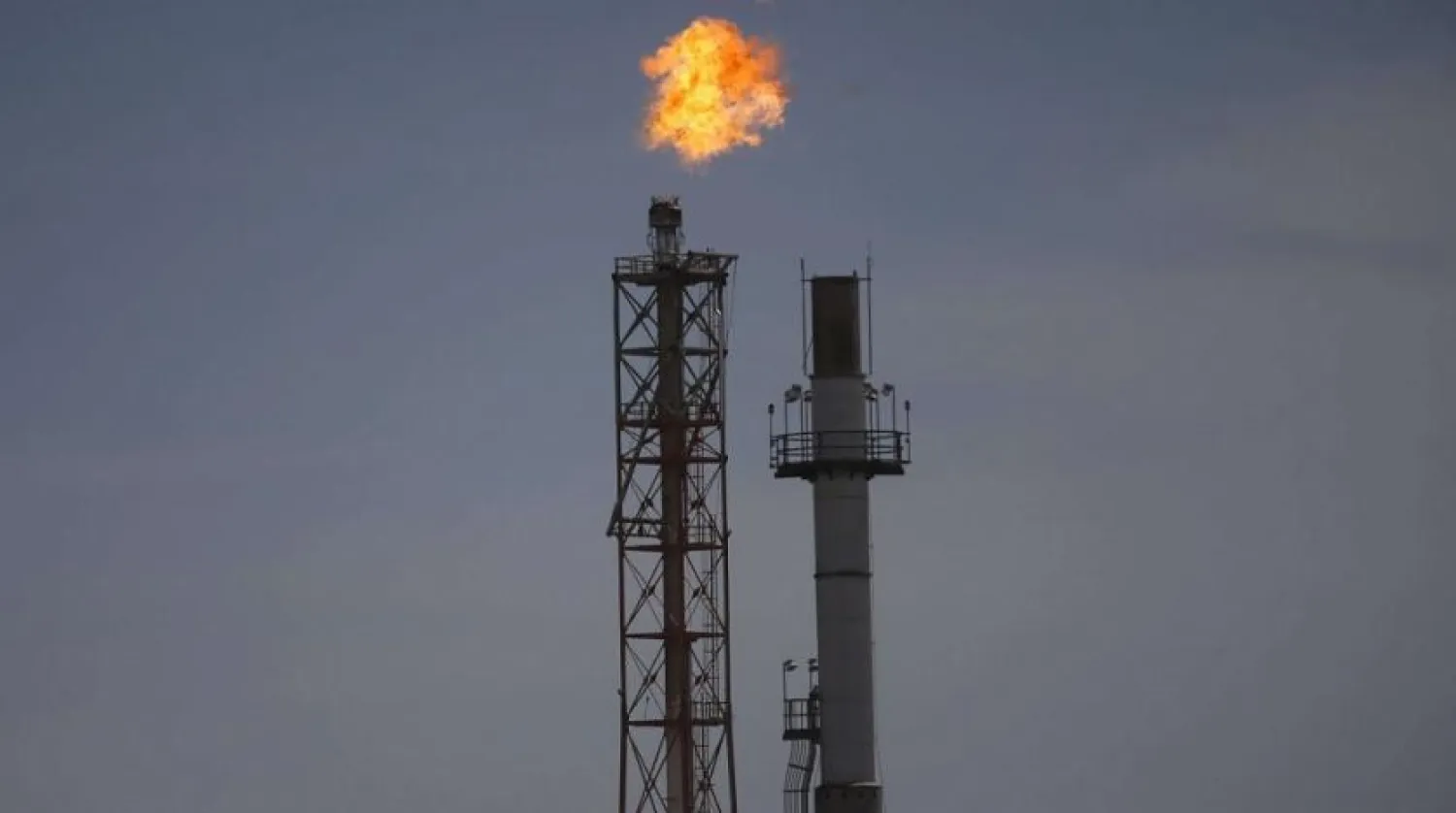

Kuwait Hails ‘Historic Agreement’ in Shared Neutral Zone with Saudi Arabia

Saudi Arabia and Kuwait signed an agreement to resume pumping at two major oilfields in a shared neutral zone. (Reuters)
TT

Kuwait Hails ‘Historic Agreement’ in Shared Neutral Zone with Saudi Arabia

Saudi Arabia and Kuwait signed an agreement to resume pumping at two major oilfields in a shared neutral zone. (Reuters)

The Kuwaiti cabinet has affirmed as “historic” the deal struck with Saudi Arabia to allow production to resume at two oilfields in their shared neutral zone.

Last Tuesday, the two countries signed an agreement to resume pumping at two major oilfields in a shared neutral zone following five years of halting production.

After the cabinet meeting, chaired by Prime Minister Sheikh Sabah Al-Khaled Al-Hamad Al-Sabah, Interior Minister Anas Khaled Nasser al-Saleh announced that these agreements embody the distinctive and special fraternal ties between the two countries, as well as their leadership and peoples' deep belief in their shared destiny.

Saleh added that the cabinet expressed admiration of the great level of cooperation, understanding and harmony among political, legal and technical negotiating teams from both sides. It also hailed their special efforts that helped materialize the vision of the two countries' leaderships.

Assistant Foreign Minister for Legal Affairs and the deals' negotiating committee Deputy Director Ambassador Ghanim Al-Ghanim said that the neutral zone was left undivided when the two countries marked their border at the Uqair Convention in 1922.

This remained the case until the 1965 deal that split the area into demarcated northern Kuwaiti and southern Saudi portions but the natural resources remained shared between both, he added.

He added that the instructions were clear, there is no loss or gain and if an agreement was reached then both parties are winners.



Saudi FM, Rubio Discuss Developments in Yemen

Saudi Minister of Foreign Affairs Prince Faisal bin Farhan bin Abdullah. SPA
TT

Saudi FM, Rubio Discuss Developments in Yemen

Saudi Minister of Foreign Affairs Prince Faisal bin Farhan bin Abdullah. SPA

Saudi Minister of Foreign Affairs Prince Faisal bin Farhan bin Abdullah has held a phone call with US Secretary of State Marco Rubio to discuss the situation in Yemen.

During Tuesday’s call, the two sides discussed developments in the region, the Saudi Press Agency (SPA) reported.

According to The State Department, Rubio spoke with Prince Faisal “about the ongoing tensions in Yemen and discussed issues impacting regional security and stability.”

Prince Faisal also received a phone call from Pakistan’s Deputy Prime Minister and Minister of Foreign Affairs Mohammad Ishaq Dar, SPA said.

During the call, they reviewed relations between the two countries and discussed the latest developments in the region and the world, the news agency added.


Saudi Govt: Escalation in Yemen Not Aligned with UAE’s Pledges

Custodian of the Two Holy Mosques King Salman bin Abdulaziz chairs the cabinet meeting in Riyadh. (SPA)
TT

Saudi Govt: Escalation in Yemen Not Aligned with UAE’s Pledges

Custodian of the Two Holy Mosques King Salman bin Abdulaziz chairs the cabinet meeting in Riyadh. (SPA)

The Saudi government reiterated on Tuesday that the Kingdom “will not hesitate in taking the necessary steps and measures to confront any violation or threat to its national security.”

Custodian of the Two Holy Mosques King Salman bin Abdulaziz chaired the cabinet meeting that was held in Riyadh.

The cabinet “reiterated its commitment to the security, stability and sovereignty of Yemen and its full support to Chairman of the Presidential Leadership Council Dr. Rashad al-Alimi and his government.”

It regretted that “Saudi Arabia’s efforts to restore calm in Yemen were met with unjustified escalation that go against the foundations of the coalition to support legitimacy in Yemen.”

“The escalation does not serve efforts to achieve security and stability in Yemen and goes against all the pledges Saudi Arabia had received from the United Arab Emirates,” added the cabinet.

The cabinet expressed Saudi Arabia’s hope that “wisdom would prevail and that priority would be given to the principles of fraternity and good neighborliness and close relations between Gulf Cooperation Council (GCC) members.”

It hoped that “the UAE would comply with the Yemeni republic’s demand that it withdraw its forces from the country withing 24 hours and that it would cease all military and financial support to the Southern Transitional Council and any other party in Yemen.”

It hoped that “the UAE would take the desired step to maintain bilateral relations between the two countries, which Saudi Arabia is keen on bolstering.”

The cabinet also reviewed regional and international developments.

It hailed the role of the coalition to restore legitimacy in Yemen in protecting civilians in the Hadhramaut and Mahra governorates.

The cabinet renewed Saudi Arabia’s support to Somalia’s sovereignty and territorial unity, rejecting Israel’s recognition of Somaliland and warning that the move encourages separatist agendas that violate international law.

King Salman also briefed the cabinet on the message he received on Tuesday from Russian President Vladimir Putin that tackled bilateral ties between their countries.


UAE to Pull Forces Out of Yemen

The UAE flag. (WAM)
The UAE flag. (WAM)
TT

UAE to Pull Forces Out of Yemen

The UAE flag. (WAM)
The UAE flag. (WAM)

The United Arab Emirates’ Defense Ministry announced on Tuesday that it was pulling its remaining forces out of Yemen.

In a statement, it said: “In light of recent developments and their potential implications for the safety and effectiveness of counterterrorism missions, the Ministry of Defense announces the termination of the remaining counterterrorism personnel in Yemen of its own volition, in a manner that ensures the safety of its personnel and in coordination with the concerned partners.”

It added that the UAE “has participated as part of the Arab Coalition since 2015 in support of legitimacy in Yemen, in backing international efforts to combat terrorist organizations, and in pursuit of security and stability for the brotherly Yemeni people. The UAE has made great sacrifices in achieving these objectives.”

“The UAE Armed Forces concluded their military presence in Yemen in 2019 after completing the assigned missions within the agreed official frameworks,” it noted. “The remaining presence was limited to specialized personnel as part of counterterrorism efforts, in coordination with relevant international partners.”

It stressed that “this measure comes within the context of a comprehensive assessment of the requirements of the current phase, and in line with the commitments of the UAE and its role in supporting security and stability in the region.”