
Solskjær’s Game of Patience at Manchester United Is Running Out of Time

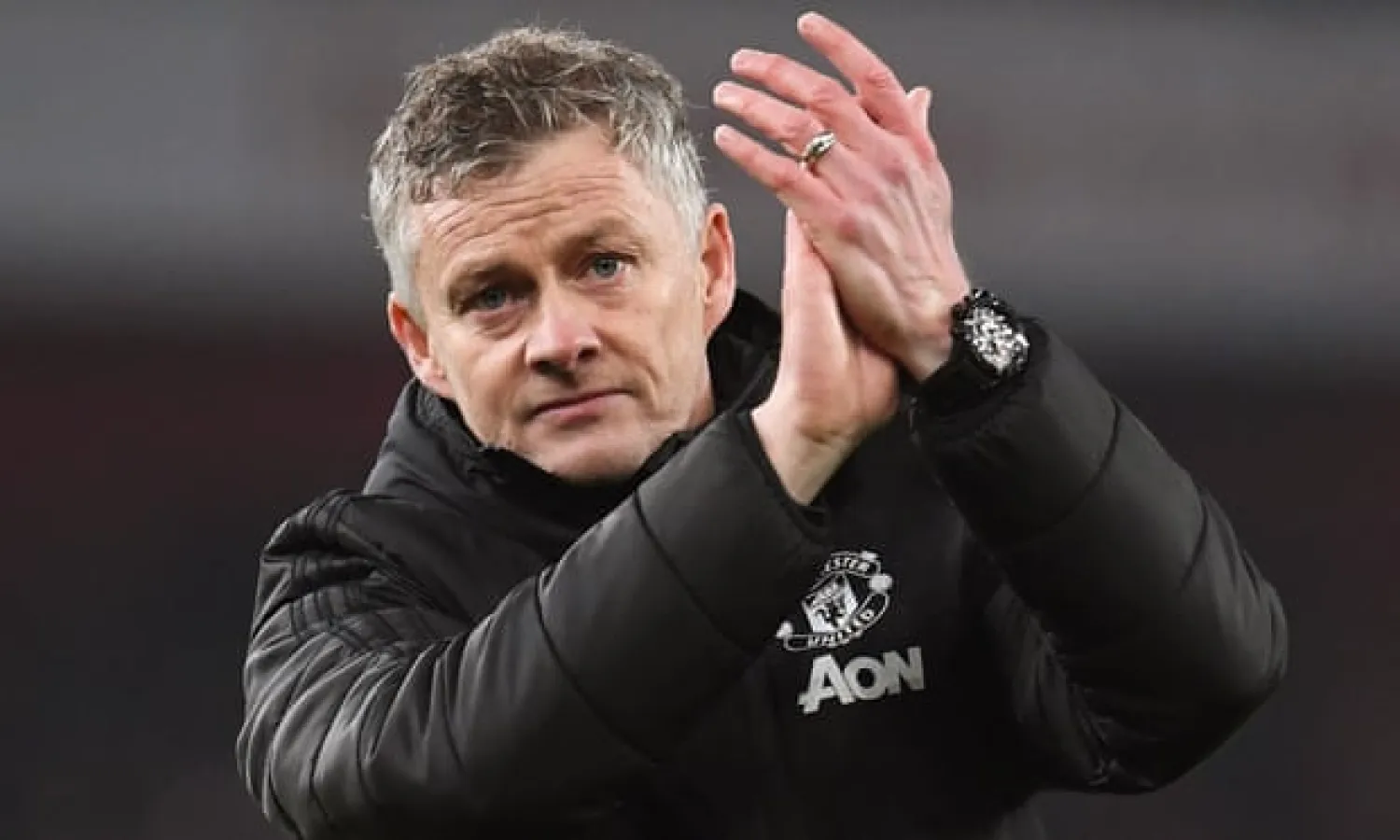
 Manchester United have not won three games in a row for 50 weeks, when Ole Gunnar Solskjær had just taken over as manager. Photograph: Andy Rain/EPA
Manchester United have not won three games in a row for 50 weeks, when Ole Gunnar Solskjær had just taken over as manager. Photograph: Andy Rain/EPA
TT

Solskjær’s Game of Patience at Manchester United Is Running Out of Time

 Manchester United have not won three games in a row for 50 weeks, when Ole Gunnar Solskjær had just taken over as manager. Photograph: Andy Rain/EPA
Manchester United have not won three games in a row for 50 weeks, when Ole Gunnar Solskjær had just taken over as manager. Photograph: Andy Rain/EPA

For eight minutes at the Emirates Stadium on Wednesday, everything looked to be going well for Manchester United. And then suddenly it wasn’t. As it was in the game, so it has been for Ole Gunnar Solskjær’s career at Old Trafford. Have patience, the message comes again and again from the United board. Look at the youth in the squad. Wait for it to flower. But for how long, and at what cost?

Watching another insipid United away performance against a side below them in the table, Mauricio Pochettino’s aphorism about the cow came to mind. It can stand in the field every day and watch the train go by but it’s never going to be able to explain the timetable. Just being there, experiencing the same thing over and over doesn’t necessarily bring wisdom, understanding or development and there is little evidence United are developing: they haven’t won three games in a row for 50 weeks, when Solskjær had just taken over and everybody was still euphoric just because he wasn’t José Mourinho.

There is great promise and ability in Marcus Rashford, Mason Greenwood, Daniel James and Aaron Wan-Bissaka. But potential is nothing if it is not guided and supported and, for all the flickers against better sides, it’s becoming increasingly difficult to maintain the faith there is any greater plan.

United have been undermined by the injury to Scott McTominay and whatever is going on with Paul Pogba (perhaps his surgery is just unfortunate circumstance but the terms in which Solskjær discussed it on Wednesday made it seem as though something more complex may be going on that didn’t reflect well on the relationship between club and player), but still United have picked up only 39 points in their last 30 league games. They should be better than this.

In those opening eight minutes, Arsenal looked fragile, vulnerable to the counterattack – as you’d expect for a side who, for the first time, included all four of Pierre-Emerick Aubameyang, Alexandre Lacazette, Nicolas Pépé and Mesut Özil. And then, abruptly, everything became much more difficult.

Pépé scored and the game changed – something Solskjær acknowledged; judge him, he seemed to be saying, on the eight minutes of promise, not the 82 minutes of grim reality that followed. Pépé ripped past Luke Shaw again and again. Sead Kolasinac combined with Aubameyang on the left. Granit Xhaka and Lucas Torreira took control of the centre. The counterattacking opportunities dried up. Rashford and Anthony Martial made run after run, and the ball never arrived, which in part is testimony to the effectiveness of the Arsenal press, even as fatigue again sapped at them in the final stages, but also to a failure of United’s midfield, to the gameplan as a whole. Put under pressure United were unable to adapt and when United aren’t counterattacking they’re not offering a threat.

That’s why United’s record is so much better against teams above them in the table. Against opponents who play against them with caution, or who press effectively, they lack not only basic guile but also attacking cohesion. Much of modern football at the highest level is about the capacity of teams to create space for themselves, to set about through precise inter-movements to pull an opposing defence apart. There is no more evidence United can do that now than there was a year ago when Solskjær took over.

They didn’t do that under Mourinho but that, at least, was understood and accepted. Mourinho is of the opinion that the structured attacking gambits pioneered by Valeriy Lobanovskyi, and practised now by Jürgen Klopp and Pep Guardiola, are of limited value because football is too random for pre‑set moves always to be valuable.

What, he would ask, if the circumstances that allow one of the gambits to be set in motion doesn’t occur? What does a team do then? He pursues instead a process of “guided discovery”, instilling in his players the right mindset so they react to situations with the right decisions.

With Solskjær it’s not clear there is any thinking at all beyond trying to play in the quick lads up front as they run in behind. And if the opposition stops you doing that there’s nothing for it but to look sad and uncomfortable on the bench, a sickly angel in a padded club coat wondering what the Boss would do.

It’s one game and it’s probably unwise to read too much into it but the implication of Wednesday was that Mikel Arteta, stalking the touchline in his roll-neck and trainers, pointing and gesticulating in homage to his mentor, Guardiola, has instilled in Arsenal in three games a more coherent structure than Solskjær has in a year.

It’s all very well to respect the history of the club and seek to maintain its traditions. Planning for the future and investing in potential is broadly laudable but at some point there has to be some evidence of a plan being enacted in the here and now. At United it increasingly feels like jam tomorrow and jam yesterday – but never jam today.

The Guardian Sport


IOC Boss Coventry Hails Milano Cortina Games a Success

 20 February 2026, Italy, Milan: President of the International Olympic Committee (IOC) Kirsty Coventry holds a press conference. (dpa)
20 February 2026, Italy, Milan: President of the International Olympic Committee (IOC) Kirsty Coventry holds a press conference. (dpa)
TT

IOC Boss Coventry Hails Milano Cortina Games a Success

 20 February 2026, Italy, Milan: President of the International Olympic Committee (IOC) Kirsty Coventry holds a press conference. (dpa)
20 February 2026, Italy, Milan: President of the International Olympic Committee (IOC) Kirsty Coventry holds a press conference. (dpa)

The Milano Cortina Olympics exceeded expectations despite a shaky build-up, IOC President Kirsty Coventry said on Friday, hailing the first spread-out Winter Games a success.

"These Games are truly ... successful in a new way of doing things, in a sustainable way of doing things, in a way that I think many people thought maybe we couldn't do, or couldn't be done well, and it's been done extremely well, and it's surpassed everyone's expectations," Coventry told a press conference.

It was the International Olympic Committee chief's clearest endorsement yet of a format that split events across several Alpine clusters rather than concentrating them in one host city.

Her assessment came after two weeks in which organizers sought to prove that a geographically dispersed Games could still deliver a consistent athlete experience.

The smooth delivery ‌comes after years ‌of logistical and political challenges, including construction delays at Milan’s Santagiulia Arena ‌and ⁠controversy over building ⁠a new sliding center in Cortina against IOC advice.

Organizers have also faced isolated disruptions during the Games, such as suspected sabotage on rail lines and protests in Milan over housing and environmental issues.

Transport concerns across the dispersed venues have been mitigated by limited cross-regional travel among spectators, though some competitors had to walk to the Cortina Curling Olympic Stadium in heavy snowfall that stopped traffic.

Central to the success of the Games, Coventry argued, was the effort to standardize conditions across multiple athlete villages despite the distances separating venues from Cortina d’Ampezzo to ⁠Livigno and Bormio.

Italian athletes’ performances also helped ticket sales, which amounted to ‌about 1.4 million.

"And the athletes are extremely happy. And they're happy ‌because the experiences that the MiCo (Milano Cortina) team and my team delivered to them have been the same," she ‌said.

Mixed relay silver medalist Tommaso Giacomel did, however, lament the fact there was no Olympic village near ‌the Antholz-Anterselva Biathlon Arena and that competitors were dotted around different hotels near the venue instead of in one place.

TWO OPENING CEREMONIES

Two opening ceremonies were held - the main one at Milan’s San Siro stadium and a more low-key parade on Cortina d’Ampezzo's Corso Italia, where athletes and spectators were within touching distance.

Feedback from competitors suggested the more intimate ‌settings had in some cases enhanced the Olympic atmosphere, Coventry said, taking the Cortina opening ceremony as an example.

The Zimbabwean, presiding over her first Games ⁠as IOC chief after elections in ⁠2025, framed Milano Cortina as proof of concept for future hosts grappling with rising costs and climate constraints, while acknowledging adjustments would follow.

"It allows us to really look at ourselves and look at the things that we have in place and how we're then going to make certain adjustments for the future," she said.

Beyond logistics, Coventry pointed to the broader impact of the Games, highlighting gender balance - with women making up 47% of competitors - and global engagement as marks of progress.

"But it's been an incredible experience and we're all very proud to have gender equity playing a big role in the delivery of the Games," she said, describing a "tremendous Games" in which athletes have "come together and shared in their passion".

With the closing ceremony in Verona approaching, Coventry said the focus would soon shift to a formal evaluation process, but insisted the headline conclusion was already clear.

"So we look forward to doing that and to learning from all the incredible experiences that I think all of the stakeholders have had across these Games, across these past two weeks," she said.


‘A Huge Mistake.’ Kompany Hits Out at Mourinho for Vinícius Júnior Comments

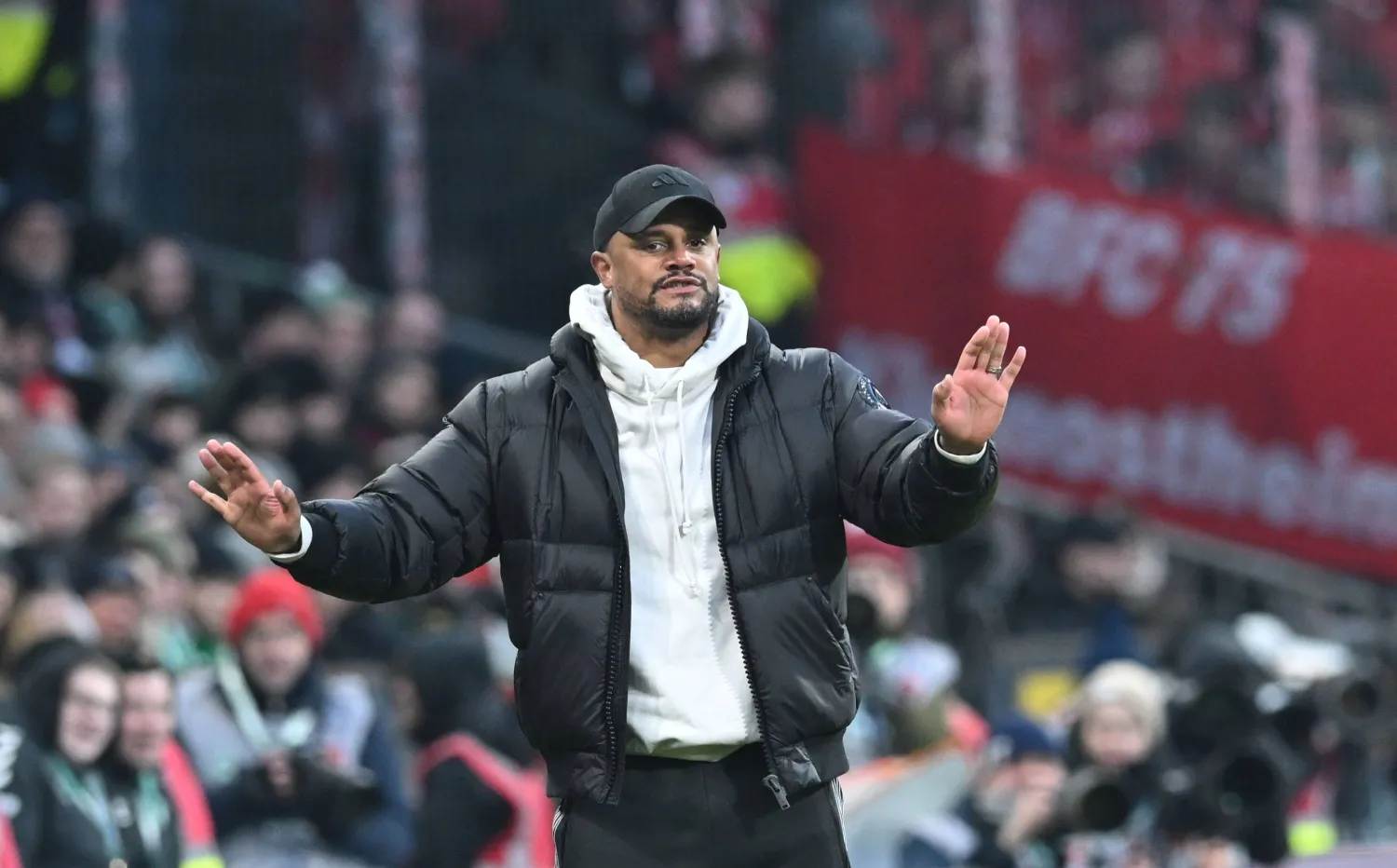
14 February 2026, Bremen: Bayern Munich coach Vincent Kompany gestures during the German Bundesliga soccer match between Werder Bremen and Bayern Munich at Weserstation. (dpa)
TT

‘A Huge Mistake.’ Kompany Hits Out at Mourinho for Vinícius Júnior Comments

14 February 2026, Bremen: Bayern Munich coach Vincent Kompany gestures during the German Bundesliga soccer match between Werder Bremen and Bayern Munich at Weserstation. (dpa)

Bayern Munich coach Vincent Kompany has criticized José Mourinho for attacking the character of Vinícius Júnior after the Real Madrid star accused an opponent of racially insulting him during a Champions League match.

Benfica coach Mourinho suggested that Brazil forward Vinícius had incited Benfica's players with his celebrations after scoring the only goal in Tuesday's playoff match.

Vinícius accused Benfica's Gianluca Prestianni of calling him "monkey" during a confrontation after his goal.

Mourinho also questioned why Vinícius, who is Black and has been subjected to repeated racist insults in Spain, was so frequently targeted.

"There is something wrong because it happens in every stadium," Mourinho said. "The stadium where Vinícius played something happened. Always."

Speaking on Friday, Kompany condemned Mourinho's comments.

"So after the game you have the leader of an organization, José Mourinho, who attacks the character of Vinícius Júnior by bringing in the type of celebration to discredit what Vinícius is doing in this moment," Kompany said. "And for me in terms of leadership, it’s a huge mistake and it’s something that we should not accept."

Mourinho’s celebrations

UEFA appointed a special investigator on Wednesday to gather evidence about what happened in Lisbon in Madrid’s 1-0 win in the first leg of the Champions League playoffs. Madrid said it had sent "all available evidence" of the alleged incident to European soccer's governing body.

Referring to Vinícius' celebrations after curling a shot into the top corner, Mourinho said he should "celebrate in a respectful way."

Kompany pointed out Mourinho's own history of exuberant celebrations — such as when he ran down the sideline to cheer when his Porto team beat Manchester United in the Champions League.

Kompany said Mourinho's former players "love him" and added "I know he’s a good person."

"I don’t need to judge him as a person, but I know what I’ve heard. I understand maybe what he’s done, but he’s made a mistake and it’s something that hopefully in the future won’t happen like this again," he said.

Prestianni denied racially insulting Vinícius. Benfica said the Argentine player was the victim of a "defamation campaign."

‘Right thing to do’

Kompany said Vinícius' reaction "cannot be faked."

"You can see it — his reaction is an emotional reaction. I don’t see any benefit for him to go to the referee and put all this misery on his shoulders," he said. "There is absolutely no reason for Vini Junior to go and do this.

"I think in his mind he’s doing it more because it’s the right thing to do in that moment."

Kompany added: "You have a player who’s complaining. You have a player who says he didn’t do it. And I think unless the player himself comes forward, it’s difficult. It’s a difficult case."


FIFA to Lead $75m Palestinian Soccer Rebuilding Fund

President of FIFA Gianni Infantino attended the inaugural meeting of US President Donald Trump's 'Board of Peace'. CHIP SOMODEVILLA / GETTY IMAGES NORTH AMERICA/AFP
TT

FIFA to Lead $75m Palestinian Soccer Rebuilding Fund

President of FIFA Gianni Infantino attended the inaugural meeting of US President Donald Trump's 'Board of Peace'. CHIP SOMODEVILLA / GETTY IMAGES NORTH AMERICA/AFP

FIFA will spearhead a $75 million fund to rebuild soccer facilities in Gaza that were destroyed by the war between Israel and Hamas, President Donald Trump and the sport's governing body said Thursday.

Trump made the announcement in Washington at the first meeting of his "Board of Peace," an amorphous institution that features two dozen of the US president's close allies and is initially focused on rebuilding the Gaza strip, said AFP.

"I'm also pleased to announce that FIFA will be helping to raise a total of $75 million for projects in Gaza," said Trump.

"And I think they're soccer related, where you're doing fields and you're getting the greatest stars in the world to go there -- people that are bigger stars than you and I, Gianni," he added, referring to FIFA president Gianni Infantino, who was present at the event.

"So it's really something. We'll soon be detailing the announcement, and if I can do I'll get over there with you," Trump said.

Later Thursday, FIFA issued a statement providing more details, including plans to construct a football academy, a new 20,000-seat national stadium and dozens of pitches.

The FIFA communique did not mention Trump's $75 million figure, and said funds would be raised "from international leaders and institutions."

Infantino has fostered close ties with Trump, awarding him an inaugural FIFA "Peace Prize" at the World Cup draw in December.

At Thursday's meeting, the FIFA president donned a red baseball cap emblazoned with "USA" and "45-47," the latter a reference to Trump's two terms in the White House.

In FIFA's statement, Infantino hailed "a landmark partnership agreement that will foster investment into football for the purpose of helping the recovery process in post conflict areas."

The "Board of Peace" came together after the Trump administration, teaming up with Qatar and Egypt, negotiated a ceasefire in October to halt two years of devastating war in Gaza.

The United States says it is now focused on disarming Hamas -- the Palestinian group whose unprecedented October 7, 2023, attack on Israel triggered the massive offensive.