


The Goalkeepers’ Union: Why Do They Stick up for Each Other?

There are no union meetings, subs or walkouts, but goalies do share a sense of solidarity

James Shea
James Shea
TT

The Goalkeepers’ Union: Why Do They Stick up for Each Other?

James Shea
James Shea

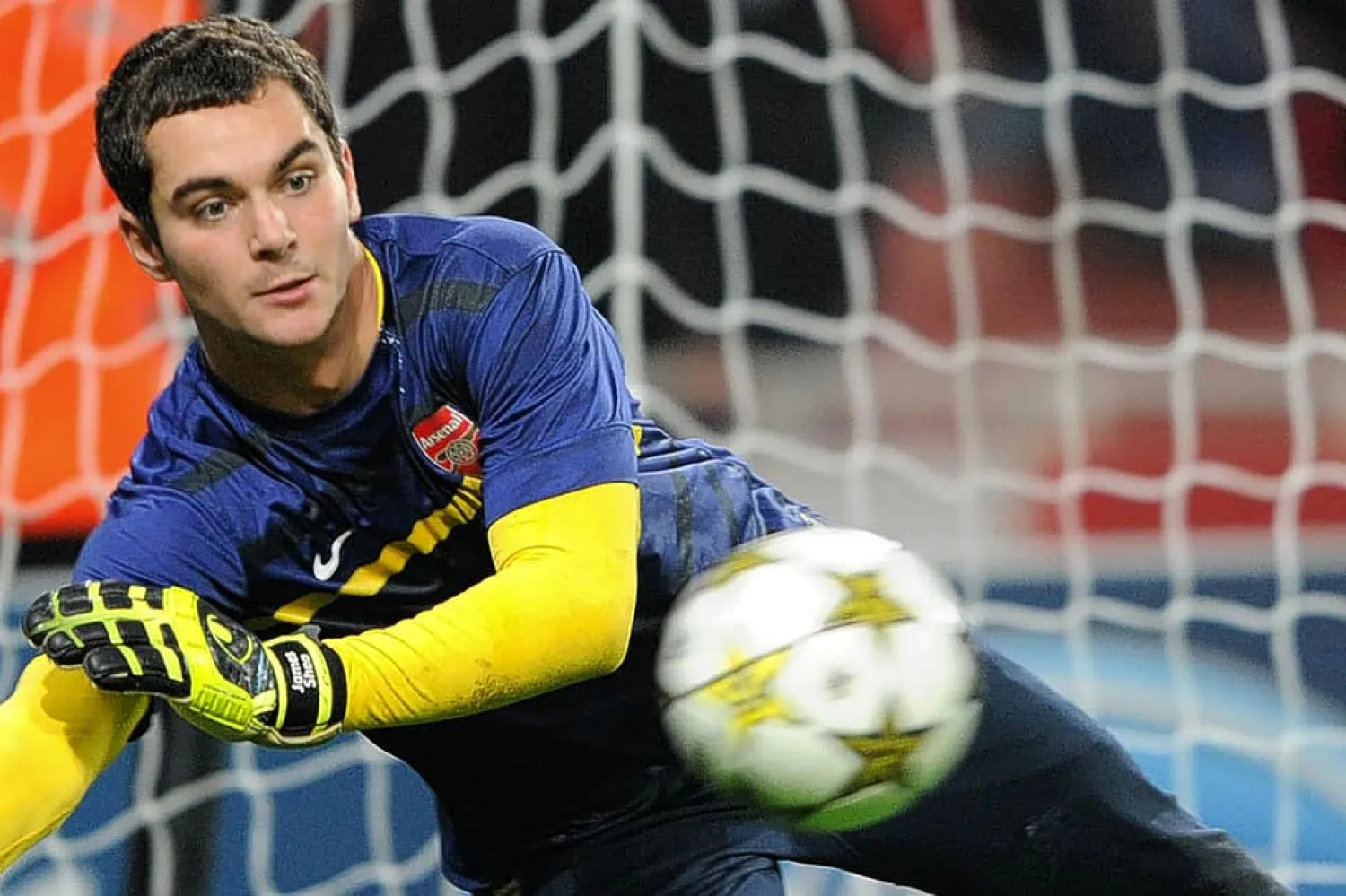
James Shea tells a story that captures the fraternal spirit among goalkeepers. Back when he was a novice at Arsenal – before his meandering path from the wilds of non-league took him to his current club, Luton Town – new gloves felt like a luxury and, on an academy keeper’s salary, were still a significant expense. Shea asked Lukasz Fabianski if he could borrow a pair for training. A few days later, Fabianski turned up with a big box full of gloves with Shea’s name emblazoned on them.

It was far from a one-off act of kindness. There are many goalkeepers with similar stories. Football is so often a dog-eat-dog environment but many keepers testify to a different moral code. There is even a term for this tendency towards mutual support: the goalkeepers’ union. There are no subs, no union meetings, and no walkouts, but many will bear witness to the sense of solidarity between the sticks.

“It’s a bit of a cliche, but goalkeepers are effectively playing a different sport,” says Richard Lee, a former Premier League goalkeeper with Watford and Blackburn Rovers. “Naturally, there’s that camaraderie between keepers. You support each other and you can empathize when other goalkeepers are going through a tough time.”

When it comes to criticism, many feel that only those within the goalkeepers’ union really get it. “The position of goalkeeper, even now, is quite misunderstood,” says Lee. “From a goalkeeper’s perspective, if you give an opinion, it is only ever going to be an amateur opinion if you haven’t played the position.”

That applies to punditry, commentary, and mainstream media analysis, which is why Lee started a keeper-oriented podcast called – surprise, surprise – The Goalkeepers’ Union. Co-creator Matthew Beadle, himself a willing goalie as a kid, voices his own frustrations about the way goalkeepers are under-represented on TV. “There’s now saturation analysis in football,” he says. “But there’s rarely ever a goalkeeper sitting on a panel that is able to say: ‘This is why this keeper has done that. Here’s why he may have made an error.’”

Without an expert in the room, former outfield players fall back on platitudes: “beaten at his near post”; “he’s flapped at that”; “a good height for a goalkeeper” and so on. Lee points out that, whereas Sky Sports have Ref Watch – a program in which a former referee will dissect the big decisions of the day – there is no equivalent for keepers. “Plus, now there are thousands of people on social media who see themselves as goalkeeping experts, telling you what you should have done. It’s tough so goalkeepers do tend to band together. It’s down to that appreciation of the position.”

The same misconceptions can also apply to teammates and even those in the dugout. James Shaw, who plays for Tooting & Mitcham United in the Isthmian League, agrees that goalkeeping is a misunderstood art. Asked about the goalkeepers’ union, he says: “It’s almost like Fight Club. You try to stick up for each other, because no matter what club it is, up and down the country, the goalkeeper is getting stick for something for no apparent reason. Every training session, every game, I get a right-winger or someone asking: ‘Why didn’t you do this? Why didn’t you come out for that?’ It’s like: ‘If I actually took you through the five decisions I had to make in that half a second, even then you probably wouldn’t understand.’”

Even though the demands of the position are changing – even at non-league level, keepers increasingly need to be comfortable in possession and able to play with their feet – keepers get minimal recognition. “Goalkeepers often don’t even get credit for being footballers,” says Shaw. “People treat you as if you’re just the idiot who stands in goal.” Then there is the brutal nature of their mistakes, with managers breathing fire on keepers who let in a goal after saving five or six.

Goalkeeping is a solitary art, which brings its own unique psychological challenges. The Russian author Vladimir Nabokov idealized the goalkeeper as “the lone eagle”, which goes some way to explaining why keepers feel a distant kinship.

“At times it’s like you’re friends, even though you don’t know the opposition keeper at all,” says Shaw. “It’s like meeting a long-lost brother. You know them, you know they’re related to you somehow and you don’t really know anything about them, but you can appreciate that you’re probably dealing with the same sort of things.”

In the Premier League that can mean standing alone in front of a sheer wall of noise. In non-league it can mean facing down intensely personal abuse from a handful of fans. And for every goalkeeper it means long spells waiting in the wind, rain, sleet, and snow, punctured by sudden rushes of desperate adrenaline.

Goalkeepers also train in tight-knit units, often sharing a small pool of coaches who, as ex-keepers themselves, serve as the invisible glue that holds the union together. While that contributes to their closeness, it also breeds a fierce competitiveness, and rival keepers cannot be entirely selfless. “If a mistake happens and your team concedes, you obviously feel sorry for them but you’re also like: ‘I could be back in next week,’” says Shaw. “That’s a cynical way of looking at it, but sometimes you need to look after No 1.”

If that is a tension within the goalkeepers’ union, most manage to keep it under wraps. “It’s just the reality, there’s only one position on the field,” says Lee. “I was with Brad Friedel at Blackburn and the guy just never gets injured. Peter Enckelman was there with him for four years and barely played a game of football.”

If anything, the possibility of spending weeks and months on the sidelines, waiting, is just another shared psychological challenge that brings keepers together. Even when pitted against each other, then, the spirit of the goalkeepers’ union remains and is symbolized, after training or the final whistle, by the clasping of gloved fists.

(The Guardian)


Shakhtar Boss Pays Ukrainian Racer $200,000 After Games Disqualification

Ukrainian President Volodymyr Zelenskiy holds helmet as he meets with a Ukrainian skeleton racer Vladyslav Heraskevych , who was disqualified from the Olympic skeleton competition over his "helmet of remembrance" depicting athletes killed since Russia's invasion and his father and coach, Mykhailo Heraskevych, amid Russia's attack on Ukraine, in Munich, Germany February 13, 2026. (Ukrainian Presidential Press Service/Handout via Reuters)
TT

Shakhtar Boss Pays Ukrainian Racer $200,000 After Games Disqualification

Ukrainian President Volodymyr Zelenskiy holds helmet as he meets with a Ukrainian skeleton racer Vladyslav Heraskevych , who was disqualified from the Olympic skeleton competition over his "helmet of remembrance" depicting athletes killed since Russia's invasion and his father and coach, Mykhailo Heraskevych, amid Russia's attack on Ukraine, in Munich, Germany February 13, 2026. (Ukrainian Presidential Press Service/Handout via Reuters)

The owner of ‌Ukrainian football club Shakhtar Donetsk has donated more than $200,000 to skeleton racer Vladyslav Heraskevych after the athlete was disqualified from the Milano Cortina Winter Games before competing over the use of a helmet depicting Ukrainian athletes killed in the war with Russia, the club said on Tuesday.

The 27-year-old Heraskevych was disqualified last week when the International Bobsleigh and Skeleton Federation jury ruled that imagery on the helmet — depicting athletes killed since Russia invaded Ukraine in 2022 — breached rules on athletes' expression at ‌the Games.

He ‌then lost an appeal at the Court ‌of ⁠Arbitration for Sport hours ⁠before the final two runs of his competition, having missed the first two runs due to his disqualification.

Heraskevych had been allowed to train with the helmet that displayed the faces of 24 dead Ukrainian athletes for several days in Cortina d'Ampezzo where the sliding center is, but the International Olympic Committee then ⁠warned him a day before his competition ‌started that he could not wear ‌it there.

“Vlad Heraskevych was denied the opportunity to compete for victory ‌at the Olympic Games, yet he returns to Ukraine a ‌true winner," Shakhtar President Rinat Akhmetov said in a club statement.

"The respect and pride he has earned among Ukrainians through his actions are the highest reward. At the same time, I want him to ‌have enough energy and resources to continue his sporting career, as well as to fight ⁠for truth, freedom ⁠and the remembrance of those who gave their lives for Ukraine," he said.

The amount is equal to the prize money Ukraine pays athletes who win a gold medal at the Games.

The case dominated headlines early on at the Olympics, with IOC President Kirsty Coventry meeting Heraskevych on Thursday morning at the sliding venue in a failed last-minute attempt to broker a compromise.

The IOC suggested he wear a black armband and display the helmet before and after the race, but said using it in competition breached rules on keeping politics off fields of play. Heraskevych also earned praise from Ukraine President Volodymyr Zelenskiy.


Speed Skating-Italy Clinch Shock Men’s Team Pursuit Gold, Canada Successfully Defend Women’s Title

 Team Italy with Davide Ghiotto, Andrea Giovannini, Michele Malfatti, celebrate winning the gold medal on the podium of the men's team pursuit speed skating race at the 2026 Winter Olympics, in Milan, Italy, Tuesday, Feb. 17, 2026. (AP)
Team Italy with Davide Ghiotto, Andrea Giovannini, Michele Malfatti, celebrate winning the gold medal on the podium of the men's team pursuit speed skating race at the 2026 Winter Olympics, in Milan, Italy, Tuesday, Feb. 17, 2026. (AP)
TT

Speed Skating-Italy Clinch Shock Men’s Team Pursuit Gold, Canada Successfully Defend Women’s Title

 Team Italy with Davide Ghiotto, Andrea Giovannini, Michele Malfatti, celebrate winning the gold medal on the podium of the men's team pursuit speed skating race at the 2026 Winter Olympics, in Milan, Italy, Tuesday, Feb. 17, 2026. (AP)
Team Italy with Davide Ghiotto, Andrea Giovannini, Michele Malfatti, celebrate winning the gold medal on the podium of the men's team pursuit speed skating race at the 2026 Winter Olympics, in Milan, Italy, Tuesday, Feb. 17, 2026. (AP)

An inspired Italy delighted the home crowd with a stunning victory in the Olympic men's team pursuit final as

Canada's Ivanie Blondin, Valerie Maltais and Isabelle Weidemann delivered another seamless performance to beat the Netherlands in the women's event and retain their title ‌on Tuesday.

Italy's ‌men upset the US who ‌arrived ⁠at the Games ⁠as world champions and gold medal favorites.

Spurred on by double Olympic champion Francesca Lollobrigida, the Italian team of Davide Ghiotto, Andrea Giovannini and Michele Malfatti electrified a frenzied arena as they stormed ⁠to a time of three ‌minutes 39.20 seconds - ‌a commanding 4.51 seconds clear of the ‌Americans with China taking bronze.

The roar inside ‌the venue as Italy powered home was thunderous as the crowd rose to their feet, cheering the host nation to one ‌of their most special golds of a highly successful Games.

Canada's women ⁠crossed ⁠the line 0.96 seconds ahead of the Netherlands, stopping the clock at two minutes 55.81 seconds, and

Japan rounded out the women's podium by beating the US in the Final B.

It was only Canada's third gold medal of the Games, following Mikael Kingsbury's win in men's dual moguls and Megan Oldham's victory in women's freeski big air.


Lindsey Vonn Back in US Following Crash in Olympic Downhill 

Milano Cortina 2026 Olympics - Alpine Skiing - Women's Downhill 3rd Official Training - Tofane Alpine Skiing Centre, Belluno, Italy - February 07, 2026. Lindsey Vonn of United States in action during training. (Reuters)
TT

Lindsey Vonn Back in US Following Crash in Olympic Downhill 

Milano Cortina 2026 Olympics - Alpine Skiing - Women's Downhill 3rd Official Training - Tofane Alpine Skiing Centre, Belluno, Italy - February 07, 2026. Lindsey Vonn of United States in action during training. (Reuters)

Lindsey Vonn is back home in the US following a week of treatment at a hospital in Italy after breaking her left leg in the Olympic downhill at the Milan Cortina Games.

“Haven’t stood on my feet in over a week... been in a hospital bed immobile since my race. And although I’m not yet able to stand, being back on home soil feels amazing,” Vonn posted on X with an American flag emoji. “Huge thank you to everyone in Italy for taking good care of me.”

The 41-year-old Vonn suffered a complex tibia fracture that has already been operated on multiple times following her Feb. 8 crash. She has said she'll need more surgery in the US.

Nine days before her fall in Cortina d'Ampezzo, Italy, Vonn ruptured the ACL in her left knee in another crash in Switzerland.

Even before then, all eyes had been on her as the feel-good story heading into the Olympics for her comeback after nearly six years of retirement.
