


The Goalkeepers’ Union: Why Do They Stick up for Each Other?

There are no union meetings, subs or walkouts, but goalies do share a sense of solidarity

James Shea
James Shea
TT

The Goalkeepers’ Union: Why Do They Stick up for Each Other?

James Shea
James Shea

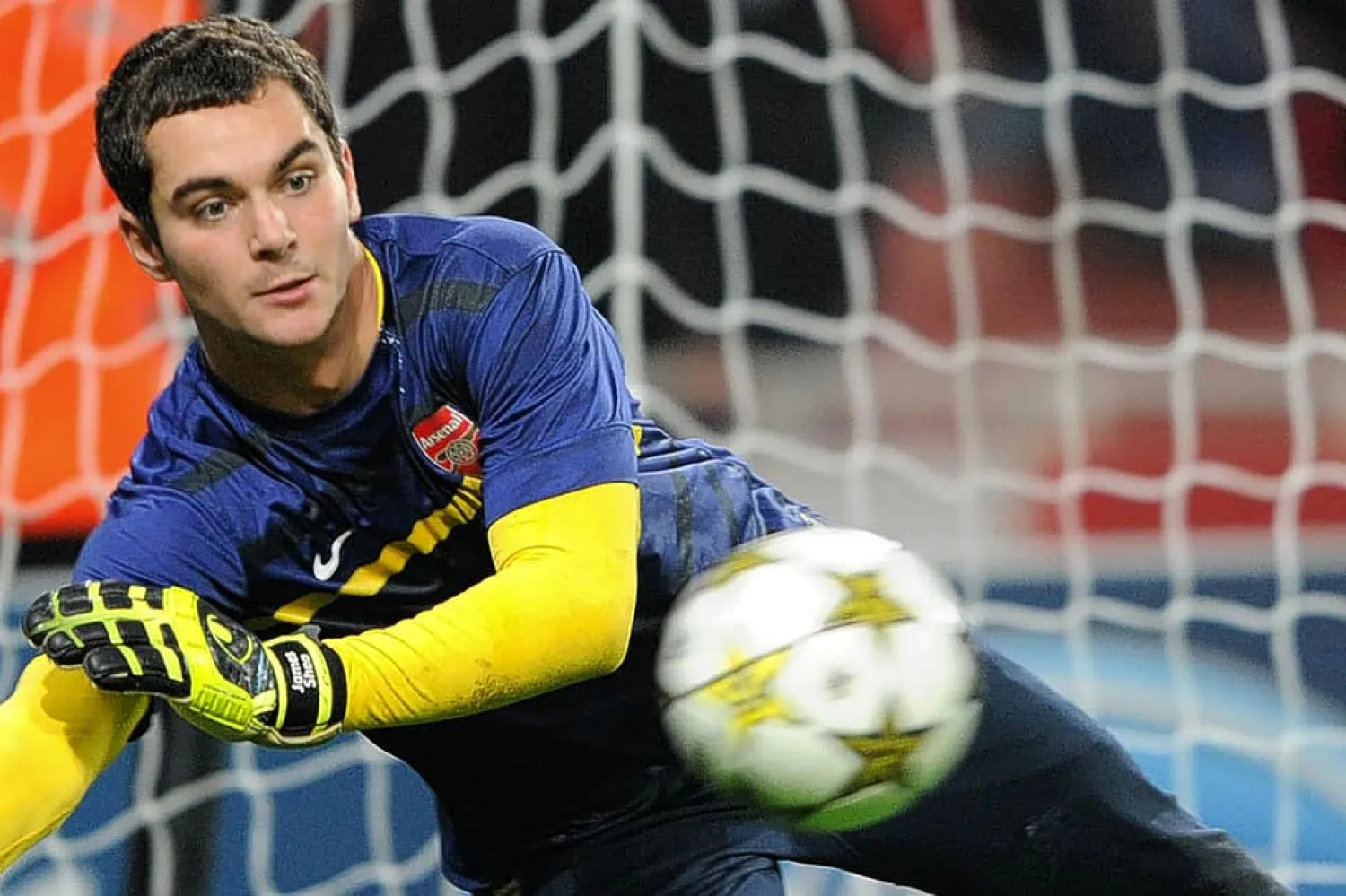
James Shea tells a story that captures the fraternal spirit among goalkeepers. Back when he was a novice at Arsenal – before his meandering path from the wilds of non-league took him to his current club, Luton Town – new gloves felt like a luxury and, on an academy keeper’s salary, were still a significant expense. Shea asked Lukasz Fabianski if he could borrow a pair for training. A few days later, Fabianski turned up with a big box full of gloves with Shea’s name emblazoned on them.

It was far from a one-off act of kindness. There are many goalkeepers with similar stories. Football is so often a dog-eat-dog environment but many keepers testify to a different moral code. There is even a term for this tendency towards mutual support: the goalkeepers’ union. There are no subs, no union meetings, and no walkouts, but many will bear witness to the sense of solidarity between the sticks.

“It’s a bit of a cliche, but goalkeepers are effectively playing a different sport,” says Richard Lee, a former Premier League goalkeeper with Watford and Blackburn Rovers. “Naturally, there’s that camaraderie between keepers. You support each other and you can empathize when other goalkeepers are going through a tough time.”

When it comes to criticism, many feel that only those within the goalkeepers’ union really get it. “The position of goalkeeper, even now, is quite misunderstood,” says Lee. “From a goalkeeper’s perspective, if you give an opinion, it is only ever going to be an amateur opinion if you haven’t played the position.”

That applies to punditry, commentary, and mainstream media analysis, which is why Lee started a keeper-oriented podcast called – surprise, surprise – The Goalkeepers’ Union. Co-creator Matthew Beadle, himself a willing goalie as a kid, voices his own frustrations about the way goalkeepers are under-represented on TV. “There’s now saturation analysis in football,” he says. “But there’s rarely ever a goalkeeper sitting on a panel that is able to say: ‘This is why this keeper has done that. Here’s why he may have made an error.’”

Without an expert in the room, former outfield players fall back on platitudes: “beaten at his near post”; “he’s flapped at that”; “a good height for a goalkeeper” and so on. Lee points out that, whereas Sky Sports have Ref Watch – a program in which a former referee will dissect the big decisions of the day – there is no equivalent for keepers. “Plus, now there are thousands of people on social media who see themselves as goalkeeping experts, telling you what you should have done. It’s tough so goalkeepers do tend to band together. It’s down to that appreciation of the position.”

The same misconceptions can also apply to teammates and even those in the dugout. James Shaw, who plays for Tooting & Mitcham United in the Isthmian League, agrees that goalkeeping is a misunderstood art. Asked about the goalkeepers’ union, he says: “It’s almost like Fight Club. You try to stick up for each other, because no matter what club it is, up and down the country, the goalkeeper is getting stick for something for no apparent reason. Every training session, every game, I get a right-winger or someone asking: ‘Why didn’t you do this? Why didn’t you come out for that?’ It’s like: ‘If I actually took you through the five decisions I had to make in that half a second, even then you probably wouldn’t understand.’”

Even though the demands of the position are changing – even at non-league level, keepers increasingly need to be comfortable in possession and able to play with their feet – keepers get minimal recognition. “Goalkeepers often don’t even get credit for being footballers,” says Shaw. “People treat you as if you’re just the idiot who stands in goal.” Then there is the brutal nature of their mistakes, with managers breathing fire on keepers who let in a goal after saving five or six.

Goalkeeping is a solitary art, which brings its own unique psychological challenges. The Russian author Vladimir Nabokov idealized the goalkeeper as “the lone eagle”, which goes some way to explaining why keepers feel a distant kinship.

“At times it’s like you’re friends, even though you don’t know the opposition keeper at all,” says Shaw. “It’s like meeting a long-lost brother. You know them, you know they’re related to you somehow and you don’t really know anything about them, but you can appreciate that you’re probably dealing with the same sort of things.”

In the Premier League that can mean standing alone in front of a sheer wall of noise. In non-league it can mean facing down intensely personal abuse from a handful of fans. And for every goalkeeper it means long spells waiting in the wind, rain, sleet, and snow, punctured by sudden rushes of desperate adrenaline.

Goalkeepers also train in tight-knit units, often sharing a small pool of coaches who, as ex-keepers themselves, serve as the invisible glue that holds the union together. While that contributes to their closeness, it also breeds a fierce competitiveness, and rival keepers cannot be entirely selfless. “If a mistake happens and your team concedes, you obviously feel sorry for them but you’re also like: ‘I could be back in next week,’” says Shaw. “That’s a cynical way of looking at it, but sometimes you need to look after No 1.”

If that is a tension within the goalkeepers’ union, most manage to keep it under wraps. “It’s just the reality, there’s only one position on the field,” says Lee. “I was with Brad Friedel at Blackburn and the guy just never gets injured. Peter Enckelman was there with him for four years and barely played a game of football.”

If anything, the possibility of spending weeks and months on the sidelines, waiting, is just another shared psychological challenge that brings keepers together. Even when pitted against each other, then, the spirit of the goalkeepers’ union remains and is symbolized, after training or the final whistle, by the clasping of gloved fists.

(The Guardian)


Sinner Sees off Popyrin to Reach Doha Quarters

 Italy's Jannik Sinner greets the fans after defeating Australia's Alexei Popyrin in their men's singles match at the Qatar Open tennis tournament in Doha on February 18, 2026. (AFP)
Italy's Jannik Sinner greets the fans after defeating Australia's Alexei Popyrin in their men's singles match at the Qatar Open tennis tournament in Doha on February 18, 2026. (AFP)
TT

Sinner Sees off Popyrin to Reach Doha Quarters

 Italy's Jannik Sinner greets the fans after defeating Australia's Alexei Popyrin in their men's singles match at the Qatar Open tennis tournament in Doha on February 18, 2026. (AFP)
Italy's Jannik Sinner greets the fans after defeating Australia's Alexei Popyrin in their men's singles match at the Qatar Open tennis tournament in Doha on February 18, 2026. (AFP)

Jannik Sinner powered past Alexei Popyrin in straight sets on Wednesday to reach the last eight of the Qatar Open and edge closer to a possible final meeting with Carlos Alcaraz.

The Italian, playing his first tournament since losing to Novak Djokovic in the Australian Open semi-finals last month, eased to a 6-3, 7-5 second-round win in Doha.

Sinner will play Jakub Mensik in Thursday's quarter-finals.

Australian world number 53 Popyrin battled gamely but failed to create a break-point opportunity against his clinical opponent.

Sinner dropped just three points on serve in an excellent first set which he took courtesy of a break in the sixth game.

Popyrin fought hard in the second but could not force a tie-break as Sinner broke to grab a 6-5 lead before confidently serving it out.

World number one Alcaraz takes on Frenchman Valentin Royer in his second-round match later.


Ukraine's Officials to Boycott Paralympics over Russian Flag Decision

Milano Cortina 2026 Winter Olympics - Skeleton - Interview with Ukraine Youth and Sports minister Matvii Bidnyi - N H Hotel, Milan, Italy - February 12, 2026 Ukraine Youth and Sports Minister Matvii Bidnyi speaks after the disqualification of Ukrainian skeleton racer Vladyslav Heraskevych from the Winter Games. REUTERS/Kevin Coombs
TT

Ukraine's Officials to Boycott Paralympics over Russian Flag Decision

Milano Cortina 2026 Winter Olympics - Skeleton - Interview with Ukraine Youth and Sports minister Matvii Bidnyi - N H Hotel, Milan, Italy - February 12, 2026 Ukraine Youth and Sports Minister Matvii Bidnyi speaks after the disqualification of Ukrainian skeleton racer Vladyslav Heraskevych from the Winter Games. REUTERS/Kevin Coombs

Ukrainian officials will boycott the Paralympic Winter Games, Kyiv said Wednesday, after the International Paralympic Committee allowed Russian athletes to compete under their national flag.

Ukraine also urged other countries to shun next month's Opening Ceremony in Verona on March 6, in part of a growing standoff between Kyiv and international sporting federations four years after Russia invaded.

Six Russians and four Belarusians will be allowed to take part under their own flags at the Milan-Cortina Paralympics rather than as neutral athletes, the Games' governing body confirmed to AFP on Tuesday.

Russia has been mostly banned from international sport since Moscow invaded Ukraine. The IPC's decision triggered fury in Ukraine.

Ukraine's sports minister Matviy Bidny called the decision "outrageous", and accused Russia and Belarus of turning "sport into a tool of war, lies, and contempt."

"Ukrainian public officials will not attend the Paralympic Games. We will not be present at the opening ceremony," he said on social media.

"We will not take part in any other official Paralympic events," he added.

Ukrainian Foreign Minister Andriy Sybiga said he had instructed Kyiv's ambassadors to urge other countries to also shun the opening ceremony.

"Allowing the flags of aggressor states to be raised at the Paralympic Games while Russia's war against Ukraine rages on is wrong -- morally and politically," Sybiga said on social media.

The EU's sports commissioner Glenn Micallef said he would also skip the opening ceremony.

- Kyiv demands apology -

The IPC's decision comes amid already heightened tensions between Ukraine and the International Olympic Committee, overseeing the Winter Olympics currently underway.

The IOC banned Ukrainian skeleton racer Vladyslav Heraskevych for refusing to ditch a helmet depicting victims of the war with Russia.

Ukraine was further angered that the woman chosen to carry the "Ukraine" name card and lead its team out during the Opening Ceremony of the Games was revealed to be Russian.

Media reports called the woman an anti-Kremlin Russian woman living in Milan for years.

"Picking a Russian person to carry the nameplate is despicable," Kyiv's foreign ministry spokesman Georgiy Tykhy said at a briefing in response to a question by AFP.

He called it a "severe violation of the Olympic Charter" and demanded an apology.

And Kyiv also riled earlier this month at FIFA boss Gianni Infantino saying he believed it was time to reinstate Russia in international football.

- 'War, lies and contempt' -

Valeriy Sushkevych, president of the Ukrainian Paralympic Committee told AFP on Tuesday that Kyiv's athletes would not boycott the Paralympics.

Ukraine traditionally performs strongly at the Winter Paralympics, coming second in the medals table four years ago in Beijing.

"If we do not go, it would mean allowing Putin to claim a victory over Ukrainian Paralympians and over Ukraine by excluding us from the Games," said the 71-year-old in an interview.

"That will not happen!"

Russia was awarded two slots in alpine skiing, two in cross-country skiing and two in snowboarding. The four Belarusian slots are all in cross-country skiing.

The International Paralympic Committee (IPC) said earlier those athletes would be "treated like (those from) any other country".

The IPC unexpectedly lifted its suspension on Russian and Belarusian athletes at the organisation's general assembly in September.


'Not Here for Medals', Nakai Says after Leading Japanese Charge at Olympics

Ami Nakai of Japan competes during the women's short program figure skating at the 2026 Winter Olympics, in Milan, Italy, Tuesday, Feb. 17, 2026. (AP Photo/Ashley Landis)
TT

'Not Here for Medals', Nakai Says after Leading Japanese Charge at Olympics

Ami Nakai of Japan competes during the women's short program figure skating at the 2026 Winter Olympics, in Milan, Italy, Tuesday, Feb. 17, 2026. (AP Photo/Ashley Landis)

Ami Nakai entered her first Olympics insisting she was not here for medals — but after the short program at the Milano Cortina Games, the 17-year-old figure skater found herself at the top, ahead of national icon Kaori Sakamoto and rising star Mone Chiba.

Japan finished first, second, and fourth on Tuesday, cementing a formidable presence heading into the free skate on Thursday. American Alysa Liu finished third.

Nakai's clean, confident skate was anchored by a soaring triple Axel. She approached the moment with an ease unusual for an Olympic debut.

"I'm not here at this Olympics with the goal of achieving a high result, I'm really looking forward to enjoying this Olympics as much as I can, till the very last moment," she said.

"Since this is my first Olympics, I had nothing to lose, and that mindset definitely translated into my results," she said.

Her carefree confidence has unexpectedly put her in medal contention, though she cannot imagine herself surpassing Sakamoto, the three-time world champion who is skating the final chapter of her competitive career. Nakai scored 78.71 points in the short program, ahead of Sakamoto's 77.23.

"There's no way I stand a chance against Kaori right now," Nakai said. "I'm just enjoying these Olympics and trying my best."

Sakamoto, 25, who has said she will retire after these Games, is chasing the one accolade missing from her resume: Olympic gold.

Having already secured a bronze in Beijing in 2022 and team silvers in both Beijing and Milan, she now aims to cap her career with an individual title.

She delivered a polished short program to "Time to Say Goodbye," earning a standing ovation.

Sakamoto later said she managed her nerves well and felt satisfied, adding that having three Japanese skaters in the top four spots "really proves that Japan is getting stronger". She did not feel unnerved about finishing behind Nakai, who also bested her at the Grand Prix de France in October.

"I expected to be surpassed after she landed a triple Axel ... but the most important thing is how much I can concentrate on my own performance, do my best, stay focused for the free skate," she said.

Chiba placed fourth and said she felt energised heading into the free skate, especially after choosing to perform to music from the soundtrack of "Romeo and Juliet" in Italy.

"The rankings are really decided in the free program, so I'll just try to stay calm and focused in the free program and perform my own style without any mistakes," said the 20-year-old, widely regarded as the rising all-rounder whose steady ascent has made her one of Japan's most promising skaters.

All three skaters mentioned how seeing Japanese pair Riku Miura and Ryuichi Kihara deliver a stunning comeback, storming from fifth place after a shaky short program to capture Japan's first Olympic figure skating pairs gold medal, inspired them.

"I was really moved by Riku and Ryuichi last night," Chiba said. "The three of us girls talked about trying to live up to that standard."
