


Sudan to Tackle Fuel Subsidies as Economy Hangs on Edge

In this Sunday, Jan. 28, 2020 photo, Ibrahim Elbadawi, Sudan's interim minister of finance, speaks in an interview in Khartoum, Sudan. (AP)
TT

Sudan to Tackle Fuel Subsidies as Economy Hangs on Edge

In this Sunday, Jan. 28, 2020 photo, Ibrahim Elbadawi, Sudan's interim minister of finance, speaks in an interview in Khartoum, Sudan. (AP)

Sudan hopes to cut fuel subsidies over the course of 18 months, starting as early as March, and replace them with direct cash payments to the poor, the country’s finance minister said Wednesday, laying out a timetable for sweeping economic reforms sought by international lenders.

The plan comes as Sudan's fragile democracy is slowly taking shape after the ouster last year of the country's long-time president Omar al-Bashir.

In an interview with The Associated Press, Finance Minister Ibrahim Elbadawi said the decision was a “no brainer." The government has previously said it will not change bread and flour subsidies.

Elbadawi's comments — the first to reveal a planned timeline — came after the Sudanese government skirted the issue of slashing subsidies late last year, after the country's pro-democracy movement rejected the move, and instead included them in the 2020 budget.

In the interview with the AP, Elbadawi said the plan now is to gradually lift fuel subsidies, which take up 36% of the nation's budget, as early as March and following an economic conference with civil society groups, and continue into the next year.

A former World Bank economist, Elbadawi was appointed to the country's interim government last year. He said gasoline subsidies would be removed first, before tackling those related to diesel in mid-year.

Sudan's new leadership is navigating a treacherous transition to civilian rule. Two-thirds of the country's more than 40 million people live in poverty, and slashing the fuel subsidies could lead to destabilizing protests reminiscent of the large-scale demonstrations that ended Bashir's 30-year rule in April. At the same time, sweeping economic reforms are required to re-integrate Sudan into the international economy and win support from international lenders.

Since Bashir's ouster, an interim government made of civilian and military representatives has been leading the country and the economy — already in a severe downturn and battered by a weakening currency, shortages and inflation — has become the lynchpin of the fragile transitional period.

Sudan has been an international pariah after it was placed on the United States' list of states that sponsor terror, more than two decades ago. This largely excluded it from the global economy and prevented it from receiving loans from international institutions like the International Monetary Fund.

Sudan's interim government has also inherited a debt of 60 billion dollars and a rapid inflation rate, and badly needs an injection of funds from foreign donors. The nation's currency, the Sudanese pound, is trading on the black market for double its official rate of 45.3 pounds to the dollar.

The uprising against Bashir began as protests over rising prices of key staples such as bread and frustration among the youth over unemployment and the brutality of the nation's security forces. Many in the country’s civil society movement fear that lifting subsidies now could make the country's most vulnerable even poorer.

Elbadawi said a direct cash payment to poor families, through banks or mobile phone transfers, could help ease the shock of the reforms. Such a program could be off the ground in six months, he said, though the government still needs better data to reach all those in need. As part of a pilot group, some 4.5 million people would start receiving the money soon, he added.

"We think that if we manage to do this, it will be a very viable and credible alternative," he told the AP. "It will target the poor, it will promote the cause of peace and it will actually change the social contract."

Because of the longstanding subsidy program, Sudan has been one of the cheapest countries in the world to fill up a tank. Cheap gasoline prices have also encouraged fuel smuggling out of the country. If things were to stay as they were — with no changes to the 2020 budget — the government would be spending more on subsidies than on health, education and internal security combined, Elbadawi said.

To pave the way for international loans, Sudan has been in talks with the US to remove it from the list of terrorism sponsors —something Elbadawi hopes will be only a matter of weeks or a few months. In the meantime, he said the government is in talks with the IMF and is working on a reform program that could lay the groundwork for future debt relief.

The government is also launching a national dialogue to explain the necessity of the subsidy reforms but will tread carefully, aware of likely popular opposition, Elbadawi said. The Sudanese Professionals Association, the main organizer of demonstrations during last year's uprising, has threatened to mobilize protesters if the transition goes astray.

That means Sudan's civilian stakeholders would have to be on board with the program.

“If, for whatever reason, we are unable to reach a consensus, then I think it will be incumbent upon the government to explain the consequences and to allow the Sudanese people to take whatever decision and course they want to take,” Elbadawi said.
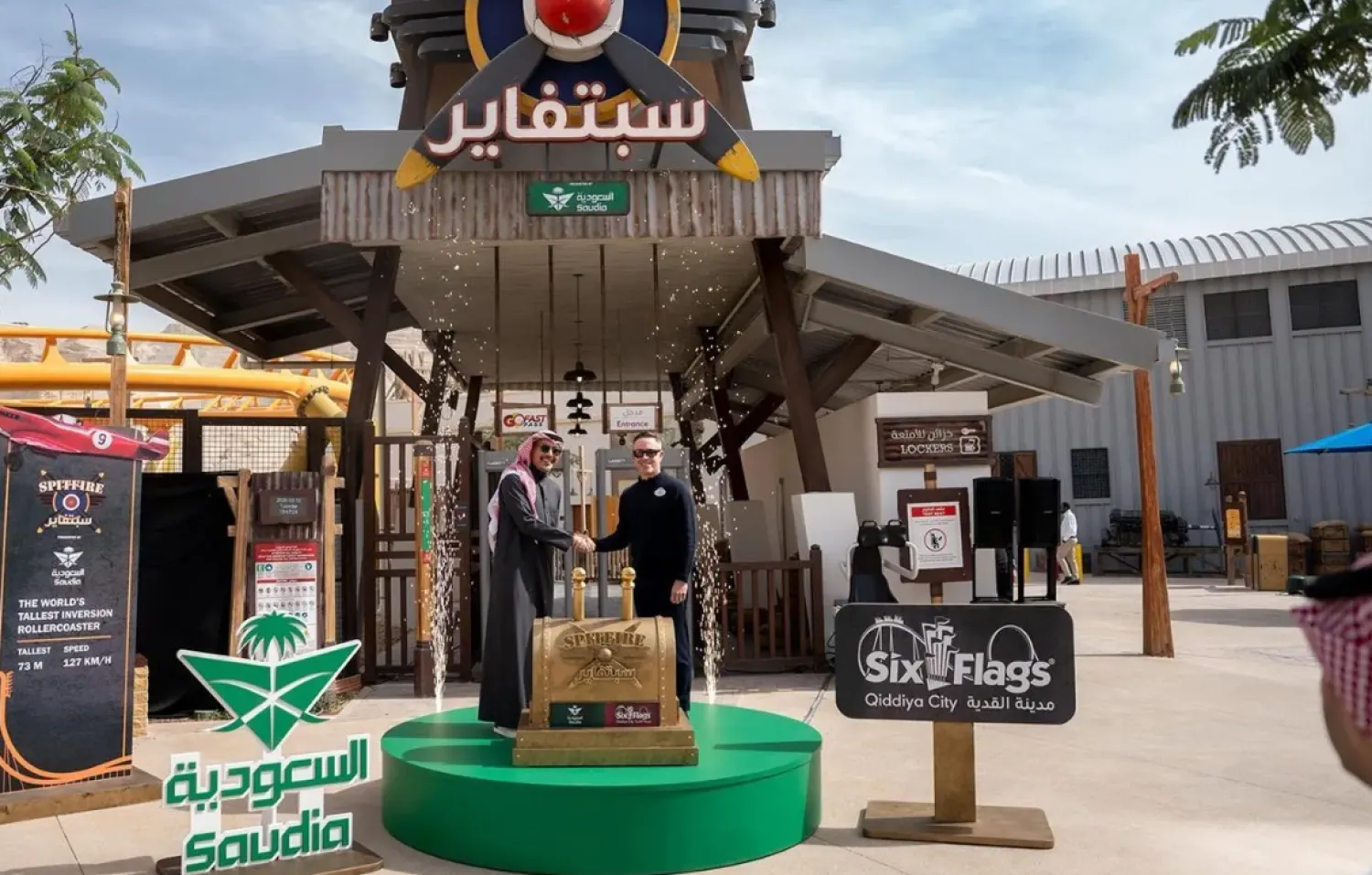



Saudia Signs Strategic Partnership Agreement with Six Flags and Aquarabia Qiddiya City

udia will develop special travel packages designed to enable visitors to experience world-class attractions - SPA
TT

Saudia Signs Strategic Partnership Agreement with Six Flags and Aquarabia Qiddiya City

udia will develop special travel packages designed to enable visitors to experience world-class attractions - SPA

Saudia Airlines has signed a five-year strategic partnership with Six Flags and Aquarabia Qiddiya City, becoming the official premier partner exclusively in the airline category.

As part of the partnership, Saudia will develop special travel packages designed to enable visitors to experience world-class attractions. The collaboration also brings the spirit of Six Flags and Aquarabia Qiddiya City to the skies through special aircraft branding across Saudia’s fleet, SPA reported. 

Chief Marketing Officer of Saudia Group Khaled Tash said in a press release: "Saudia is committed to supporting national development projects as part of its contribution to Vision 2030, aligned with our strategy to bring the world to the Kingdom. Partnerships of this scale with national partners play a key role in positioning Saudi Arabia as a leading global destination for entertainment and tourism."

Park President of Six Flags and Aquarabia Qiddiya City Brian Machamer added: "Our partnership with Saudia not only reflects a shared ambition to connect the Kingdom to the world through world-class entertainment experiences, but strengthens our ability to attract visitors from around the world and realize our vision of setting a new global benchmark for immersive, world-class theme park entertainment and reinforcing Saudi Arabia’s growing presence on the global tourism stage."

Six Flags Qiddiya City sets a new benchmark for exceptional entertainment regionally and globally. Spanning six iconic themed lands, the theme park takes visitors on an immersive journey across 28 rides and attractions designed to world-class standards. Beyond the scale and diversity of its offerings, Six Flags Qiddiya City stands out for pushing the boundaries of engineering and entertainment, featuring five exclusive, record-breaking rides that have redefined global benchmarks. Leading these innovations is Falcons Flight, the roller coaster that has captured global attention as the fastest, tallest, and longest in the world.

Aquarabia Qiddiya City delivers a distinctive aquatic entertainment experience, offering 22 rides and water attractions, along with a man-made river designed for both relaxation and family-friendly water fun. For guests seeking privacy and elevated comfort, Aquarabia features 91 luxury cabanas, positioning the destination as a fully integrated leisure offering that redefines water-based entertainment to the highest international standards.

Located in the Tuwaiq Mountains near Riyadh, Qiddiya City is an emerging destination bringing together entertainment, sports, and culture. Six Flags and Aquarabia Qiddiya City form part of its entertainment offering.


Moody’s Establishes Regional HQ in Riyadh, Deepening Presence in Region

(FILES) Signage for Moody's Corporation is displayed at their headquarters at 7 World Trade Center on March 18, 2025 in New York City. (Photo by ANGELA WEISS / AFP)
TT

Moody’s Establishes Regional HQ in Riyadh, Deepening Presence in Region

(FILES) Signage for Moody's Corporation is displayed at their headquarters at 7 World Trade Center on March 18, 2025 in New York City. (Photo by ANGELA WEISS / AFP)

Moody’s Corporation announced that it has established its regional headquarters in Riyadh, reflecting ongoing commitment to support the development of the Kingdom’s capital markets and economy.

“This investment aligns to the Kingdom's Vision 2030 initiative and underscores its dynamism and growth,” Moody’s said in a statement this week.

The new regional headquarters marks an expansion of Moody’s presence in Saudi Arabia, where the company first opened an office in 2018, and reflects its longstanding commitment to the Middle East.

“The headquarters will strengthen Moody’s engagement with Saudi institutions and enable broader access to Moody’s decision grade data, analytics and insights,” said the statement.

“Our decision to establish a regional headquarters in Riyadh reflects our confidence in Saudi Arabia’s strong economic momentum, as well as our commitment to helping domestic and international investors unlock opportunities with our expertise and insights,” said President and Chief Executive Officer of Moody’s Rob Fauber.

“We are well positioned to provide the analytical capabilities and market intelligence that investors and institutions need to navigate evolving markets across the Middle East,” the statement quoted him as saying.

Mahmoud Totonji will lead the regional headquarters as General Manager.


Saudi Arabia Launches First Endowment Fund for Environmental, Water and Agricultural Sustainability

The launch of the Namaa Endowment Fund (Asharq Al-Awsat)
TT

Saudi Arabia Launches First Endowment Fund for Environmental, Water and Agricultural Sustainability

The launch of the Namaa Endowment Fund (Asharq Al-Awsat)

Saudi Arabia has launched its first endowment fund dedicated to advancing environmental, water and agricultural sustainability, reinforcing efforts to strengthen the Kingdom’s non-profit sector and long-term development.

Minister of Environment, Water and Agriculture Eng. Abdulrahman Al-Fadhli on Tuesday inaugurated the Namaa Endowment Fund at the ministry’s headquarters, in the presence of senior officials and stakeholders.

The fund is designed to support economic and social development goals, address community needs, increase the non-profit sector’s contribution to GDP, and promote sustainable management of environmental, water and agricultural resources.

Al-Fadhli said the fund represents a new model of institutional endowment work and a practical mechanism to expand developmental impact while ensuring the sustainability of non-profit initiatives.

Developed in partnership with the General Authority for Awqaf, the fund aims to build assets commensurate with its ambitions, enabling higher returns and a wider impact over the long term.

It will pursue carefully structured investments that balance financial performance with developmental outcomes, with the potential to own or benefit from real estate assets that can be used by non-profit organizations.

Encouraging Private-Sector Participation

Al-Fadhli added that the ministry, in cooperation with the General Authority for Awqaf, the Capital Market Authority and AlAhli Capital, will support the fund and encourage contributions from the private sector, business leaders and the wider public.

Contributions will be made through a licensed digital platform under strict financial governance. He called on all segments of society to contribute in support of sustainable development across the environment, water and agriculture sectors.

Namaa will finance endowment initiatives within the ministry’s ecosystem, including the non-profit institutions Reef, Morooj and Saqaya. Its focus areas include water provision and conservation, afforestation, biodiversity protection, vegetation cover, the circular economy, sustainable agriculture and irrigation, and reducing food loss and waste.

Emad Alkharashi, Governor of the General Authority for Awqaf, announced an initial contribution of SAR100 million, describing it as a foundation for a sustainable endowment model.

He said the fund combines the legacy of endowments with modern investment practices to protect natural resources, strengthen food security and ensure lasting developmental impact.

Alkharashi added that the partnership with the ministry maximizes results and positions the fund as a model for directing endowments toward high-impact, long-term priorities through a transparent, well-governed institutional framework.