


Pioneering Reds to the Reds: Why Jürgen Klopp’s Pressing Is a Perfect Fit for the Age

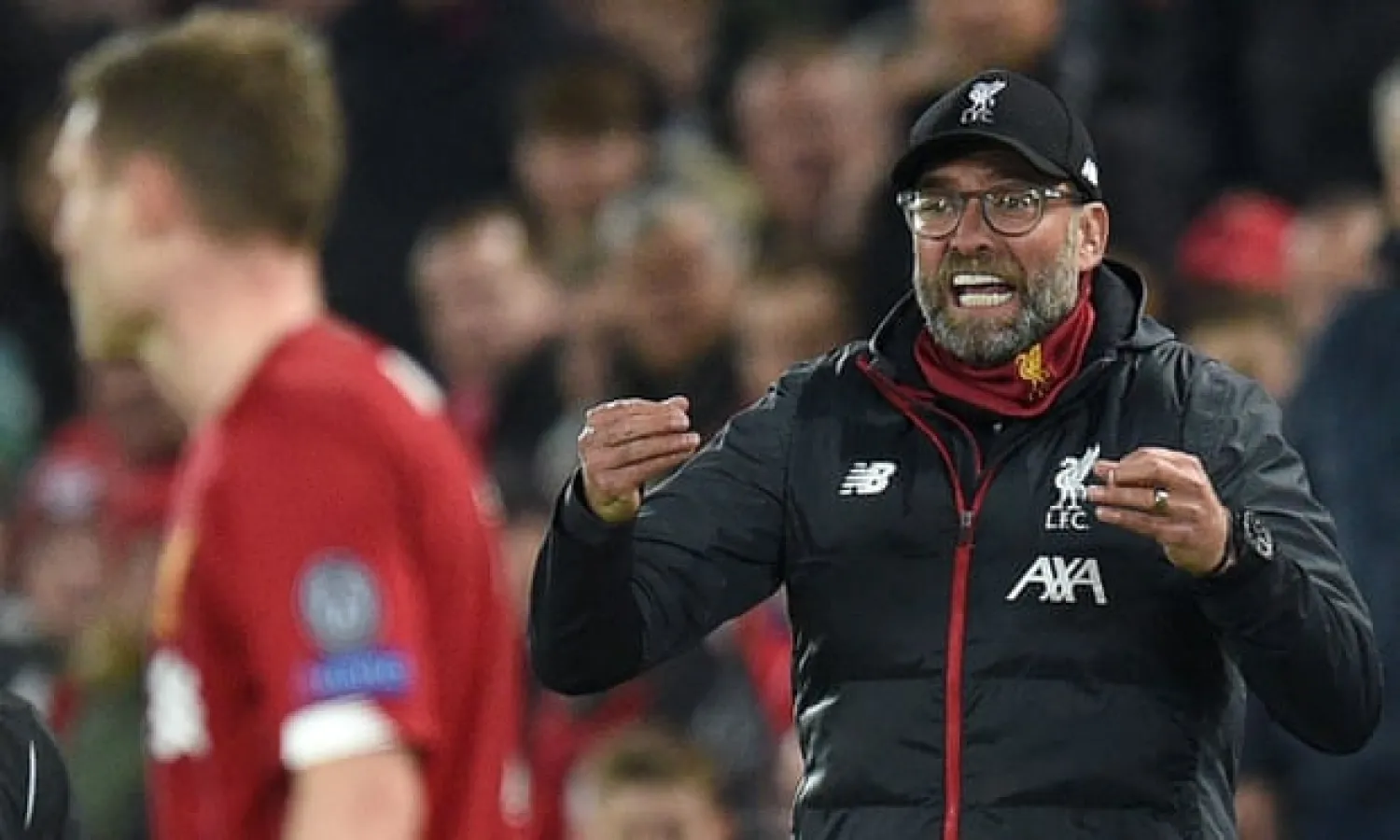
 Jürgen Klopp has taken ideas he learned as a player at Mainz to new heights at Liverpool. Photograph: Oli Scarff/AFP via Getty Images
Jürgen Klopp has taken ideas he learned as a player at Mainz to new heights at Liverpool. Photograph: Oli Scarff/AFP via Getty Images
TT

Pioneering Reds to the Reds: Why Jürgen Klopp’s Pressing Is a Perfect Fit for the Age

 Jürgen Klopp has taken ideas he learned as a player at Mainz to new heights at Liverpool. Photograph: Oli Scarff/AFP via Getty Images
Jürgen Klopp has taken ideas he learned as a player at Mainz to new heights at Liverpool. Photograph: Oli Scarff/AFP via Getty Images

A training field near Ostfildern, in the forest south-east of Stuttgart. It’s February 1983, and local sixth-tier side Viktoria Backnang are playing a friendly against Valeriy Lobanovskyi’s Dynamo Kyiv, who are wintering at Sportschule Ruit. For Viktoria’s young player-manager, Ralf Rangnick, it is a revelatory experience. When the ball goes out of play for a throw-in early on, Rangnick counts the Dynamo players, half-believing they had sneaked an extra man on to the pitch. They hadn’t, but such was the ferocity of their pressing that it felt as if they had. And so a seed was planted that has had a profound impact on football’s tactical development.

Dynamo kept coming to Ruit and Rangnick, who is now the head of sport and development at Red Bull, kept studying them. As his career developed he became part of a group of coaches fascinated by the possibilities of zonal marking and pressing, radical ideas in a Germany dominated by the belief that football was about individual battles, courage and vocal leadership.

Arrigo Sacchi’s Milan became a huge influence. Helmut Gross, a structural engineer who had essentially taught himself tactical theory, became a close friend of Rangnick’s and together they implemented pressing through Stuttgart’s youth ranks.

Volker Finke had remarkable success at Freiburg, leading them to third in the Bundesliga in 1995, beating Bayern 5-1 on the way. Economic issues led to their decline, and Finke was largely dismissed as a crank, but a revolution was gradually brewing.

Wolfgang Frank had been a striker for Eintracht Braunschweig in the 70s but his biggest influence was Sacchi. When he was appointed coach of struggling Mainz in the second division in September 1995, he set about applying the Italian’s methods.

It was hard, boring work, learning positioning, walking through prearranged patterns on the training field. “But,” said the team’s centre-back Jürgen Klopp, “we thought if Gullit and Van Basten had to learn that at Milan, we could put up with it as well.”

Klopp has taken those ideas to new heights, finding at Liverpool a club whose previous best days were based on a pressing game (albeit one quite different in tone from the modern version). His version of pressing – dynamic and aggressive – is now the pre-eminent tactical mode, prompting evolution even in Pep Guardiola, whose press-and-possess football at Barcelona had laid the groundwork for this development.

Almost everybody at the highest level presses hard and high now, from Antonio Conte to Erik ten Hag, Mauricio Pochettino to Jorge Jesus, Christophe Galtier to Jorge Sampaoli. There is a generation of coaches schooled in the Bundesliga developing that pressing game: Julian Nagelsmann, Rangnick’s successor as coach of RB Leipzig, is the highest profile, but the group also includes Lucien Favre and Marco Rose in Germany and Ralph Hasenhüttl (who came between Rangnick’s two spells at Leipzig), Daniel Farke and Thomas Frank in England.

Germany, having resisted pressing for so long, has seemingly adopted it wholesale, the excitement of the new, the absence of preconceptions, allowing it to be taken to new heights. But in terms of how top-level European football has evolved the recent pattern is unusual.

In attempting to trace trends, there is a danger always of oversimplification. The development of tactics is not linear, and it is subject to a range of forces – economic, scientific and cultural – as well as the input of inspired individuals. But there is something inherently dialectical about it.

One team plays in a certain way, others copy it, others work out a way to combat it, that new mode becomes hegemonic until a way of countering that is found and so the game changes again.

It is not cyclical, in part because each step is underpinned by knowledge of what went before and because external developments – leaps forward in nutrition to improve fitness or computer technology to improve analysis, for instance – open up new possibilities.

But there was a time when the dominant mode in top-level European football seemed to oscillate between the attacking and the defensive. The freeform individuality of Real Madrid and Benfica gave way to catenaccio, which in turn was supplanted by Total Football and then the pragmatic pressing of the years of English domination.

The picture blurs a little after that, as globalisation takes hold and the advent of the Champions League begins the movement towards the modern superclub era. But still, the paradigm just about holds: Sacchi’s aggressive pressing followed by the more cautious style of Marcelo Lippi, then the coming of 4-2-3-1 and the reintroduction of dribblers before the last age of attrition with José Mourinho, Rafa Benítez and Greece’s victory at the 2004 Euros. Since when we’ve had Guardiola and the triumph of the pass before this era of high-intensity transition.

Which breaks the pattern. This is an attacking mode following another attacking mode. And perhaps that is what is happening. Perhaps the commercial imperative to produce excitement, coupled with the domestic domination of the superclubs and various law changes designed to encourage a more open game, has produced a world in which the defensive impulse is diminished.

But within that recognition, it is perhaps worth acknowledging that the attacking/defensive divide was always misleading, morally loaded terminology. Louis van Gaal, for instance, tends to use the term “attacking” simply to mean having the ball, but there are many who would regard his possession-based style as sterile. Or think of the 2010 World Cup, when Jogi Löw’s counterattacking Germany were more overtly thrilling than Vicente del Bosque’s possession-driven Spain.

This is the paradox of pressing: in seeking to win the ball back, it falls into the category that has habitually been regarded as defending, and yet it is extremely proactive in the way it reacts to the internal shapes and rhythms of the opponent.

It is, in other words, the perfect form of defending, thrilling, dynamic and percussive, for a world that demands constant entertainment for its television audience. And that, perhaps, is the biggest paradox of all: that the prevailing style in football’s hyper-capitalistic age was inspired by a Soviet team under an overtly Communist coach.

The Guardian Sport


Scrutiny on Flick Rises as Barca Seek Recovery 

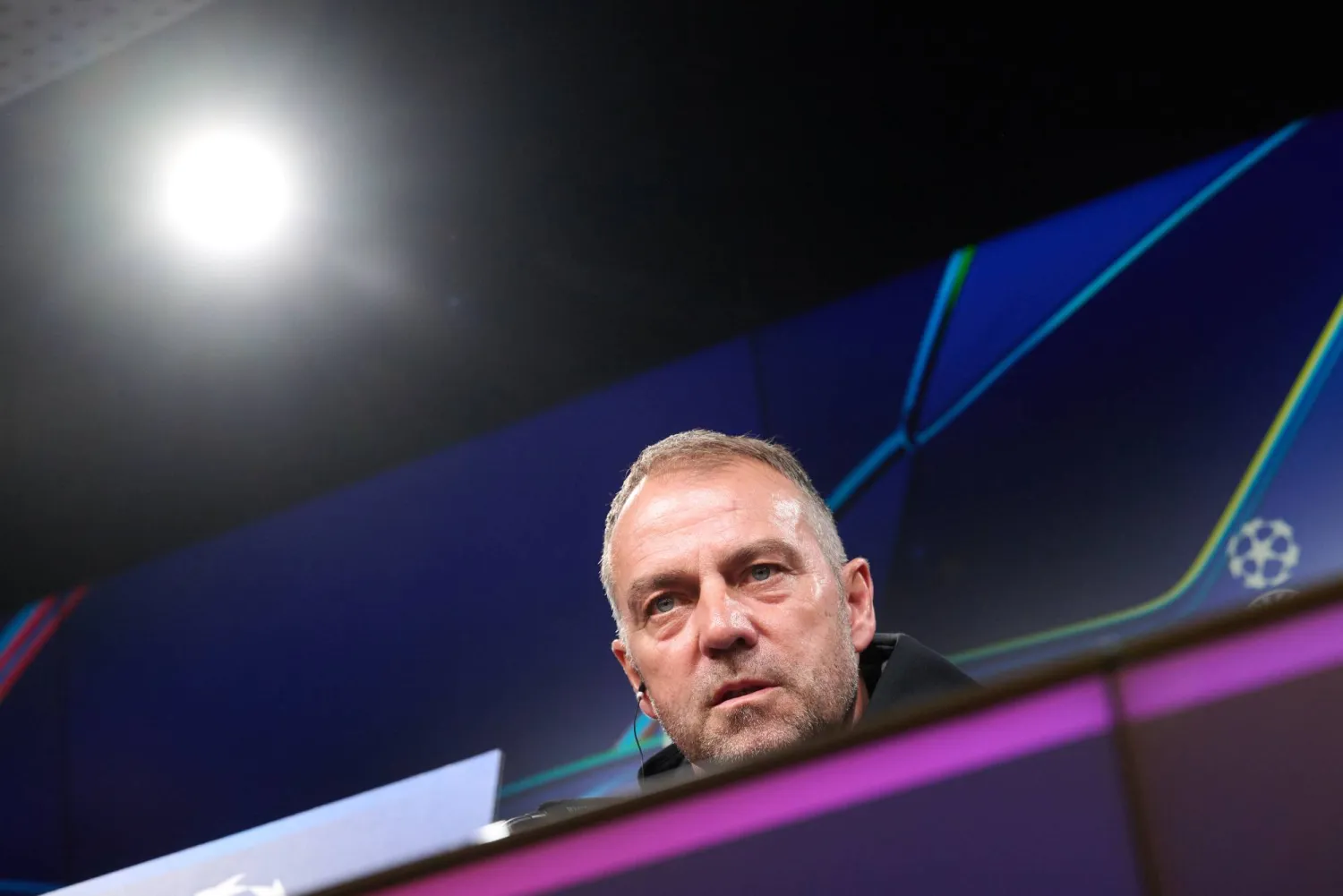
14 April 2025, North Rhine-Westphalia, Dortmund: Barcelona coach Hansi Flick attends a press conference ahead of the 2025 UEFA Champions League quarter-final second leg soccer match against Borussia Dortmund. (dpa)
TT

Scrutiny on Flick Rises as Barca Seek Recovery 

14 April 2025, North Rhine-Westphalia, Dortmund: Barcelona coach Hansi Flick attends a press conference ahead of the 2025 UEFA Champions League quarter-final second leg soccer match against Borussia Dortmund. (dpa)

Since Hansi Flick arrived in Barcelona in the summer of 2024 things have largely gone better than even he might have hoped, at least until the past week.

Revitalizing the Catalan giants and inspiring them to a domestic treble last season, as well as steering them to the final four of the Champions League for the first time in six years was an excellent accomplishment.

The current campaign has been a bumpier ride, in part due to injury problems, but Barca were still going strong until two consecutive defeats sapped morale as the business end of the season approaches.

Barca host Levante on Sunday at Camp Nou in La Liga as they aim to get back on track and potentially reclaim top spot from rivals Real Madrid, who visit Osasuna on Saturday.

Los Blancos moved two points ahead of Barca last weekend and stayed there as Flick's side crumbled in a 2-1 defeat at neighbors Girona on Monday.

That was hot on the heels of a 4-0 humiliation by Atletico Madrid in the Copa del Rey semi-final first leg, arguably Barca's worst performance since Flick's arrival.

Barca protested officiating mistakes in both games, and although the refereeing technical committee later admitted some fault, it does not absolve the Blaugrana of two worrying displays.

"We are not in a good mood, not in a good moment," admitted Flick.

"I gave the team two days off, because I think it's important that they reset."

The coach said his side, who hope to have playmaker Pedri Gonzalez back in action against Levante after injury, may be tired but also needed to buck up their ideas.

"(Mistakes) could be something to do with if they are tired, not fresh enough... but at the end we have to have the hunger to win the games," said Flick.

"When they come back I want another mentality, another level, they (must) train and play at."

Since Flick arrived Barca have played an ultra-attacking style with a high defensive line, leading to a lot of high-scoring games.

However, with the injuries they have had this season, perhaps partly due to wear-and-tear due to Flick's demands over pressing, they are creating less and finishing more inefficiently.

Both central strikers, Robert Lewandowski and Ferran Torres, are out of form in 2026.

The defense, meanwhile, is as porous as ever and with Pedri missing eight of the last 14 league games, they have struggled for control in midfield.

Flick's recent comments about not adjusting his approach regardless of the opponent Barca face are cause for concern.

"I don't take care if (the opponents) play five at the back or if they have a fast striker. We have the quality and this is what I want to see," said Flick last week, although recent results suggest perhaps he should look to tweak things more reactively.

Against Atletico the pace of wingers Ademola Lookman and Giuliano Simeone helped rip Barca's defense to shreds.

Although Barca are firm favorites against Levante, 19th, the trio of games which follow, leading into the Champions League last 16, are key to stopping the season from spiraling away from them.

They next host high-flying Villarreal, before the Copa semi second leg against Atletico and a tricky visit to the San Mames to play Athletic Bilbao.


Messi Kicks Off MLS Season in Key World Cup Year

Argentine forward Lionel Messi won the MLS Cup for Inter Miami, co-owned by David Beckham. CHANDAN KHANNA / AFP/File
TT

Messi Kicks Off MLS Season in Key World Cup Year

Argentine forward Lionel Messi won the MLS Cup for Inter Miami, co-owned by David Beckham. CHANDAN KHANNA / AFP/File

Lionel Messi kicks off a critical season for Major League Soccer this weekend as the rapidly growing US domestic league seeks to cash in on a huge spike in interest from the upcoming World Cup.

Messi -- MLS's undisputed flagship star -- will lace up his boots for a fourth year with Inter Miami, who take on South Korean ace Son Heung-min's Los Angeles FC in Saturday's opener at the 70,000-capacity Memorial Coliseum.

It is a suitably splashy start for a season that will be split in two by the 2026 World Cup, which takes place across the United States, Canada and Mexico this summer.

World Cup host countries typically see boosts in attendance and interest for their domestic leagues, and MLS bosses are determined to keep US eyeballs on the planet's biggest sport long after national teams have returned home.

"This is a massive year for Major League Soccer," said league commissioner Don Garber, describing the season as "a seminal moment for our sport."

The MLS season will this year have a seven-week interruption for the World Cup in June and July.

Five MLS stadiums will host World Cup matches, while many more will be used as training facilities and fan zones.

An increased number of MLS players are expected to play in the World Cup, including Son -- and potentially Messi, though the Argentina great has not yet confirmed he will participate in a record sixth World Cup.

The league plans to use the season's bifurcation to its advantage in order to draw in new fans.

A rumored $15-30 million marketing spend throughout the international tournament will encourage viewers to embrace their local teams, and elevate the US domestic league's increasingly star-studded profile.

The MLS season resumes for its second half in the rest days between the World Cup semi-finals and final. An All-Star Game will quickly follow.

"MLS will be at the center of the soccer universe during the world's largest sporting event, and that creates an extraordinary opportunity for our league, our clubs, and our players," said Garber.

New stars

The decision to start the new MLS season with a game featuring the league's two biggest global stars, at a giant former Olympic stadium in the heart of Los Angeles, is no accident.

Garber is predicting "the largest opening weekend crowd in league history."

While MLS has been heavily dependent on eight-time Ballon d'Or-winner Messi's allure in recent years, the arrival of Son midway through 2025 has been transformative.

Signed by Los Angeles FC for $26.5 million -- reportedly the largest transfer in MLS history -- the 33-year-old's arrival has brought with it the support of thousands of South Koreans living in the United States.

Other marquee names to join MLS sides this year include Minnesota United's James Rodriguez, who penned an extendable six-month contract in a bid to find form before Colombia's World Cup campaign, after a difficult few domestic seasons.

Argentina-born Mexico striker German Berterame has joined Messi at reigning MLS champions Inter Miami, who are co-owned by David Beckham.

And Timo Werner, joining San Jose Earthquakes, becomes the latest German star to ply his trade in a league that already features Thomas Muller at the Vancouver Whitecaps and Marco Reus for Los Angeles Galaxy.

'Best leagues'

MLS is planning another major change that it hopes will entice even more big names.

Beginning July 2027, MLS will change from its current spring-to-fall schedule, to a summer-through-spring rota.

The switch will align MLS with the big European leagues like England's Premier League and Spain's La Liga.

The hope is this will allow US clubs to buy and sell global talent during simultaneous transfer windows, particularly during the summer break.

It would also avoid future clashes with international fixtures and major tournaments.

Garber said the move "reflects exactly where we see MLS going, not just aligning with the best leagues in the world but competing with them."

Critics say it is a gamble, as MLS will soon be directly competing for viewers with the similarly scheduled NFL, NBA and NHL leagues.


Perfect Start for Pereira as Forest Enjoy Record Win at Fenerbahce

Nottingham Forest's Portuguese head coach Vitor Pereira (CR) gestures from the techincal area during the UEFA Europa League - knockout round play-off first leg - football match between Fenerbahce SK and Nottingham Forest FC at the Sukru Saracoglu Stadium in Istanbul on February 19, 2026. (Photo by Yasin AKGUL / AFP)
TT

Perfect Start for Pereira as Forest Enjoy Record Win at Fenerbahce

Nottingham Forest's Portuguese head coach Vitor Pereira (CR) gestures from the techincal area during the UEFA Europa League - knockout round play-off first leg - football match between Fenerbahce SK and Nottingham Forest FC at the Sukru Saracoglu Stadium in Istanbul on February 19, 2026. (Photo by Yasin AKGUL / AFP)

Nottingham Forest's new head ‌coach Vitor Pereira said he had encouraged his players to express themselves at Fenerbahce on Thursday and they responded in style with a 3-0 victory that marked their biggest away win in European competition.

The comfortable win in the first leg of their Europa League knockout round playoff tie in Turkey was the perfect start for Pereira, who took the ‌helm last ‌weekend following the departure of ‌Sean ⁠Dyche.

Goals from Murillo, ⁠Igor Jesus and Morgan Gibbs-White secured the win but the scoreline could have been even more emphatic.

"We had chance to score two more goals. It was a very good result," Portuguese Pereira told TNT Sports, according to Reuters. "It is only ⁠halftime, we need to be consistent, ‌the schedule is ‌tight and difficult."

Pereira is Forest's fourth managerial appointment this ‌season after Nuno Espirito Santo, Ange Postecoglou ‌and Dyche, and the 57-year-old arrives with the side just three points above the Premier League relegation zone.

"Everyone must be ready to help the ‌team. This is what I ask them," said Pereira. "I realized before I ⁠came that ⁠the players have a lot of quality. They need results but they need to enjoy the game.

"If they enjoy the way they are playing they can have a high level. They need organization and confidence. I asked them to express themselves on the pitch. They did it."

Forest host Liverpool in the league on Sunday before Fenerbahce arrive for the second leg of their Europa League tie on February 26.
