


Ramage's 'Young Black Lads' Mindset Reflects Football's Inaction on Racism

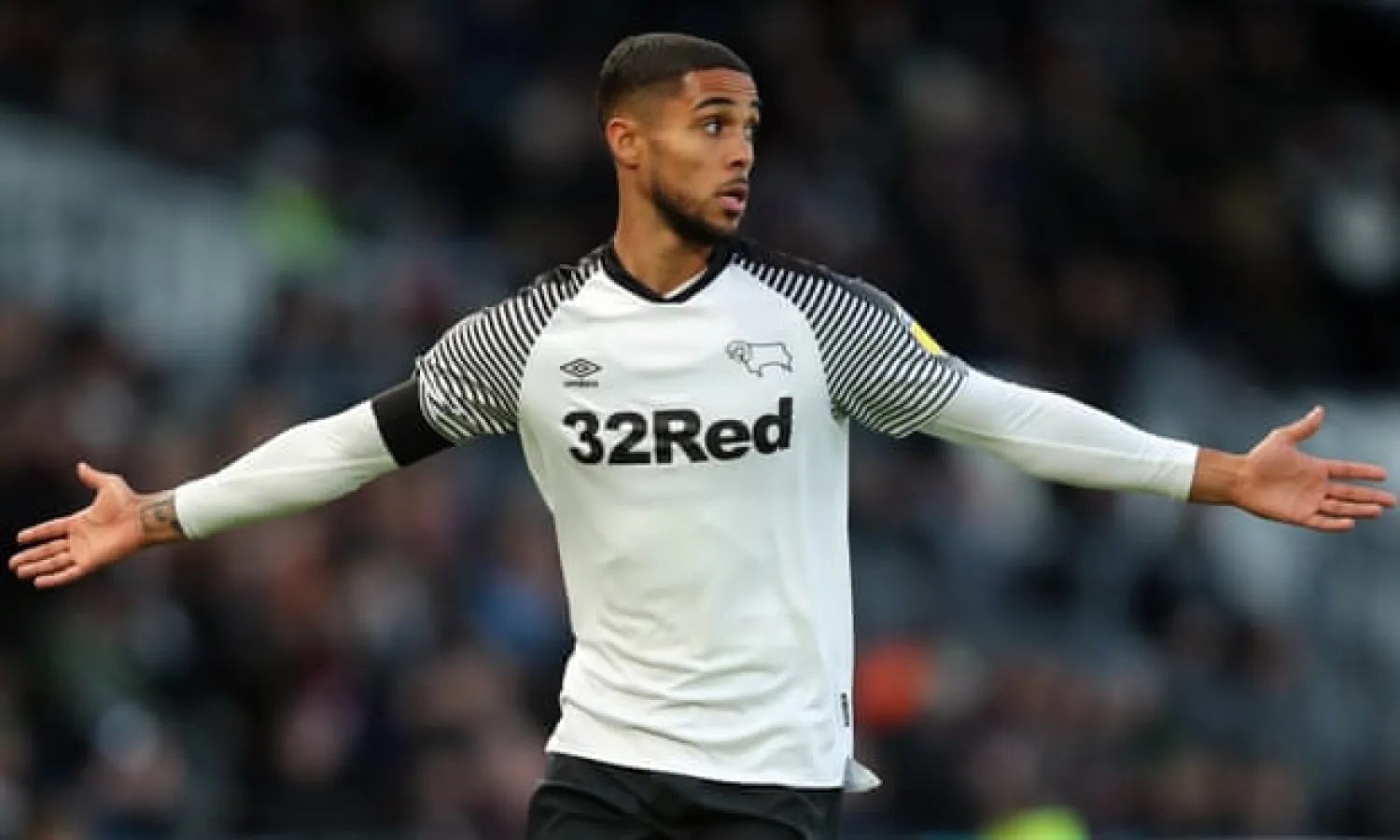
 Derby’s Max Lowe said: ‘Racial ignorance, stereotyping and intolerance negatively affects the image of impressionable young footballers and creates an unnecessary divide in society.’ Photograph: Marc Atkins/Getty
Derby’s Max Lowe said: ‘Racial ignorance, stereotyping and intolerance negatively affects the image of impressionable young footballers and creates an unnecessary divide in society.’ Photograph: Marc Atkins/Getty
TT

Ramage's 'Young Black Lads' Mindset Reflects Football's Inaction on Racism

 Derby’s Max Lowe said: ‘Racial ignorance, stereotyping and intolerance negatively affects the image of impressionable young footballers and creates an unnecessary divide in society.’ Photograph: Marc Atkins/Getty
Derby’s Max Lowe said: ‘Racial ignorance, stereotyping and intolerance negatively affects the image of impressionable young footballers and creates an unnecessary divide in society.’ Photograph: Marc Atkins/Getty

It’s worth reading the comments made by local BBC pundit – now former BBC pundit – Craig Ramage in the wake of Derby’s 1-1 draw with Huddersfield on Saturday. “When I look at certain players,” Ramage judged, “their body language, their stance, the way they act, you just feel, hold on a minute, he needs pulling down a peg or two. So I’d probably say that about all the young black lads … that, you know, it’s about, when you are struggling for form, you are going through a sticky patch, it’s about going back to basics, working hard, and doing the right things.”

Well there you go. Ramage has now been relieved of his duties by the BBC, though it was notably left to a 22-year-old Derby player to publicly challenge the comments. On Sunday, defender Max Lowe spoke out on Instagram “on behalf of black footballers at Derby Country … Racial ignorance, stereotyping and intolerance negatively affects the image of impressionable young footballers and creates an unnecessary divide in society. I am also disappointed that a public service broadcaster did not step in to ask the analyst to explain his reasoning or to distance themselves from these archaic thoughts.” Quite. And we’ll come shortly to the depressing regularity with which pushback against racism ends up having to be player-led.

For now, Ramage has issued a statement explaining that this is not who he is, and his views don’t reflect his views. Or something. However, it’s hard not to suspect they reflect the views of many pundits, supporters, and some of the newspapers and media outlets, subconsciously or otherwise.

“Certain players”, to use Ramage’s euphemism, will never be able to do right for doing wrong, and almost all players have to live with the reality that entirely normal activities will be parsed as somehow detrimental to their game. The most anodyne aspects of the outside life of footballers are ruthlessly policed. Have they been on social media in a manner entirely in keeping with the fact that their side just lost 2-1? Have they been pictured in an expensive car within 48 hours of their side having lost 2-1? Have they got the wrong sort of home, the wrong sort of tattoo, the wrong sort of gait? Are they – whenever they so much as leave the house – showing either extreme contrition or extreme gratitude, the only two acceptable off-pitch emotions? If not, some genius analyst or other will soon be making a distinctly moral judgment about “focus”.

Without wishing to slaughter a sacred cow, then, does any of this really matter? Does it really have any effect on performance, or simply on the feelings of some supporters or commentators? When asked why it matters quite so much as they seem to think it does, pundits given to falling back on this type of critique only ever seem to offer vast woollinesses. It is “indicative of a mindset”, it “sends a message”, it “says his head’s somewhere else”. Does it? It’s certainly convenient to think so. But I often feel the mindset it is all rather more indicative of is that of the pundit in question.

In fact, Ramage’s comments are useful insofar as they show how absolutely impossible it sometimes is to be young, acceptable and black. His primary issues with the young black players are ludicrous things – things like their stance, their body language.

And yet it continues to fall to players like them to lead the charge against their own treatment. A fortnight after a 50%rise in football-related racist incidents over the past year was revealed, Raheem Sterling has mooted a players’ taskforce to combat a problem most now acknowledge is rising. It is said he will consult with the Premier League and Uefa – but is that the right way round?

When Kobe Bryant died, the reflection of the Uefa president was striking. “I did not know Bryant personally,” said Aleksander Ceferin, “but I was always struck by the way he never shied from taking a firm stance against racism. It made him a true role model for other high-profile sports stars.” What about for high-profile sports bodies? It doesn’t take several years of forensic accountants, lawyers, former Belgian prime ministers, hackers and whistleblowers to uncover when some racism is happening in a location Uefa is technically supposed to govern. Quite often, you can do it off your telly.

Despite this, calling it out in a way that produces meaningful results seems to have been officially designated a job for the players, who must do it at the same time as having to try to win a football match. I guess if you want something done, ask a busy person. Even so, many find this allocation of duties unsatisfactory, as suggested by Bayern Munich and Austria defender David Alaba in a Sunday Times interview last weekend. Of the triggering of Uefa’s three-step protocol during England’s game against Bulgaria in Sofia last October, Alaba said: “It’s very sad that the players have to say something because everybody sees it and everybody hears it so why should the players do something? Because it’s not always for the player. They have to do their job. They’re playing a game … We have to find a solution that gets through that.”

Unfortunately, at this stage in the governing body’s glacial journey towards getting a clue about racism, it still can’t be left to Uefa, who don’t seem to truly want to win on this front at all. Leaving it to the players is – how to put this? – “indicative of a mindset”. In fact, mind-blowing as it might be to Ramage and those who secretly agree with him, perhaps players do occasionally have their heads elsewhere. Which is to say, they’re distracted by the continuous burden of having deal with racism because others are failing to.

The Guardian Sport


Morocco's Igamane Suffers ACL Injury

Morocco's forward #07 Hamza Igamane reacts as he misses his penatly during the Africa Cup of Nations (CAN) semi-final football match between Nigeria and Morocco at the Prince Moulay Abdellah stadium in Rabat on January 14, 2026. (Photo by FRANCK FIFE / AFP)
TT

Morocco's Igamane Suffers ACL Injury

Morocco's forward #07 Hamza Igamane reacts as he misses his penatly during the Africa Cup of Nations (CAN) semi-final football match between Nigeria and Morocco at the Prince Moulay Abdellah stadium in Rabat on January 14, 2026. (Photo by FRANCK FIFE / AFP)

Lille striker Hamza Igamane suffered an anterior cruciate ligament injury in Morocco's Africa Cup of Nations final against Senegal, the Ligue 1 side announced on Monday, casting doubt over his participation in this year's World Cup.

The 23-year-old was on the bench ‌for the ‌final, which Senegal ‌won ⁠1-0, before ‌coming on in extra time as the sixth substitute. He lasted seven minutes before going off injured, leaving Walid Regragui's side to finish the match with ⁠10 men.

"Tests carried out on the ‌player have unfortunately confirmed ‍a serious ‍injury. Hamza Igamane has indeed ‍suffered a rupture of the anterior cruciate ligament in his right knee," Reuters quoted Lille as saying in a statement.

"Hamza will be unavailable for several months," it added, with ⁠the injury coming five months before the 2026 World Cup, where Morocco will face Brazil, Scotland and Haiti in Group C.

Igamane, who joined Lille from Rangers in the close season, has scored nine goals in 21 games for the French ‌side in all competitions.


Precision-Serving Former Finalist Rybakina Powers on in Melbourne

Kazakhstan's Elena Rybakina signs autographs after her victory against Slovenia's Kaja Juvan in their women's singles match on day three of the Australian Open tennis tournament in Melbourne on January 20, 2026. (AFP)
TT

Precision-Serving Former Finalist Rybakina Powers on in Melbourne

Kazakhstan's Elena Rybakina signs autographs after her victory against Slovenia's Kaja Juvan in their women's singles match on day three of the Australian Open tennis tournament in Melbourne on January 20, 2026. (AFP)

Former finalist Elena Rybakina warned Tuesday if her serve was firing she would be a threat at the Australian Open, after reinforcing her title credentials with a comfortable first-round victory.

The fifth seed, who lost the 2023 final in three tough sets to Aryna Sabalenka, sent Slovenia's Kaja Juvan packing 6-4, 6-3 with her serve proving a potent weapon.

Rybakina won 83 percent of her first-serve points to keep up her record of safely negotiating the first hurdle at every Grand Slam since the 2022 US Open.

"No matter who is on the other side, if the serve is going, then it's perfect," she said after routinely racing to 40-0 leads and holding to love three times.

"Of course, little things (to work on) on the serve. Maybe adjust, be better in the first few shots of the rally, then we will see how it's going to go.

"But I'm happy with the serve, it really worked today."

It was her second serve that truly separated her from Juvan, winning 10 of 18 points behind it and not facing a break point until the final game of the match.

Rybakina, who won Wimbledon in 2022, faces France's Varvara Gracheva next.


Tjen First Indonesian to Win at Australian Open in 28 Years

Indonesia's Janice Tjen prepares to serve Canada's Leylah Fernandez during their women's singles match on day three of the Australian Open tennis tournament in Melbourne on January 20, 2026. (AFP)
TT

Tjen First Indonesian to Win at Australian Open in 28 Years

Indonesia's Janice Tjen prepares to serve Canada's Leylah Fernandez during their women's singles match on day three of the Australian Open tennis tournament in Melbourne on January 20, 2026. (AFP)

Janice Tjen called it "special" after she pulled off an upset to become the first Indonesian to win a match at the Australian Open in 28 years on Tuesday.

Unseeded Tjen stunned Canadian 22nd seed Leylah Fernandez 6-2, 7-6 (7/1) to surge into the second round in Melbourne and add to her growing list of milestones.

Tjen, who this time last year was ranked 413 but is now the world number 59, is the first Indonesian to win a match at the major since Yayuk Basuki in 1998.

"I'm very happy to be a part of history and be able to get a win here for Indonesia," said the 23-year-old.

"It was special, especially being able to do it in front of my family here and there were a lot of Indonesians, and my close friends are also here."

Asked by AFP how her life had changed off court since a breakthrough 2025, she said: "I get recognized a little bit here and there and I think it's nice, it's a nice feeling to be recognized."

In front of the vocal Indonesia fans Tjen made a lightning start, sealing the first set in 36 minutes to leave her higher-ranked opponent from Canada reeling.

Tjen seized an early break in the second set to put 2021 US Open runner-up Fernandez immediately on the back foot.

The fourth game of the second set threatened to be pivotal, Tjen digging herself out of a hole on her own serve to hold and go 3-1 up.

The 23-year-old Fernandez fought back, reeling off three games in a row to turn the tide.
The battling duo headed into a tiebreak, where Tjen powered into a 3-0 lead and never looked back, letting out a mighty roar when victory was confirmed.

Tjen's career took off in 2025.

She pulled off another surprise in upsetting Russian 24th seed Veronika Kudermetova as a qualifier at the US Open.

In New York she was the first Indonesian to play in the main singles draw of a Grand Slam since 2004.

The Jakarta native lifted the title in Chennai last year -- the first Indonesian to win a WTA Tour singles crown since 2002.

Reflecting on the support in Melbourne of Indonesia fans waving their red and white flag and chanting, Tjen said: "It's something special and feels a little bit like home.

"Knowing that a lot of Indonesians came out to support me today means a lot."
