


Uncertainty over Iraq Confidence Vote amid Virus Outbreak

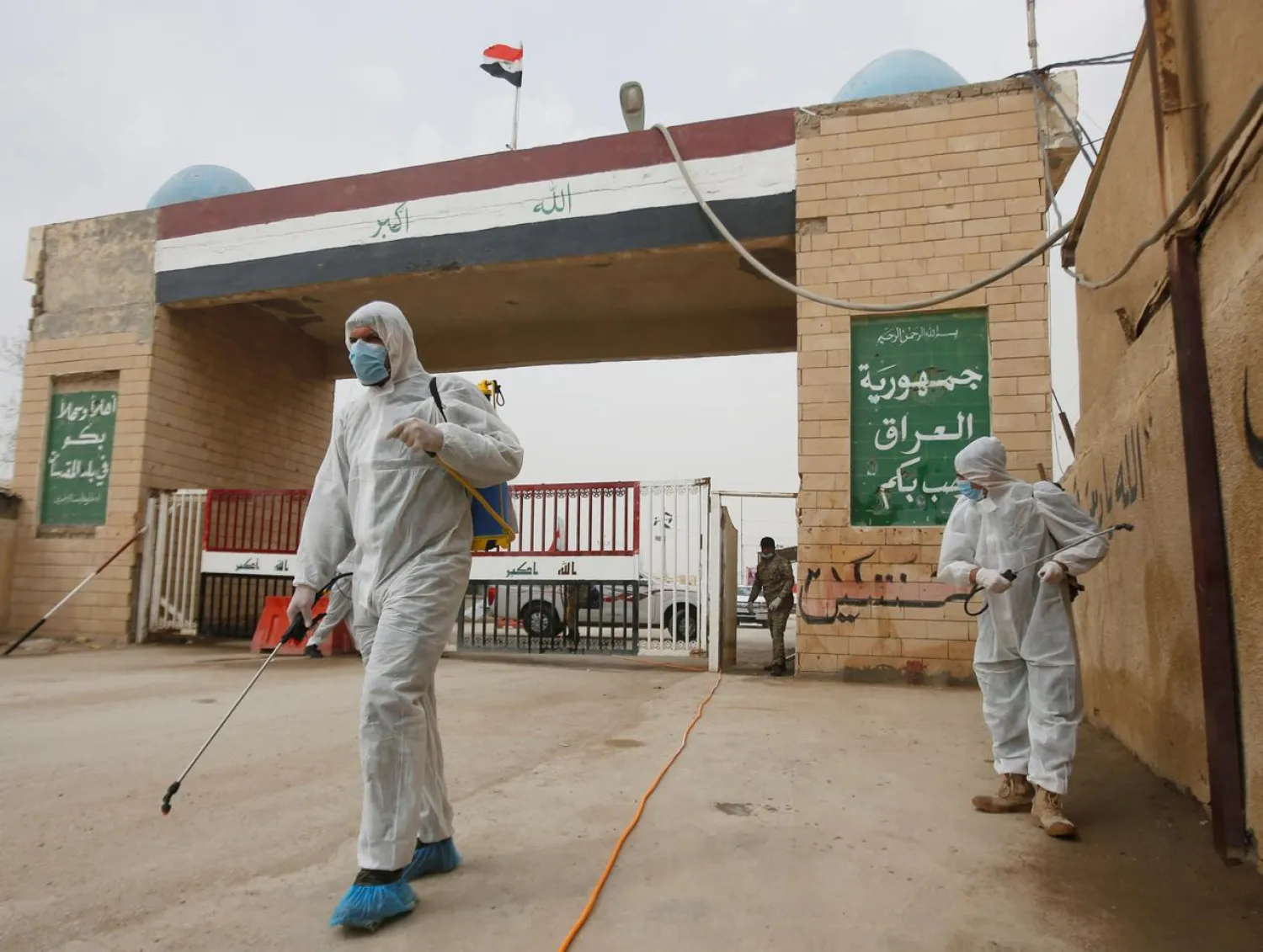
Workers in protective suits spray disinfectants near the gate of Shalamcha Border Crossing, after Iraq shut a border crossing to travelers between Iraq and Iran, Iraq March 8, 2020. REUTERS/Essam al-Sudani
TT

Uncertainty over Iraq Confidence Vote amid Virus Outbreak

Workers in protective suits spray disinfectants near the gate of Shalamcha Border Crossing, after Iraq shut a border crossing to travelers between Iraq and Iran, Iraq March 8, 2020. REUTERS/Essam al-Sudani

The coronavirus outbreak in Iraq has led to uncertainty over the parliament’s ability to hold a session and vote on the new government next month.

Prime Minister-designate Adnan al- Zurfi’s constitutional deadline to form his government ends on April 16, four days after the imposed curfew in Iraq expires.

However, statements made by Health Minister Jaafar Sadiq Allawi, who heads the Iraqi crisis committee to contain the COVID-19 disease, on the possibility of extending the curfew mean that the parliament cannot hold its scheduled session.

Legal expert Ahmed al-Abadi told Asharq Al-Awsat that the curfew doesn’t affect the constitutional deadline, since nothing hinders the PM-designate or the political parties from holding consultations on the government formation.

Abadi stressed that no article in the constitution indicates measures or emergency plans to be implemented in such case.

He explained that if the designated figure completes his government formation, but the parliament fails to hold its session as scheduled due to the coronavirus outbreak, no constitutional measure shall be taken against Zurfi.

National Coalition MP Kazem al-Shammari told Asharq Al-Awsat that the bloc doesn’t object Zurfi’s designation in principle but has expressed some reservations and made some demands.

Shammari stressed the formation of a court to bring into trial those involved in the killing of demonstrators, and requested a clear position on the armed factions that are not part of the Popular Mobilization Forces.

He also raised questions on Zurfi’s position from the security agreement and calls for coalition forces to leave Iraqi territories.

Kurdish and Sunni blocs, however, are still waiting for Shiite blocs to reach a consensual agreement on Zurfi before announcing their final stance from his nomination as PM-designate.

Iraqi Forces Alliance MP Mohammed al-Karbouli told Asharq Al-Awsat that Sunnis will back Zurfi once he persuades at least half of the Shiite blocs to support him.

The positions of the two main Kurdish parties remain unclear pending the announcement of the majority of Shiite blocs’ final stance.

However, they maintained the standards for preserving the Kurdistan region’s rights, implementing the agreements concluded between the federal government and the Kurdistan Regional Government, and being represented in the new cabinet.



One Syrian Security Member Killed in ISIS Attack in Raqqa

Syrian Internal Security vehicles patrol near Ain al-Arab in eastern Aleppo province after authorities said 20 suspects were arrested in connection with attacks on security checkpoints and facilities. (SANA file)
TT

One Syrian Security Member Killed in ISIS Attack in Raqqa

Syrian Internal Security vehicles patrol near Ain al-Arab in eastern Aleppo province after authorities said 20 suspects were arrested in connection with attacks on security checkpoints and facilities. (SANA file)

Syria's Interior Ministry said on Monday that one of its security personnel had been killed as its forces thwarted an attack by two ISIS militants on a command headquarters of the country's internal security forces in the city of Raqqa.

According to a ministry statement, two suicide attackers attempted to storm the facility. Security ‌personnel engaged the pair, ‌neutralizing one of them, ‌while ⁠the second detonated ⁠an explosive vest after being surrounded.

Three security personnel were also wounded in the attack, the statement added.

Earlier, the Syrian state news agency had cited the Interior Ministry's spokesperson as saying that preliminary information indicated at least ⁠two ministry personnel were killed in ‌a suicide attack on ‌a ministry camp in Raqqa.

In February, ISIS ‌declared a new phase of operations against ‌the government of President Ahmed al-Sharaa and has since carried out a spate of attacks, including one that killed four Syrian security personnel near ‌Raqqa.

Last year, Sharaa's government joined the US-led coalition fighting ISIS.

At the peak of its power during the Syrian civil war a decade ago, ISIS controlled around a quarter or more of Syria, before being driven out of the territory by a US-led coalition and other foes.


Dutch Court Jails ‘Assad Torturer’ for 26 Years for Torture, Rape

A demonstrator stands on a photograph of President Bashar al-Assad during a protest outside the Syrian consulate in Istanbul, Türkiye, on Dec. 8, 2024. (Getty Images/AFP)
TT

Dutch Court Jails ‘Assad Torturer’ for 26 Years for Torture, Rape

A demonstrator stands on a photograph of President Bashar al-Assad during a protest outside the Syrian consulate in Istanbul, Türkiye, on Dec. 8, 2024. (Getty Images/AFP)

A Dutch court Monday sentenced a Syrian man to 26 years in jail for the torture and rape of opponents of former president Bashar al-Assad during the country's civil war.

The 58-year-old man, identified as Rafik A., was head of the interrogation unit of the National Defense Force (NDF) in the western Syrian city of Salamiyah in 2013 and 2014.

The paramilitary NDF violently suppressed dissent against the Assad regime and imprisoned and tortured opponents.

The court said victims were "handcuffed and blindfolded, beaten with various objects and kicked for prolonged periods, folded up inside a car tire, hung upside down, or electrocuted, often being forced to be naked."

A. was also found guilty of sexually abusing multiple victims and raping one of them, the court said.

"Time and again, the suspect created conditions of mortal terror, threat, pain, hopelessness and powerlessness," said the court in The Hague.

He was convicted of 19 counts of crimes against humanity against eight victims.

The court said the sentence was justified by "the exceptional gravity of the offences and the suffering of the victims".

It was the first time anyone had been tried in the Netherlands for sexual violence as a crime against humanity.

A. arrived in the Netherlands in 2021 and won temporary asylum, settling in the central town of Druten with his family.

Police arrested him shortly afterwards following a tip.

During his trial, A. denied the charges against him which he dismissed as a "conspiracy".

His lawyers said A. himself was tortured by militias and is suffering from post-traumatic stress syndrome.

Several European countries are trying suspects from the Syrian civil war under the legal tool of universal jurisdiction, allowing judges to rule on alleged serious crimes committed abroad.

Similar cases have been heard in France, Germany, Sweden, Belgium and Austria.


Palestinian Leader Abbas Announces Presidential Election in Early 2027

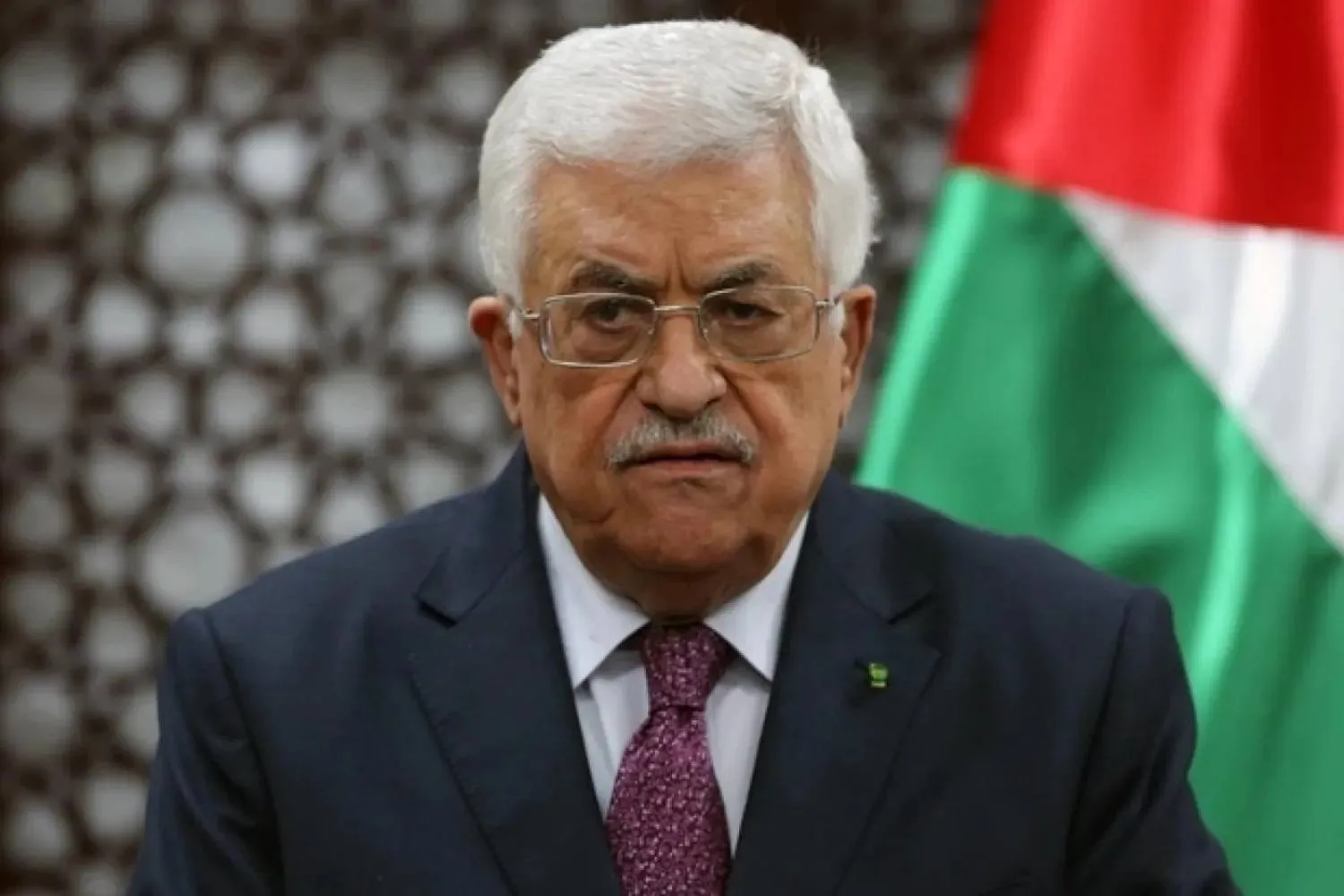
 Palestinian President Mahmoud Abbas. (AFP file photo)
Palestinian President Mahmoud Abbas. (AFP file photo)
TT

Palestinian Leader Abbas Announces Presidential Election in Early 2027

 Palestinian President Mahmoud Abbas. (AFP file photo)
Palestinian President Mahmoud Abbas. (AFP file photo)

Palestinian president Mahmoud Abbas has issued a decree calling for presidential elections in early 2027 and for legislative elections to be held in November of this year, official Palestinian news agency Wafa reported, without saying if he would run. 

Abbas, 90, won the last Palestinian presidential election in 2005 with a mandate of four years, meaning his term should have expired in 2009. 

However his term was extended and no presidential election has been held since, with Abbas ruling by presidential decrees, courting criticism at home and abroad. 

"President Mahmoud Abbas announced that presidential elections will be held in early 2027," Wafa said, citing a statement from the presidency. 

The nonagenarian leader's decree also calls for legislative elections to take place in November of this year, it added. 

In his decree, Abbas emphasized he was "fully prepared to organize the Palestinian National Council elections scheduled for November, which include the general legislative elections in the homeland and elections abroad". 

The Palestinian National Council (PNC) is the parliament of the Palestine Liberation Organization (PLO), which has over 700 members from the Palestinian territories and abroad. 

The last legislative elections in the Palestinian territories were held in 2006, when Hamas won, defeating Abbas' Fatah party, which had previously dominated Palestinian politics. 

As a result, the Palestinian Legislative Council, which is the parliament of Abbas' Palestinian Authority, has not met since 2007. 

Holding elections is part of the reforms demanded by the international community, which supports the Palestinian Authority financially. 

Palestinian legal researcher Mahmud Al-Afranji said there was both political will and international pressure on the Palestinian Authority to hold the elections. 

But he told AFP that a lack of guarantees that elections would be held in occupied east Jerusalem and the Gaza Strip remained "an obstacle to holding the legislative elections". 

In 2021, Abbas announced legislative and presidential elections to be held in May and July of that year respectively. 

They were then postponed indefinitely due to the absence of guarantees that voting could take place in east Jerusalem, which Israel has occupied since 1967. 

In April, Palestinians went to the polls to elect municipal council heads in the occupied West Bank, in the first vote since the outbreak of the Gaza war in October 2023.