


Football Isn't Quite Getting Its Coronavirus Response Right but Who Is?

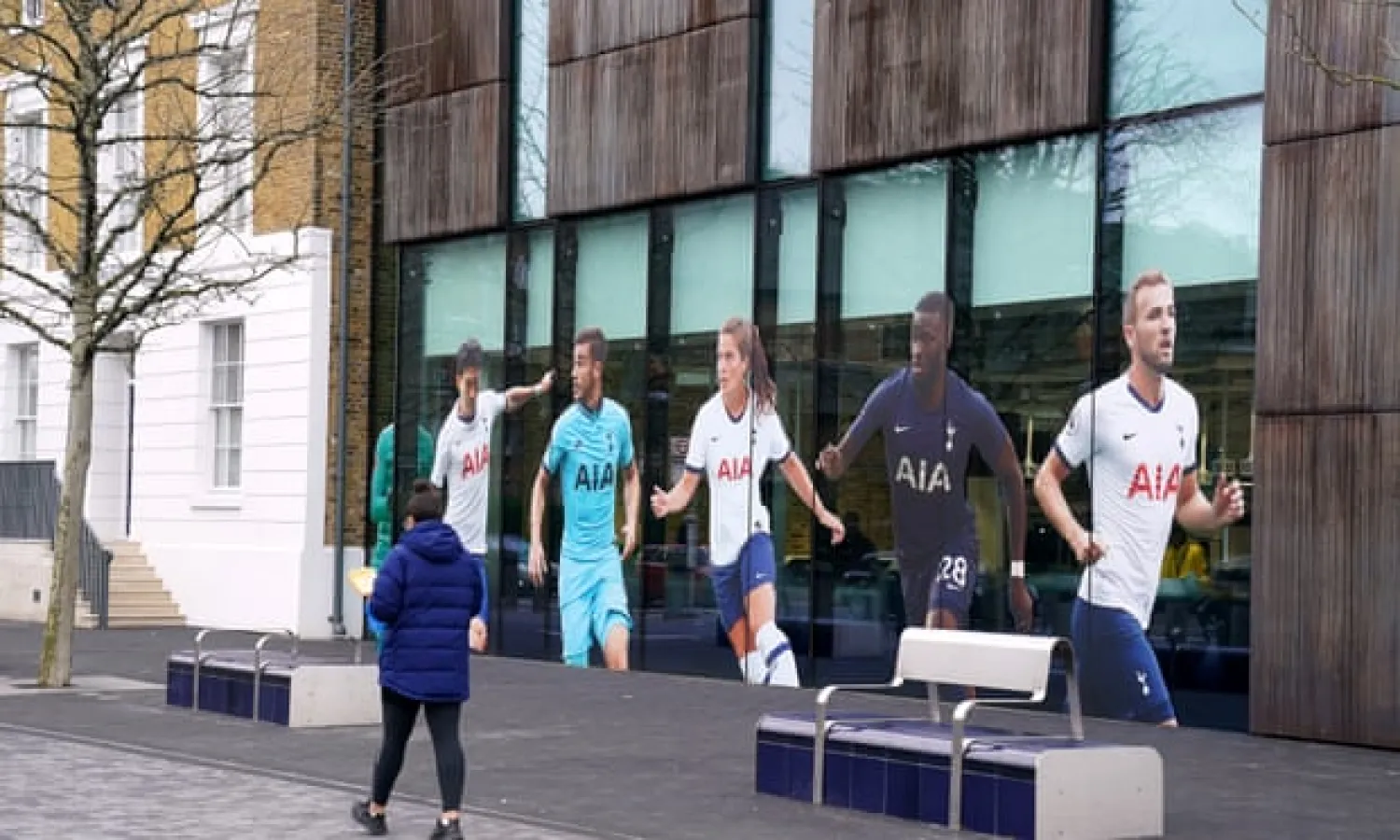
 Tottenham’s reputation has suffered during the lockdown. Photograph: John Walton/PA
Tottenham’s reputation has suffered during the lockdown. Photograph: John Walton/PA
TT

Football Isn't Quite Getting Its Coronavirus Response Right but Who Is?

 Tottenham’s reputation has suffered during the lockdown. Photograph: John Walton/PA
Tottenham’s reputation has suffered during the lockdown. Photograph: John Walton/PA

There are two parallel worlds right now. The first is those in the heart of this crisis. The prime minister fighting for his life. The heroic out-of-retirement doctors going back and not returning. The underpaid nurses leaving behind families. The care workers, the bus drivers, the victims – those final breaths surrounded by ventilator machines and masks instead of wives, husbands and children. The news.

The three lecterns, the Skyping journalists, the sheer numbers lost – they start to become almost meaningless when they get so high. The second world is the rest of us. The lucky ones. Untouched directly – so far.

Each with our own petty lockdown frustrations. Zooming permanently out‑of‑shot parents, dodging joggers who hurtle round blind corners, the endless washing-up. Eye-rolling at people out in parks complaining about other people who are out in parks. And in the middle of all of it is football just not quite getting it right. As someone put it so perfectly the other day, football is being used as, well, a political football – amplified even more than normal by social media as we have nothing to do but scroll, refresh, scroll, refresh until our allotted outside time.

Twitter bios updated to read: “Proud Dad, amateur virologist, keen interest in Football Finance specifically in times of a Global Pandemic.” Everyone is losing at the moment. The Football Association, the Premier League, the EFL, the broadcasters, the players, the fans. Some maybe more than others, but no one benefits. This is the weirdest and most complex situation of our lifetime, none of us know what is going to happen – and that includes owners, players, broadcasters, MPs … all of us. Surely we are all going to get it wrong at some point.

That doesn’t mean giving people a free pass but it does mean patience, flexibility and understanding: three words seemingly absent from the debate. Until a month ago I would have guessed a reverse furlough was something Jos Buttler might pull out in the IPL. Liverpool’s about-turn appears correct.

Is it too simple to suggest that every pound the government puts into furlough is taken away from purchasing or building ventilators or PPE equipment? Probably. But it’s another pound the government won’t have. Liverpool are a business with rich owners and not too many staff – they can afford it, in a way that perhaps Norwich and Bournemouth can’t.

They deserve credit for changing their mind. It’s OK to screw up and admit your mistake. If – as some seem desperate to see – you want a league table of who deserves praise right now then they finish below Leeds and the Manchester clubs and above Tottenham and Newcastle. But ultimately it doesn’t matter. They no longer have the government’s money. Park that and let’s move on to the next thing.

The question about whether it’s fair for some clubs to furlough when others don’t appears legitimate. And where do you draw the acceptable line – above or below Newcastle? The answer is more complex. It is going to be different for every club in the pyramid. There won’t be a line. Some League Two clubs won’t need to; some Premier League clubs will. And what of Spurs? You have to hand it to them for continuing their dismal form even when football has completely stopped.

Furloughing staff while players run arm in arm in a park in Barnet. Even former players (Kyle Walker) and players who haven’t joined yet (Jack Grealish) are getting involved in damaging the brand. Joe Lewis is a billionaire. Daniel Levy is paid millions of pounds. The Tottenham Hotspur Supporters’ Trust put out a very sensible and measured statement asking for an explanation, and followed up saying: “Do not further damage the club’s reputation, listen to your fans.” Surely there was a meeting where Spurs weighed up both options.

Now is the time to be crystal clear – if stadium debt, or whatever, is an issue, then be open about it. Some fans have threatened to give up on their club. Is that even possible? Could you give up on your football team? Surely the subconscious will take over when Hugo Lloris leads them out for their next Premier League game behind closed doors on a training ground in the Midlands? What about the broadcasters? They are due £762m back if the season isn’t completed. Do they need that money? All of it? Straight away? With no live sport, their subscription numbers will decrease, not to mention the loss of advertising revenue and sponsorship around live games.

Everyone loses. And what of the players? The last few days have made us realise that they might actually be like a large group of real humans – different, impossible to cover with just one label. Most with good intentions, engaged, thoughtful and in touch. A few less so. And while thousands of people who aren’t being asked to give up their wages ask footballers to give up theirs, surely it’s OK for those footballers to at least spend a bit of time working out exactly where their money might go.

Of course at the very moment footballers seemed to be winning the PR battle, Walker picked a pursuit completely unachievable while maintaining physical distancing. But others, like Jordan Henderson and Marcus Rashford, are going above and beyond. Footballers leading the way. It’s refreshing. The truth is that football – like the rest of society – is struggling to work out how to proceed. So many vested interests, all wanting to do the right thing, but trying to protect themselves at the same time, which is probably what we’re all doing right now.

The Guardian Sport


Jeddah to Host Opening Round of UIM E1 World Championship

Hosting the season premiere aligns with Saudi Vision 2030 goals to diversify the economy and promote sports tourism. SPA
TT

Jeddah to Host Opening Round of UIM E1 World Championship

Hosting the season premiere aligns with Saudi Vision 2030 goals to diversify the economy and promote sports tourism. SPA

Jeddah is set to host the opening round of the third season of the E1 Series, the world's first all electric raceboat championship, on January 23 and 24.

Organized by the Saudi Water Sports and Diving Federation in partnership with the Public Investment Fund and the UIM, the event underscores Saudi Arabia’s commitment to modern sports and environmental sustainability.

The 2026 season features eight international rounds. Following the Jeddah opener, the series will travel to Lake Como (Italy), Dubrovnik (Croatia), and Monaco, followed by a second unannounced European round. The championship then heads to Lagos (Nigeria) and Miami (US), before reaching its grand finale in the Bahamas.

Hosting the season premiere aligns with Saudi Vision 2030 goals to diversify the economy and promote sports tourism. As Jeddah's shores transform into a global hub for advanced electric marine racing, the event solidifies the Kingdom's status as a leading destination for major international sporting competitions.


Djokovic Says 'Addiction' to Tennis Keeps him Going at 38

Tennis - Australian Open - Melbourne Park, Melbourne, Australia - January 17, 2026 Serbia's Novak Djokovic during the press conference REUTERS/Tingshu Wang
TT

Djokovic Says 'Addiction' to Tennis Keeps him Going at 38

Tennis - Australian Open - Melbourne Park, Melbourne, Australia - January 17, 2026 Serbia's Novak Djokovic during the press conference REUTERS/Tingshu Wang

Novak Djokovic said Saturday he still gets a "drug-like" adrenaline rush from tennis and is not thinking about retiring anytime soon.

The 38-year-old is about to embark on his 21st Australian Open and remains among the top contenders, behind defending champion Jannik Sinner and top-ranked Carlos Alcaraz.

Melbourne Park is his favorite hunting ground, claiming 10 titles.

Despite scaling back his tournament appearances in recent years the Serbian great remains confident he can still compete with the best and is not ready to leave the sport behind.

"I'm still living my dream to be honest," the former world number one said on the eve of the opening Grand Slam of the year.

"It's passion and love for the game. It's the interaction with people. It's the energy that you feel when you walk out on the court.

"That adrenaline rush, it's almost like a drug.

"I think that a lot of the top athletes from different sports can relate to that. I have been at least hearing them speak about that.

"It's so addictive, you know, the feeling of competing."

His long-time rivals Roger Federer and Rafael Nadal have both hung up their racquets and Djokovic said he constantly got asked about when he would join them.

"I have been asked a lot about obviously when is the end date going to come for me, but I don't want to talk or think about it yet because I'm here, I'm competing," AFP quoted him as saying.

"When that arrives and kind of becomes ripe in my head, I'll share it with you, and then we can all discuss on the farewell tour.

"But right now I'm still number four in the world, still competing at the highest level, and I feel like there is no need to draw the attention to that discussion."


World Number Ones Sabalenka, Alcaraz Begin Australian Open Campaigns

This handout picture released by Tennis Australia on January 16, 2026, shows Aryna Sabalenka of Belarus speaking at a press conference ahead of the 2026 Australian Open. (Photo by Vince Caligiuri / TENNIS AUSTRALIA / AFP)
TT

World Number Ones Sabalenka, Alcaraz Begin Australian Open Campaigns

This handout picture released by Tennis Australia on January 16, 2026, shows Aryna Sabalenka of Belarus speaking at a press conference ahead of the 2026 Australian Open. (Photo by Vince Caligiuri / TENNIS AUSTRALIA / AFP)

The first round of the Australian Open begins in Melbourne on Sunday.

World number one Carlos Alcaraz, who could complete a career Grand Slam if he wins the tournament, faces Adam Walton, while Aryna Sabalenka takes on Tiantsoa Rakotomanga Rajaonah as she seeks a third title at Melbourne Park.

TOP MEN'S MATCH: ALCARAZ V WALTON
At 22, Alcaraz could replace Don Budge as the youngest man to achieve the career Grand Slam with victory at the Australian Open. The Spaniard has left no one in any doubt what his main goal is for the 2026 season, saying in November he would rather win a first Melbourne Park crown than retain his French and US Open titles.

His quest to make history will begin with a first-round tie against Australian Walton, Reuters reported.

The pair have crossed paths once before, with Alcaraz beating the Australian ⁠6-4 7-6(4) during his title-winning run at the Queen's Club Championships last year.

TOP WOMEN'S MATCH: SABALENKA V RAKOTOMANGA RAJAONAH
Sabalenka will be bidding to continue her incredible record in hard court Grand Slam tournaments when she begins her campaign against Frenchwoman Rakotomanga Rajaonah.

The Belarusian world number one has reached the final of the last six majors she has played on the surface, winning four of those.

She enters the competition in fine form after retaining her Brisbane International title this ⁠month without losing a set, and should have little trouble when she takes on the 118th-ranked Rakotomanga Rajaonah.

VENUS WILLIAMS IS BACK
Venus Williams, a two-times Australian Open singles finalist, returns to the tournament for the first time since 2021 after receiving a wildcard.

The 45-year-old faces Olga Danilovic in the first round, where she is set to become the oldest woman to feature in the Australian Open main draw by surpassing Japan's Kimiko Date, who was 44 when she bowed out in the first round in 2015.

Williams has endured a poor start to the season, losing to Magda Linette in the first round in Auckland and to Tatjana Maria in her opening match at the Hobart International.

Despite her defeats, she ⁠said she was happy with her level.

"I can't expect perfection right now, but I know I'm playing good tennis.

Winning and losing doesn't know any age. Once you walk on court, you're there to compete," Williams said before her defeat in Hobart.
