


Hard Work Lies ahead for Lebanon on Road to IMF Aid Deal as Banks Reject Rescue Plan

An anti-government protester scuffles with Lebanese army soldiers in the town of Zouk Mosbeh, north of Beirut, Lebanon, April 27, 2020. (AP)
TT

Hard Work Lies ahead for Lebanon on Road to IMF Aid Deal as Banks Reject Rescue Plan

An anti-government protester scuffles with Lebanese army soldiers in the town of Zouk Mosbeh, north of Beirut, Lebanon, April 27, 2020. (AP)

With a rescue plan that will form the basis of talks for IMF aid finally in place, Lebanon must now enact painful steps and work out how it distributes the costs, with the country’s banks likely to be particularly hard hit.

The Lebanese government signed a request for assistance from the International Monetary Fund (IMF) on Friday in what Prime Minister Hassan Diab’s office described as “a historic moment in the history of Lebanon”.

Although economists and diplomats welcomed the plan as a critical first step, many were skeptical that ambitious proposals to cut public sector spending and overhaul the banking sector could be enacted after years of political wrangling.

“This means the onset of serious negotiations with the IMF so this is very important and good news because it removes a lot of uncertainty. Having said that, the issue in Lebanon has always been one of execution,” ex-economy minister Nasser Saidi said of the 53-page plan passed on Thursday.

The plan sets out tens of billions of dollars in financial system losses and tough measures to claw Lebanon out of a crisis that has seen its currency crash, unemployment soar, the country default on its sovereign debt and protests on the streets.

“We have taken the first step on the path of saving Lebanon from the deep financial gap; and it would be difficult to get out of it without efficient and impactful help,” Diab’s office said in Friday’s statement.

A rapid slide in the Lebanese pound, which has lost more than half its value since October, has sparked renewed unrest, with a demonstrator killed in riots targeting banks that have frozen savers out of US dollar deposits.

Beirut hopes that with an IMF program in hand, foreign donors will release about $11 billion pledged at a Paris conference in 2018 which was tied to long-stalled reforms.

“Implementation is the hard bit, and Lebanon has consistently failed on this. Progress will only be possible with that, on the basis of greater political and public consensus,” a Western diplomat told Reuters.

The plan, which calls for an additional $10 billion in external support over five years, also forms the backbone of talks with foreign bondholders that have yet to start and several Lebanese dollar bonds notched up their best daily gains on Friday in more than a month.

Lebanon said in March that it was defaulting on Eurobonds totalling $31 billion to preserve cash for vital imports.

“In large part it’s a big PR move for the government as there was a feeling that the government was starting to lose control of the narrative. This plan shows they’re really trying to work towards something,” Nafez Zouk, emerging markets strategist at Oxford Economics, said.

Blow to banks

A central plank of the plan is imposing financial sector losses of roughly $70 billion, which will be covered in part by a shareholder bail-in and cash taken from large depositors.

With measures such as recovering stolen assets abroad, this could take years while some economists say the plan places too heavy a burden on a banking sector that has helped finance decades of large state budget deficits.

“This is basically a takeover of the banking sector by the state. I don’t understand how this will restore confidence,” said Nassib Ghobril, chief economist at Byblos Bank. “When you go this way, where is lending going to come from?”

Marwan Mikhael, head of research at Blominvest Bank, said it was unfair to make banks pay such a high cost for years of government borrowing that led to the default and broader crisis.

“The government doesn’t have the money to bail out the banks ... so here they want the banks to rescue the government.”

The Lebanese Banking Association said Friday it would in “no way” endorse the rescue plan, saying it wasn’t even consulted on it “despite being key part of any solution.”

“Domestic bank restructuring will further destroy confidence in Lebanon both domestically and internationally,” it said in a statement.

The plan will likely deter investment in the economy, thereby, hindering any recovery prospects, it added.

The association called the plan's revenue and expenditure measures "vague" and not backed by a precise timeline for implementation, and said it did not address inflationary pressures that could lead to hyperinflation.

It urged MPs to reject it, in part because it violated private property, and said it would soon present a plan of its own that could restore growth.

Oil Hovers Near Seven-month Highs Ahead of US-Iran Talks

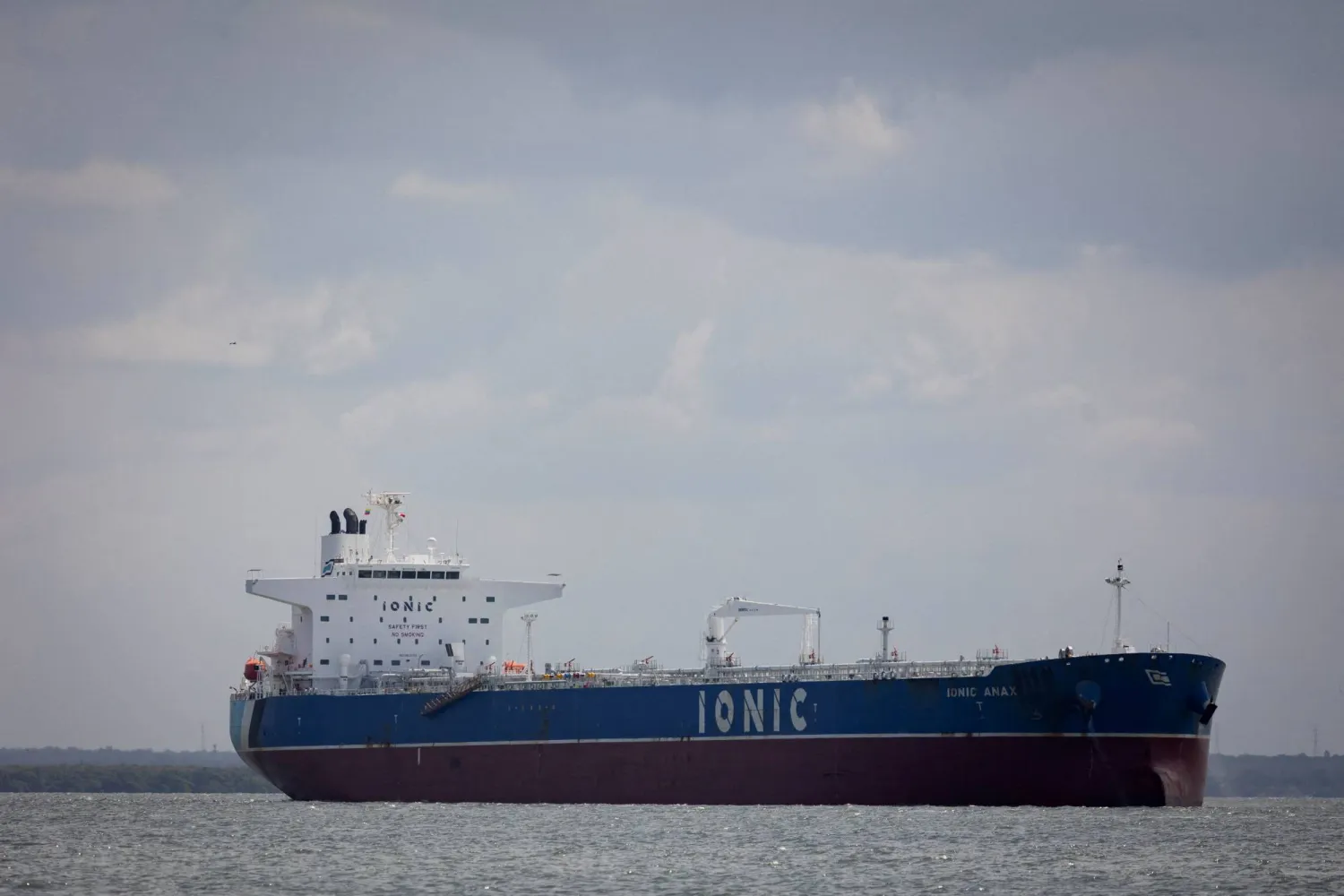
FILE PHOTO: Chevron-chartered Ionic Anax oil tanker sits anchored in Lake Maracaibo, near the Bajo Grande crude port operated by state oil company PDVSA, in Maracaibo, Venezuela, February 9, 2026. REUTERS/Marco Bello/File Photo
TT

Oil Hovers Near Seven-month Highs Ahead of US-Iran Talks

FILE PHOTO: Chevron-chartered Ionic Anax oil tanker sits anchored in Lake Maracaibo, near the Bajo Grande crude port operated by state oil company PDVSA, in Maracaibo, Venezuela, February 9, 2026. REUTERS/Marco Bello/File Photo

Oil prices edged higher on Wednesday, as investors weighed the threat of military conflict between the US and Iran that could disrupt supply and a big build in US crude inventories.

Brent futures were up 6 cents at $70.83 per barrel at 0957 GMT. WTI futures rose 4 cents to $65.67 per barrel.

Brent prices reached their highest since July 31 on Friday, while WTI hit its highest since August 4 on Monday, as the US positioned military ‌forces in ‌the Middle East to try to compel Iran to ‌negotiate ⁠an end to ⁠its nuclear and ballistic missile program.

An extended conflict could disrupt supplies from Iran, the third-biggest crude producer in the Organization of the Petroleum Exporting Countries, and other countries in the key Middle East producing region.

Supporting oil prices, US President Donald Trump briefly laid out his case for a possible attack on Iran in his State of the Union speech on Tuesday, saying he would ⁠not allow a country he described as the world's biggest ‌sponsor of terrorism to have a nuclear ‌weapon.

"This uncertainty means the market will continue to price in a large risk premium ‌and remain sensitive to any fresh developments," ING commodities strategists said on ‌Wednesday.

US envoys Steve Witkoff and Jared Kushner are due to meet an Iranian delegation for a third round of talks on Thursday in Geneva.

Iran's Foreign Minister Abbas Araqchi said on Tuesday that a deal with the US was "within reach, but ‌only if diplomacy is given priority.”

"Trump has warned that without a deal, there will be 'very bad consequences'. Whether (Iran's) concessions ⁠will meet ⁠the US's 'zero enrichment' red line remains to be seen," Tony Sycamore, IG market analyst, said in a note.

Amid the heightened tensions, Iran has accelerated talks to purchase Chinese anti-ship cruise missiles, according to Reuters sources, which could target the US naval forces that have assembled near the Iranian coast.

While geopolitical tensions have supported prices, the market is also contending with concerns of large inventory gains as global supply exceeds demand.

According to market sources, the American Petroleum Institute late on Tuesday reported a massive increase in US oil stockpiles of 11.43 million barrels in the week ended February 20.


Iraq’s West Qurna 2 Oilfield Poised for Output Surge with Chevron, Minister Says 

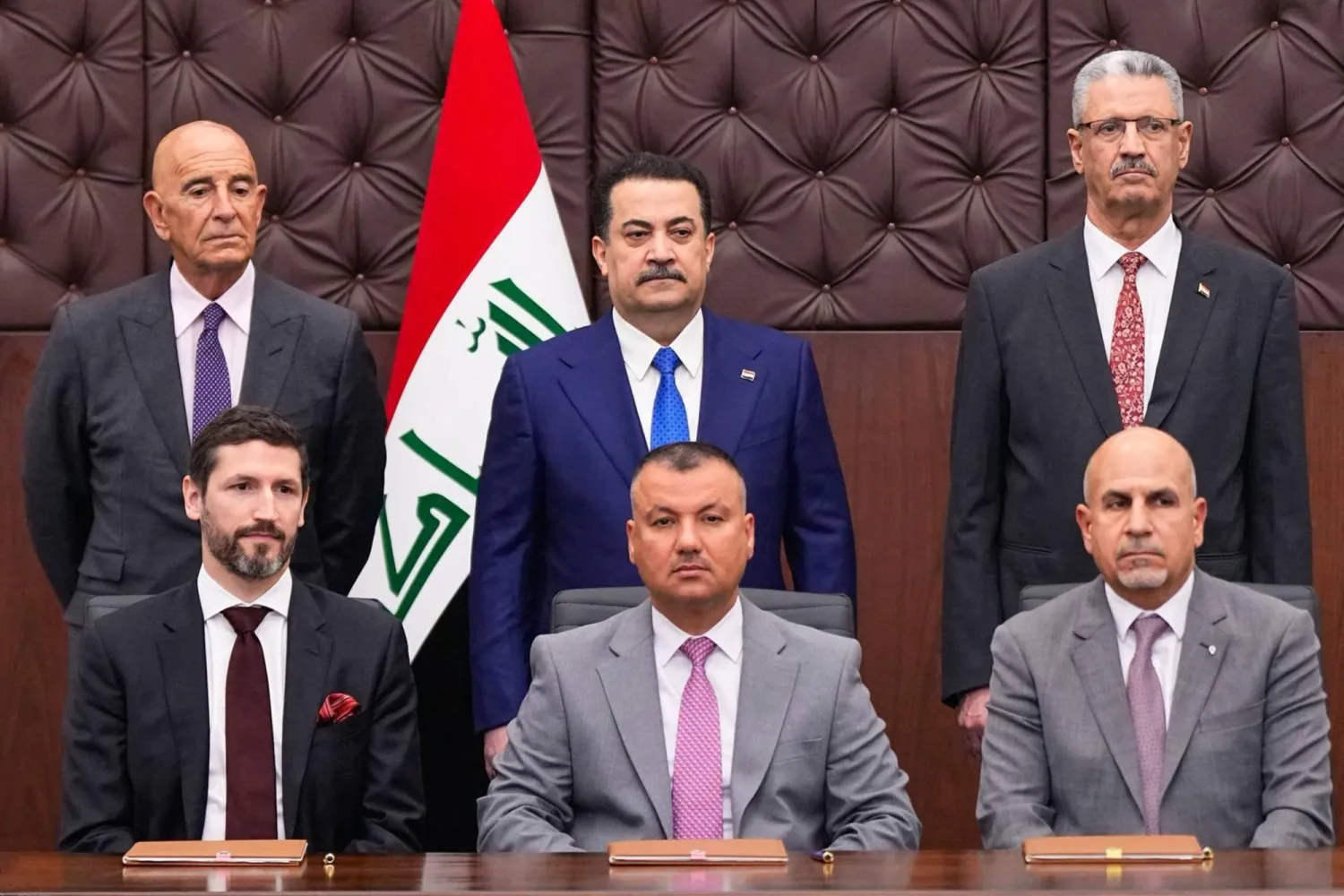
This handout picture made available by the Iraqi prime minister's office shows Iraq's Prime Minister Mohammed Shia al-Sudani (top C), Oil Minister Hayan Abdel-Ghani (top R), US Special Envoy to Iraq Tom Barrack (top L), Chevron's Director of Business Development Joe Koch (bottom L), Iraq's North Oil Company Director Amer Khalil (bottom C), and the Director of the Dhi Qar Oil Company Said Zghair Shallagha (bottom R) attending the signing of agreements between Chevron Corporation and the Dhi Qar and North Oil Companies at the government palace in Baghdad on February 23, 2026. (Handout / Iraqi Prime Minister’s Press Office / AFP)
TT

Iraq’s West Qurna 2 Oilfield Poised for Output Surge with Chevron, Minister Says 

This handout picture made available by the Iraqi prime minister's office shows Iraq's Prime Minister Mohammed Shia al-Sudani (top C), Oil Minister Hayan Abdel-Ghani (top R), US Special Envoy to Iraq Tom Barrack (top L), Chevron's Director of Business Development Joe Koch (bottom L), Iraq's North Oil Company Director Amer Khalil (bottom C), and the Director of the Dhi Qar Oil Company Said Zghair Shallagha (bottom R) attending the signing of agreements between Chevron Corporation and the Dhi Qar and North Oil Companies at the government palace in Baghdad on February 23, 2026. (Handout / Iraqi Prime Minister’s Press Office / AFP)

Iraq could nearly double its output from West Qurna 2 oilfield to 800,000 barrels per day as Chevron enters exclusive talks to take over operations from Russia's Lukoil, Iraq's oil minister said on Wednesday.

Iraq has been seeking to increase its oil and gas production, with oil majors vying to expand their operations in Iraq, after they had previously scaled back due to years of political instability.

Oil Minister Hayan Abdel-Ghani told ‌Kurdish TV ‌channel Rudaw that output could rise to between 750,000 ‌and ⁠800,000 bpd after Chevron ⁠takes over the operations in the field. The US firm has secured one-year exclusive rights to negotiate taking over the project.

The deal would expand Chevron's footprint by giving it control of one of the world's largest oilfields, which accounts for nearly 10% of Iraq's production and about 0.5% of global supply.

Chevron had already agreed to develop several fields in the country as part of ⁠an international expansion.

The Chevron deal is the latest in ‌a string of agreements with global oil ‌majors such as Exxon, BP, and TotalEnergies, in which Baghdad offers more generous terms in ‌a bid to beef up production.

Iraq, the second-largest producer within the ‌OPEC+ group comprising the Organization of the Petroleum Exporting Countries and allies including Russia, plans to raise oil production capacity to more than 6 million barrels per day (bpd) by 2029.

It has frequently produced in excess of its agreed target with OPEC+.

The ‌deal could also bolster relations between Baghdad and Washington, which threatened to curb Iraq's access to oil revenues if ⁠Iranian-backed groups ⁠were included in the upcoming government.

The agreement with Chevron, however, aligns Iraq more closely with Western energy interests as a US major replaces a sanctioned Russian firm, Lukoil, within broader efforts to isolate Moscow over its war in Ukraine.

Lukoil declared force majeure in November at West Qurna 2 after it was hit with sanctions alongside Rosneft as part of US President Donald Trump's push to end the war in Ukraine.

Iraq stripped Lukoil of operatorship of the field in January and temporarily transferred the field to the state-run Basra Oil Company (BOC).

In January, Iraq's cabinet said an "amicable settlement" with Lukoil for the transfer was approved. A final deal requires approval from Iraq's cabinet and the US Office of Foreign Assets Control, Chevron has said.


Germany Wants Deeper, Fairer Economic Ties with China, Merz Tells Li 

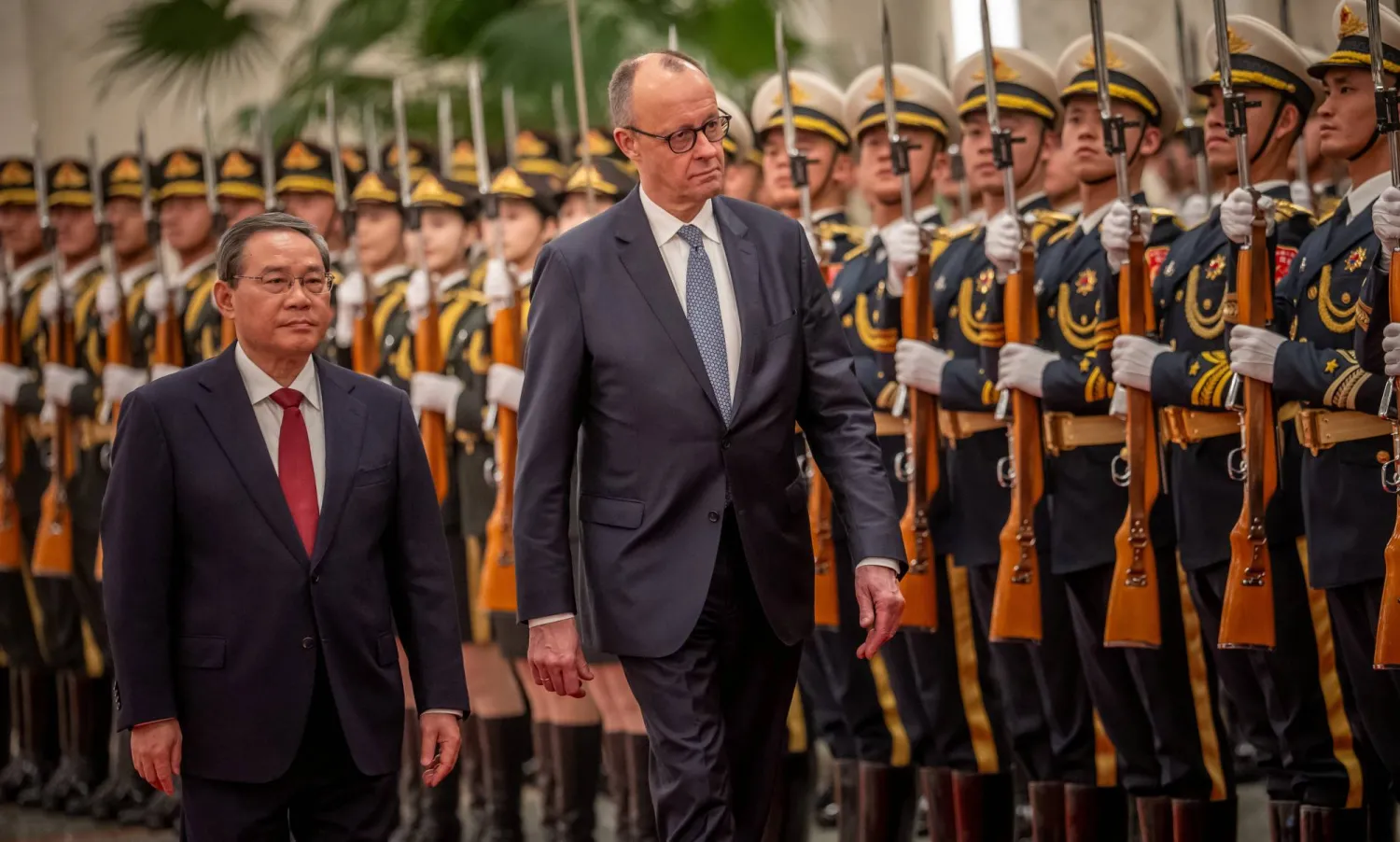
Chinese Premier Li Qiang welcomes German Chancellor Friedrich Merz with military honors in the Great Hall of the People in in Beijing, China, February 25, 2026. (Reuters)
TT

Germany Wants Deeper, Fairer Economic Ties with China, Merz Tells Li 

Chinese Premier Li Qiang welcomes German Chancellor Friedrich Merz with military honors in the Great Hall of the People in in Beijing, China, February 25, 2026. (Reuters)

China and Germany want to deepen cooperation, German Chancellor Friedrich Merz and Chinese Premier Li Qiang said in Beijing on Wednesday, as Merz began a visit aimed at resetting ties amid a widening trade imbalance.

Merz told Li that Germany attached great importance on maintaining and deepening its extensive economic exchanges with China, its largest trading partner last year, while emphasizing the need for fair cooperation and open communication.

"We have very specific concerns regarding our cooperation, which we want to improve and make fair," said Merz, who faces a tough balancing act of redefining an economic relationship that is increasingly unfavorable to German interests.

Li called on both sides to work together to safeguard multilateralism and free trade, in a comment seen as a reference to US President Donald Trump's trade war, which has upended the global ‌trading system.

"China and ‌Germany, as two of the world's largest economies and major countries with important influence, ‌should ⁠strengthen our confidence in ⁠cooperation, jointly safeguard multilateralism and free trade, and strive to build a more just and fair global governance system," Li said.

NO CONSEQUENTIAL DEALS SIGNED

Despite their calls for deeper engagement, the agreements Merz and Li formalized after their meeting were narrowly targeted and in industries peripheral to both economies.

The five documents signed covered continued efforts in climate change and green transition, cooperation in animal disease prevention and a poultry products protocol, as well as sports collaboration agreements for football and table tennis.

That paled in comparison with Canada and Britain, which respectively signed eight and 12 documents with China last month aimed at boosting trade ⁠and investments.

Still, the business-focused latter half of Merz's visit could see more deals ‌secured.

He is accompanied by a delegation of 30 firms including top carmakers ‌such as Volkswagen and BMW which are acutely feeling the strain of Chinese competition - contributing to the growing trade imbalance that has ‌sparked concern in Berlin and led to calls for protectionist policies.

CHINA-EU TIES IN FOCUS

China is seeking to pitch ‌itself as a reliable economic partner, in contrast to the United States, as Europe struggles to address vulnerabilities in its supply chains and worries about growing dependence on China.

Europe is seeing an acceleration of concerning trends in China, Europe's Trade Commissioner Maroš Šefčovič told the European Parliament on Tuesday, citing China's growing dominance in key manufacturing sectors, a rising imbalance in trade, and falling market share ‌of EU companies in China.

Germany's manufacturing-heavy economy has been particularly hard hit by competition from China's manufacturers, Rhodium Group's China analyst Noah Barkin said in a recent ⁠research note.

Merz, on his first visit ⁠to China, becomes the latest European leader seeking to reset ties with China after Britain's Keir Starmer and Canada's Mark Carney earlier this year, while Beijing touts the benefits of engaging with its massive consumer market and advanced manufacturing base.

Engagement between Europe's largest economy and China could set the stage for EU-China relations this year.

China's market, once coveted by foreign businesses for its wide consumer base and rising spending power, has changed in recent years with a slowing economy capping consumer demand and manufacturing overcapacity increasingly pushing domestic firms to look for opportunities abroad.

CHINA STILL BOASTS MEGA MARKET

In editorials ahead of the visit, Chinese state media emphasized the potential for EU-China cooperation to become a stabilizing force while US tariff policies upend global trade.

Xinhua cited a German chamber of commerce survey finding that innovation gains in China are feeding back into German headquarters.

State-backed newspaper the Global Times said concerns about competition with China would be outweighed by the lure of China's massive market.

"Rhetoric such as 'systemic rival' and 'de-risking' has at times complicated Germany's China policy," it said in an early Wednesday editorial.

"Yet the enthusiasm and actions of the German business community speak louder than political slogans."