


New Virus Hotbed in Jordan Raises Number of Infections

New Virus Hotbed in Jordan Raises Number of Infections
TT

New Virus Hotbed in Jordan Raises Number of Infections

New Virus Hotbed in Jordan Raises Number of Infections

Coronavirus infections rose in Jordan on Friday after a truck driver residing in Mafraq Governorate, east of Amman, tested positive.

The driver had not self-quarantined upon his return to the country around 14 days ago after his test results came back negative, yet he began showing symptoms on Wednesday.

The authorities this week tested people who had come into close contact with him, raising the number of infections by 24, only a day after Jordan reported no new cases for eight consecutive days.

Among those infected are the man’s family members and friends, as well as a nurse at a public hospital.

The driver has also infected people in Irbid and Ramtha cities, while another case was discovered in a student who returned from Russia last week.

Citizens held the government responsible for the new infections, accusing it of not enforcing quarantine measures on truck drivers crossing the land border into Jordan.

Health Minister Saad Jaber announced on Friday that quarantine centers are being set up on the border, where drivers would stay for 17 days, a period long enough to discover if a person is infected or not.

Activists on social media wondered how the government imposed a 17-day quarantine on students returning from abroad, while similar measures were not applied to truck drivers.

Infections among drivers were first recorded in mid-April.

News has also circulated that some 245 truck drivers haven’t been tested upon their arrival in Jordan.

Jordan has been preparing to begin lifting measures so that life would return to normal gradually through new government decisions that were announced mid-last week.

The Kingdom has recorded 508 cases since its outbreak early March, while nine elderly suffering from chronic diseases have died.

The Jordanian army, in coordination with the security services and the Queen Alia International Airport management, announced on Friday the end of the first evacuation phase of about 3,000 students from abroad.

The first phase began on Tuesday and ended early Friday.

Director of the Coronavirus Crisis Cell Operations Brigadier General Mazen El Faraya has earlier announced a plan to return about 23,000 stranded students and citizens from abroad.


Iran Links Hamas, its Allies’ Weapons in Lebanon to Hezbollah’s Arms

A Lebanese soldier sits on an armored personnel carrier at the entrance of Burj Barajneh Palestinian refugee camp in southern Beirut, Lebanon, 21 August 2025.   EPA/WAEL HAMZEH
A Lebanese soldier sits on an armored personnel carrier at the entrance of Burj Barajneh Palestinian refugee camp in southern Beirut, Lebanon, 21 August 2025. EPA/WAEL HAMZEH
TT

Iran Links Hamas, its Allies’ Weapons in Lebanon to Hezbollah’s Arms

A Lebanese soldier sits on an armored personnel carrier at the entrance of Burj Barajneh Palestinian refugee camp in southern Beirut, Lebanon, 21 August 2025.   EPA/WAEL HAMZEH
A Lebanese soldier sits on an armored personnel carrier at the entrance of Burj Barajneh Palestinian refugee camp in southern Beirut, Lebanon, 21 August 2025. EPA/WAEL HAMZEH

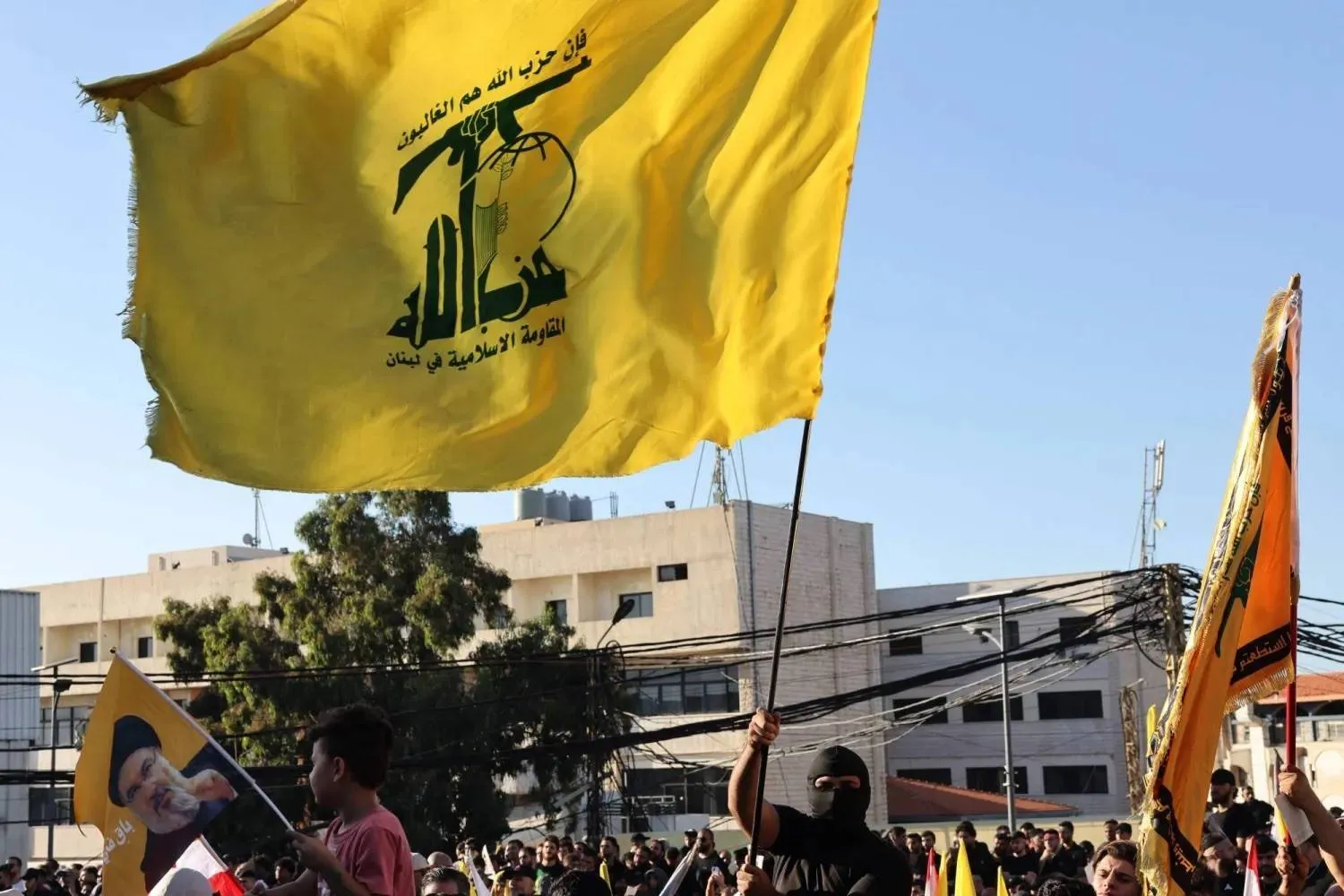
As efforts to address Hezbollah’s weapons continue to stall, along with the domestic dialogue over the issue, discussion of Palestinian weapons inside the refugee camps has simultaneously receded, despite the fact that the process of withdrawing those weapons actually began some time ago.

With key stages in the handover of weapons belonging to Palestinian factions of the Palestine Liberation Organization now completed, attention has turned primarily to weapons held by factions close to Hezbollah, foremost among them Hamas and Palestinian Islamic Jihad.

Both movements have refused to cooperate with the official Lebanese-Palestinian understanding on the issue, raising questions over whether the fate of these weapons will be addressed separately or whether it has, in one way or another, become tied to the fate of Hezbollah’s own weapons.

Since August 2025, the Lebanese Army has taken possession of a large portion of the medium and heavy weapons belonging to PLO factions. The process took place in stages, in implementation of the resolutions of the Lebanese-Palestinian summit held on May 21, 2025, between Lebanese President Joseph Aoun and Palestinian President Mahmoud Abbas.

The resolutions affirmed Lebanon’s sovereignty over its entire territory, the extension of state authority, and the principle that weapons must be held exclusively by the state.

However, Hamas, Palestinian Islamic Jihad, and other allied factions rejected the resolutions of the Lebanese-Palestinian summit. They believe the Lebanese state should address the Palestinian issue in Lebanon as a single package, meaning that priority should not be given to weapons over Palestinian rights and demands.

A Bargaining Chip

After US President Donald Trump announced at the end of July that the “Board of Peace” he chairs had reached an agreement calling for the “full disarmament” of Hamas and other armed groups in the Gaza Strip, questions emerged over whether the fate of Hamas's weapons in Lebanon was linked to the fate of its weapons in Gaza.

However, a senior Lebanese official told Asharq Al-Awsat that “what is preventing the completion of the process of taking possession of Palestinian weapons deployed inside the camps, specifically the weapons of Hamas, Palestinian Islamic Jihad, and their allies, is that Iran and Hezbollah have linked the fate of these weapons to the fate of Hezbollah’s weapons, believing that they can be used as a bargaining chip in any future negotiations.”

He noted that “when Hamas is asked to hand over its weapons in Lebanon, it says the matter is in Hezbollah’s hands. When Hezbollah is asked about the issue, it says the time is not right to settle it.”

The source explained that “around 60 percent of the weapons belonging to PLO factions have been handed over, and most of the remaining weapons are small arms that the factions say they need to maintain security in the camps and defend themselves in any internal Palestinian conflict.” He added that “Hamas's main weapons are concentrated in Rashidieh camp south of the Litani River, including the Grad rockets located there.”

Hamas's Position

On whether the fate of Hamas's weapons in Lebanon is linked to the fate of its weapons in Gaza, sources within the movement said that, regarding Palestinian weapons in the Gaza Strip, “the discussion was about restricting and collecting the weapons, not handing them over, with the weapons to be collected by a Palestinian party, whether the local administration in the Gaza Strip or the Palestinian factions.” They stressed that “the weapons in Gaza cannot be compared with those in Lebanon because Gaza is under Israeli occupation, and the Palestinian people have the right to resist the occupation with all the means at their disposal.

As for the weapons in Lebanon, the movement does not have heavy weapons in Lebanon. There are many Palestinian factions that possess weapons, and they predate Hamas in terms of their presence in the camps and may possess quantities of weapons far greater than those held by Hamas. Therefore, we said that in Hamas's case in Lebanon, the discussion primarily concerns small arms held by the Palestinian resistance or by the movement, rather than heavy weapons in the conventional sense.”

The source told Asharq Al-Awsat that “the movement supports any steps that would strengthen Lebanon’s stability and security. It has held several meetings with the Lebanese-Palestinian Dialogue Committee to reach a comprehensive solution to the conditions of Palestinians, covering humanitarian, social, economic, and rights-related aspects. But recently we have observed new measures restricting Palestinians, contrary to what had been agreed, including preventing them from owning property and denying Palestinians certain professional and social rights.”

The source added: “As for the weapons, they have been there for decades and are historically linked to the issue of the Israeli occupation. Today, their presence is more symbolic than a means of confronting the occupation. If the Lebanese state wants to address this issue, we are open to dialogue and understanding to reach solutions that satisfy everyone, away from any tension or confrontation.”

Palestinian Factions in Lebanon

Palestinian armed forces in Lebanon are broadly divided into three main groups, although their situations today differ significantly.

The first group consists of PLO factions, most notably Fatah, the largest Palestinian force in Lebanon, the Popular Front for the Liberation of Palestine, the Democratic Front for the Liberation of Palestine, and the Palestine Liberation Front, along with smaller factions.

The second group consists of Hamas and Palestinian Islamic Jihad, the two most prominent Palestinian Islamist armed forces outside the PLO.

The two movements were part of the Palestinian forces alliance, which also included factions historically linked to Syria. In 2025, they announced that their weapons were tied to the “Palestinian cause,” rather than to PLO weapons, and therefore did not take part in the handover process that began in August 2025 in the same manner.

The third group consists of factions that were linked to the former Syrian regime and whose presence inside the camps has now become largely symbolic. Three main forces fall into this category: the Popular Front for the Liberation of Palestine-General Command, the most prominent Palestinian faction that was closely linked to the Assad regime and maintained military bases outside the camps, most notably Qusaya and Sultan Yacoub in the Bekaa.

Fatah al-Intifada was also closely linked to Syria and maintained positions and weapons outside the camps, most notably in Naameh, south of Beirut, and in the Bekaa in eastern Lebanon. The third was Al-Sa'iqa, a Palestinian faction established by Syria's former leadership. Its ties to the Syrian regime were direct, although weaker in Lebanon than those of the General Command and Fatah al-Intifada.

These three factions effectively lost their Syrian political and military backing after the fall of the Assad regime in December 2024. The Lebanese state did not wait for a comprehensive agreement on disarming Palestinian factions inside the camps. Instead, the Lebanese Army began dealing with the military bases of Syria-linked factions outside the camps. It took control of General Command positions in Qusaya and Sultan Yacoub, including their weapons, equipment, and rockets. Several positions belonging to other factions were also dismantled.

Notably, this took place at the end of 2024 and beginning of 2025, before the process of handing over weapons in PLO camps began in August 2025.

Fatah al-Intifada, meanwhile, maintained a presence in some of the camps, and the handover of its weapons was not directly linked to the transfer of control over General Command bases. A month ago, the movement began handing over its heavy and medium weapons to the Lebanese Army at Beddawi camp in northern Lebanon, in a move described as the first instance of a Palestinian faction outside the PLO proceeding to hand over its weapons.


Al-Baidani: Houthis Use 'Siege' Slogan to Advance Iran’s Agenda as Pressure Builds Within

Yemeni political researcher Saleh Al-Baidani, who says the Houthis are facing growing popular and economic pressure in areas under their control - Asharq Al-Awsat
TT

Al-Baidani: Houthis Use 'Siege' Slogan to Advance Iran’s Agenda as Pressure Builds Within

Yemeni political researcher Saleh Al-Baidani, who says the Houthis are facing growing popular and economic pressure in areas under their control - Asharq Al-Awsat

Yemeni political researcher Saleh Al-Baidani says the Houthis' use of claims about a siege and unpaid salaries is an attempt to mask the group's agenda with Iran behind humanitarian slogans.

Al-Baidani, who has authored two books on the Yemeni crisis, believes that Yemenis living in areas under Houthi control will play a role in bringing an end to the coup that began in September 2014.

“The Iran-backed group is facing unprecedented popular and economic pressure in areas under its control,” the political researcher says, adding that the Houthis are trying to escape this internal predicament by launching new rounds of escalation.

The comments came during a new episode of Asharq Al-Awsat Podcast, in which Al-Baidani discussed the latest developments in Yemen. The conversation also covered the tribes, the Houthis' political and ideological ties to Iran, and his home governorate of Al-Bayda, which he described as “strategic.”

3 Reasons Behind the Latest Moves

On a warm August night in Riyadh, Al-Baidani cited three main reasons behind the Houthis' latest moves. The first was to support Iran's position militarily and politically and turn the Houthis into an additional pressure tool in Tehran's hands. The second was an attempt to establish an internal deterrence dynamic that serves the group. The third was linked to growing public anger over economic conditions, levies and taxes, and the declining standard of living.

He said the slogan “I am hungry,” which has begun appearing in areas under Houthi control, reflects the level of accumulated public discontent. He believes that “the explosion will come from within,” and that any future military move by government forces could coincide with a popular uprising in areas controlled by the group.

Regarding the Houthis' relationship with Iran, Al-Baidani rejected arguments that downplay the strength of the ties between the two sides. He said the relationship was no longer merely a political alliance or a convergence of interests, but had, in his words, become a deep ideological and military relationship.

He added that the period when Hassan Irloo was in Sanaa represented an important turning point in reshaping the group's decision-making center. He said the small circle controlling political and military decisions had become more closely aligned with Iran's Islamic Revolutionary Guard Corps.

The discussion also touched on the sectarian dimension. Al-Baidani distinguished between traditional Zaydism, which historically coexisted with the Shafi'i school and other Yemenis, and the version embraced by the Houthi group, which he described as more hardline and closer to Jarudism. He considers the problem to have gone beyond the sectarian dimension to a lineage-based view of power and society.

The Tribe and the Governorate

In discussing the tribe, the political researcher argued that the Houthis have helped revive tribal ties that had faded somewhat in recent years. Asked about the current tribal gathering in Yemen's Al-Jawf governorate, Al-Baidani described the “Al-Rayyan Encampment” as more of a symbolic protest than a military one, while stressing that it nonetheless serves as a symbolic indicator of the level of discontent among the tribes.

Al-Baidani also discussed Al-Bayda governorate, which he described as one of Yemen's most important geographical crossroads because of its central location and its links to eight governorates. He noted that the Houthis recognized its importance early on, which is why it was among the first areas they moved toward after taking control of Sanaa.

Research Work

Al-Baidani discussed the establishment of the “Anaween Center for Research and the Study of Transformations,” explaining that its goal is to examine turning points in Yemen's political landscape rather than simply track events or revisit their background.

He concluded by revealing that he is working on a third book that will, in his words, be “deeper and more comprehensive” than his two previous books, “Faces in the War” and “The Gate of Perdition... The Story of the War in Yemen,” but declined to disclose its title.

The figure who, in his view, remained present on every page of “Faces in the War” without having a chapter devoted to him was the late Yemeni President Ali Abdullah Saleh. Al-Baidani said Saleh's life was intertwined with most of the figures and political transformations that Yemen experienced over more than three decades.


How Yemen Has Developed Rules of Engagement That Are Disrupting the Houthis

The Houthi group suffered heavy losses as a result of government deterrence operations (military media).
TT

How Yemen Has Developed Rules of Engagement That Are Disrupting the Houthis

The Houthi group suffered heavy losses as a result of government deterrence operations (military media).

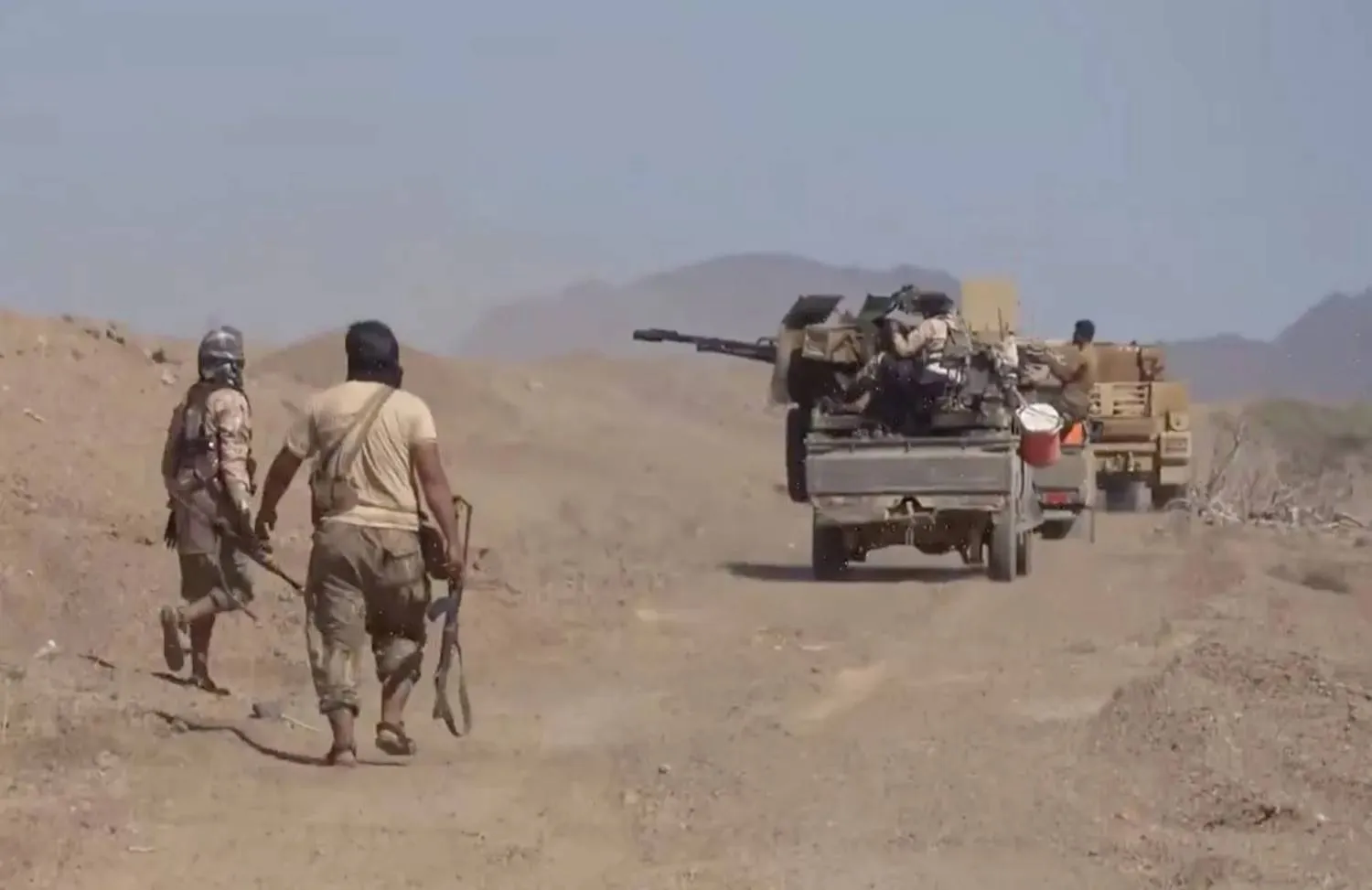
The confrontation between Yemen's internationally recognized government and the Iran-backed Houthi group is no longer unfolding according to the military equation that had prevailed along the front lines since 2022. The latest escalation, initiated by the group, has revealed a notable shift in the performance of government forces, which have begun developing new rules of engagement that have unsettled the militias. They are moving from a position of defense and containment toward a phase of preemptive strikes, making use of drones and improved precision-targeting capabilities.

The pace of attacks over the past six weeks reveals an escalating trajectory, with the strikes coinciding with Houthi use of ballistic missiles and drones to target military positions, facilities, and maritime routes.

According to information from military sources and monitoring centers, the Houthis carried out more than 75 attacks during this period using ballistic missiles and explosive-laden drones. These included missile barrages against the port of Mokha and the city of Al Khawkhah, as well as attacks on military camps in Marib and Al Abr, and others targeting commercial vessels that killed at least four sailors.

On the other side, field reports indicate that the Yemeni armed forces, the National Resistance formations, and the Giants Brigades carried out more than 500 combat, defensive, and offensive operations, focused on Houthi concentrations and command-and-control centers along the fronts in Hodeidah, Marib, Taiz, Al Dhale, and Al Bayda.

The significance of the current development lies not only in the scale of the strikes, but also in the nature of the means the government forces have begun using. The introduction of drones into offensive operations opens a new avenue for anti-Houthi forces to strike high-value targets without having to conduct large-scale ground operations.

Informed Yemeni sources indicate that two specialized drone aviation brigades have been formed within the Yemeni armed forces, marking a shift in the role of these aircraft from reconnaissance and surveillance to direct combat use.

In recent days, drones have been used to strike Houthi barracks, concentrations, supply vehicles, and trenches. These operations have been documented by drone cameras across various fronts, particularly in Marib, Al Jawf, Al Bayda, the western coast, and Al Dhale, as well as in areas of Hajjah governorate in the northwest of the country that have been retaken.

This shift is particularly significant along the western coast, where the ground confrontation intersects with the maritime threat. The downing of Houthi reconnaissance drones that, according to the available information, were preparing the way for maritime attacks using explosive-laden boats reflects an attempt by the government to deprive the group of one of its most important tools for monitoring the waters and preparing attacks on maritime traffic.

Here, drones are moving beyond their traditional military function to become part of a broader deterrence system aimed at preventing the Houthis from creating a new reality along Yemen's coasts and the Bab al-Mandab Strait.

Testing the Unification of Forces

But possessing more advanced military tools does not necessarily mean possessing the ability to wage an all-out war. The most complex challenge facing the Yemeni government remains the existence of multiple centers of military power and disparities in command-and-control structures.

Over the past two years, Yemen's Presidential Leadership Council has worked to address part of this fragmentation, with signs emerging of a more interconnected military structure, although it remains composed of multiple elements.

This structure includes the regular forces commanded by Lieutenant General Sagheer bin Aziz; the forces deployed along the western coast and in Mokha, commanded by Presidential Leadership Council member Tareq Saleh; the Emergency Forces and Nation's Shield formations, which are directly commanded by Presidential Leadership Council Chairman Rashad Al Alimi; the forces operating along the Taiz fronts under the Fourth Military Region, headquartered in Aden; as well as the Giants Brigades and other southern formations deployed along the fronts in Lahj, Al Dhale, and Shabwa, commanded by Presidential Leadership Council member Abdul Rahman Al Mahrami.

According to military assessments, these formations give the Yemeni government the ability to distribute military pressure across more than one front. At the same time, however, they place the joint operations room before a difficult test: Can it turn these multiple capabilities into a unified battle plan if the limited confrontation develops into an open war?

This question becomes increasingly important as the level of Houthi escalation rises, because moving from localized strikes to large-scale ground operations requires a higher level of coordination and political and military decision-making, as well as substantial logistical and economic capacity.

The Priority of Calculated Deterrence

In the current calculations of Yemen's legitimate government, a full-scale ground war appears less likely than continued calibrated escalation. The government does not appear willing to be drawn into the battle that the Houthis may be seeking to impose.

This is where the scenario of measured escalation repeatedly referenced by Al Alimi comes into focus. It is based on targeting sources of threat with missiles, artillery, and drones, ensuring that Houthi attacks do not go unanswered while avoiding large-scale ground operations to seize new territory.

This strategy allows the Yemeni government to raise the cost of Houthi attacks without opening a front that could later prove difficult to contain. It also gives the government room to maneuver between military retaliation and political and diplomatic options.

But continued Houthi attacks on maritime traffic and vital facilities could change the calculations. If maritime pressure develops into a sustained threat to shipping in the southern Red Sea, and attacks on ports and facilities continue, the western coast, particularly Hodeidah, could become the focus of a larger battle. This is what was understood from Tareq Saleh's recent statements.

The government could then find itself facing the option of launching a military operation aimed at ending the group's ability to use the coast as a platform for maritime threats, a choice that would carry significant military, humanitarian, and economic consequences.

The recent attacks on the port of Mokha reveal the scale of the economic risks associated with this course. According to the available information, the shelling brought the port's strategic activity to a halt and caused extensive damage to its infrastructure, with preliminary estimates putting the losses at billions of Yemeni riyals.

The consequences do not stop at civilian facilities. Yemen, which is facing a deep humanitarian and economic crisis, has little room to maneuver, given that the United Nations humanitarian response plan continues to face a funding gap of more than 80 percent, while the limited escalation of recent weeks has led to new waves of displacement in Marib and along the western coast.

If a full-scale confrontation erupts, the closure of vital roads and corridors and damage to ports and commercial facilities could multiply the cost of the war for the population and place additional pressure on the fragile economy of the governorates held by the government.

Between Houthi escalation and the government's calibrated deterrence, the coming days and weeks will determine whether the drones and precision strikes used by Yemeni government forces succeed in establishing a new balance with the Houthis, or whether they prove to be the prelude to the broadest military round since the 2022 truce and the fragile de-escalation that followed.