


Coronavirus Crisis Punctures Tunisia Tourism Rebound

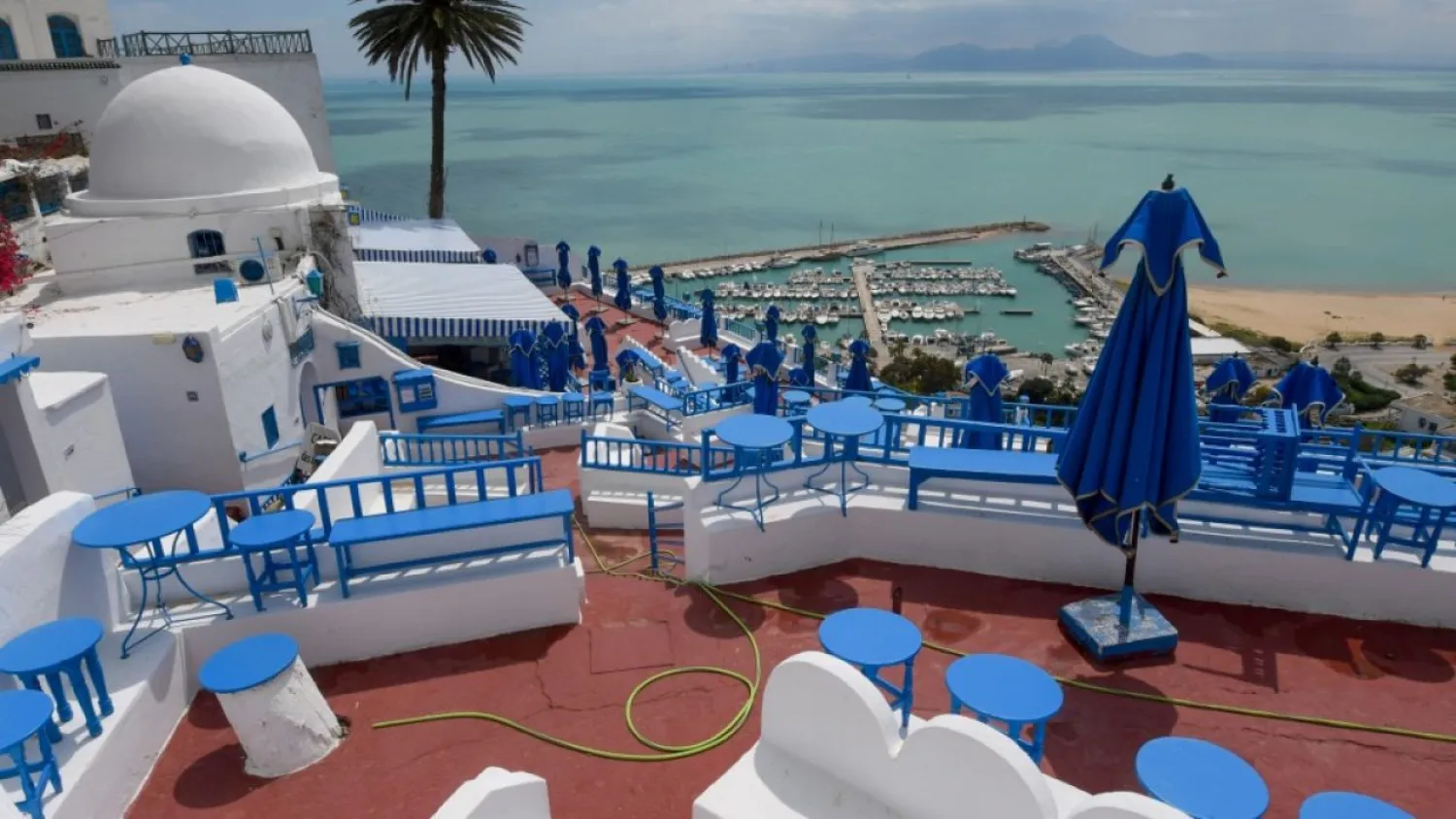
A cafe stands empty in the Tunisian village of Sidi Bou Said, where streets are usually filled with tourists at this time of year | AFP
TT

Coronavirus Crisis Punctures Tunisia Tourism Rebound

A cafe stands empty in the Tunisian village of Sidi Bou Said, where streets are usually filled with tourists at this time of year | AFP

As the novel coronavirus pandemic wipes out a recovery from militant attacks in 2015, Tunisia's vital tourism sector is trying to find ways to avoid going under.

"Normally, the season starts now. But there is nobody," said Mohammed Saddam, who owns an antiques shop in the famous blue and white village of Sidi Bou Said, near the capital Tunis.

Usually its streets are filled with tourists at this time of year, but now Saddam is only opening his store for an hour a day to air it out.

"We are waiting for the airspace to reopen," he said. "But 2020 is a write-off."

The North African country has registered 45 deaths from the COVID-19 illness, and for several days this week saw no new infections, putting it among Mediterranean countries faring relatively well in the pandemic.

But the crisis has led to a shortfall in tourism revenues of six billion dinars (over $2 billion), the country's national tourism office has estimated, and some 400,000 jobs are at risk.

The sector had been bouncing back to levels not seen since before the 2011 revolution that toppled longtime autocrat Zine El Abidine Ben Ali

"Tunisia had started off the year well, with an increase in (tourism) revenue of 28 percent," said Feriel Gadhoumi, a coordinator at the tourism office.

But that all came to a halt in March as countries imposed travel restrictions and border closures to curb the spread of the pandemic.

Now, seaside resorts are empty and hoteliers are trying to salvage what they can of the season, counting on the country's relatively optimistic health situation and sector-specific virus prevention measures.

- Steps to 'regain trust' -

While most hotels have shut for now, some are providing accommodation for people in compulsory quarantine, notably Tunisians repatriated from abroad.

The tourism ministry is preparing protocols for facilities that reopen, with some planning to do so from June.

Measures are expected to include temperature checks at hotel entrances, rooms being disinfected and left empty for 48 hours between guests and the intensive cleaning of common areas.

Such steps are necessary to "regain the trust of partners", Gadhoumi from the tourism office said.

The UN World Tourism Organization has warned that international tourist numbers could drop by 60 to 80 percent in 2020.

The sector accounts for around 14 percent of Tunisia's GDP, according to the tourism ministry.

Other changes could include offering fixed menus instead of buffets and giving guests the same tables and umbrellas for the length of their stay, hotel sales manager Anis Souissi said.

Clients will focus "on health and hygiene", he added.

But it is unclear whether hotels, some of which are already on the edge of bankruptcy, will be able to make the necessary investments.

Even before the pandemic struck, a series of crises had weakened Tunisia's tourism sector.

After the political instability that followed the fall of Ben Ali, jihadist attacks in 2015 targeted European holiday-makers at the Bardo museum in Tunis and the coastal tourist resort of Sousse.

The attacks killed 60 people, many of them British tourists, and dealt a heavy blow to the sector.

- Limited options -

The security situation has greatly improved since then, and tourist numbers last year had returned to pre-2011 levels, with 9.5 million visitors.

But the collapse in September of British tour operator Thomas Cook, which brought five percent of Tunisia's European tourists, shook some hotels.

Thomas Cook had suspended trips to Tunisia after the attacks, but had returned in force in the last two years.

Now, the sector is searching for ways to survive, as the coronavirus crisis persists and as passenger flights from Europe, Tunisia's main market, are expected to remain grounded for much of the summer.

Although thousands of foreigners remain stuck in the country due to border closures and flight suspensions, their presence won't be nearly enough.

Instead, hoteliers have their eyes set on local tourists, as well as Algerian or Russian holiday-makers who helped dampen the previous crises.

But domestic tourism accounts for just 20 percent of Tunisia's market, and many locals have seen their income and holiday allowances disappear during the lockdown.

Bringing more bad news, Algeria has been seriously affected by the pandemic and reopening its borders is not envisaged in the short term, while Russia currently has the second-highest number of reported infections in the world.

"Targeting the local market and preparing for the next season are the only choices we have," sales manager Souissi said.



Saudi Arabia Turns Potato Farming Challenge into Export Opportunity

Saudi Arabia Turns Potato Farming Challenge into Export Opportunity
TT

Saudi Arabia Turns Potato Farming Challenge into Export Opportunity

Saudi Arabia Turns Potato Farming Challenge into Export Opportunity

In the deserts of Hail in northern Saudi Arabia, where rugged mountains border a climate that turns mild in summer and biting in winter, an unlikely agricultural success story has emerged.

From sandy soil that appears unforgiving at first glance, uniform potatoes are harvested to meet the exacting standards of local and international markets, supplying global food companies and contributing to the growth of a thriving export industry.

Grown not on traditional farmland but in a desert landscape long constrained by water and energy shortages, the crop has become a case study in how agricultural innovation and industrial sustainability can converge, positioning Saudi Arabia among the world's exporters of potatoes and processed potato products.

Potatoes in Hail are cultivated in sandy soil that gives the crop sufficient room to grow without deformities, setting it apart from harder soils that reduce quality and market acceptance. The main challenge, however, was not the soil but groundwater scarcity, making the search for innovative irrigation solutions a necessity rather than a choice.

That marked the start of a shift. Farmers have adopted drip irrigation systems powered by solar energy to reduce consumption and increase productivity, transforming Hail into a strategic production hub that contributes to self-sufficiency and exports to global markets.

According to previous remarks by Saudi Industry Minister Bandar Alkhorayef, the kingdom developed an irrigation model tailored to potatoes grown for potato chip manufacturing and export.

Alkhorayef said at the time that PepsiCo, which produces the well-known Lay’s brand, faced difficulties exporting potatoes grown in the kingdom. He stated that the government had collaborated with the Ministry of Agriculture to address the issue.

“They had a valid concern related to water scarcity, so we developed an appropriate irrigation model, which was approved by the agriculture ministry, resolving the export problem,” he said.

According to the Ministry of Environment, Water, and Agriculture, Saudi Arabia experienced a significant increase in potato production in 2023, with output rising by 47 percent to exceed 621,750 tonnes. The self-sufficiency rate reached 86.8 percent, according to the latest officially announced figures.

Hamoud Al Saleh, founder and chairman of Lahaa Agricultural Production, one of the Saudi suppliers to PepsiCo, said the kingdom had exported potatoes to Russia for six consecutive years, in addition to other countries including Norway, Lebanon, Syria and Jordan, while also supplying local factories.

Challenges

Some European markets still face hurdles in importing Saudi potatoes due to the absence of trade protocols, while Norway has proven more flexible, continuing imports over recent years, Al Saleh said.

He said groundwater remains the biggest challenge for farmers. Speaking to Asharq Al Awsat, Al Saleh said PepsiCo supported the company in implementing drip irrigation, covering part of the cost for three years and providing experts to help design and approve the system, which significantly increased productivity.

He said yields per hectare rose to between 50 and 60 tonnes in some fields, alongside a notable reduction in water consumption. He added that Saudi potatoes show high resilience to environmental conditions.

Energy has also been a challenge, with agricultural equipment relying heavily on diesel. This has prompted many farmers to adopt solar power, thereby easing operating costs for both farmers and the state.

Al Saleh unveiled a new project costing 15 million riyals, approximately $4 million, spanning 700 hectares and utilizing a combination of diesel and solar energy, describing it as a long-term investment aimed at enhancing sustainability and reducing consumption.

Resource efficiency

PepsiCo said resource efficiency has become a central pillar of its regional strategy. Ahmed El Sheikh, president and general manager for the Middle East, North Africa and Pakistan, said the company had adopted advanced drip irrigation systems in cooperation with specialized firms and the agriculture and industry ministries.

He said this helped cut water use by around 30 percent compared to traditional irrigation, alongside a shift toward solar energy instead of diesel, which reduced fuel and energy consumption.

Regarding exports, El Sheikh stated that most products are shipped to Gulf states and Jordan, with efforts underway to explore exports to Syria from plants within the kingdom.

In terms of investments linked to Vision 2030, he stated that the company has invested 300 million riyals, approximately $80 million, in new production lines targeting both local and export markets.

He stated that local content reached 95 percent for certain packaging materials that were previously imported, while locally sourced potatoes also achieved 95 percent, with ongoing efforts to reach 100 percent.

Local content refers to the share of raw materials, manufactured inputs, or extracted resources produced inside Saudi Arabia, whether agricultural, industrial, or packaging-related.

Regarding workforce localization, El Sheikh stated that some plants, including the Dammam factory, have achieved Saudization rates of 80 percent, with the appointment of the first Saudi female plant manager.

In research and development, the company stated that it has established an R&D center with investments exceeding 30 million riyals, approximately $8 million, thereby localizing operations within the kingdom instead of relying on overseas centers.

El Sheikh said the company has reached full operational capacity in working with farmers on potato crops, calling it a major achievement that it hopes to replicate with other crops in the future.

Water scarcity by the numbers

This agricultural experience comes amid mounting challenges to water resources. The National Water Strategy says Saudi Arabia has a limited stock of exploitable non-renewable groundwater, with low recharge rates not exceeding 2.8 billion cubic meters annually.

Total water demand is estimated at approximately 24.8 billion cubic meters, with an annual growth rate of around 7 percent.

The strategy states that agriculture is the largest consumer of water in the kingdom, accounting for approximately 84 percent of total demand, and relies heavily on non-renewable resources that make up nearly 90 percent of agricultural water use.

Agriculture ministry data show irrigation efficiency does not exceed 50 percent, compared with more than 75 percent under global best practices. Fodder cultivation alone consumes about 67 percent of agricultural water, according to the latest available figures.

Government role

This shift in potato farming would not have been completed without government support. The kingdom developed and approved an irrigation model suited to potatoes grown for chips and export as the preferred method, prompting PepsiCo to expand its factories in the Eastern Province with investments exceeding 300 million riyals.

This helped make Saudi Arabia the world’s second-largest hub for potato chip manufacturing, according to previous remarks by the industry minister.

Beyond exports, the model strengthens self-sufficiency. Under this approach, Saudi potatoes have become more than just an ingredient in chips, turning into a symbol of integration between agriculture and industry and evidence of the kingdom’s ability to transform environmental challenges into global economic and investment opportunities, in line with the ambitions of Vision 2030.


Saudi Arabia Among Top 10 Investors in Tunisia With Over $375 Mln

 Saudi Minister of Industry and Mineral Resources Bandar bin Ibrahim Alkhorayef speaks during the business forum in Riyadh (Asharq Al-Awsat)
Saudi Minister of Industry and Mineral Resources Bandar bin Ibrahim Alkhorayef speaks during the business forum in Riyadh (Asharq Al-Awsat)
TT

Saudi Arabia Among Top 10 Investors in Tunisia With Over $375 Mln

 Saudi Minister of Industry and Mineral Resources Bandar bin Ibrahim Alkhorayef speaks during the business forum in Riyadh (Asharq Al-Awsat)
Saudi Minister of Industry and Mineral Resources Bandar bin Ibrahim Alkhorayef speaks during the business forum in Riyadh (Asharq Al-Awsat)

Saudi investments in Tunisia have gathered momentum over recent years, placing the kingdom among the country’s top 10 foreign investors, with cumulative investments surpassing $375 million by the end of 2024.

The figures were disclosed at the Saudi-Tunisian Business Forum, held in Riyadh on Monday on the sidelines of the 12th session of the Saudi-Tunisian Joint Committee, where officials and business leaders met to explore ways to deepen investment ties between the two countries.

The forum was attended by Saudi Minister of Industry and Mineral Resources Bandar bin Ibrahim Alkhorayef and Tunisia’s Minister of Economy and Planning, Dr. Samir Abdelhafidh.

The forum was organized by the Ministry of Industry and Mineral Resources in cooperation with the Ministry of Investment and the Federation of Saudi Chambers, with the participation of official delegations and more than 300 representatives from the public and private sectors in both countries.

High-level visits

In his opening remarks, Alkhorayef emphasized the strength of long-standing Saudi-Tunisian relations, which are rooted in the shared vision of the two countries’ leaderships and reinforced by high-level reciprocal visits.

He said these visits had formed a cornerstone in supporting economic momentum and driving recent growth in bilateral trade.

Alkhorayef described the Saudi Tunisian Business Forum as an important milestone for enhancing investment partnerships and transforming promising opportunities into projects with tangible economic impact.

“We are betting today on investors, business leaders, and private sector champions in both countries to lead growth in promising sectors, including advanced industries, tourism, renewable energy, and mining,” he said.

“Our role as governments is to enable, legislate, and facilitate procedures, while the private sector’s role is to build, innovate, and turn these enablers into productive projects, job opportunities, and shared success stories that reflect the value and depth of the partnership, toward comprehensive economic integration based on the competitive advantages of both countries.”

Investment fundamentals

For his part, Abdelhafidh said the Saudi Tunisian Business Forum serves as a practical platform for strengthening investment partnerships, noting the steady rise in Saudi investments in Tunisia in recent years, with the kingdom among the top 10 investing countries and total investments exceeding $375 million by the end of 2024.

He said Tunisia offers competitive investment fundamentals, including a strong pool of engineering and technical talent, as well as the capacity to absorb large-scale projects, particularly in renewable energy, automotive and aerospace components manufacturing, pharmaceuticals, and the food industry.

Supply chains

In a related context, Saudi Tunisian Business Council Chairman Dr. Omar Al Ajaji highlighted the importance of the private sector’s role in strengthening economic cooperation between the two countries.

He said the forum helps business communities explore promising opportunities and opens broader horizons for integration in key sectors, particularly industry, technology, and supply chains.

Also speaking at the forum, Dr. Samir Majoul, President of the Tunisian Union of Industry, Trade, and Handicrafts, emphasized the need to create a regulatory environment conducive to investment and to establish sustainable strategic partnerships that foster trade and investment flows between the kingdom and Tunisia.

The Saudi-Tunisian Business Forum reflects the two countries’ shared vision of building effective investment partnerships that expand cooperation and economic integration, support growth in bilateral trade, align with the goals of Saudi Vision 2030, and advance comprehensive and sustainable development in both countries.


Iran's Central Bank Chief Resigns

A man walks past a sign at a currency exchange bureau as the value of the Iranian rial drops, in Tehran, Iran, December 20, 2025. (Via Reuters)
TT

Iran's Central Bank Chief Resigns

A man walks past a sign at a currency exchange bureau as the value of the Iranian rial drops, in Tehran, Iran, December 20, 2025. (Via Reuters)

Iran's central bank chief, Mohammad Reza Farzin, has resigned, the semi-official ​Nournews agency reported on Monday, citing an official at the president's office, as the country battles a slump in its rial currency and high inflation.

The rial, which has been falling as the Iranian economy has suffered from the impact of Western sanctions, fell to a ‌new record low on ‌Monday at around 1,390,000 ‌to ⁠the ​dollar, according ‌to websites displaying open market rates.

Iranian media outlets reported there had been demonstrations in the capital Tehran, mainly by shop owners, against the economic situation.

Farzin has headed the central bank since December 2022. His resignation will be reviewed by President Masoud ⁠Pezeshkian, the official added, according to Nournews.

Iranian state media reported ‌later on Monday, citing the communications ‍and information deputy ‍at the Iranian president's office, that former Economy ‍Minister Abdolnaser Hemmati will be appointed as the new central bank chief.

Iranian media have said the government's recent economic liberalization policies have put pressure on the ​open-rate currency market.

The open-rate market is where ordinary Iranians buy foreign currency, whereas businesses typically ⁠use state-regulated rates.

The reimposition of US sanctions in 2018 during President Donald Trump's first term has harmed Iran's economy by limiting its oil exports and access to foreign currency.

The Iranian economy is at risk of recession, with the World Bank forecasting GDP will shrink by 1.7% in 2025 and 2.8% in 2026. The risk is compounded by rising inflation, which hit a 40-month high of ‌48.6% in October, according to Iran's Statistical Center.