43 ISIS Attacks in Syria Since Beginning of Ramadan
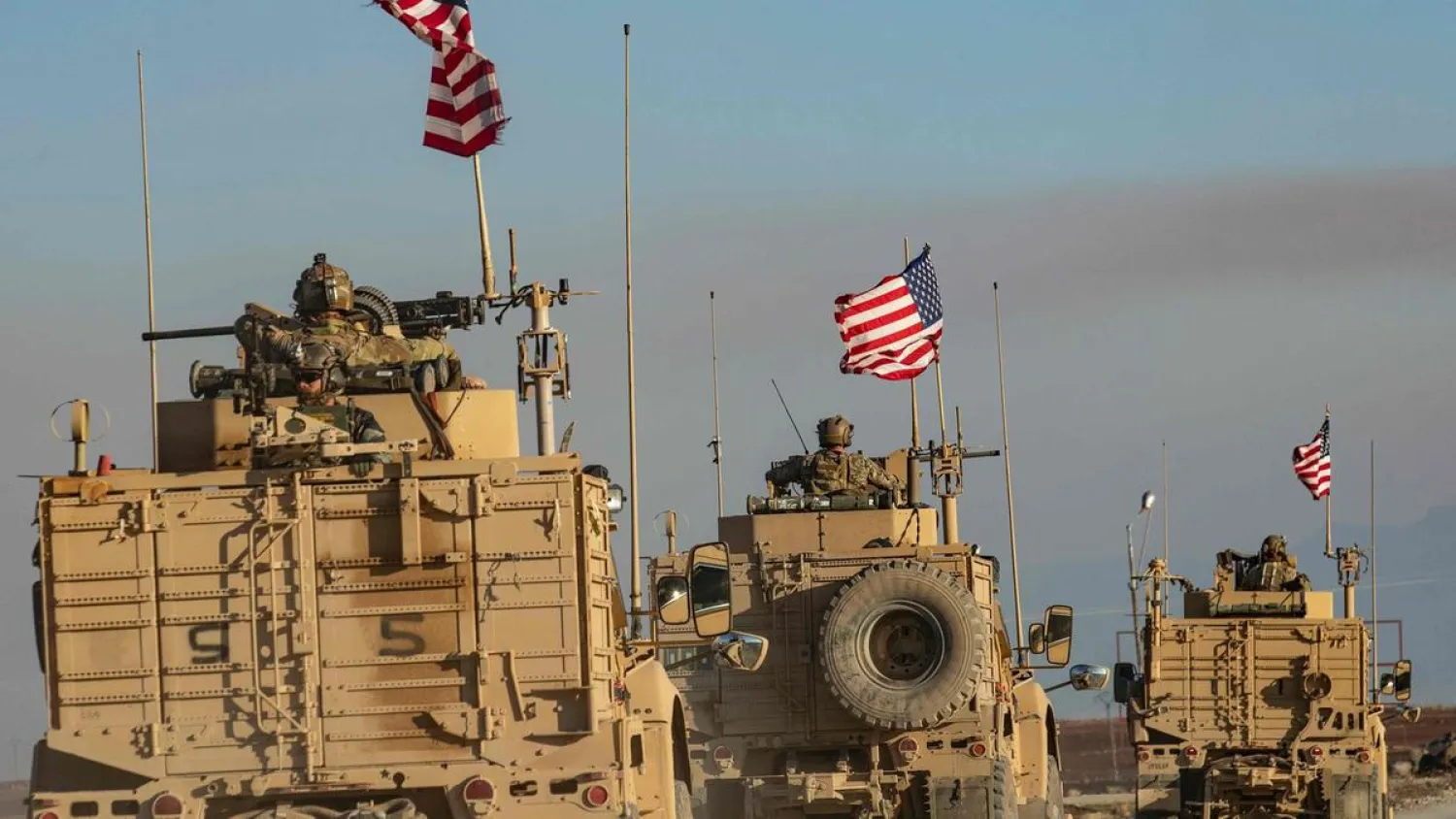
File photo: US troops on patrol in Deir Ezzor. AFP
The Syrian Observatory for Human Rights said Friday that since the beginning of Ramadan, it has documented 43 ISIS attacks against regime forces and their loyal Syrian and foreign militiamen in the Syrian desert, as well as Syrian Democratic Forces (SDF) in the eastern Euphrates region.
According to the Observatory, the attacks ranged between blasts, executions and ambushes.
“Neither SDF and international coalition security campaigns in the eastern Euphrates nor the large reinforcement brought in recently by the Iranians and regime forces to the desert have been able to contain ISIS’ growing activities and attacks,” the Britain-based watchdog said.
In areas under the control of regime forces and loyalists, SOHR said it documented 11 ISIS attacks, mainly concentrated in the desert of Deir Ezzor and Homs, leaving 37 regime soldiers and loyal militiamen dead, in addition to the killing of a civilian woman in a field execution.
In SDF-held areas, the Observatory documented nearly 32 ISIS attacks, mostly concentrated in cities and towns of the eastern countryside of Deir Ezzor, which left 21 persons dead.
Meanwhile, Observatory sources confirmed that the international coalition carried out Friday a new airdrop in the eastern countryside of Deir Ezzor, targeting in Al-Shuhayl town the house of a person who lives outside Syria and is inhabited by a displaced family from Bukamal.
It said a group of SDF and coalition members raided the house and arrested the men living there. There were no further details on the identity of the men.
An ex-ISIS member, who lives next to the targeted house, was killed during the operation.
On May 19, Observatory activists reported an airdrop conducted by US forces in the Deir Ezzor countryside. That was the third operation of its kind to be carried out in the area in three consecutive days.
On Friday, the US Central Command announced that US-led coalition forces and their Kurdish allies killed two regional ISIS leaders in a raid in eastern Syria this week.
Ahmad 'Isa Ismail al-Zawi and Ahmad 'Abd Muhammad Hasan al-Jughayfi were killed in the May 17 joint raid on an ISIS position in Deir Ezzor province, CentCom said in a statement.
Since its territorial defeat in Syria in March 2019, ISIS attacks have been restricted to the vast deserts stretching from Deir Ezzor to Homs in the center of the country.
Yemeni Govt Forces Press Advance on Houthis Near Bab al-Mandeb, in Taizhttps://english.aawsat.com/arab-world/5334405-yemeni-govt-forces-press-advance-houthis-near-bab-al-mandeb-taiz
A fighter loyal to Yemen's legitimate government fires a machine gun balanced on a motorcycle at a position along the frontlines against the Houthis around Mount al-Midan in Yemen's western Taiz province on October 26, 2026. (AFP)
Yemeni Govt Forces Press Advance on Houthis Near Bab al-Mandeb, in Taiz
A fighter loyal to Yemen's legitimate government fires a machine gun balanced on a motorcycle at a position along the frontlines against the Houthis around Mount al-Midan in Yemen's western Taiz province on October 26, 2026. (AFP)
Fighting spread across Yemen on Tuesday as government forces renewed their push against remaining Houthi pockets near the strategic Bab al-Mandeb Strait, while battles raged around Taiz amid heavy airstrikes on Houthi positions, reinforcements and supply lines.
Government forces reported gains in several strategic positions.
Fierce clashes erupted near Bab al-Mandeb between the Houthis and government forces backed by the Giants Brigades, Nation's Shield Forces and Tihama Brigades, as troops battled to seize hills overlooking the vital waterway.
The fighting coincided with airstrikes on Houthi positions around the port city of Mokha and along Yemen's western coast.
Government military sources said troops captured strategic hilltops after attacking Houthi positions, killing and wounding fighters and forcing others to flee by boat.
Preliminary reports pointed to strikes on boats and maritime supplies believed to be used by the Houthis to ferry reinforcements and equipment to positions near the strait.
Sources in the Nation's Shield Forces dismissed reports that the Houthis had seized the Kahboub mountains, saying their troops remained deployed at Dhubab Airport and across the surrounding mountain range.
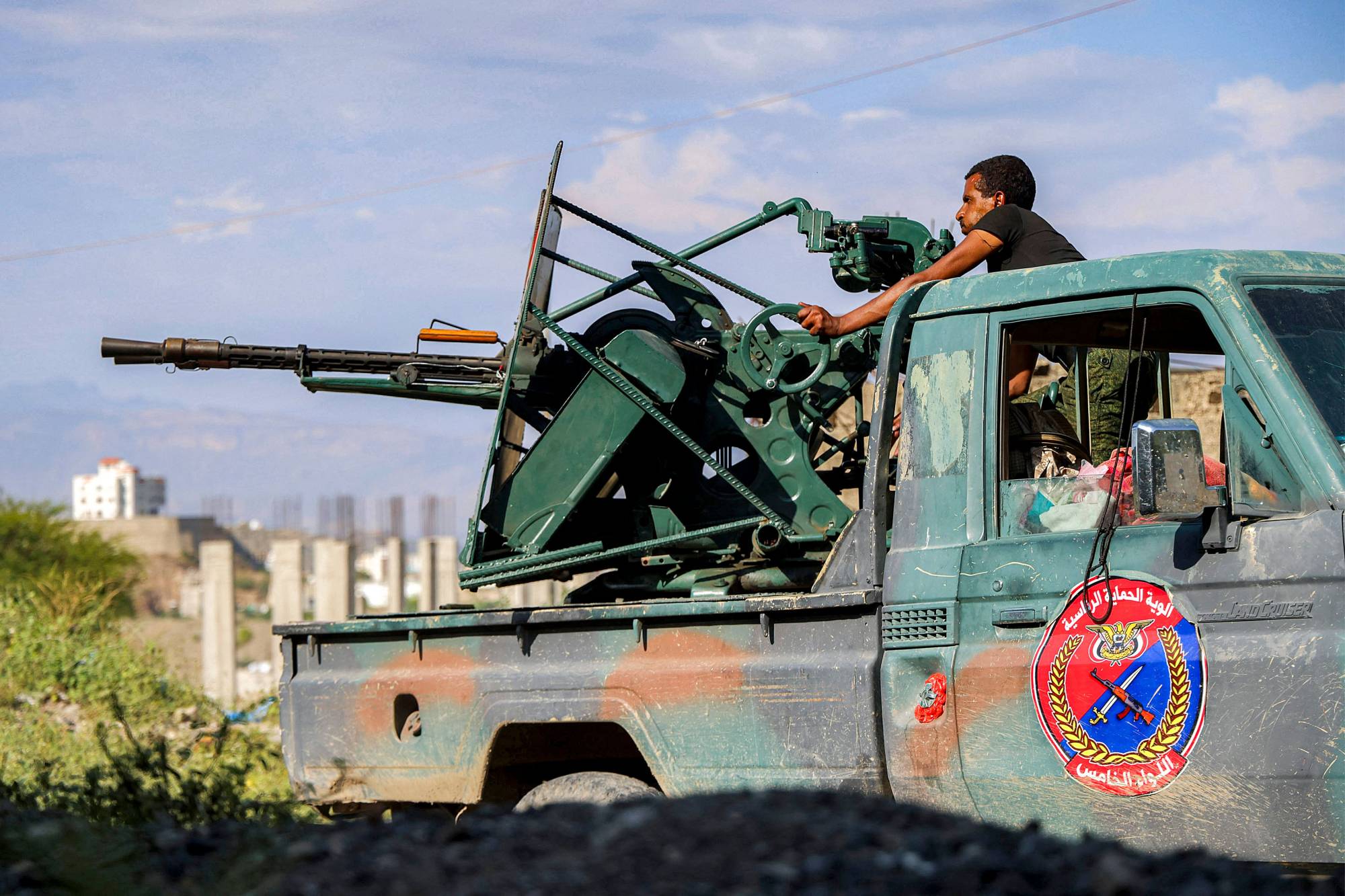
A fighter loyal to Yemen's legitimate government operates a turret from the back of a pickup truck at a position along the frontlines against the Houthis around Mount al-Midan in Yemen's western Taiz province on October 26, 2026. (AFP)
Government forces push forward in Taiz
Battles continued across Taiz city and its surrounding countryside, with airstrikes pounding Houthi positions, troop concentrations and reinforcements as government forces and local resistance fighters sought to strengthen their positions and thwart Houthi advances.
Government military sources said troops seized Mount al-Midan after fierce fighting backed by airstrikes. Field sources said government troops and local fighters also established fire control over in areas along the Al-Dhabab road.
Troops had begun clearing, securing and consolidating their newly captured positions, said Yemeni army Colonel Abdulbasit al-Bahr.
But government forces met stiff resistance near the Old Airport military camp and the Madrat area, where heavy fire and heavy weapons thwarted their attempts to advance, he revealed.
He reported Houthi fighters killed, wounded and captured, along with military vehicles destroyed or set ablaze.
Heavy clashes also broke out on the Shaqab and Al-Aqroud fronts, with both sides exchanging fire using various weapons. Government sources said troops repelled a Houthi attack in Al-Aqroud.
Authorities in Taiz said Houthi sniper fire killed five civilians and wounded five others, including children, in the villages of Hamma, Al-Damna and nearby communities. Shelling also struck residential neighborhoods on the city's outskirts. Local sources reported airstrikes near Taiz Airport and across several areas of the province.
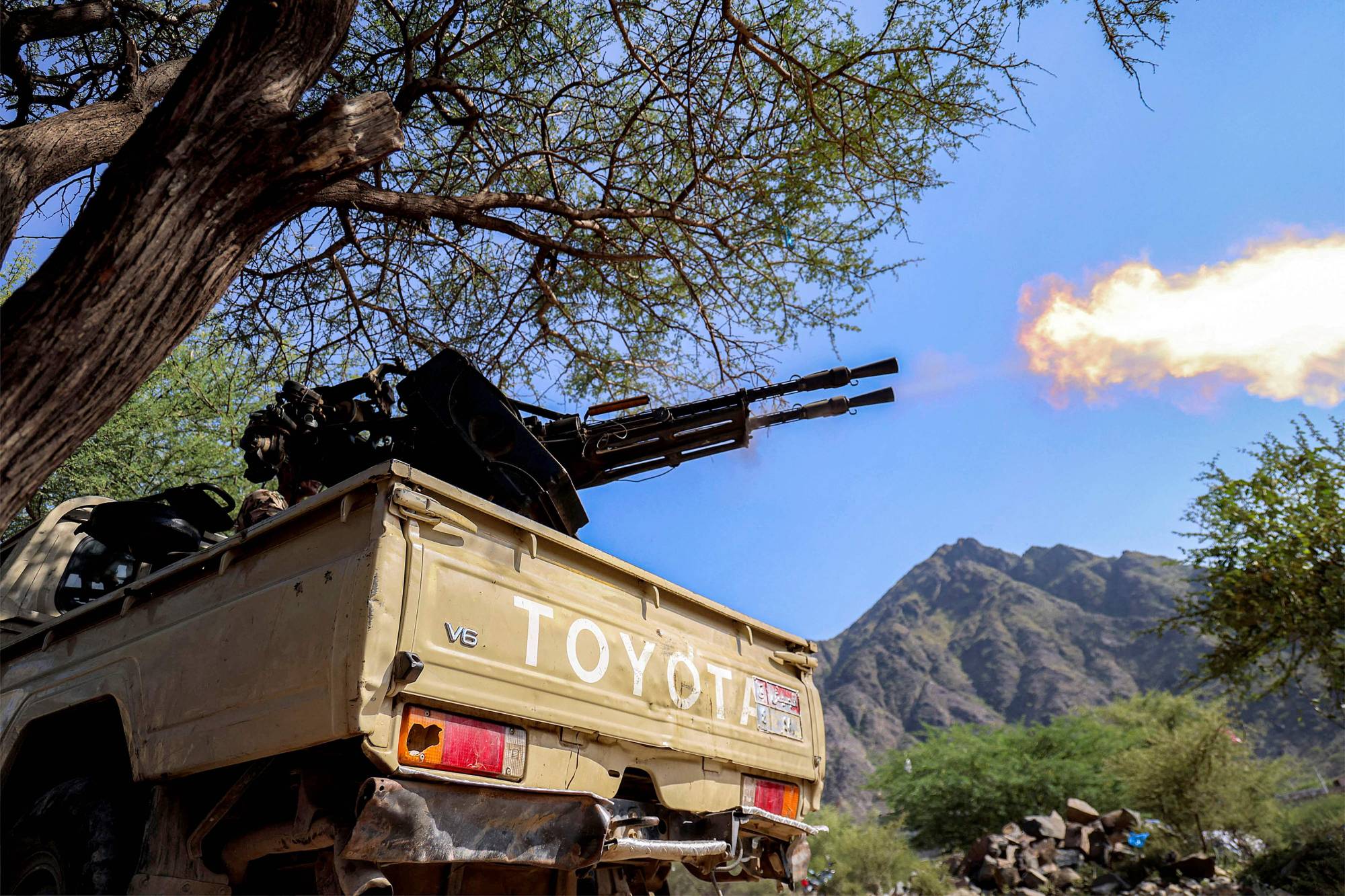
A fighter loyal to Yemen's legitimate government fires a turret from the back of a pickup truck at a position along the frontlines against the Houthis around Mount al-Midan in Yemen's western Taiz province on October 26, 2026. (AFP)
1,276 strikes
Yemen's armed forces said they carried out 1,276 strikes in 24 hours under Operation Dawn of Yemen, targeting Houthi military capabilities across multiple fronts in an indication of the widening campaign.
Military spokesman Colonel Majed al-Nuzaili said the strikes targeted command-and-control centers, defensive positions, firing positions, reinforcements, transport and supply vehicles, and weapons and ammunition depots.
Strikes also hit targets deeper inside Houthi-held territory in an effort to disrupt the group's ability to direct operations and regroup its forces, he said.
The military said the operations had neutralized about 382 Houthi commanders and fighters, destroyed or disabled 140 military vehicles and heavy weapons, and destroyed weapons and ammunition depots.
Nuzaili said simultaneous operations were continuing across Al-Jawf, Marib, Al-Bayda and the southern and southwestern fronts, targeting Houthi movements, defenses and supply lines.
The aim, he said, was to restrict the Houthis' ability to move reserves and concentrate forces on a single front.
As fighting intensified, government officials and rights groups raised alarms over the impact of shelling and the siege on civilians in Taiz.
Yemen's Human Rights Ministry condemned attacks on densely populated neighborhoods with mortar shells, Katyusha rockets and ballistic missiles.
It urged the international community to act to halt the attacks, lift the siege and hold those responsible for targeting civilians and civilian property accountable.
On the diplomatic front, Yemeni Prime Minister Shaya al-Zindani discussed the military escalation and its humanitarian fallout with European Union Ambassador to Yemen Patrick Simonnet, including the continuing siege of Taiz and attacks on civilian facilities.
Zindani urged international pressure to end the Houthi siege and reopen roads for civilians and humanitarian aid.
He also pointed to the European Commission's allocation of an additional 22.5 million euros in humanitarian assistance for Yemen.
Syria Mourns Daraa Victims, Moves to Form Emergency Joint Committee with Jordanhttps://english.aawsat.com/arab-world/5334398-syria-mourns-daraa-victims-moves-form-emergency-joint-committee-jordan
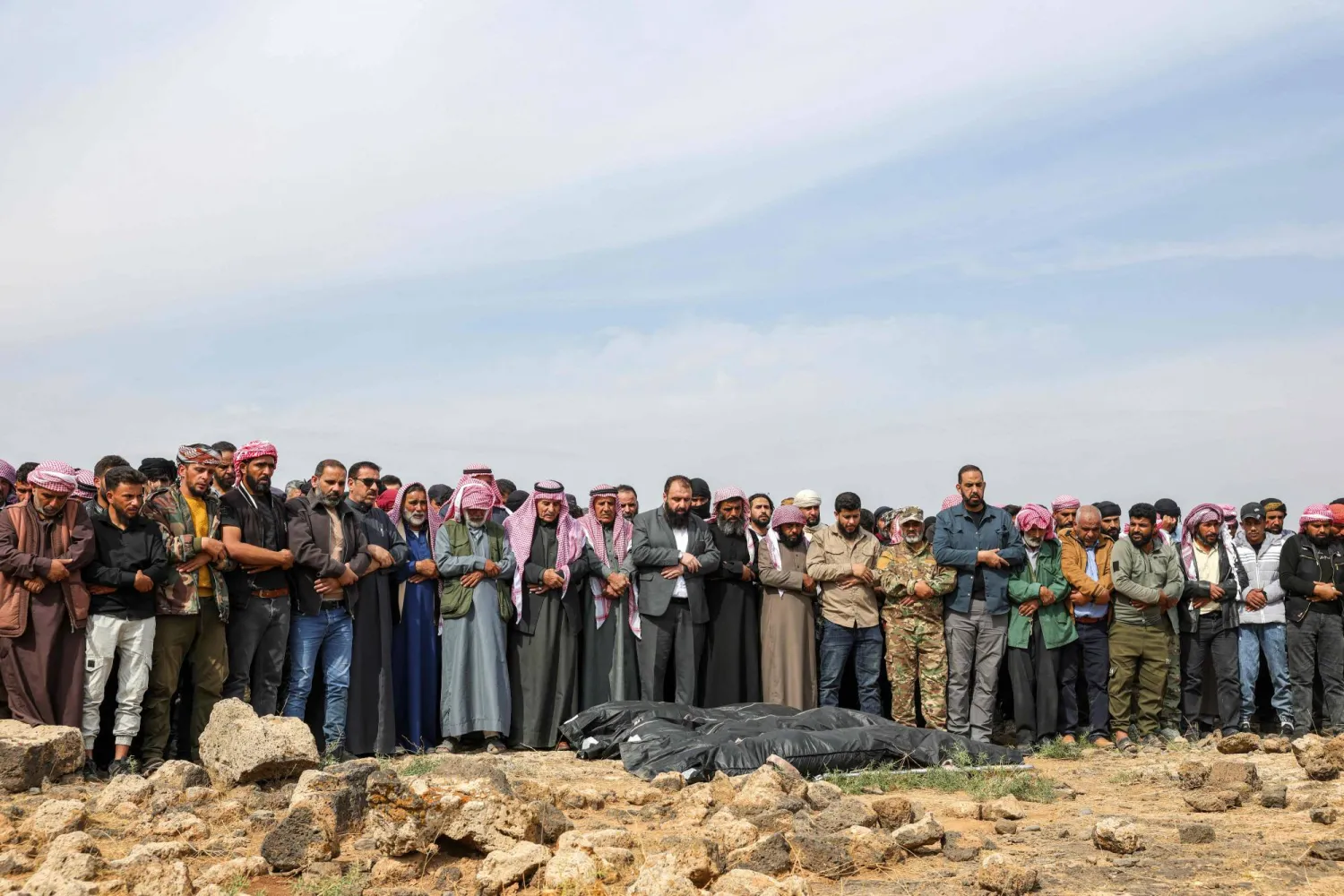
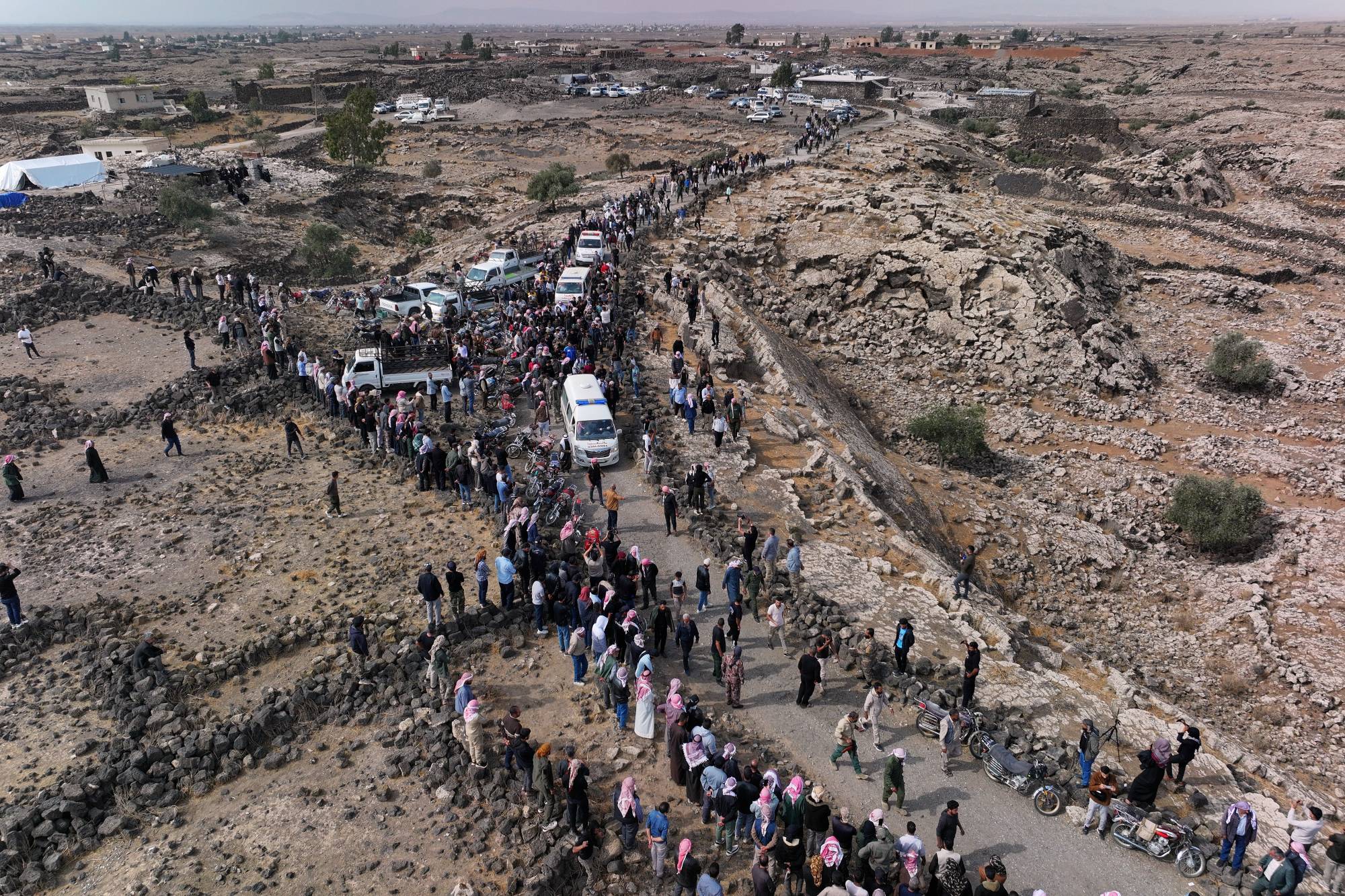
Mourners pray over the bodies of those who were killed in airstrikes carried out by Jordan the night before on the village of Al-Taf in the Al-Lajat region, located in the northeastern countryside of Daraa, during their funeral on October 27, 2026. (AFP)
Syria Mourns Daraa Victims, Moves to Form Emergency Joint Committee with Jordan
Mourners pray over the bodies of those who were killed in airstrikes carried out by Jordan the night before on the village of Al-Taf in the Al-Lajat region, located in the northeastern countryside of Daraa, during their funeral on October 27, 2026. (AFP)
Residents of Syria's southern Daraa province mourned seven civilians killed in Jordanian airstrikes on Tuesday, as public anger mounted over the deaths of children and elderly people and calls grew for an investigation.
Syria's Foreign Ministry condemned the military action as "completely unacceptable," accusing what it called "suspicious parties" of seeking to undermine the close ties between the two countries.
In a statement on Tuesday, the ministry said Syria and Jordan were coordinating to urgently establish a joint field and security committee to address on-the-ground violations and prevent their recurrence.
Mourners in Daraa demanded an investigation into the strikes, which hit several locations across the province, and called on Jordan to explain the intelligence behind its choice of targets.
Syria's state-run Al-Ikhbariya television quoted mourners as insisting the targeted sites were civilian and that no terrorist organizations operated in their province.
Military expert Imad Shahoud called the proposed joint committee "a belated measure that should have been taken before the operation."
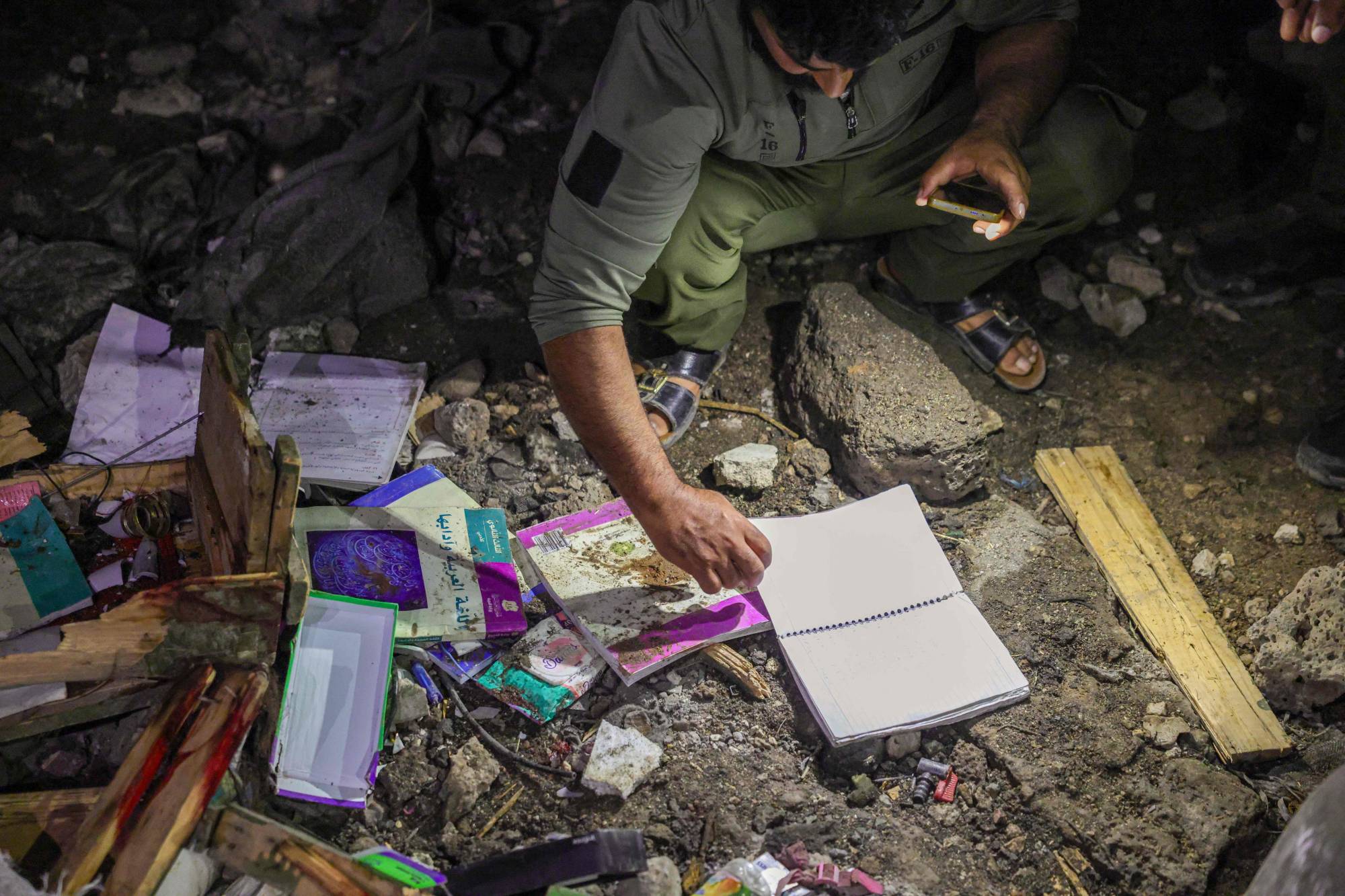
A man inspects the damage in the aftermath of airstrikes carried out by Jordan on the village of Al-Taf in the Al-Lajat region, located in the northeastern countryside of Daraa, on October 27, 2026. (AFP)
Speaking to Asharq Al-Awsat, Shahoud said an error had caused civilian deaths and that the victims' families were entitled to compensation.
He placed primary responsibility on Jordanian intelligence, saying it should have verified its information and target coordinates in coordination with Syrian authorities.
Shahoud also pointed to what he described as a professional failure to conduct surveillance of the targets for at least 24 hours.
Questioning the use of F-16 fighter jets against a "terrorist cell," he said such operations should aim to capture suspects alive whenever possible.
Jordanian warplanes struck several locations in Daraa overnight Monday into Tuesday.
Daraa's Health Directorate put the casualty toll between dead and wounded at 10.
Syria's People's Assembly joined calls for a joint investigation, condemning the "crime that killed civilians, including women and children."
The assembly also underscored the deep ties between the Syrian and Jordanian peoples.
Despite the condemnation, official statements from Damascus and Amman signaled a shared desire to protect bilateral relations.
Syrian politician and People's Assembly member Moayad Ghazlan said relations between the two countries were "greater than any mistakes," while cautioning against blaming a third party without evidence.
"We are counting on bilateral relations being stronger than any mistakes, but we cannot accept a failure to investigate what happened, take responsibility for this grave incident or compensate families for the devastating loss of our martyrs' lives," Ghazlan told Asharq Al-Awsat.
Mourners join the funeral procession for five family members, including three children, killed in a Jordanian airstrike in southern Syria's Daraa province, Tuesday, Oct. 27, 2026. (AP)
He said security cooperation and broader ties between Syria and Jordan were improving, but suggested their joint fight against terrorism and firm opposition to Israeli violations had angered parties seeking to undermine the relationship.
Asked whether the strikes could damage bilateral ties, Ghazlan was emphatic. "Our relationship with Jordan must not be affected. It is strong and deeply rooted," he said, adding that such ties required full respect for sovereignty and coordination with Syrian authorities under agreed counterterrorism protocols.
Syrian analysts broadly agreed that a security failure had led to the civilian deaths, though questions remained over how the operation unfolded.
Political and media analyst Ali Eid pointed to a wider security gap in southern Syria, blaming Israeli actions for preventing Damascus from deploying sufficient security forces and carrying out adequate sweeps to secure the region.
Eid, himself from Daraa, told Asharq Al-Awsat that Israel was a major underlying cause of the disorder that had created conditions for such interventions, even if its role was not immediately visible.
He said the lack of coordination over the strikes exposed differences between Damascus and Amman on security matters, with the civilian deaths laying bare the consequences.
Eid said the Syrian Foreign Ministry had sought to balance its response by preserving relations with Jordan while asserting Syrian sovereignty and insisting on prior coordination for any future operations.
"Syrian territory is the responsibility of the Syrian state, not the Jordanian side," he said.
With no tangible evidence that terrorists were among those killed, Eid said the strikes had fueled widespread public anger and intensified pressure on Syria's government and president.
That pressure would likely force a different approach to security coordination, he said, though any such effort would probably "run into Israeli obstacles."
Houthi Attacks Displace 270,000 Yemenis in Two Monthshttps://english.aawsat.com/arab-world/5334189-houthi-attacks-displace-270000-yemenis-two-months
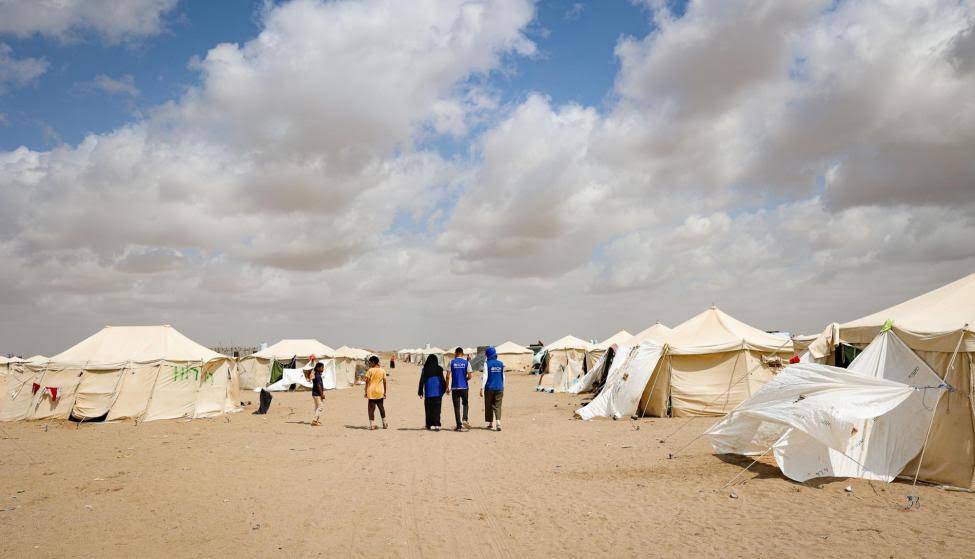
A displaced Yemeni child sits outside a tent at the Al-Fardous displacement camp in Ras Imran, on the outskirts of Aden, Yemen, Sunday, Oct. 25, 2026. (AP Photo/Abdulnasser Alseddik)
Houthi Attacks Displace 270,000 Yemenis in Two Months
A displaced Yemeni child sits outside a tent at the Al-Fardous displacement camp in Ras Imran, on the outskirts of Aden, Yemen, Sunday, Oct. 25, 2026. (AP Photo/Abdulnasser Alseddik)
Caught between displacement camps that lack even the most basic necessities and perilous sea crossings, hundreds of thousands of Yemenis are facing yet another journey of displacement as the Houthis' military escalation has expanded since September of last year.
The crisis has extended far beyond the front lines, placing increasing pressure on governorates hosting displaced populations and spilling across Yemen's borders, all amid dwindling humanitarian funding and a declining capacity to meet growing needs.
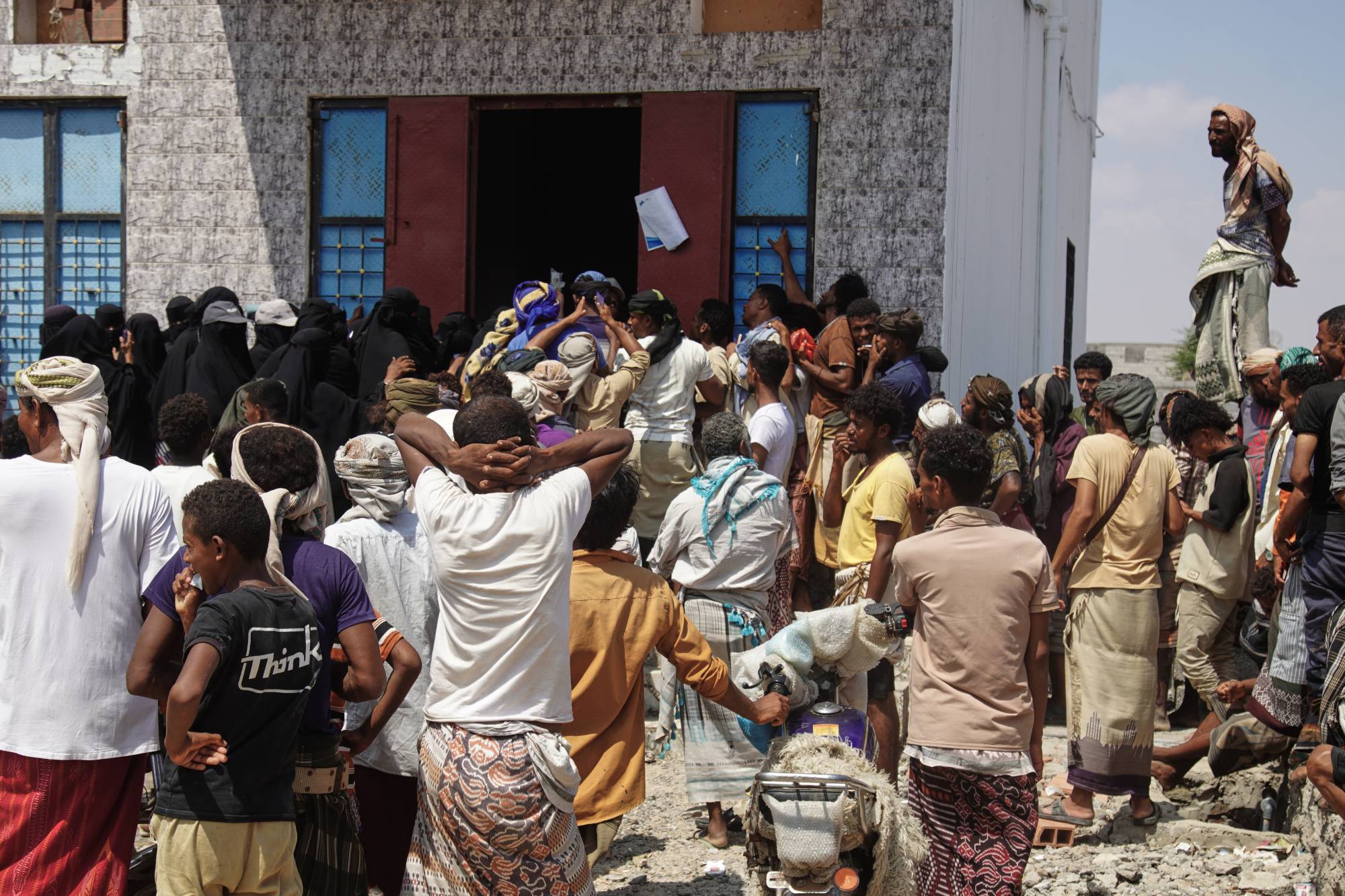
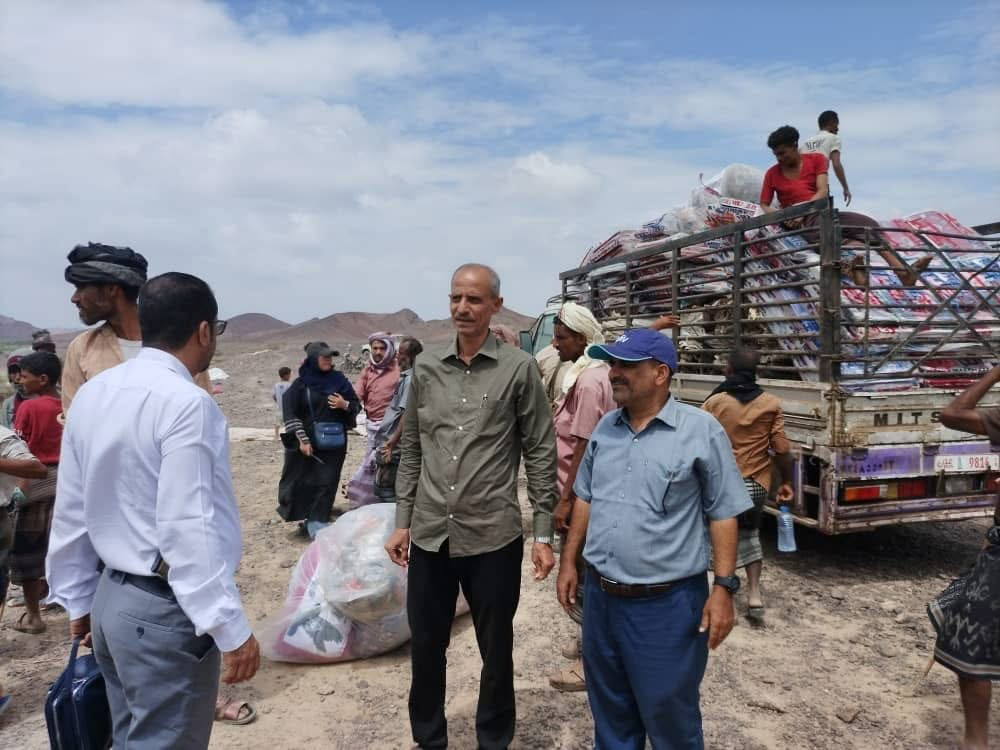
Yemenis displaced by fighting in Taiz gather to receive food aid in the Salah al-Din area on the outskirts of Aden, Yemen, Sunday, Oct. 25, 2026. (AP Photo/Abdulnasser Alseddik)
As of October 23, more than 268,000 people had been displaced, almost all of them since the beginning of September, the International Organization of Migration (IOM) said. Displaced families are now sheltering in 62 districts across ten governorates.
As of October 17, 3,836 Yemenis have arrived in Djibouti, half of them children, including 282 under the age of five.
These figures reflect the growing scale of displacement from conflict zones, particularly in western Taiz, Lahj, and southern Hodeidah, where families have been forced to flee their homes in search of safety. At the same time, host areas are increasingly struggling to absorb the rising numbers of displaced people and provide for their basic needs.
The wave of displacement due to Houthi attacks has expanded, exacerbating the humanitarian situation (Local media)
In Aden, the number of displaced people has more than doubled since October 7 to more than 42,000, while Lahj now hosts around 67,000.
The flight from violence has not been limited to land routes. Yemeni families have also taken to the sea in an attempt to escape areas of escalating conflict. Some boats reached shore before arriving at their intended destinations after running out of fuel, highlighting the dangers civilians face as they seek safer refuge.
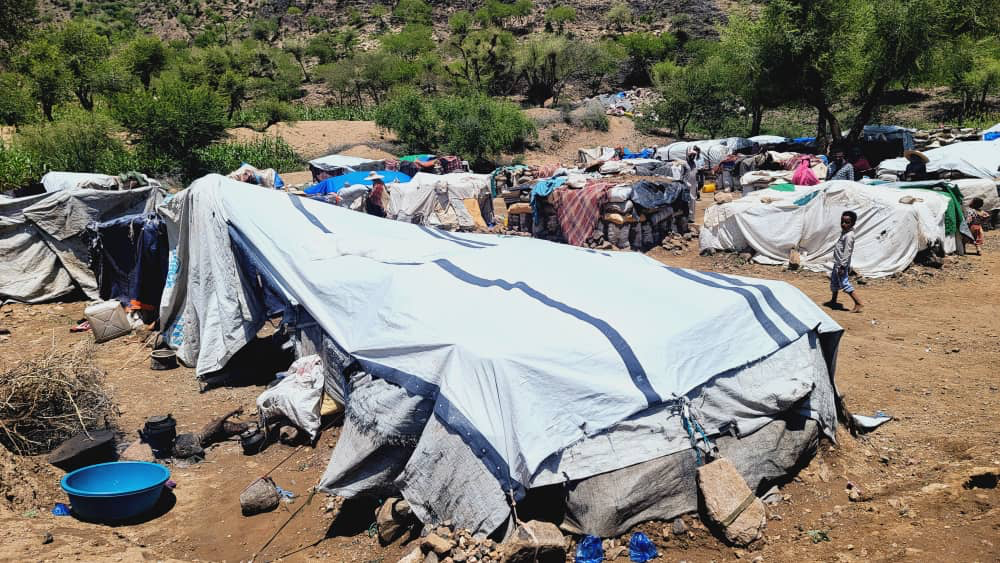
As the number of arrivals continues to grow, families who fled their homes in haste are struggling to secure shelter, safe drinking water, healthcare, and other essential services.
At the same time, pressure is mounting on host communities that already suffer from limited resources, while humanitarian needs are increasing at a pace that far exceeds the capacity of available response efforts.
The suffering of the displaced does not end once they leave conflict zones. Many families are forced to take shelter in overcrowded public buildings, while others sleep in the open due to a lack of adequate accommodation.
Continuous flow of displaced persons from the outskirts of Lahij governorate (Local media)
The shortage of sanitation facilities and basic services further compounds their hardship. These conditions heighten the risks faced by children, women, the elderly, and people with disabilities.
"The scale and speed of this displacement is leaving families in desperate need of help, and our response is struggling to keep pace," said IOM Yemen Chief of Mission Abdusattor Esoev. "Our teams are reaching people every day, but funding is falling far short. Without urgent support, more families will go without assistance that could save their lives."
With 44,736 families displaced, many are struggling to access clean water, health care and basic services amid severe fuel shortages and skyrocketing prices for basic food items and medicine.
Humanitarian access constraints in Taiz continue to slow aid delivery and the IOM faces a critical funding gap of $30 million over the next six months to provide shelter, emergency cash, protection, health care, clean water and sanitation, and to track displacement.
Displacement camps in Yemen lack the most basic necessities (Local media)
"Many families have had to flee more than once, each time facing the struggle to find somewhere safe to stay and access the support they need," said Esoev. "Support must reach both displaced families and the communities hosting them now, before more lives are put at risk."
Since August 1, IOM has worked with local authorities, UN partners and local organizations to reach 11,178 conflict-affected households with emergency shelter, household items, water, sanitation and hygiene supplies and multi-purpose cash assistance.
IOM has also provided protection services to 6,757 migrants and displaced people and carried out 56,863 primary health care consultations.
The organization urged donors “to urgently scale up support to keep pace with rapidly growing needs, and on all parties to protect civilians and humanitarian workers and to ensure safe, unimpeded access to people in need.”
لم تشترك بعد
انشئ حساباً خاصاً بك لتحصل على أخبار مخصصة لك ولتتمتع بخاصية حفظ المقالات وتتلقى نشراتنا البريدية المتنوعة