


Neutral Venue Option Assumes That Football Fans Are Inherently Disorderly

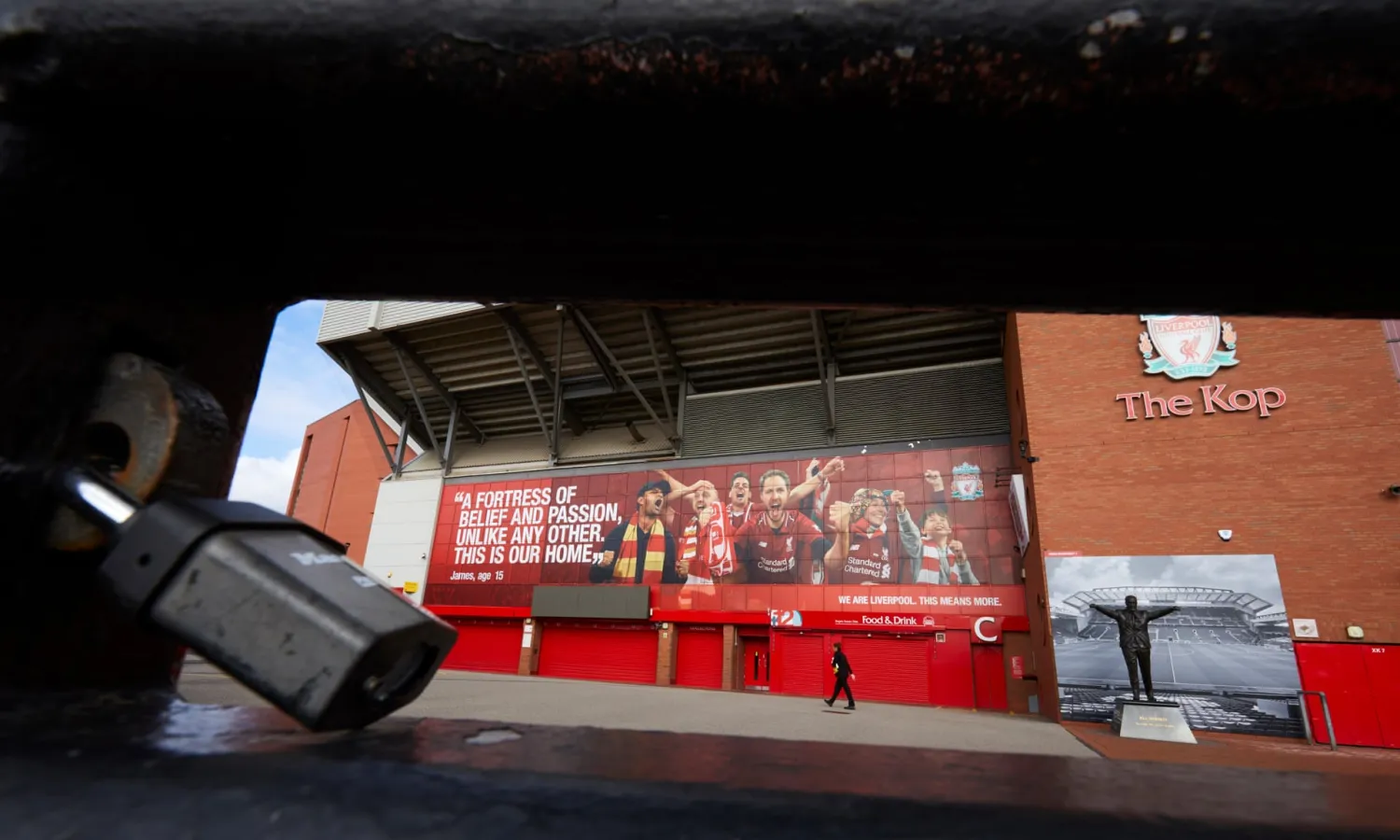
A locked gate outside the Kop at at Anfield. Photograph: Christopher Thomond/The Guardian
TT

Neutral Venue Option Assumes That Football Fans Are Inherently Disorderly

A locked gate outside the Kop at at Anfield. Photograph: Christopher Thomond/The Guardian

The Premier League is set to resume the 2019‑20 season on 17 June, but all the remaining games will be played without fans. It will look and sound like nothing we have seen before. Of course, that’s the way it has to be in order to resume the national game in the middle of a pandemic.

I am sure fans understand this is how it has to be. They have lost friends and loved ones to the virus, some of them are frontline NHS or care workers. All have made sacrifices in adhering to the lockdown, all know the seriousness of this virus, and the measures needed to tackle it. They, and the football “industry”, know things have changed dramatically.

In contrast, by insisting that some games be played at neutral venues, it seems the only stakeholder stuck in pre‑pandemic thinking is the police. In particular the National Police Chiefs’ Council, which has led the call for certain fixtures to be played away from a team’s home ground in order to avoid the risk or “threat” of fans congregating and potentially engaging in disorder. For the NPCC this is a double threat: the risk of potential disorder and the threat that the emergency services, at full stretch in the pandemic, would be “overwhelmed” were games to be staged in any other way other than the police’s preferred option of neutral venues.

There are several flaws in this position. Firstly, the major risk is surely one of epidemiology – how best to mitigate the spread of a deadly virus and keep people safe from a public health perspective, as opposed to a risk of public disorder around behind-closed-doors fixtures. When the Bundesliga successfully and safely resumed, its focus was on health. It did not experience widespread issues concerning disorder. In this sense the neutral‑venues argument is based on the unrealistic fear of disorderly fans gathering en masse outside closed football grounds.

Secondly, neutral venues does not address the reality of fan culture. For instance, if (when) Liverpool win the Premier League, or potentially Leeds United get promoted, whole cities will celebrate in their tens of thousands. Potentially these celebrations will take place in the streets, in houses, in parks, regardless of where that final game is actually played. The existing Covid-19 restrictions will allow multiple groups of up to six people to do just that in parks and open spaces anyway, providing that physical distancing is maintained. It is not clear how the neutral-venue position helps to manage these issues.

Thirdly, the argument for neutral venues presupposes fans will gather in significant numbers outside closed grounds. No evidence has been presented for this rationale. The fan culture expert Dr Geoff Pearson described the notion as “fanciful”. Many remain unconvinced that large numbers of fans would gather at behind‑closed‑doors matches particularly when managers, players, and clubs appeal for them to stay away.

Indeed, this is the major flaw with the neutral-venues thinking, the underlying assumptions about the inherently disorderly nature of football fans, as a problem to be managed rather than a solution to be embraced. The neutral‑venues strategy fails to acknowledge that the vast majority of football fans are responsible community‑spirited people who will, in the overwhelming majority, understand the need to stay away and do so.

Liverpool and Everton fans promote their foodbank at an Anfield derby in 2016. The community-spiritedness of supporters should not be overlooked now. Photograph: John Powell/Liverpool FC via Getty Images
These are the fans who run foodbanks, mobilize to support the vulnerable, collect for charity, and, like everyone else, clapped for the NHS on a Thursday night. If they cannot easily travel, get a beer, or get inside the ground, why do the police think they will gather outside a closed ground for a match that may in any event be televised?

If the police abandon the language of fear there is no reason to pursue a neutral‑venues option. It is an approach that is seemingly struggling to get traction with either the Premier League or English Football League and at least two major police forces (Merseyside and Greater Manchester). The alternative is to keep the resumption local and simple. Clubs, too, will have greater confidence in their own safety and hygiene regimes if they retain ownership and responsibility for them.

Sending their players and staff off to a neutral venue subcontracts that responsibility to someone else, somewhere else. Hosts of the neutral venues will see multiple teams and their staff coming through the doors on a more frequent basis – not the ideal scenario to maintain the necessary hygiene systems.

Perhaps taking into account the whole array of risks that need to be managed, local police forces are best positioned to police behind closed doors in their own ways at their own grounds. That’s where the police-fan relationship is at its strongest after all.

Owen West is a recently retired chief superintendent operational lead for football in West Yorkshire, an experienced match commander and commentator on public order policing.

(The Guardian)


Chelsea Injuries up 44% After Club World Cup but Report Says Event Has Had ‘Minimal’ Impact

Chelsea's Reece James, center, lifts the trophy following the Club World Cup final soccer match between Chelsea and PSG at MetLife Stadium in East Rutherford, N.J., Sunday, July 13, 2025. (AP)
TT

Chelsea Injuries up 44% After Club World Cup but Report Says Event Has Had ‘Minimal’ Impact

Chelsea's Reece James, center, lifts the trophy following the Club World Cup final soccer match between Chelsea and PSG at MetLife Stadium in East Rutherford, N.J., Sunday, July 13, 2025. (AP)

Chelsea suffered a 44% spike in injuries after competing in the supersized Club World Cup this year, according to findings published on Tuesday.

But the newly expanded tournament has so far had a “minimal impact” on injuries overall, the latest edition of the Men’s European Football Injury Index found.

There was fierce opposition to FIFA's new flagship club event when it was confirmed in 2023 that it would increase from seven to 32 teams, with players' unions warning of physical and mental burnout of players due to an ever expanding match schedule. But FIFA pressed ahead and staged the tournament in the United States in June-July.

Chelsea went on to win the inaugural competition, receiving the trophy from US President Donald Trump at MetLife Stadium and taking home prize money of around $125 million. But, according to the Index, from June-October, Chelsea picked up more injuries — 23 — than any of the nine clubs from Europe's top leagues that participated in the Club World Cup.

They included star player Cole Palmer, and was a 44% increase on the same period last year.

While Chelsea, which played 64 games over the entire 2024-25 season, saw an increase in injuries, the Index, produced by global insurance firm Howden, found that overall there was a decrease.

“In principle you would expect this increased workload to lead to an increase in the number of injuries sustained, as a possible rise in overall injury severity,” the Index report said, but added: “The data would suggest a minimal impact on overall injury figures.”

Despite the figures, the authors of the report accept it was too early to assess the full impact of the Club World Cup, with the findings only going up to October.

“We would expect to see the impact to spike in that sort of November to February period,” said James Burrows, Head of Sport at Howden. “What we’ve seen previously is that’s where the impact is seen from summer tournaments."

Manchester City has sustained 22 since the tournament, which is the highest among the nine teams from Europe's top leagues — England, Spain, Italy, Germany and France.

Those teams have recorded 146 injuries from June-October, which is down on the previous year's figure of 174.

From August-October that number is 121, the lowest for that three-month period in the previous six years of the Index.


Sunderland Worst Hit by Losing Players to African Cup of Nations 

14 December 2025, United Kingdom, London: Sunderland's Habib Diarra (L) and Leeds United's Gabriel Gudmundsson battle for the ball during the English Premier League soccer match between Brentford and Leeds United at the Gtech Community Stadium. (dpa)
TT

Sunderland Worst Hit by Losing Players to African Cup of Nations 

14 December 2025, United Kingdom, London: Sunderland's Habib Diarra (L) and Leeds United's Gabriel Gudmundsson battle for the ball during the English Premier League soccer match between Brentford and Leeds United at the Gtech Community Stadium. (dpa)

Premier League Sunderland will have to do without six players over the next few weeks and are the club worst hit as the Africa Cup of Nations takes its toll on European clubs competing over the holiday season.

Sunderland, eighth in the standings, had four of their African internationals in action when they beat Newcastle United on Sunday, but like 14 other English top-flight clubs will now lose those players to international duty.

The timing of the African championship, kicking off in Morocco on Sunday and running through to January 18, has long been an irritant for coaches, with leagues in Belgium, France, Germany, Italy, Netherlands, Portugal, and Spain also affected.

Hosting the tournament in the middle of the season impacts around 58% of the players at the Cup of Nations, though the Confederation of African Football did try to mitigate the impact by moving the start to before Christmas, so it is completed before the next round of Champions League matches.

The impact on European clubs was also lessened by allowing them to release players seven days, rather than the mandatory 14 days, before the tournament, meaning they could play for their clubs last weekend.

Sunderland's Congolese Arthur Masuaku and Noah Sadiki, plus full back Reinildo (Mozambique), midfielder Habib Diarra (Mali), and attackers Chemsdine Talbi (Morocco) and Bertrand Traore (Burkina Faso) have now departed for Morocco.

Ironically, Mohamed Salah’s absence from Liverpool to play for Egypt should lower the temperature at the club after his recent outburst against manager Arne Slot, but Manchester United will lose three players in Noussair Mazraoui, Bryan Mbeumo and Amad Diallo, who scored in Monday’s 4-4 draw with Bournemouth.

France is again the country with the most players heading to the Cup of Nations, and with 51 from Ligue 1 clubs. But their absence is much less impactful than previously as Ligue 1 broke after the weekend’s fixtures and does not resume until January 2, by which time the Cup of Nations will be into its knockout stage.

There are 21 players from Serie A clubs, 18 from the Bundesliga, and 15 from LaLiga teams among the 24 squads at the tournament in Morocco.


Rodgers Takes Charge of Saudi Team Al-Qadsiah After Departure from Celtic 

Then-Celtic head coach Brendan Rodgers greets supporters after a Europa League soccer match between Red Star and Celtic at Rajko Mitic Stadium in Belgrade, Serbia, Sept. 24, 2025. (AP)
TT

Rodgers Takes Charge of Saudi Team Al-Qadsiah After Departure from Celtic 

Then-Celtic head coach Brendan Rodgers greets supporters after a Europa League soccer match between Red Star and Celtic at Rajko Mitic Stadium in Belgrade, Serbia, Sept. 24, 2025. (AP)

Brendan Rodgers has returned to football as the coach of Saudi Arabian club Al-Qadsiah, six weeks after resigning from Scottish champion Celtic.

Al-Qadsiah, whose squad includes Italian striker Mateo Retegui and former Real Madrid defender Fernandez Nacho, is in fifth place in the Saudi Pro League in its first season after promotion.

Rodgers departed Celtic on Oct. 27 and has opted to continue his managerial career outside Britain for the first time, having previously coached Liverpool, Leicester and Swansea.

In its statement announcing the hiring of Rodgers on Tuesday, Al-Qadsiah described him as a “world-renowned coach” and said his arrival “reflects the club’s ambitious vision and its rapidly growing sporting project.”

Aramco, the state-owned Saudi oil giant, bought Al-Qadsiah in 2023 in a move that has helped to transform the club’s status.

“This is a landmark moment for the club,” Al-Qadsiah chief executive James Bisgrove said. “The caliber of his experience and track record of winning reflects our ambition and long-term vision to establish Al-Qadsiah as one of Asia’s leading clubs.”

Rodgers is coming off winning back-to-back Scottish league titles with Celtic, where he won 11 major trophies across his two spells. He also won the FA Cup with Leicester.

Al-Qadsiah's last two coaches were former Liverpool striker Robbie Fowler and former Spain midfielder Michel.
