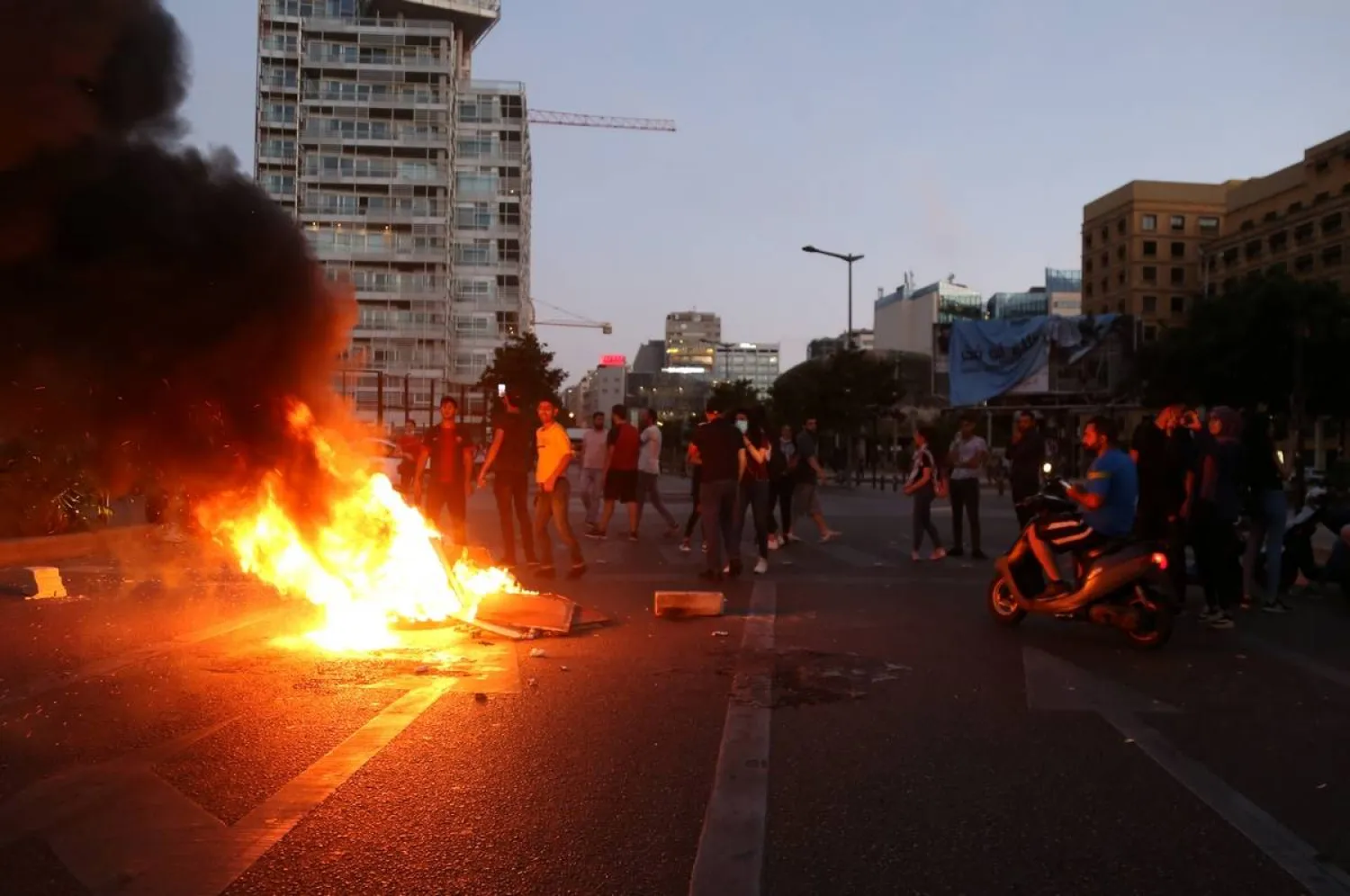

Lebanon's money changers said the central bank agreed Friday to inject fresh dollars into the market to prop up the national currency a day after protesters poured into the streets over the rising dollar price.
The protests, which degenerated into attacks on several bank branches, and the tumbling of the currency prompted an emergency cabinet meeting Friday.
Prime Minister Hassan Diab chaired the meeting, also attended by Central Bank Governor Riad Salameh and representatives of the country's money changers.
Mahmoud Halawa, head of the money changers union, said Salameh promised to inject a sufficient amount of dollars into the market for importers and regular citizens.
Security forces would also crack down on the black market or any money changers selling above a set rate of 3,940 to the dollar, Halawa said.
It was not clear whether there are enough dollars available to stop the local currency depreciation. Halawa said fresh dollars would mostly come from money transfer bureaus.
Despite previous efforts to control the currency depreciation, the Lebanese pound sold for more than 6,000 to the dollar Thursday on the black market, down from 4,000 in recent days. The pound had maintained a fixed rate of 1,500 to the dollar for nearly 30 years.
The central bank late Thursday hit out at "baseless" information on social media of "exchange rates at levels far from reality, which mislead citizens".
The currency crash comes during a historic economic and financial crisis facing the country and appeared to reflect the growing shortage of foreign currency.
It also signaled panic over new US sanctions that will affect Syria in the coming days and a lack of trust in the government’s management of the crisis.
Experts say the cabinet would like to see Salameh removed from the position he has held since 1993.
Protesters accuse Salame of having encouraged a policy of increasing state borrowing over the decades that they say benefited only the country's banking and political elite.