
Milan's Asmir Begovic: When I First Came back, Nobody was in the Streets

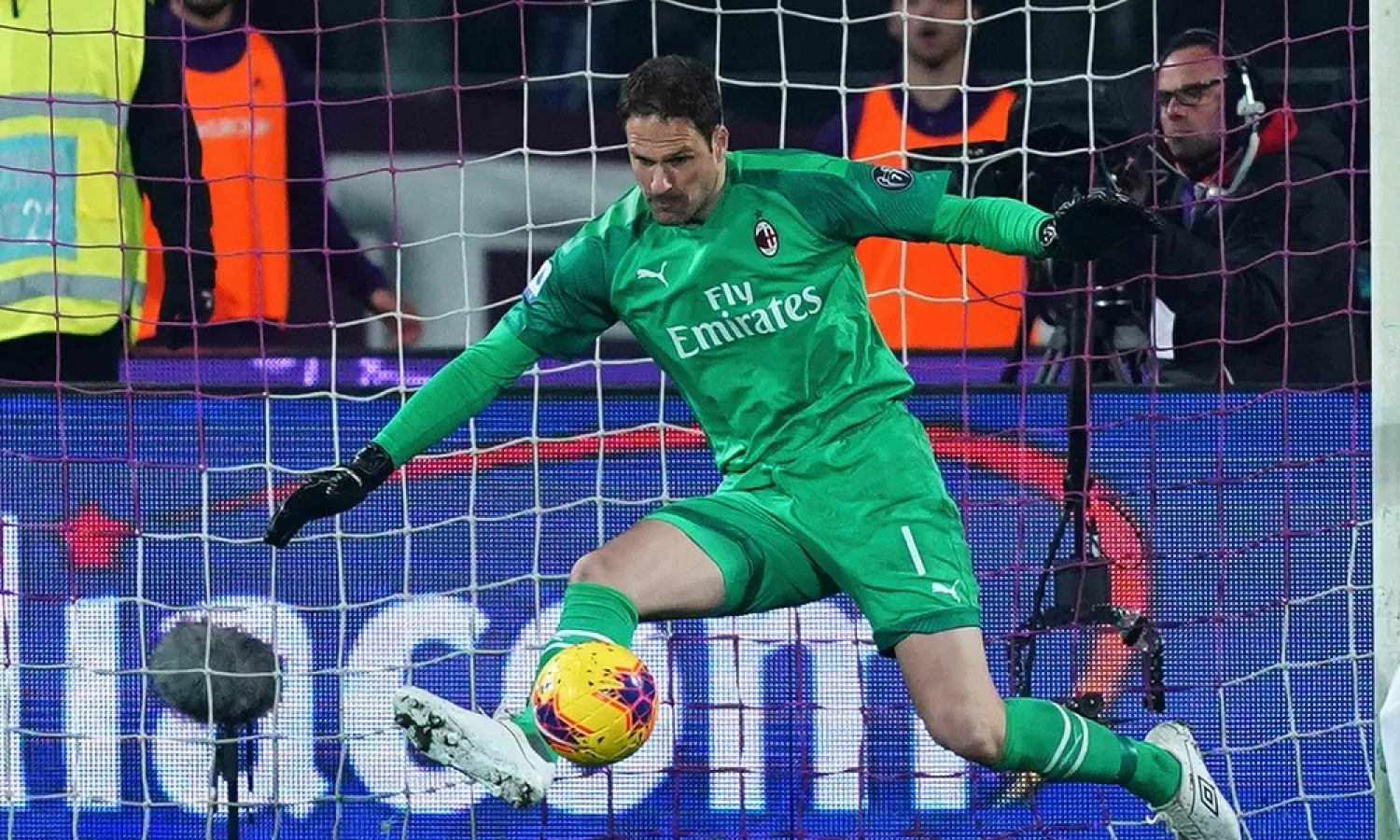
Milan’s goalkeeper Asmir Begovic keeps out an effort from Fiorentina on his debut as a substitute in a 1-1 draw during February. (AP)
TT

Milan's Asmir Begovic: When I First Came back, Nobody was in the Streets

Milan’s goalkeeper Asmir Begovic keeps out an effort from Fiorentina on his debut as a substitute in a 1-1 draw during February. (AP)

Asmir Begovic was in the midst of a year less ordinary long before a pandemic brought football to a shuddering halt. “Unorthodox?” he asks with a laugh. “A great couple of chapters in my book one day. That’s one of the reasons I love football, you just don’t know what is round the corner. As much as people want to plan, it’s such a reactive game. Things on a daily or weekly basis can change your future.”

Twelve months ago, the goalkeeper had not featured in the closing stages of a Bournemouth season during which Premier League status was comfortably retained. If an exit from the Vitality Stadium seemed likely, nobody could have reasonably predicted what happened next.

Begovic spent the first half of the 2019-20 campaign with Qarabag, where a Europa League campaign delivered useful distraction from the Azerbaijan domestic scene. By January he found himself in an altogether different movie as Pepe Reina’s move from Milan to Aston Villa left the Italian club needing an experienced goalkeeper to work alongside Gianluigi Donnarumma.

“He can be anything he wants to be,” Begovic says of the 21-year-old. “He is one of the top goalkeepers in the world right now and if he keeps going like this it’s only a matter of time before he becomes unanimously the best. He is phenomenal, a huge talent and a good guy too, with a very good work rate. What he has already achieved in the game is quite remarkable really. I can only see good things in the future for him.”

If Donnarumma is the boy wonder, Begovic can also derive thrills from playing and training alongside Zlatan Ibrahimovic. The return of the Swede, now 38, to Milan triggered scenes of euphoria. “He has had such a huge impact; his personality, his leadership, his quality on the pitch,” says Begovic. “The best thing about him is how competitive he is. At his age, he is still pushing every day to be the best. He is a team player in so many ways, his standards make everyone else better. He can change games with presence.” In short? “A world-class player who is a joy to watch.”

As Milan and other Serie A clubs returned to training three weeks ago, Italy assessed the grim impact of coronavirus. Begovic and his family returned to England, their home of 15 years, soon after the season was halted in early March. They watched the trauma in northern Italy from afar. “When I first came back, nobody was in the streets and there was absolutely nothing happening,” says the 32-year-old. “It seems like now we are getting back to somewhat normal life again.”

Football, naturally given the Italian psyche, seems key. “I think that’s been a huge factor in trying to get back as soon – and as safely – as possible here,” Begovic says. “It’s part of the culture, part of the religion here, especially in Milan. If we can bring it back for people then that should be positive all round. There has been a real collective effort across the country.

“Training has been absolutely fine. So far, the club and everyone involved has done a great job and you don’t feel uncomfortable at all. It has been tough, like pre-season really, but it’s awesome after such a long break to be back doing what we love doing. It is an honor to be part of this club. I have come to Milan and seen what this club means.”

Begovic, who left war-gripped Bosnia as a four-year-old, was thinking of others long before coronavirus took hold. His expanding goalkeeper academy, with bases in Bosnia and England, involves 10 coaches presiding over 60 youngsters. Such is its popularity that there are regular calls to offer outfield classes, too. Lockdown did not stall the project. “We have tried to keep the kids engaged as much as we can, through Zoom and other technology. We have had online sessions, video analysis, educational sessions. The parents have been thankful for a bit of purpose as well.

“It is a way of sharing knowledge of the game and what I have learned from the journey I’ve been on. I feel like it has had positive impact because I am a current player. When we put together philosophies and the way we want to coach the kids, it is very much related to the modern game because I am still playing at the highest level. There can [otherwise] be pushback from people: ‘He used to play, this was 10 years ago, this was 20 years ago.’”

Begovic’s academy has partnered FirstPoint USA with a view to providing scholarships in the States. His younger brother, Denis, is a student in North Carolina. “We want to open up as many opportunities as possible; some kids have been picked up by professional clubs, some by semi-professional clubs and the thing missing was a north American route,” the goalkeeper says. “That gives you so many opportunities; NCAA from a sporting point of view but also education and life experience as well. We want to give our kids every opportunity to stay in the game.”

Bournemouth’s upcoming mission is to remain in the Premier League. If Begovic is even remotely bitter about circumstances on the south coast, he hides it perfectly. Perhaps present surroundings would deem any such sentiment laughable in any case. “I hope things work out for them, of course,” says Begovic. “There are some superb people at that club and a very good manager. With the people at the helm and the people running the team there, I’d be confident things will be all right. It’s a club that has done so many of the right things.” Begovic’s own dedication continues to pay dividends.

The Guardian Sport


Shakhtar Boss Pays Ukrainian Racer $200,000 After Games Disqualification

Ukrainian President Volodymyr Zelenskiy holds helmet as he meets with a Ukrainian skeleton racer Vladyslav Heraskevych , who was disqualified from the Olympic skeleton competition over his "helmet of remembrance" depicting athletes killed since Russia's invasion and his father and coach, Mykhailo Heraskevych, amid Russia's attack on Ukraine, in Munich, Germany February 13, 2026. (Ukrainian Presidential Press Service/Handout via Reuters)
TT

Shakhtar Boss Pays Ukrainian Racer $200,000 After Games Disqualification

Ukrainian President Volodymyr Zelenskiy holds helmet as he meets with a Ukrainian skeleton racer Vladyslav Heraskevych , who was disqualified from the Olympic skeleton competition over his "helmet of remembrance" depicting athletes killed since Russia's invasion and his father and coach, Mykhailo Heraskevych, amid Russia's attack on Ukraine, in Munich, Germany February 13, 2026. (Ukrainian Presidential Press Service/Handout via Reuters)

The owner of ‌Ukrainian football club Shakhtar Donetsk has donated more than $200,000 to skeleton racer Vladyslav Heraskevych after the athlete was disqualified from the Milano Cortina Winter Games before competing over the use of a helmet depicting Ukrainian athletes killed in the war with Russia, the club said on Tuesday.

The 27-year-old Heraskevych was disqualified last week when the International Bobsleigh and Skeleton Federation jury ruled that imagery on the helmet — depicting athletes killed since Russia invaded Ukraine in 2022 — breached rules on athletes' expression at ‌the Games.

He ‌then lost an appeal at the Court ‌of ⁠Arbitration for Sport hours ⁠before the final two runs of his competition, having missed the first two runs due to his disqualification.

Heraskevych had been allowed to train with the helmet that displayed the faces of 24 dead Ukrainian athletes for several days in Cortina d'Ampezzo where the sliding center is, but the International Olympic Committee then ⁠warned him a day before his competition ‌started that he could not wear ‌it there.

“Vlad Heraskevych was denied the opportunity to compete for victory ‌at the Olympic Games, yet he returns to Ukraine a ‌true winner," Shakhtar President Rinat Akhmetov said in a club statement.

"The respect and pride he has earned among Ukrainians through his actions are the highest reward. At the same time, I want him to ‌have enough energy and resources to continue his sporting career, as well as to fight ⁠for truth, freedom ⁠and the remembrance of those who gave their lives for Ukraine," he said.

The amount is equal to the prize money Ukraine pays athletes who win a gold medal at the Games.

The case dominated headlines early on at the Olympics, with IOC President Kirsty Coventry meeting Heraskevych on Thursday morning at the sliding venue in a failed last-minute attempt to broker a compromise.

The IOC suggested he wear a black armband and display the helmet before and after the race, but said using it in competition breached rules on keeping politics off fields of play. Heraskevych also earned praise from Ukraine President Volodymyr Zelenskiy.


Speed Skating-Italy Clinch Shock Men’s Team Pursuit Gold, Canada Successfully Defend Women’s Title

 Team Italy with Davide Ghiotto, Andrea Giovannini, Michele Malfatti, celebrate winning the gold medal on the podium of the men's team pursuit speed skating race at the 2026 Winter Olympics, in Milan, Italy, Tuesday, Feb. 17, 2026. (AP)
Team Italy with Davide Ghiotto, Andrea Giovannini, Michele Malfatti, celebrate winning the gold medal on the podium of the men's team pursuit speed skating race at the 2026 Winter Olympics, in Milan, Italy, Tuesday, Feb. 17, 2026. (AP)
TT

Speed Skating-Italy Clinch Shock Men’s Team Pursuit Gold, Canada Successfully Defend Women’s Title

 Team Italy with Davide Ghiotto, Andrea Giovannini, Michele Malfatti, celebrate winning the gold medal on the podium of the men's team pursuit speed skating race at the 2026 Winter Olympics, in Milan, Italy, Tuesday, Feb. 17, 2026. (AP)
Team Italy with Davide Ghiotto, Andrea Giovannini, Michele Malfatti, celebrate winning the gold medal on the podium of the men's team pursuit speed skating race at the 2026 Winter Olympics, in Milan, Italy, Tuesday, Feb. 17, 2026. (AP)

An inspired Italy delighted the home crowd with a stunning victory in the Olympic men's team pursuit final as

Canada's Ivanie Blondin, Valerie Maltais and Isabelle Weidemann delivered another seamless performance to beat the Netherlands in the women's event and retain their title ‌on Tuesday.

Italy's ‌men upset the US who ‌arrived ⁠at the Games ⁠as world champions and gold medal favorites.

Spurred on by double Olympic champion Francesca Lollobrigida, the Italian team of Davide Ghiotto, Andrea Giovannini and Michele Malfatti electrified a frenzied arena as they stormed ⁠to a time of three ‌minutes 39.20 seconds - ‌a commanding 4.51 seconds clear of the ‌Americans with China taking bronze.

The roar inside ‌the venue as Italy powered home was thunderous as the crowd rose to their feet, cheering the host nation to one ‌of their most special golds of a highly successful Games.

Canada's women ⁠crossed ⁠the line 0.96 seconds ahead of the Netherlands, stopping the clock at two minutes 55.81 seconds, and

Japan rounded out the women's podium by beating the US in the Final B.

It was only Canada's third gold medal of the Games, following Mikael Kingsbury's win in men's dual moguls and Megan Oldham's victory in women's freeski big air.


Lindsey Vonn Back in US Following Crash in Olympic Downhill 

Milano Cortina 2026 Olympics - Alpine Skiing - Women's Downhill 3rd Official Training - Tofane Alpine Skiing Centre, Belluno, Italy - February 07, 2026. Lindsey Vonn of United States in action during training. (Reuters)
TT

Lindsey Vonn Back in US Following Crash in Olympic Downhill 

Milano Cortina 2026 Olympics - Alpine Skiing - Women's Downhill 3rd Official Training - Tofane Alpine Skiing Centre, Belluno, Italy - February 07, 2026. Lindsey Vonn of United States in action during training. (Reuters)

Lindsey Vonn is back home in the US following a week of treatment at a hospital in Italy after breaking her left leg in the Olympic downhill at the Milan Cortina Games.

“Haven’t stood on my feet in over a week... been in a hospital bed immobile since my race. And although I’m not yet able to stand, being back on home soil feels amazing,” Vonn posted on X with an American flag emoji. “Huge thank you to everyone in Italy for taking good care of me.”

The 41-year-old Vonn suffered a complex tibia fracture that has already been operated on multiple times following her Feb. 8 crash. She has said she'll need more surgery in the US.

Nine days before her fall in Cortina d'Ampezzo, Italy, Vonn ruptured the ACL in her left knee in another crash in Switzerland.

Even before then, all eyes had been on her as the feel-good story heading into the Olympics for her comeback after nearly six years of retirement.