


Avoiding the Caesar Act Impact on Lebanon Is Closely Linked to Reforms

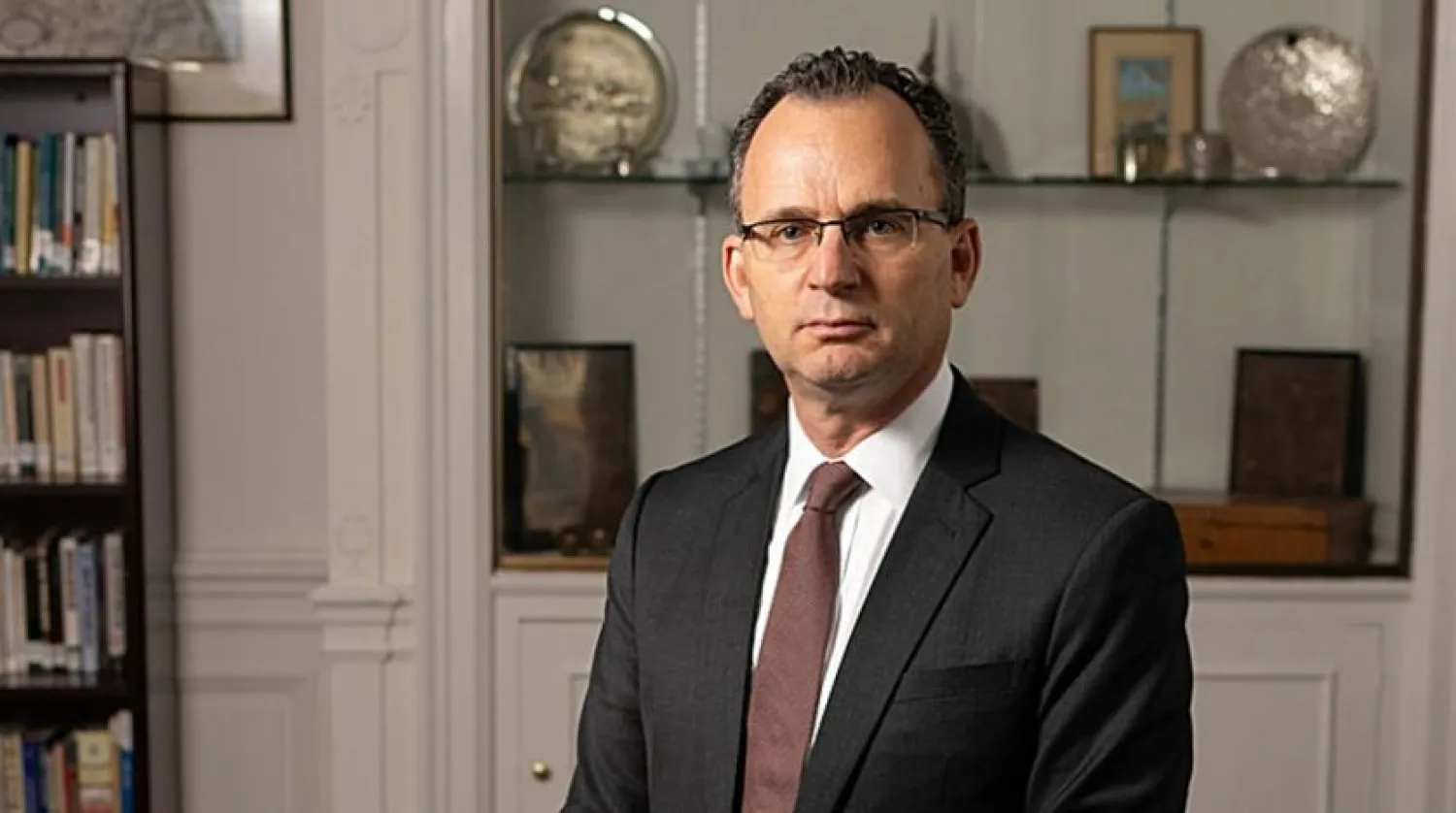
Paul Salem, president of the Washington-based Middle East Institute (Asharq Al-Awsat)
TT

Avoiding the Caesar Act Impact on Lebanon Is Closely Linked to Reforms

Paul Salem, president of the Washington-based Middle East Institute (Asharq Al-Awsat)

The Caesar Act is designed to punish the Syrian regime, until it “changes its behavior and accepts a peaceful path to a political solution in Syria,” according to officials in the US administration.

But the close links between Lebanon and Syria through dozens of bilateral agreements signed during the era of Syrian tutelage have had the new measures against the Syrian regime directly affect its neighbor, according to experts.

Basically, the Caesar Act seeks to drive Iran out of Syria and close the corridor from Tehran to Beirut via Baghdad and Damascus. And since it does not clearly define the entities, institutions, and even individuals who will be subject to its sanctions, discretion may prevail.

Some Lebanese were getting ready to have “a portion of the pie” of the projects that could be implemented in Syria. But the collapse of the exchange rate of the Syrian and Lebanese pounds exposed the reality of the structural problem faced by the two countries.

While there are no signs of imminent progress in the discussions between Beirut and the International Monetary Fund (IMF), which asked the Lebanese state to prioritize three files, including the electricity, the fight against corruption, and the closure of illegal crossings, the country could face increased losses as a result of the implementation of the Caesar Act.

Paul Salem, the president of the Washington-based Middle East Institute, said that a large part of the recent collapse in the financial, monetary, and economic situation in Lebanon and Syria was due to fears of the implementation of the new US bill.

“There is no doubt that the two economies are intertwined and the bill further complicates the situation… Unfortunately, the two regimes may not be affected, and fear is for the Lebanese and Syrian people, as the social cost in both countries will be high, and we see signs of this in prices of food and medicine,” Salem told Asharq Al-Awsat.

He noted, however, that despite the stance against Iran and Hezbollah, the US Administration still declares its support for Lebanon as long as it undertakes economic and political reform and faces corruption.

“Washington has not yet abandoned Lebanon, but the problem lies in the economic and financial collapse, the main reasons for which are the mismanagement of the Lebanese, and not only because of our association with Syria. The US or even France will not roam the world to prevent the fall of Lebanon, and there is no safety card to prevent it from collapsing,” he underlined.

In remarks to Asharq Al-Awsat, Tony Badran, a senior researcher at the Foundation for the Defense of Democracies in Washington, said that financial and commodity smuggling to Syria became a structural issue that turned Lebanon into a center to avoid sanctions against the Assad regime.

“When Lebanese merchants import goods from abroad, they must obtain approvals, and all the ministries, especially the Ministry of Energy and banks, know that the import requests are much greater than Lebanon’s need and that they have been earmarked for Syria,” he explained.

“All of this will stop with the Caesar Act and violators will be subject to sanctions,” he remarked, adding: “What is certain is that avoiding the repercussions of the bill depends on Lebanon’s response to the conditions of the international community in implementing reforms.”



Britain Imposes Sanctions on RSF Leaders, Including Hemedti’s Brother

British Foreign Secretary Yvette Cooper. (AP)
TT

Britain Imposes Sanctions on RSF Leaders, Including Hemedti’s Brother

British Foreign Secretary Yvette Cooper. (AP)

Britain on Friday imposed sanctions on senior commanders of Sudan’s Rapid Support Forces (RSF), accusing them of involvement in mass killings, systematic sexual violence and deliberate attacks on civilians in Sudan.

The UK government said Abdul Rahim Hamdan Dagalo, the RSF’s deputy commander and brother of its leader Mohamed Hamdan Dagalo, known as Hemedti, along with three other commanders suspected of involvement in the crimes, are now subject to asset freezes and travel bans.

In an official statement, British Foreign Secretary Yvette Cooper said: “The atrocities taking place in Sudan are so horrific they scar the conscience of the world. The overwhelming evidence of heinous crimes - mass executions, starvation, and the systematic and calculated use of rape as a weapon of war - cannot and will not go unpunished.”

The RSF’s actions in el-Fasher are not random: they are part of a “deliberate strategy to terrorize” populations and seize control through fear and violence. The impact of their actions is visible from space. Satellite images of el-Fasher show blood-stained sand, clusters of bodies, and evidence of mass graves where victims have been burned and buried. There needs to be accountability for these actions, and urgent steps taken to avoid this happening again, it added.

Sanctioning RSF leaders suspected of mass killings and sexual violence in el-Fasher “sends a clear message that those who commit atrocities will be held accountable,” it continued, underscoring Britain’s commitment to preventing further crimes.

Those sanctioned include Abdul Rahim Hamdan Dagalo, the RSF deputy commander, whom the UK said there are reasonable grounds to suspect of involvement in mass killings, ethnically motivated executions, systematic sexual violence including gang rape, kidnapping for ransom, arbitrary detention, and attacks on health facilities and aid workers.

Also sanctioned is Gedo Hamdan Ahmed, the RSF commander in North Darfur, who is suspected of involvement in mass killings, sexual violence, kidnappings and attacks on medical teams and humanitarian staff.

The list further includes Al-Fateh Abdullah Idris, an RSF brigadier suspected of responsibility for violence against people based on ethnicity and religion and for deliberately targeting civilians, and Tijani Ibrahim Moussa Mohamed, an RSF field commander suspected of responsibility for the deliberate targeting of civilians in el-Fasher.

Britain urged all parties to the conflict to immediately end atrocities, protect civilians and remove obstacles to humanitarian access.

The government also pledged an additional £21 million to provide food, shelter, healthcare and protection for women and children in hard-to-reach areas on the brink of collapse. The funding, the statement said, will enable aid agencies to reach 150,000 people, meet basic needs, keep hospitals operating and reunite families separated by war.

The sanctions come after the United States, the United Arab Emirates, Egypt and Saudi Arabia proposed a three-month ceasefire plan in November, followed by peace talks. While the RSF initially accepted the plan, it later launched intensive drone strikes on army-held areas.

The war in Sudan, which erupted in April 2023 between the army and the RSF, has displaced millions.

Earlier this month, the UN Human Rights Council adopted a UK-led resolution condemning atrocities and mandating an urgent investigation into crimes committed in el-Fasher.

UN Secretary-General Antonio Guterres has described the war as a “scandal,” announcing plans to convene talks between the Sudanese army and the RSF in Geneva to press both sides to respect international humanitarian law, protect civilians and implement commitments made under the Jeddah Declaration.


Arab, Muslim States Say UNRWA Role is Indispensable

UNRWA headquarters in Gaza (file photo, Reuters)
TT

Arab, Muslim States Say UNRWA Role is Indispensable

UNRWA headquarters in Gaza (file photo, Reuters)

Saudi Arabia, Egypt, Jordan, the United Arab Emirates, Indonesia, Pakistan, Türkiye and Qatar on Friday rallied behind the UN Relief and Works Agency for Palestine Refugees in the Near East, UNRWA, stressing that its role in protecting Palestinian refugees and caring for their needs is both indispensable and irreplaceable.

They warned that any effort to undermine its capacity could carry dangerous consequences for the region.

In a joint statement, the foreign ministers of the eight countries said that for decades UNRWA has carried out a unique mandate entrusted to it by the international community, focused on protecting Palestinian refugees and providing education, health care, social services and emergency assistance to millions of them across its areas of operation, in line with UN General Assembly Resolution 302 of 1949.

They added that the General Assembly’s adoption of a resolution renewing UNRWA’s mandate for an additional three years reflects international confidence in the agency’s vital role and the continuity of its operations.

The ministers condemned the Israeli forces’ storming of the agency’s headquarters in the Sheikh Jarrah neighborhood of East Jerusalem, saying the attack constitutes a flagrant violation of international law and the inviolability of UN premises.

They described it as an unacceptable escalation that runs counter to the advisory opinion issued by the International Court of Justice on Oct. 22, 2025, which stipulates that Israel, as an occupying power, must not obstruct UNRWA’s operations but rather facilitate them.

On the unprecedented humanitarian crisis in Gaza, the ministers stressed the agency’s essential role in distributing aid through its network of centers, ensuring that food, relief supplies and necessities reach those entitled to them fairly and efficiently, in line with UN Security Council Resolution 2803.

The statement said UNRWA schools and health facilities are a lifeline for the refugee community in Gaza, as they continue to support education and provide basic health services despite extremely difficult conditions.

It added that this supports the implementation on the ground of US President Donald Trump’s plan and enables Palestinians to remain on their land and build their homeland.

The ministers reaffirmed that UNRWA’s role cannot be replaced, saying there is no other entity with the infrastructure, expertise and field presence required to meet the needs of Palestinian refugees or to ensure the continuity of services on the necessary scale.

They warned that any weakening of UNRWA’s capacity would result in serious humanitarian, social, and political repercussions across the region. They called on the international community to ensure adequate and sustainable funding for the agency and to grant it the political and operational space needed to continue its vital work across all five areas of operation.

The statement noted that support for UNRWA is a cornerstone for preserving stability, safeguarding human dignity and guaranteeing the rights of Palestinian refugees until a just and lasting solution to their cause is reached in accordance with international law and relevant UN resolutions, including General Assembly Resolution 194.


Partial Rafah Rebuilding Risks Delaying Cairo Conference

Two boys shelter from the rain while sitting on a donkey cart in Deir al Balah in the central Gaza Strip (AFP)
TT

Partial Rafah Rebuilding Risks Delaying Cairo Conference

Two boys shelter from the rain while sitting on a donkey cart in Deir al Balah in the central Gaza Strip (AFP)

Discussion has intensified over plans for partial reconstruction in parts of Gaza, even as official Arab statements insist that rebuilding must begin across the entire enclave.

The debate comes nearly two weeks after the postponement of the Cairo Conference on Gaza reconstruction, intended to marshal large-scale funding to revive the devastated territory, amid estimates that rebuilding could cost as much as $35 billion.

Hebrew media leaks about these “partial plans,” targeting areas including the southern city of Rafah, say the government of Israeli Prime Minister Benjamin Netanyahu has approved financing for them.

Experts who spoke to Asharq Al-Awsat said the move aligns with earlier US plans in case efforts to move to the second phase of the Gaza agreement fail.

They said the Cairo reconstruction conference would be delayed for some time but would eventually take place, although not soon, and that its outcomes would face Israeli obstacles during implementation.

The Yedioth Ahronoth newspaper quoted an Israeli official as saying Tel Aviv had given preliminary approval to cover the cost of removing rubble from Gaza and to take responsibility for the massive engineering operation, following a request from the United States. Israel would begin by clearing an area in Rafah in southern Gaza in preparation for reconstruction.

According to the newspaper’s sources, Israel could be required to remove rubble from the entire Gaza Strip, a process expected to take years and cost more than $1 billion.

The United States wants reconstruction to begin in Rafah in the hope it can serve as a successful model for US President Donald Trump’s vision for rehabilitating Gaza, drawing residents from across the enclave, with other areas rebuilt in later phases, the Israeli paper said.

The Israeli leaks come about two weeks after comments by Egyptian Foreign Ministry spokesman Tamim Khallaf, who told Asharq Al-Awsat that Cairo was working with regional and international partners to prepare the conditions needed for the success of the Early Recovery and Reconstruction in Gaza conference. His remarks came in response to questions about the reason for its delay.

On Nov. 25, an informed Egyptian source told Asharq Al-Awsat the conference would not be held as scheduled at the end of November and would be postponed, citing the escalation in Gaza and Cairo’s desire to see better conditions on the ground to achieve its goals.

The comments coincided with reports of Israeli plans to divide Gaza into two parts, one under Israeli control and the other under Hamas control, covering no more than about 55 percent of the territory.

An emergency Arab summit hosted by Cairo on March 4 adopted a Gaza reconstruction and development plan aimed at early recovery and rebuilding the enclave without displacing Palestinians.

The plan outlines specific phases over up to five years at an estimated cost of $53 billion. Egypt also called for an international conference to support Gaza’s reconstruction, in coordination with the United Nations.

Rakha Ahmed Hassan, a member of the Egyptian Council for Foreign Affairs and a former assistant foreign minister, said guarantors and some mediators of the Gaza agreement would not accept such partial plans, viewing them as a violation of the deal.

He said they come amid Israeli moves to obstruct the second phase by arguing that disarming Gaza must come first.

Palestinian political analyst Abdel Mahdi Mutawe said Israel’s approval of partial reconstruction funding and renewed promotion of the idea indicated little chance of reaching a second phase, pushing instead toward an alternative plan previously discussed by Jared Kushner, Trump’s son-in-law.

That plan envisages building in areas outside Hamas control as long as the group does not accept disarmament.

Mutawe said reviving talk of partial reconstruction delays comprehensive rebuilding and sends a message to potential donors that obstacles remain, further delaying the Cairo conference.

In October, Kushner said at a press conference in Israel that rebuilding Gaza in areas under Israeli army control was being carefully studied, with considerations underway in areas controlled by the Israeli military that could be secured to begin building a “new Gaza.”

He said no funds would be allocated to reconstruction in areas still controlled by Hamas. The partial plans run counter to Arab positions.

Egyptian President Abdel Fattah al Sisi and Bahrain’s King Hamad bin Isa Al Khalifa stressed in a phone call on Thursday the need for full implementation of the ceasefire agreement in Gaza and the inevitability of starting reconstruction across the entire enclave, according to an Egyptian presidency statement.

In an interview with US broadcaster Tucker Carlson at the Doha Forum on Sunday, Qatari Prime Minister Sheikh Mohammed bin Abdulrahman Al-Thani reaffirmed that the Palestinians will not be abandoned but that cheques to rebuild what others have destroyed won’t be signed.

Hassan said Qatar’s recent call for Israel to bear the cost of the destruction it caused reflected a firm Arab position aimed at preventing a repeat of the devastation.

He added that Egypt was also aware of Israeli moves toward an alternative plan involving partial reconstruction in Rafah, but that Cairo sought to strengthen a unified Arab stance in favor of comprehensive rebuilding, which would begin with the second phase that includes an Israeli withdrawal.

Mutawe said the Arab position would certainly exert pressure, but acknowledged differing views among Arab states.

He said the Cairo reconstruction conference was tied to progress in the second phase and the issue of disarmament in Gaza. It would eventually take place, he said, but not in the near term, and its outcomes would remain vulnerable to Israeli obstacles.