Qatar Emir's Brother Accused of Ordering Murder, Going on Drug Binges

Sheikh Khalid bin Hamad bin Khalifa Al Thani. The Daily Mail
TT

Qatar Emir's Brother Accused of Ordering Murder, Going on Drug Binges

Sheikh Khalid bin Hamad bin Khalifa Al Thani. The Daily Mail

The brother of Qatar's emir has ordered his staff to kill Americans on US soil and personally beat his chauffeur to death in Qatar, according to a federal civil lawsuit filed in Massachusetts this week.

Britain’s The Daily Mail, which has exclusively obtained a copy of the lawsuit, said the allegations are against Sheikh Khalid bin Hamad bin Khalifa Al Thani.

The court papers, filed by six American former staffers of the Sheikh, claim he went on days-long sleepless "binges", ordered two of his US staff to kill people and among others threatened to kill staff himself.

One of the plaintiffs, Ramez Tohme, the son of Michael Jackson's last manager Tohme Tohme, claims in the lawsuit that the Qatari prince threatened to kill him, saying "you can call your father and tell him that you are going to be buried in the desert."

Tohme, 33, claims the Sheikh kidnapped him and kept him prisoner in Doha for days, attempted to frame him for a crime and had him thrown in jail, said The Daily Mail.

Another of the plaintiffs, Oak Ridge Tennessee-based Terry Hope, worked for Sheikh Khalid's car racing team, Al Anabi Racing.

In the lawsuit he claims that between 2010 and 2012 the Sheikh ordered him to murder his rival, the then owner of the American Drag Racing League and the owner's wife, four times.

Hope, 54, claims the Sheikh told him he "would be financially 'set up' for the rest of his life" if he performed the contract killings, but he refused.

Hope claims that in 2016, while working for Sheikh Khalid in Doha, the prince drove out to the desert and beat his chauffeur to death in front of him.

“The more that the chauffeur pleaded, the more aggressive Defendant Khalid beat him,” Hope claimed in his lawsuit, recounting the alleged murder that he says he saw from just a few feet away.

“Plaintiff observed Defendant Khalid to pull out his pistol, grab the chauffeur by the back of the head, and place the pistol in the chauffeur's mouth,” the former racing team member claimed.

“Plaintiff observed Defendant Khalid to then strike chauffeur in the back of the head, observed the chauffeur to fall limp, observed the chauffeur's chest to cease rising, and the chauffeur to eventually become lifeless.”

The Daily Mail has previously revealed the claims of one of the plaintiffs, ex-US Marine Matthew Pittard, that the royal told him to kill two people, and the Sheikh later threatened to kill him after he refused.

Sheikh Khalid hired Pittard, 46, in 2017 as his security director and soon after made the illegal request, the documents claim.

“In approximately late September of 2017 and November of 2017, in Los Angeles California, Defendant Khalid asked Pittard to murder a male and female who Defendant Khalid viewed as threats to his social reputation and personal security,” the legal filing said.

“Pittard refused to execute these unlawful requests.”

The Sheikh's legal team, lawyers for his US company and the Qatari embassy did not respond to repeated requests by The Daily Mail for comment.

Royal Order Appoints Lieutenant General Fahd Al-Salman Adviser to Defense Minister, Tasks General Al-Ruwaili with Joint Forces Command

Custodian of the Two Holy Mosques King Salman bin Abdulaziz Al Saud (SPA)
TT

Royal Order Appoints Lieutenant General Fahd Al-Salman Adviser to Defense Minister, Tasks General Al-Ruwaili with Joint Forces Command

Custodian of the Two Holy Mosques King Salman bin Abdulaziz Al Saud (SPA)

Custodian of the Two Holy Mosques King Salman bin Abdulaziz Al Saud issued a royal order on Monday, based on a proposal by the Minister of Defense, appointing Lieutenant General Fahd bin Hamad bin Abdulaziz Al-Salman as Adviser to the Minister of Defense for Military Affairs.

The order also tasks Chief of the General Staff General Fayyad bin Hamed bin Ruqad Al-Ruwaili with the duties of Commander of the Joint Forces, in addition to his current post.


Egypt, Kuwait Discuss Regional De-Escalation Efforts

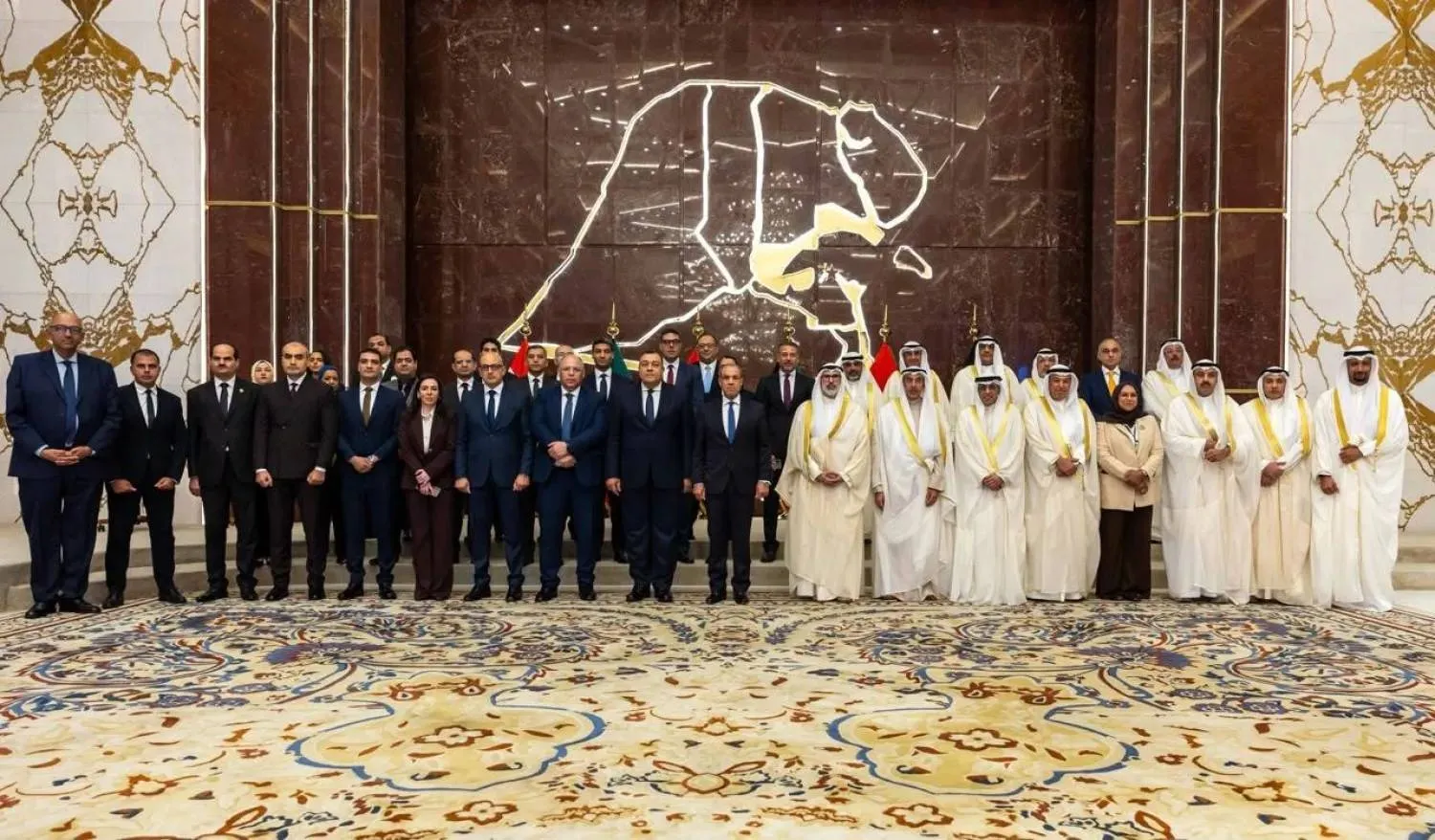
Kuwaiti Foreign Minister Sheikh Jarrah Jaber Al-Ahmad Al-Sabah, his Egyptian counterpart Badr Abdelatty and delegations from both countries at the 14th session of the Kuwaiti-Egyptian Joint Committee in Kuwait on Sunday. (Egyptian Foreign Ministry on Facebook)
TT

Egypt, Kuwait Discuss Regional De-Escalation Efforts

Kuwaiti Foreign Minister Sheikh Jarrah Jaber Al-Ahmad Al-Sabah, his Egyptian counterpart Badr Abdelatty and delegations from both countries at the 14th session of the Kuwaiti-Egyptian Joint Committee in Kuwait on Sunday. (Egyptian Foreign Ministry on Facebook)

Cairo and Kuwait on Sunday discussed ways to de-escalate regional tensions, strengthen bilateral ties, and explore new financing avenues.

In a statement, Kuwait’s Ministry of Foreign Affairs said it hosted the 14th session of the Kuwaiti-Egyptian Joint Committee, co-chaired by Foreign Minister Sheikh Jarrah Jaber Al-Ahmad Al-Sabah and his Egyptian counterpart Badr Abdelatty.

The meetings focused on ways to advance cooperation to new levels. They tackled the latest regional and international developments, ongoing diplomatic efforts, and means to bolster joint action to confront current regional challenges.

The two sides signed three memoranda of understanding covering exhibitions, economic and free zones, and civil aviation authorities, as well as executive programs in training, culture, the arts, education, and customs affairs.

According to a statement from the Egyptian Ministry of Foreign Affairs, Abdelatty underscored the importance of continued efforts to boost economic and investment cooperation, increase bilateral trade and mutual investments, and expand partnerships between both countries.

He underscored the Egyptian government’s commitment to overcoming any obstacles facing their investments.

Former Egyptian Assistant Foreign Minister Mohamed Hegazy said Sunday’s meetings underscore the importance of bilateral relations as “a strategic partnership dictated by the nature of ongoing transformations in the region, along with the crises, conflicts, and reshaping of regional and international balances of power and alliances it is witnessing.”

Speaking to Asharq Al-Awsat, Hegazy added that “Cairo and Kuwait possess the historical capital, political trust, and economic interests that qualify them to move to a more advanced stage of strategic partnership.”

Kuwait Crown Prince Sabah Al-Khaled Al-Hamad Al-Sabah also received Abdelatty for talks on regional developments and de-escalation efforts.

Abdelatty’s visit took place as Iran carried out a new attack against Bahrain on Sunday following one on Friday.

Hegazy said that Egyptian-Kuwaiti coordination carries a clear message that Gulf security is not a separate from Arab national security.

“Egypt’s security and Gulf stability form a single system of integrated strategic interests,” he added.

“We are looking at two countries that recognize regional stability is a shared responsibility, and that security, political, and economic challenges can no longer be addressed through unilateral moves, but rather require institutionalized and continuous Arab coordination,” he explained.

Abdelatty’s visit to Kuwait also included intensive discussions aimed at attracting investment and financing.

He met with Finance Minister Yaqoub Al-Rifai to discuss “increasing mutual investments between the two sides and building on the promising opportunities in economic relations that match the stature and capabilities of both countries,” said the Egyptian Foreign Ministry.


Salam in Doha for More Talks on Electricity, Gas Projects in Lebanon

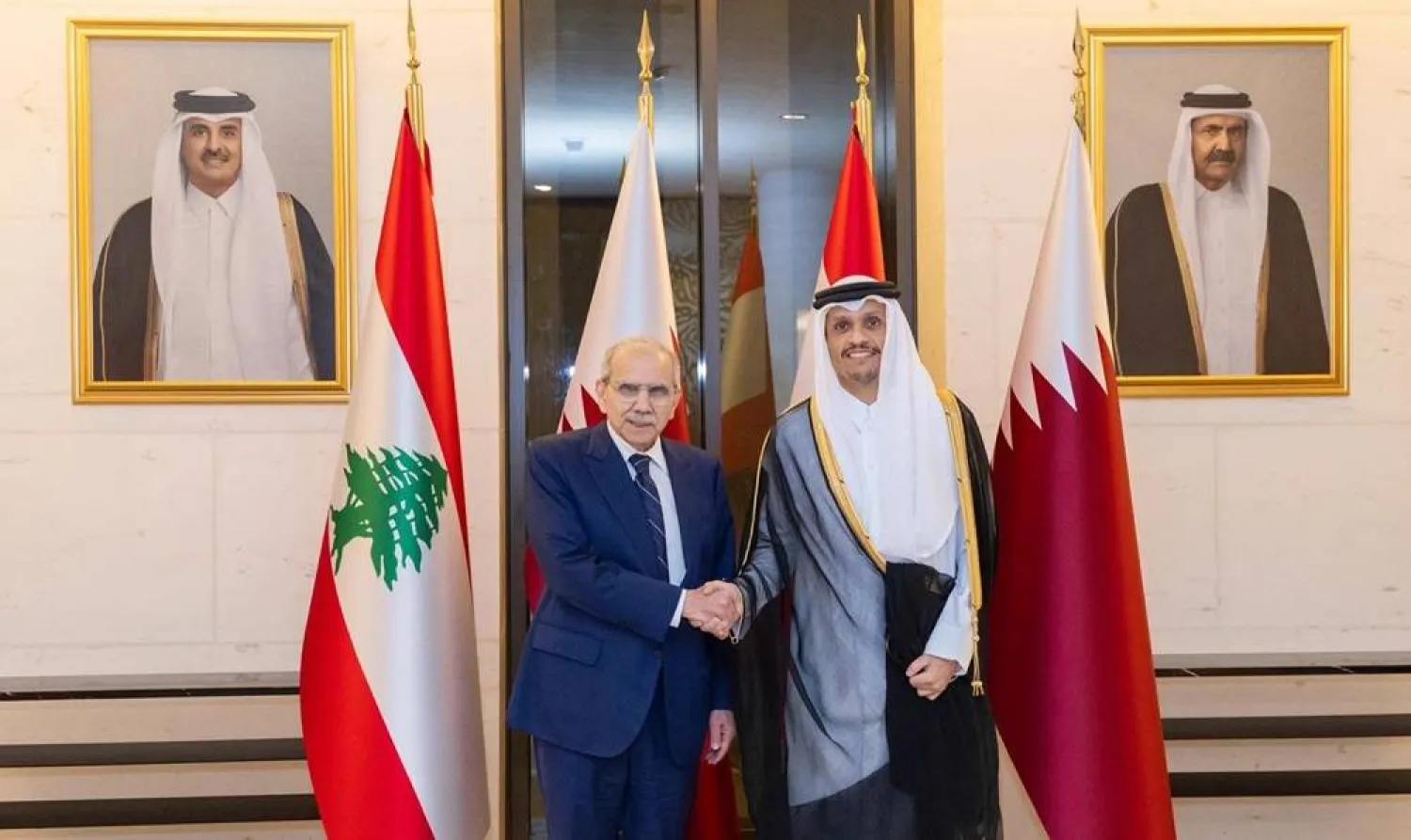
Lebanese Prime Minister Nawaf Salam and Qatari Prime Minister and Minister of Foreign Affairs Sheikh Mohammed bin Abdulrahman bin Jassim Al Thani meet in Doha on Sunday. (QNA)
TT

Salam in Doha for More Talks on Electricity, Gas Projects in Lebanon

Lebanese Prime Minister Nawaf Salam and Qatari Prime Minister and Minister of Foreign Affairs Sheikh Mohammed bin Abdulrahman bin Jassim Al Thani meet in Doha on Sunday. (QNA)

Lebanese Prime Minister Nawaf Salam began on Sunday a visit to the Qatari capital, Doha, accompanied by Minister of Energy and Water Joe Saddi, to continue talks on cooperation in the electricity sector.

Salam held a meeting with Qatari Prime Minister and Minister of Foreign Affairs Sheikh Mohammed bin Abdulrahman bin Jassim Al Thani, attended by Saddi and Qatari Minister of State for Energy Affairs Saad bin Sherida Al Kaabi.

The meeting aimed to continue discussions on a range of projects, most notably developing electricity production in Lebanon, importing gas and electricity through Syria, constructing new power plants, and establishing a floating liquefied natural gas (LNG) storage and regasification unit.

It also tackled negotiating a 20-year agreement for the supply of LNG from Qatar, in addition to renewable energy projects, said a statement from Salam’s office.

The visit forms part of ongoing talks between Lebanon and Qatar to establish a comprehensive framework for energy sector cooperation. Discussions on the issue gained momentum following the Qatari prime minister’s visit to Beirut on October 16.

At the time, Salam announced that Qatar would finance, build, and operate the electricity project under a Build-Operate-Transfer (BOT) model without requiring upfront investment from the Lebanese state, as part of a plan to boost production, improve power supply, and cut costs.

Qatar plans to construct two power plants in Lebanon over the next three years and sign a 20-year LNG supply deal under ‌a proposal to revive the ailing Lebanese power sector, a document dated October 2026 seen by Reuters showed.

Lebanon's energy sector is at the center of the country's financial and economic malaise, contributing tens of billions of dollars to the national debt since the country's 1975-1990 civil war even as it failed to deliver 24/7 power.

The state power company currently supplies just a few hours of power per day, with the rest coming from expensive private diesel generators that spew toxic exhaust often seen forming a yellow-grey layer ⁠of smog above Beirut.

Qatar has been a longtime financial ‌and political ⁠backer of Lebanon, stepping in multiple times over the last decades during times of political and economic crisis.