


Personality, Reform and Relations Dominate Race for WTO Presidency

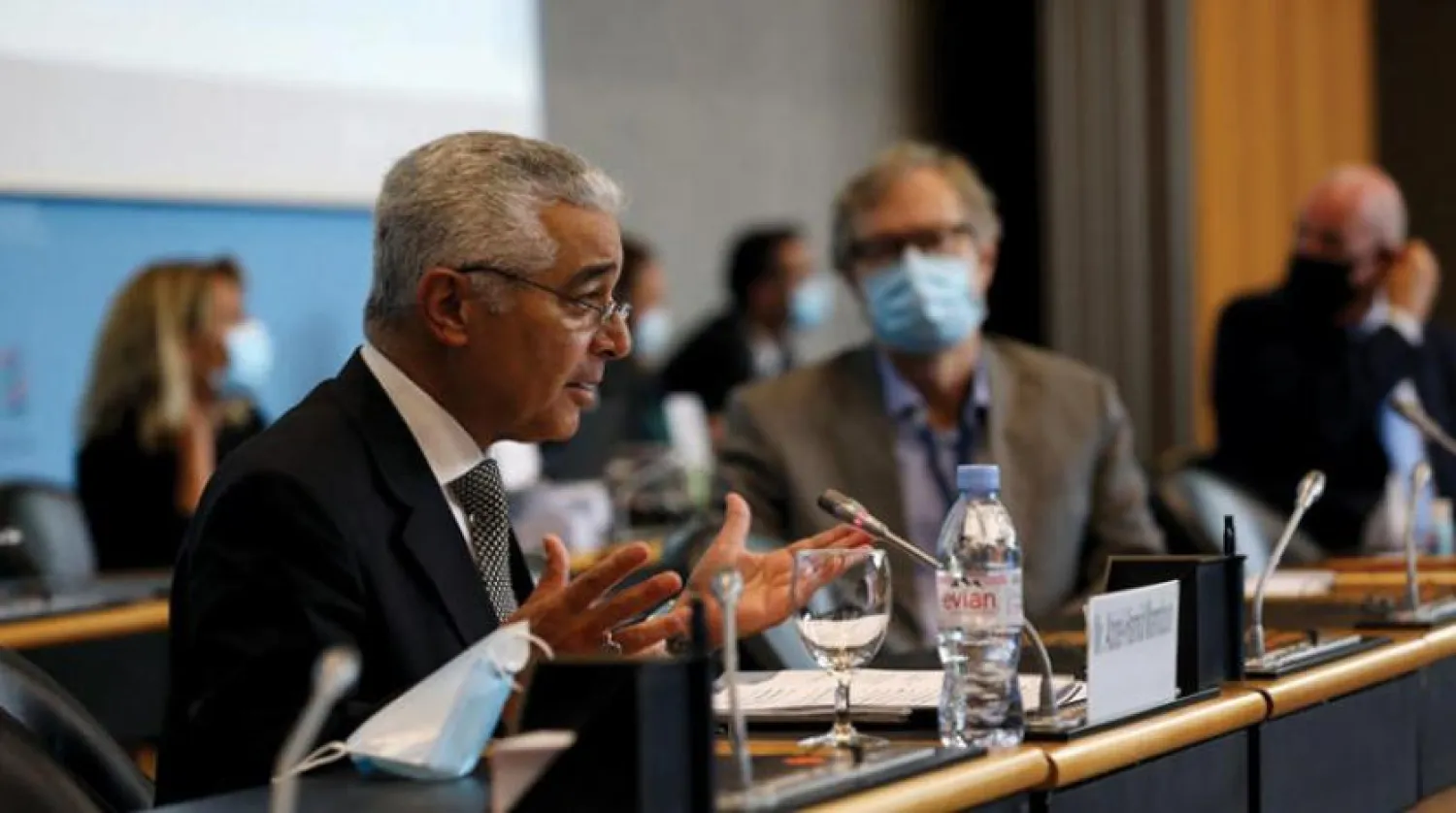
Abdel-Hamid Mamdouh of Egypt. Asharq Al-Awsat
TT

Personality, Reform and Relations Dominate Race for WTO Presidency

Abdel-Hamid Mamdouh of Egypt. Asharq Al-Awsat

The race over the leadership of the World Trade Organization (WTO) was launched on Wednesday in Geneva, with agendas highlighting the criteria of “strong personality,
knowledge of reform and the depth of international relations.”

Candidates from Mexico, Egypt and Nigeria revealed their programs in front of 164 members of the council, as the Organization faces major challenges represented by the trade war and the severe global economic crisis.

The fierce rivalry between the candidates comes after Brazilian Roberto Azevedo suddenly announced leaving his post in mid-May, and officially giving up his duties at the end of August, a year before the end of his term.

Eight candidates (three Africans, two from Asian, two Europeans and one Latin American) will be presenting themselves until next Friday. They will have a few weeks until September 7 to persuade the capitals, which will choose the next WTO president during a special meeting in Geneva.

The first presenter, former WTO Deputy Director-General Jesus Seade Kuri of Mexico, said the global trade body needed a chief with vision, leadership and political capacity.

He emphasized that he had a wide political and international background and a deep knowledge in managing international organizations.

“It is of the essence that the Director-General has a solid command of the arcane world of the WTO and trade negotiations; that he or she be aware and be sensitive to the reasons behind certain balances in the texts, and in command of the alternatives that may have been formulated or could be explored,” he noted.

Ngozi Okonjo-Iweala of Nigeria, for her part, said that she would use the reform tools she gained from her long experience in her country and internationally, adding that she had all the personal characteristics that enable her to achieve the goals of the advancement of the organization.

“I would also prioritize updating the rulebook, unlocking the dispute settlement system, working on transparency and notification, enhancing the work of regular bodies, and strengthen the Secretariat,” she said.

Abdel-Hamid Mamdouh of Egypt, who is former director of the Trade in Services and Investment Division of the WTO, emphasized the legal aspects. He stressed that the starting point must be to reform the treaties and review the main goals of the organization as an urgent priority.

He stressed that the biggest challenge was to work to promote the common goals of member-states in light of the economic reality surrounding the world, including globalization.

“Reforming the WTO is…not about restructuring departments or reallocating resources across different projects or different country programs. This is about reforming the treaty, and the treaty is that enforceable contract between governments, and the only way reform can take place is through negotiations,” he said.

Africa is hoping to have a chance of obtaining the position, to which no African figure has been appointed yet.

Three African candidates are racing for the presidency, including Ngozi Okonjo-Iweala of Nigeria, Egyptian Abdel-Hamid Mamdouh and former Kenyan Sports Minister Amina Mohamed, who in the past has chaired the organization’s three largest bodies.

Various international reports have been focusing on the need to choose a woman to take over the WTO presidency. The reports pointed to pressure from trade delegations in Geneva to elect a woman for the first time in the organization’s history.

Five other candidates are running alongside the Africans, who are South Korean Trade Minister Yu Myung-hee, former British Minister of International Trade Liam Fox, former Moldovan Foreign Minister Tudor Ulianovschi, former WTO Deputy Director-General Jesus Seade Kuri, as well as former Saudi Minister of Economy and Planning Muhammad Al-Tuwaijri.

Saudi Arabia attaches great hopes to its candidate’s victory, especially after a strong confidence from the international community in the role assumed by Saudi Arabia in the global economic scene.



China Passes Revised Foreign Trade Law to Bolster Trade War Capabilities

Containers are seen at the port in Shanghai, China, Oct. 13, 2025. (AFP)
TT

China Passes Revised Foreign Trade Law to Bolster Trade War Capabilities

Containers are seen at the port in Shanghai, China, Oct. 13, 2025. (AFP)

China on Saturday passed revisions to a key piece of legislation aimed at strengthening Beijing's ability to wage trade war, curb outbound shipments from strategic minerals, and further open its $19 trillion economy.

The latest revision to the Foreign Trade Law, approved by China's top legislative body, will take effect on March 1, 2026, state news agency Xinhua reported on Saturday.

The world's second-largest economy is overhauling its trade-related legal frameworks partly to convince members of a major trans-Pacific trade bloc created to counter China's growing influence that the manufacturing powerhouse ‌deserves a seat at ‌the table, as Beijing seeks to reduce ‌its ⁠reliance on the US.

Adopted ‌in 1994 and revised three times since China joined the World Trade Organization in 2001, most recently in 2022, the Foreign Trade Law empowers policymakers to hit back against trading partners that seek to curb its exports and to adopt mechanisms such as "negative lists" to open restricted sectors to foreign firms.

The revision also adds a provision that foreign trade should "serve national economic and social development" and help build China ⁠into a "strong trading nation", Xinhua said.

It further "expands and improves" the legal toolkit for countering external challenges, according ‌to the report.

The revision focuses on areas such ‍as digital and green trade, along ‍with intellectual property provisions, key improvements China needs to make to meet the ‍standards of the Comprehensive and Progressive Agreement for Trans-Pacific Partnership, rather than the trade defense tools the 2020 revamp honed in on following four years of tariff war with the first Trump administration.

Beijing is also sharpening the wording of its powers in anticipation of potential lawsuits from private firms, which are becoming increasingly prominent in China, according to trade diplomats.

"Ministries have become more concerned about private sector criticism," ⁠said one Western trade diplomat with decades' of experience working with China. "China is a rule-of-law country, so the government can stop a company's shipment, but it needs a reason."

"It's not totally lawless here. Better to have everything written out in black and white," they added, requesting anonymity, as they were not authorized to speak with media.

China's private exporting firms attracted global attention in November after the French government moved to suspend the Chinese e-commerce platform Shein.

The Chinese government increasingly could also find itself at odds with private enterprise when seeking to carry out sweeping bans, ‌such as Beijing's prohibition of all Japanese seafood imports, as Asia's top two economies continue to feud over Taiwan, trade diplomats say.


Lebanese Cabinet Approves Draft Law on Financial Crisis Losses

A photograph released by the Lebanese Government Press Office on December 26, 2025, show Prime Minister Nawaf Salam speaking during a press conference after a cabinet session in Beirut on December 26, 2025. (Photo by Handout / Lebanese Government Press Office / AFP)
TT

Lebanese Cabinet Approves Draft Law on Financial Crisis Losses

A photograph released by the Lebanese Government Press Office on December 26, 2025, show Prime Minister Nawaf Salam speaking during a press conference after a cabinet session in Beirut on December 26, 2025. (Photo by Handout / Lebanese Government Press Office / AFP)

Lebanon's government on Friday approved a draft law to distribute financial losses from the 2019 economic crisis that deprived many Lebanese of their deposits despite strong opposition to the legislation from political parties, depositors and banking officials.

The draft law will be submitted to the country's divided parliament for approval before it can become effective.

The legislation, known as the "financial gap" law, is part of a series of reform measures required by the International Monetary Fund (IMF) in order to access funding from the lender.

The cabinet passed the draft bill with 13 ministers in favor and nine against. It stipulates that each of the state, the central bank, commercial banks and depositors will share the losses accrued as a result of the financial crisis.

Prime Minister Nawaf Salam defended the bill, saying it "is not ideal... and may not meet everyone's aspirations" but is "a realistic and fair step on the path to restoring rights, stopping the collapse... and healing the banking sector.”

According to government estimates, the losses resulting from the financial crisis amounted to about $70 billion, a figure that is expected to have increased over the six years that the crisis was left unaddressed.

Depositors who have less than $100,000 in the banks, and who constitute 85 percent of total accounts, will be able to recover them in full over a period of four years, Salam said.

Larger depositors will be able to obtain $100,000 while the remaining part of their funds will be compensated through tradable bonds, which will be backed by the assets of the central bank.

The central bank's portfolio includes approximately $50 billion, according to Salam.

The premier told journalists that the bill includes "accountability and oversight for the first time.”

"Everyone who transferred their money before the financial collapse in 2019 by exploiting their position or influence... and everyone who benefited from excessive profits or bonuses will be held accountable and required to pay compensation of up to 30 percent of these amounts," he said.

Responding to objections from banking officials, who claim components of the bill place a major burden on the banks, Salam said the law "also aims to revive the banking sector by assessing bank assets and recapitalizing them.”

The IMF, which closely monitored the drafting of the bill, previously insisted on the need to "restore the viability of the banking sector consistent with international standards" and protect small depositors.

Parliament passed a banking secrecy reform law in April, followed by a banking sector restructuring law in June, one of several key pieces of legislation aimed at reforming the financial system.

However, observers believe it is unlikely that parliament will pass the current bill before the next legislative elections in May.

Financial reforms in Lebanon have been repeatedly derailed by political and private interests over the last six years, but Salam and Lebanese President Joseph Aoun have pledged to prioritize them.


Türkiye Says Russia Gave It $9 Billion in New Financing for Akkuyu Nuclear Plant

Türkiye’s Energy Minister Alparslan Bayraktar talks during a meeting in Ankara, Türkiye, September 14, 2023. (Reuters)
TT

Türkiye Says Russia Gave It $9 Billion in New Financing for Akkuyu Nuclear Plant

Türkiye’s Energy Minister Alparslan Bayraktar talks during a meeting in Ankara, Türkiye, September 14, 2023. (Reuters)

Türkiye's energy minister said Russia had provided new financing worth $9 billion for the Akkuyu nuclear power plant being built by ​Moscow's state nuclear energy company Rosatom, adding Ankara expected the power plant to be operational in 2026.

Rosatom is building Türkiye's first nuclear power station at Akkuyu in the Mediterranean province of Mersin per a 2010 accord worth $20 billion. The plant was expected ‌to be operational ‌this year, but has been ‌delayed.

"This (financing) ⁠will ​most ‌likely be used in 2026-2027. There will be at least $4-5 billion from there for 2026 in terms of foreign financing," Alparslan Bayraktar told some local reporters at a briefing in Istanbul, according to a readout from his ministry.

He said ⁠Türkiye was in talks with South Korea, China, Russia, and ‌the United States on ‍nuclear projects in ‍the Sinop province and Thrace region, and added ‍Ankara wanted to receive "the most competitive offer".

Bayraktar said Türkiye wanted to generate nuclear power at home and aimed to provide clear figures on targets.