Syria established a special security service apparatus for its capital, Damascus, in a bid to bolster security, uncover sleeper cells and thwart attempts to destabilize the city, a senior Syrian military official told Asharq Al-Awsat Tuesday.
The official told the daily that the Capital Security Service was established and Brig. Gen. Abdul Aziz Hilal al-Ahmad appointed as its chief to “bolster security in Damascus through a more targeted approach and uncover any sleeper cells seeking to undermine the capital’s security.”
The official said he did not believe Damascus faced any immediate threat, but warned that “sabotage cells” continued to seek to undermine security in the capital, driven by foreign agendas and ties. He also accused Israel and Iran of seeking to destabilize Syria by backing local sabotage groups operating across several provinces.
The official stressed that Damascus hosts foreign embassies, diplomatic missions and offices of international and United Nations agencies and organizations, making it a key center of state sovereignty. Any breach of the capital’s security would undermine the state’s credibility and authority, he said, adding that the new service was intended to thwart attempts to unsettle the city.
Brig. Gen. Abdul Aziz Hilal al-Ahmad previously headed internal security in Latakia province, where he led operations against armed groups and former military and security figures linked to Bashar al-Assad’s regime after taking office on May 25, 2025.
No official decree announcing al-Ahmad’s appointment has been issued, though security and military sources confirmed it to several media outlets, including Asharq Al-Awsat. On Saturday, the Interior Ministry named Brig. Gen. Nayef al-Ibrahim as his successor in Latakia.
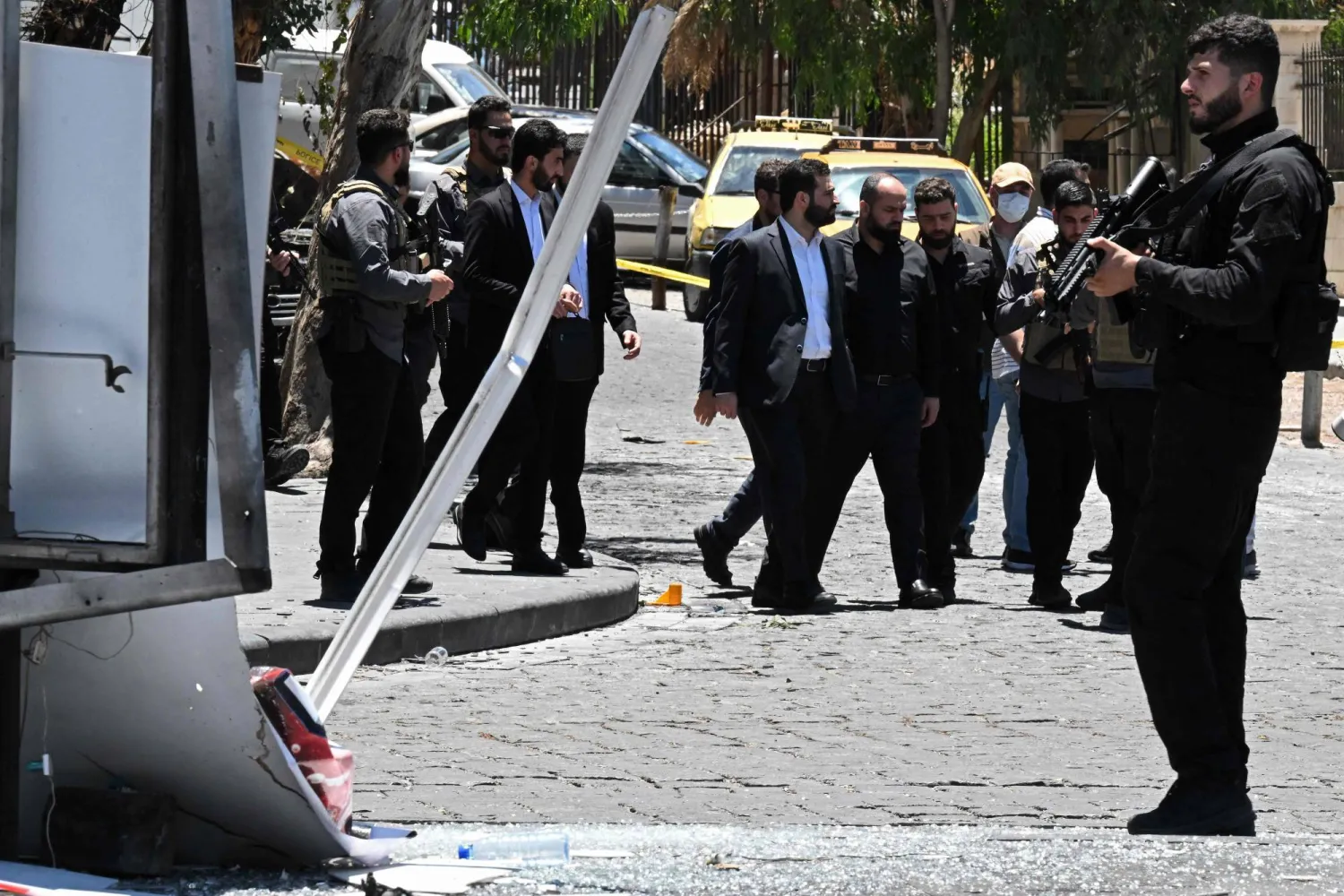
Since the ouster of the former regime, Syria’s new authorities have worked to rebuild and modernize the security sector with regional and international support. However, repeated security incidents in Damascus over the past two years have underscored persistent instability and security gaps, with experts saying much work remains to prevent further bombings.
Wael Alwan, executive director of the Jusoor Center for Studies, told Asharq Al-Awsat that authorities were working to restore security and stability across Syria, but intelligence reports pointed to activity in Damascus by Iran-backed Hezbollah and affiliated local groups, as well as ISIS.
He said previous attacks by ISIS cells and remnants of the former regime appeared aimed more at generating media attention than striking strategic security, political or military targets, citing rocket fire toward the Mazzeh area and explosions during the French president’s visit.
Alwan said Iran-backed groups, ISIS and Israeli interference sought to portray Syria as unstable and its government as unable to maintain security, undermining recovery by deterring investment, curbing tourism and deepening economic and social pressures. He added that Iran stood to benefit from chaos, which could create opportunities for its allied militias and former regime loyalists to return, rebuild their networks and expand their influence.
Alwan said the establishment of the Capital Security Service reflected the government’s cautious approach and efforts to preempt security threats by strengthening surveillance and intelligence capabilities to track former regime loyalists, ISIS cells and Iran-backed operatives, and thwart attacks before they occur.
For his part, Syrian political and security researcher Diaa Qaddour told Asharq Al-Awsat that the appointment was part of a broader restructuring of security agencies following the ouster of the former regime, reflecting a focus on securing the capital against threats from ISIS and dormant Iran-linked cells to reinforce state authority and prevent chaos.