


E-bike Revolution Tempts Ferrari’s Agnelli Family

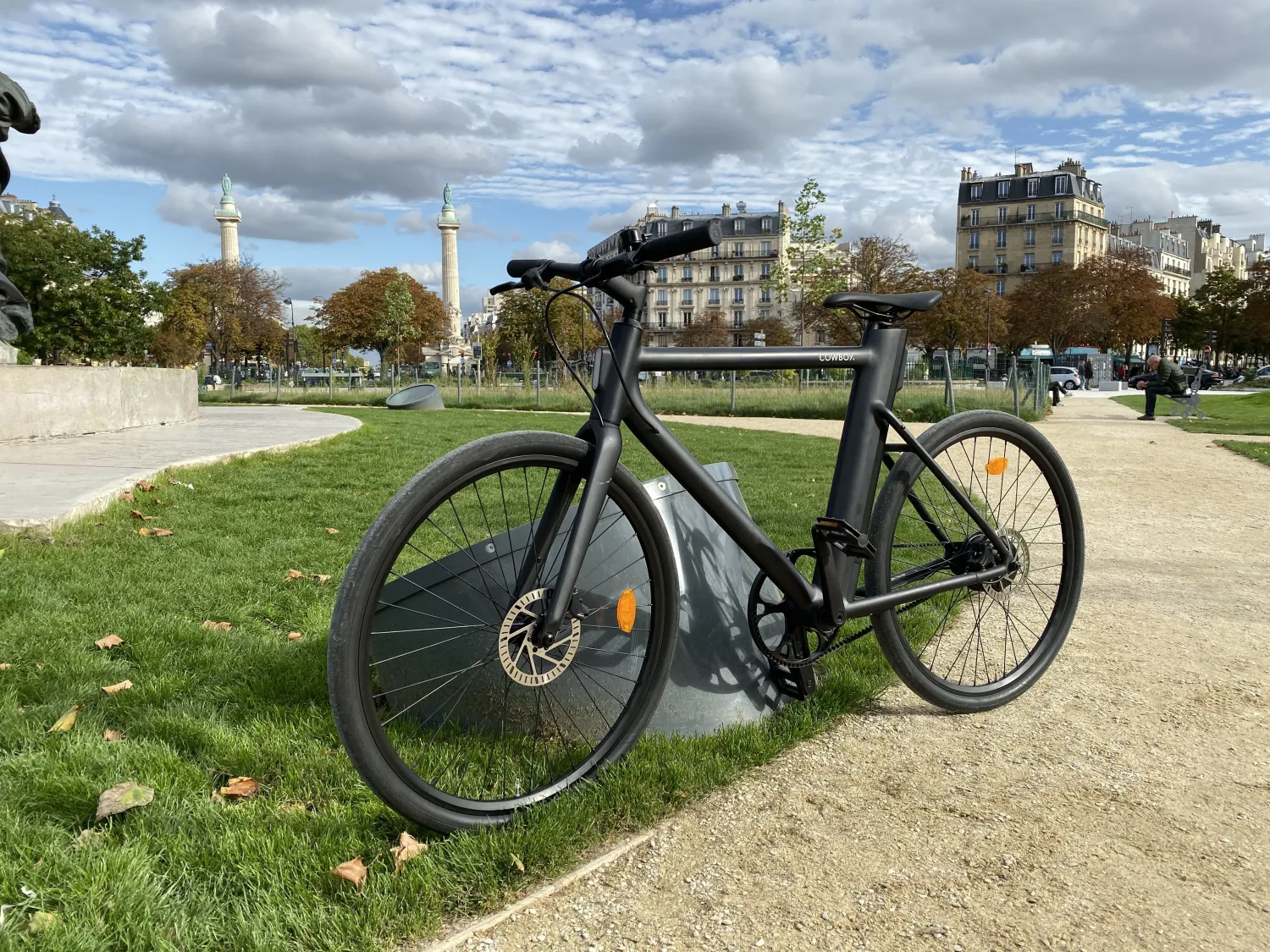
A Cowboy e-bike
A Cowboy e-bike
TT

E-bike Revolution Tempts Ferrari’s Agnelli Family

A Cowboy e-bike
A Cowboy e-bike

The Agnelli family's Exor holding company is best known as the owner of Ferrari, the four-wheeled supercar with the stallion logo.

Now, it has joined the race to invest in e-bikes with Belgian e-bike start-up Cowboy, as the two-wheeled electric commuter market shifts up a gear.

The electric bike market was already a good prospect: industry figures show three million were sold in Europe last year, a quarter more than in 2018.

But a number of factors have come together this year to boost the Cowboy in Belgium, which was never as bike-friendly as the neighboring Netherlands.

As the country tackles the coronavirus crisis, some commuters are shunning public transport.

And the city of Brussels, once jammed by endless traffic jams, is transforming itself to exit the lockdown with vastly more bike lanes.

Speed limits have been cut to 30 kilometers an hour across 85 percent of the city, despite groans of motorists' groups, and pedal power is up.

"So we really saw a spike, really an explosion in demand. Between January and mid-June, our sales went up three times -- tripled in six months," Cowboy CEO Adrien Roose told AFP.

Five investors have joined the young firm, the biggest being Exor Seeds, a venture capital arm of a company that owns Ferrari and Juventus football club.

"We're super happy to be working with them and we're hoping to find synergies, especially in the industrial process," said Roose.

Belgium is more hilly than low-lying Holland, and Brussels' cobbled streets can be hard to navigate on a push bike.

But the Cowboy's detachable lithium ion battery gives the bike a power-assisted 70-kilometer range.

Those intrigued by the concept can book a test ride at the firm's flagship store -- more like a sleek consumer tech showroom than an oily bike workshop.

Along with Dutch rivals Vanmoof and France's Angell, Cowboy is trying to tempt a new generation of riders with bikes designed as electric from the wheels up, rather than converted pedal bikes.

And lighter batteries and smaller motors are not the only innovations: the Cowboy is digitally connected to its user -- a useful security measure for a vehicle that costs more than 2,000 euros ($2350).

"People who buy an electric bike are rightly afraid of having their bike stolen. We're not going to create a stronger lock than the others but we could reduce the risk of theft," said Roose.

"If someone steals a Cowboy electric bike, it won't be worth anything to him because he won't be able to turn it on. To turn it on, you need the application with your information: your login and password.

"Secondly, if someone moves your electric bike when it's turned off, you'll get a notification on your mobile app, notifying you that maybe your bike is being stolen, and you can track it in real time."

And if that doesn't work, Cowboy sells bike insurance.


Saudi Arabia Showcases Responsible Use of AI at AI Impact Summit in India

Saudi Arabia took part in a high-level session on harnessing artificial intelligence on the sidelines of the AI Impact Summit 2026 hosted by India.
TT

Saudi Arabia Showcases Responsible Use of AI at AI Impact Summit in India

Saudi Arabia took part in a high-level session on harnessing artificial intelligence on the sidelines of the AI Impact Summit 2026 hosted by India.

Saudi Arabia, represented by the Saudi Data and Artificial Intelligence Authority (SDAIA), took part in a high-level session on harnessing artificial intelligence for people, planet, and progress on the sidelines of the AI Impact Summit 2026 hosted by India, the Saudi Press agency reported on Wednesday.

The event drew participation from more than 70 countries and 25 international organizations, as well as senior decision-makers and technology experts.

The Saudi delegation, led by SDAIA President Dr. Abdullah Alghamdi, included Saudi Ambassador to India Haitham Al-Maliki and officials from relevant government entities.

The session aimed to launch a global network of specialized AI scientific institutions, accelerate discovery through advanced technologies, strengthen international cooperation among states and research bodies, and support the deployment of artificial intelligence to address global challenges and advance the United Nations Sustainable Development Goals (SDGs) 2030.

Deputy Chief Strategy Officer at SDAIA Dr. Abdulrahman Habib emphasized the need to unify international efforts to promote the responsible and ethical use of artificial intelligence, ensuring a sustainable, positive impact on societies and economies worldwide and supporting the 2030 SDGs.

He also reviewed Saudi Arabia’s data and AI initiatives, highlighting efforts to develop regulatory frameworks and national policies that balance innovation with the governance of emerging technologies, as well as applied models that have enhanced quality of life, improved government service efficiency, and advanced environmental sustainability.

SDAIA's participation in the summit underscores Saudi Arabia’s role in shaping the global future of AI and in strengthening its presence in international forums focused on advanced technologies, in line with the objectives of Saudi Vision 2030, which prioritizes digital transformation and innovation.


Google Says to Build New Subsea Cables from India in AI Push

A logo of Google is on display at Bharat Mandapam, one of the venues for AI Impact Summit, in New Delhi, India, February 17, 2026. REUTERS/Bhawika Chhabra
TT

Google Says to Build New Subsea Cables from India in AI Push

A logo of Google is on display at Bharat Mandapam, one of the venues for AI Impact Summit, in New Delhi, India, February 17, 2026. REUTERS/Bhawika Chhabra

Google announced Wednesday it would build new subsea cables from India and other locations as part of its existing $15 billion investment in the South Asian nation, which is hosting a major artificial intelligence summit this week.

The US tech giant said it would build "three subsea paths connecting India to Singapore, South Africa, and Australia; and four strategic fiber-optic routes that bolster network resilience and capacity between the United States, India, and multiple locations across the Southern Hemisphere".


Mark Zuckerberg Set to Testify in Watershed Social Media Trial 

Meta's CEO Mark Zuckerberg testifies during the Senate Judiciary Committee hearing on online child sexual exploitation at the US Capitol in Washington, US, January 31, 2024. (Reuters)
TT

Mark Zuckerberg Set to Testify in Watershed Social Media Trial 

Meta's CEO Mark Zuckerberg testifies during the Senate Judiciary Committee hearing on online child sexual exploitation at the US Capitol in Washington, US, January 31, 2024. (Reuters)

Mark Zuckerberg will testify in an unprecedented social media trial that questions whether Meta's platforms deliberately addict and harm children.

Meta's CEO is expected to answer tough questions on Wednesday from attorneys representing a now 20-year-old woman identified by the initials KGM, who claims her early use of social media addicted her to the technology and exacerbated depression and suicidal thoughts. Meta Platforms and Google’s YouTube are the two remaining defendants in the case, which TikTok and Snap have settled.

Zuckerberg has testified in other trials and answered questions from Congress about youth safety on Meta's platforms, and he apologized to families at that hearing whose lives had been upended by tragedies they believed were because of social media.

This trial, though, marks the first time Zuckerberg will answer similar questions in front of a jury. and, again, bereaved parents are expected to be in the limited courtroom seats available to the public.

The case, along with two others, has been selected as a bellwether trial, meaning its outcome could impact how thousands of similar lawsuits against social media companies would play out.

A Meta spokesperson said the company strongly disagrees with the allegations in the lawsuit and said they are “confident the evidence will show our longstanding commitment to supporting young people.”

One of Meta's attorneys, Paul Schmidt, said in his opening statement that the company is not disputing that KGM experienced mental health struggles, but rather that Instagram played a substantial factor in those struggles.

He pointed to medical records that showed a turbulent home life, and both he and an attorney representing YouTube argue she turned to their platforms as a coping mechanism or a means of escaping her mental health struggles.

Zuckerberg's testimony comes a week after that of Adam Mosseri, the head of Meta's Instagram, who said in the courtroom that he disagrees with the idea that people can be clinically addicted to social media platforms.

Mosseri maintained that Instagram works hard to protect young people using the service, and said it's “not good for the company, over the long run, to make decisions that profit for us but are poor for people’s well-being."

Much of Mosseri's questioning from the plaintiff's lawyer, Mark Lanier, centered on cosmetic filters on Instagram that changed people’s appearance — a topic that Lanier is sure to revisit with Zuckerberg.

He is also expected to face questions about Instagram’s algorithm, the infinite nature of Meta’ feeds and other features the plaintiffs argue are designed to get users hooked.
