


E-bike Revolution Tempts Ferrari’s Agnelli Family

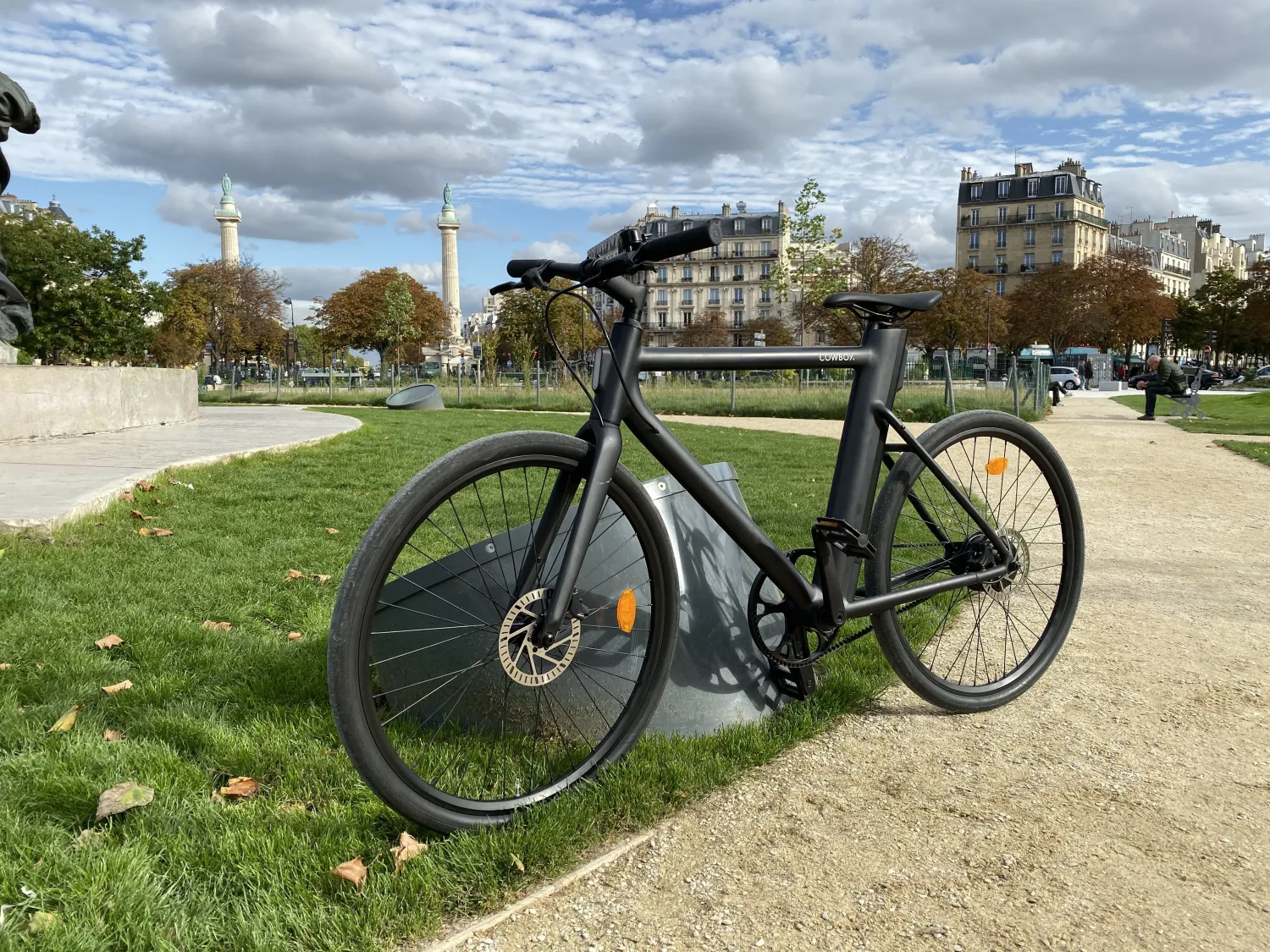
A Cowboy e-bike
A Cowboy e-bike
TT

E-bike Revolution Tempts Ferrari’s Agnelli Family

A Cowboy e-bike
A Cowboy e-bike

The Agnelli family's Exor holding company is best known as the owner of Ferrari, the four-wheeled supercar with the stallion logo.

Now, it has joined the race to invest in e-bikes with Belgian e-bike start-up Cowboy, as the two-wheeled electric commuter market shifts up a gear.

The electric bike market was already a good prospect: industry figures show three million were sold in Europe last year, a quarter more than in 2018.

But a number of factors have come together this year to boost the Cowboy in Belgium, which was never as bike-friendly as the neighboring Netherlands.

As the country tackles the coronavirus crisis, some commuters are shunning public transport.

And the city of Brussels, once jammed by endless traffic jams, is transforming itself to exit the lockdown with vastly more bike lanes.

Speed limits have been cut to 30 kilometers an hour across 85 percent of the city, despite groans of motorists' groups, and pedal power is up.

"So we really saw a spike, really an explosion in demand. Between January and mid-June, our sales went up three times -- tripled in six months," Cowboy CEO Adrien Roose told AFP.

Five investors have joined the young firm, the biggest being Exor Seeds, a venture capital arm of a company that owns Ferrari and Juventus football club.

"We're super happy to be working with them and we're hoping to find synergies, especially in the industrial process," said Roose.

Belgium is more hilly than low-lying Holland, and Brussels' cobbled streets can be hard to navigate on a push bike.

But the Cowboy's detachable lithium ion battery gives the bike a power-assisted 70-kilometer range.

Those intrigued by the concept can book a test ride at the firm's flagship store -- more like a sleek consumer tech showroom than an oily bike workshop.

Along with Dutch rivals Vanmoof and France's Angell, Cowboy is trying to tempt a new generation of riders with bikes designed as electric from the wheels up, rather than converted pedal bikes.

And lighter batteries and smaller motors are not the only innovations: the Cowboy is digitally connected to its user -- a useful security measure for a vehicle that costs more than 2,000 euros ($2350).

"People who buy an electric bike are rightly afraid of having their bike stolen. We're not going to create a stronger lock than the others but we could reduce the risk of theft," said Roose.

"If someone steals a Cowboy electric bike, it won't be worth anything to him because he won't be able to turn it on. To turn it on, you need the application with your information: your login and password.

"Secondly, if someone moves your electric bike when it's turned off, you'll get a notification on your mobile app, notifying you that maybe your bike is being stolen, and you can track it in real time."

And if that doesn't work, Cowboy sells bike insurance.


Report: France Aims to Ban Under-15s from Social Media from September 2026

French President Emmanuel Macron holds a press conference during a European Union leaders' summit, in Brussels, Belgium December 19, 2025. (Reuters)
TT

Report: France Aims to Ban Under-15s from Social Media from September 2026

French President Emmanuel Macron holds a press conference during a European Union leaders' summit, in Brussels, Belgium December 19, 2025. (Reuters)

France plans to ban children under 15 from social media sites and to prohibit mobile phones in high schools from September 2026, local media reported on Wednesday, moves that underscore rising public angst over the impact of online harms on minors.

President Emmanuel Macron has often pointed to social media as one of the factors to blame for violence among young people and has signaled he wants France to follow Australia, whose world-first ‌ban for under-16s ‌on social media platforms including Facebook, Snapchat, TikTok ‌and ⁠YouTube came into force ‌in December.

Le Monde newspaper said Macron could announce the measures in his New Year's Eve national address, due to be broadcast at 1900 GMT. His government will submit draft legislation for legal checks in early January, Le Monde and France Info reported.

The Elysee and the prime minister's office did not immediately respond to a request for comment on the reports.

Mobile phones have been banned ⁠in French primary and middle schools since 2018 and the reported new changes would extend that ban ‌to high schools. Pupils aged 11 to ‍15 attend middle schools in the French ‍educational system.

France also passed a law in 2023 requiring social platforms to ‍obtain parental consent for under-15s to create accounts, though technical challenges have impeded its enforcement.

Macron said in June he would push for regulation at the level of the European Union to ban access to social media for all under-15s after a fatal stabbing at a school in eastern France shocked the nation.

The European Parliament in ⁠November urged the EU to set minimum ages for children to access social media to combat a rise in mental health problems among adolescents from excessive exposure, although it is member states which impose age limits. Various other countries have also taken steps to regulate children's access to social media.

Macron heads into the New Year with his domestic legacy in tatters after his gamble on parliamentary elections in 2024 led to a hung parliament, triggering France's worst political crisis in decades that has seen a succession of weak governments.

However, cracking down further on minors' access to social media could prove popular, according to opinion ‌polls. A Harris Interactive survey in 2024 showed 73% of those canvassed supporting a ban on social media access for under-15s.


Poland Urges Brussels to Probe TikTok Over AI-Generated Content

The TikTok logo is pictured outside the company's US head office in Culver City, California, US, September 15, 2020. (Reuters)
TT

Poland Urges Brussels to Probe TikTok Over AI-Generated Content

The TikTok logo is pictured outside the company's US head office in Culver City, California, US, September 15, 2020. (Reuters)

Poland has asked the European Commission to investigate TikTok after the social media platform hosted AI-generated content including calls for Poland to withdraw from the EU, it said on Tuesday, adding that the content was almost certainly Russian disinformation.

"The disclosed content poses a threat to public order, information security, and the integrity of democratic processes in Poland and across the European Union," Deputy Digitalization Minister Dariusz Standerski said in a letter sent to the Commission.

"The nature of ‌the narratives, ‌the manner in which they ‌are distributed, ⁠and the ‌use of synthetic audiovisual materials indicate that the platform is failing to comply with the obligations imposed on it as a Very Large Online Platform (VLOP)," he added.

A Polish government spokesperson said on Tuesday the content was undoubtedly Russian disinformation as the recordings contained Russian syntax.

TikTok, representatives ⁠of the Commission and of the Russian embassy in Warsaw did not ‌immediately respond to Reuters' requests for ‍comment.

EU countries are taking ‍measures to head off any foreign state attempts to ‍influence elections and local politics after warning of Russian-sponsored espionage and sabotage. Russia has repeatedly denied interfering in foreign elections.

Last year, the Commission opened formal proceedings against social media firm TikTok, owned by China's ByteDance, over its suspected failure to limit election interference, notably in ⁠the Romanian presidential vote in November 2024.

Poland called on the Commission to initiate proceedings in connection with suspected breaches of the bloc's sweeping Digital Services Act, which regulates how the world's biggest social media companies operate in Europe.

Under the Act, large internet platforms like X, Facebook, TikTok and others must moderate and remove harmful content like hate speech, racism or xenophobia. If they do not, the Commission can impose fines of up to 6% ‌of their worldwide annual turnover.


Saudi National Cybersecurity Authority Launches Service to Verify Suspicious Links

Saudi National Cybersecurity Authority Launches Service to Verify Suspicious Links
TT

Saudi National Cybersecurity Authority Launches Service to Verify Suspicious Links

Saudi National Cybersecurity Authority Launches Service to Verify Suspicious Links

The National Cybersecurity Authority has launched the “Tahqaq” service, aimed at enabling members of the public to proactively and safely deal with circulated links and instantly verify their reliability before visiting them.

This initiative comes within the authority’s strategic programs designed to empower individuals to enhance their cybersecurity, SPA reported.

The authority noted that the “Tahqaq” service allows users to scan circulated links and helps reduce the risks associated with using and visiting suspicious links that may lead to unauthorized access to data. The service also provides cybersecurity guidance to users, mitigating emerging cyber risks and boosting cybersecurity awareness across all segments of society.

The “Tahqaq” service is offered as part of the National Portal for Cybersecurity Services (Haseen) in partnership with the authority’s technical arm, the Saudi Information Technology Company (SITE). The service is available through the unified number on WhatsApp (+966118136644), as well as via the Haseen portal website at tahqaq.haseen.gov.sa.
