


Sudan Expresses Reservations on US Travel Warning

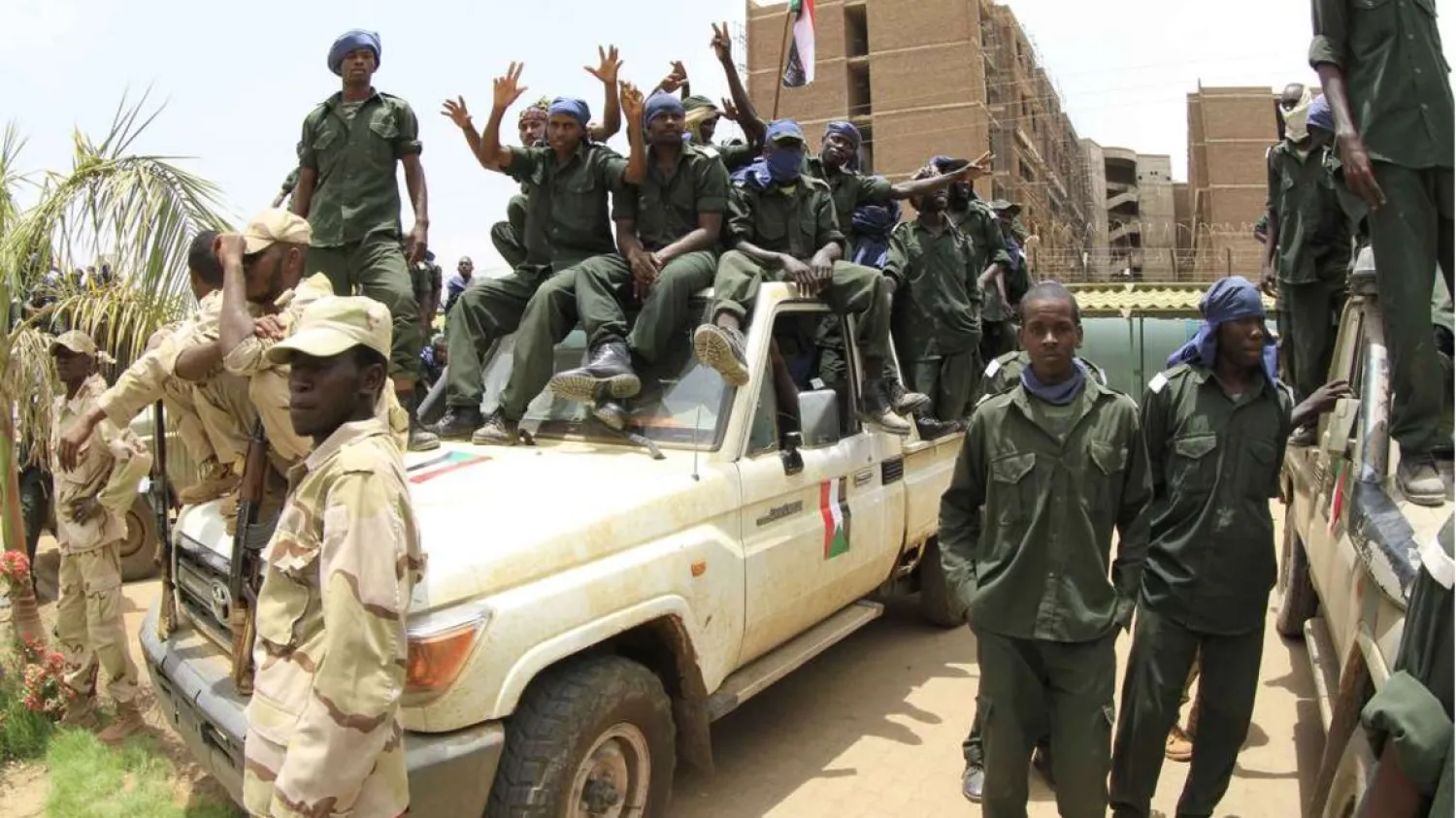
Sudanese soldiers. FILE PHOTO | AFP
TT

Sudan Expresses Reservations on US Travel Warning

Sudanese soldiers. FILE PHOTO | AFP

Sudan has said it "regrets" the latest US State Department advisory against travel to the country.

In a standard advisory, the State Department called on US citizens to "reconsider travel to Sudan due to COVID-19, crime, terrorism, civil unrest, kidnapping, and armed conflict. Members of known terrorist groups continue to be in Sudan and could pose a threat."

Sudan’s Foreign Ministry reaffirmed on Saturday the country's full cooperation with the United States and the international community to combat all forms of terrorism in Sudan and the region.

The government urged the international community to back Sudan’s openness to the world through strategic dialogue mechanisms for the best interest of all parties and for international security and peace.

It also called on the international community to abide by its commitments in supporting Sudan’s transitional phase.

The government this week welcomed remarks from US Secretary of State Mike Pompeo during a phone call with Sudanese Prime Minister Abdalla Hamdok that he would like to delist Sudan as a state sponsor of terrorism.

The US designated Sudan a state sponsor of terror in 1993 over ousted President Omar al-Bashir’s ties with terrorist groups. Earlier, the Sudanese government agreed to compensate victims’ families of the explosions at the US embassies in Nairobi and Dar es Salaam in 1998.

In another context, “rebels from the Sudan People's Liberation Army-North (SPLA-N) attacked nomadic herders on their migration route from the south to the north and soldiers securing a road, ambushing them and planting mines" in the South Kordofan region on Thursday, the statement said.

As a result, there were a number of wounded and many dead among civilians and security forces. The SPLA-N blamed the incident on "a governmental militia."



Hamas, Mediators in Renewed Push to Break Gaza Ceasefire Deadlock

Egyptian Foreign Minister Badr Abdelatty (R) meets with Bulgarian diplomat and US-appointed High Representative for Gaza and Director General of the Board of Peace, Nikolay Mladenov, at the New Administrative Capital, east of Cairo, Egypt, 01 April 2026. (EPA)
TT

Hamas, Mediators in Renewed Push to Break Gaza Ceasefire Deadlock

Egyptian Foreign Minister Badr Abdelatty (R) meets with Bulgarian diplomat and US-appointed High Representative for Gaza and Director General of the Board of Peace, Nikolay Mladenov, at the New Administrative Capital, east of Cairo, Egypt, 01 April 2026. (EPA)

A renewed push is underway to revive Gaza ceasefire talks, with mediators stepping in after meetings in Cairo to revive the process as the impasse has deepened since the outbreak of the Iran war.

Talks due to resume in Cairo in the coming days aim to break the deadlock and advance unresolved issues, including activating the technocratic committee, while increasing pressure on Israel and preventing it from entrenching a fait accompli, experts told Asharq Al-Awsat.

Egypt’s Al Qahera News TV, citing unnamed sources on Saturday, said Cairo hosted discussions over the past two days involving mediators and Nickolay Mladenov, high representative for Gaza of the US-led Board of Peace, to advance ceasefire efforts.

Egyptian Foreign Minister Badr Abdelatty met Mladenov on April 1.

The sources said a “positive atmosphere” prevailed, with all parties committing to implementing all elements of US President Donald Trump’s Gaza plan.

However, they noted Hamas insists on implementing all outcomes of the Sharm el-Sheikh summit alongside Trump’s plan. They added that Hamas and other Palestinian factions had reaffirmed their commitment to completing all phases of the ceasefire, with agreement to continue talks in Cairo next week.

Hamas said on Friday its delegation met Egyptian officials, Palestinian factions, and Mladenov, in the presence of mediators from Egypt, Qatar, and Türkiye, stressing the need to complete the first phase of the agreement in full.

The group reiterated its commitment, along with other factions, to all stages of the ceasefire, adding it had been invited to resume talks in Cairo in the coming days.

Tarek Fahmy, a political science professor and analyst of Palestinian and Israeli affairs, said Cairo is keen to keep the agreement alive to prevent Israel from consolidating control over Gaza amid the Iran war.

He said mediators are working to break the stalemate and move discussions forward on outstanding issues, including the launch of the technocratic committee.

Palestinian political analyst Nizar Nazzal said Hamas believes Israel is unlikely to implement the second phase. He said the group is seeking to shift the pressure on Israel by signaling its readiness to implement the full agreement, in a bid to break the deadlock.

A Palestinian source close to Hamas and other factions told Asharq Al-Awsat that a delegation led by Khalil al-Hayya met Mladenov and discussed the proposed framework, including weapons and the integration of employees into police and civil institutions.

The source said Hamas’ position in Cairo was clear: Israeli withdrawal, deployment of stabilization forces, and formation of a police force must come before any steps on disarmament, warning that any alternative risks a major security vacuum.

The disarmament of Hamas is central to what has been dubbed the “Mladenov plan,” outlined at the UN Security Council in late March.

According to details published by international and regional media, the plan includes dismantling tunnels and relinquishing weapons in stages over eight months, with full Israeli withdrawal contingent on verification that Gaza is free of weapons.

Israel says it will not withdraw from Gaza unless Hamas is disarmed first.


Air Strike Cuts Southern Iraq Off from Iran

 Iraqi security forces stand at the Shalamcheh border crossing with Iran after Iraq closed the crossing following airstrikes on the Iranian side that security sources said killed an Iraqi citizen, Iraq, April 4, 2026. (Reuters)
Iraqi security forces stand at the Shalamcheh border crossing with Iran after Iraq closed the crossing following airstrikes on the Iranian side that security sources said killed an Iraqi citizen, Iraq, April 4, 2026. (Reuters)
TT

Air Strike Cuts Southern Iraq Off from Iran

 Iraqi security forces stand at the Shalamcheh border crossing with Iran after Iraq closed the crossing following airstrikes on the Iranian side that security sources said killed an Iraqi citizen, Iraq, April 4, 2026. (Reuters)
Iraqi security forces stand at the Shalamcheh border crossing with Iran after Iraq closed the crossing following airstrikes on the Iranian side that security sources said killed an Iraqi citizen, Iraq, April 4, 2026. (Reuters)

A US air strike hit the Shalamcheh border crossing with Iran on Saturday, killing and wounding several people and halting trade and travel, in a sharp escalation that could signal a push by Washington to sever links between the two countries.

The crossing, east of Iraq’s Basra and about 30 km (19 miles) from the city center, is a key trade artery, with more than 300 trucks passing through daily.

The Iraqi Border Ports Authority chief, Lieutenant General Omar al-Waeli, said the strike “directly hit the passenger hall,” killing one Iraqi and wounding five others, who were taken to a hospital in Iran. He said the attack forced a halt to passenger and trade movement.

Al-Waeli said alternative crossings, including Safwan, remain available to ensure the flow of goods.

Some media reports said the strike coincided with the passage of logistical support convoys heading into Iran.

Reports of a similar strike on the Mehran crossing on the border with Wasit province were denied by a medical worker there, who told Asharq Al-Awsat the strike occurred in the nearby Iranian city of Mehran.

A source said support convoys organized by factions and other groups continue to cross into Iran, but increasingly use small vehicles to avoid US strikes.

The Popular Mobilization Forces had previously sent aid through Shalamcheh, amid reports Iraqi fighters had crossed into Iran to assist authorities in their war with the United States and Israel, raising the risk of escalation inside Iran.

Reza Pahlavi criticized on Friday the presence of Iraqi armed factions on Iranian territory.

Political analyst Falah al-Mashaal said targeting crossings appears aimed at “isolating Iraq from Iran,” adding the escalation likely seeks to block aid and disrupt trade, effectively imposing isolation “by bombs” after political efforts failed.

Later on Saturday, Iraq said passenger movement at the crossing had resumed, reportedthe country’s state official news agency INA.

Drone strikes hit oil facilities

In Iraq’s Basra, drones believed to have been launched by Iran-aligned factions struck oil facilities, in what appeared to be an effort to pressure foreign companies, particularly US firms, to leave the country.

Two drones hit sites operated by al-Majal company, sparking fires in Burjesia and the North Rumaila oilfield, with no casualties reported.

A source said the attack set fire to a food storage warehouse in Rumaila and damaged company offices in Burjesia. Civil defense teams extinguished one fire and brought the other under control.

US strikes also hit positions linked to the Popular Mobilization Forces in Anbar, where the group said one fighter was killed and five others wounded in al-Qaim.

The PMF said four of its fighters were wounded, along with a Defense Ministry member.

Sources close to the group told Asharq Al-Awsat it had ordered members to keep their distance from headquarters and granted leave to about half its personnel over fears of further strikes.

Separately, the Interior Ministry said its forces had taken over security duties in al-Qaim and al-Rummanah, part of a shift from the Defense Ministry within city centers.

The ministry said the move aims to strengthen security, allow army units to focus on border duties and improve coordination among forces, calling on citizens to report suspicious activity.


Lebanon President Calls for Israel Talks to Prevent Gaza-Style Destruction

 A man stands as rescuers work at the site of Israeli strike, amid escalating hostilities between Israel and Hezbollah, as the US-Israeli conflict with Iran continues, in Kfar Hatta in southern Lebanon, April 5, 2026. (Reuters)
A man stands as rescuers work at the site of Israeli strike, amid escalating hostilities between Israel and Hezbollah, as the US-Israeli conflict with Iran continues, in Kfar Hatta in southern Lebanon, April 5, 2026. (Reuters)
TT

Lebanon President Calls for Israel Talks to Prevent Gaza-Style Destruction

 A man stands as rescuers work at the site of Israeli strike, amid escalating hostilities between Israel and Hezbollah, as the US-Israeli conflict with Iran continues, in Kfar Hatta in southern Lebanon, April 5, 2026. (Reuters)
A man stands as rescuers work at the site of Israeli strike, amid escalating hostilities between Israel and Hezbollah, as the US-Israeli conflict with Iran continues, in Kfar Hatta in southern Lebanon, April 5, 2026. (Reuters)

Lebanese President Joseph Aoun reiterated on Sunday a call for negotiations with Israel, saying he wanted to spare his country's south from destruction on the scale seen in Gaza.

"It is true that Israel might want to do in southern Lebanon what it did in Gaza," Aoun said in a televised address, after Israel launched airstrikes and a ground offensive against Hezbollah, destroying several southern Lebanese villages.

"Gaza was destroyed, over 70,000 people were killed, and they eventually sat down and negotiated, so why don't we negotiate... until we can at least save the homes that have not yet been destroyed?" he added.