


'Fresh Paint on Crumbling Building': Lebanon Bank Clean-up Raises Doubts

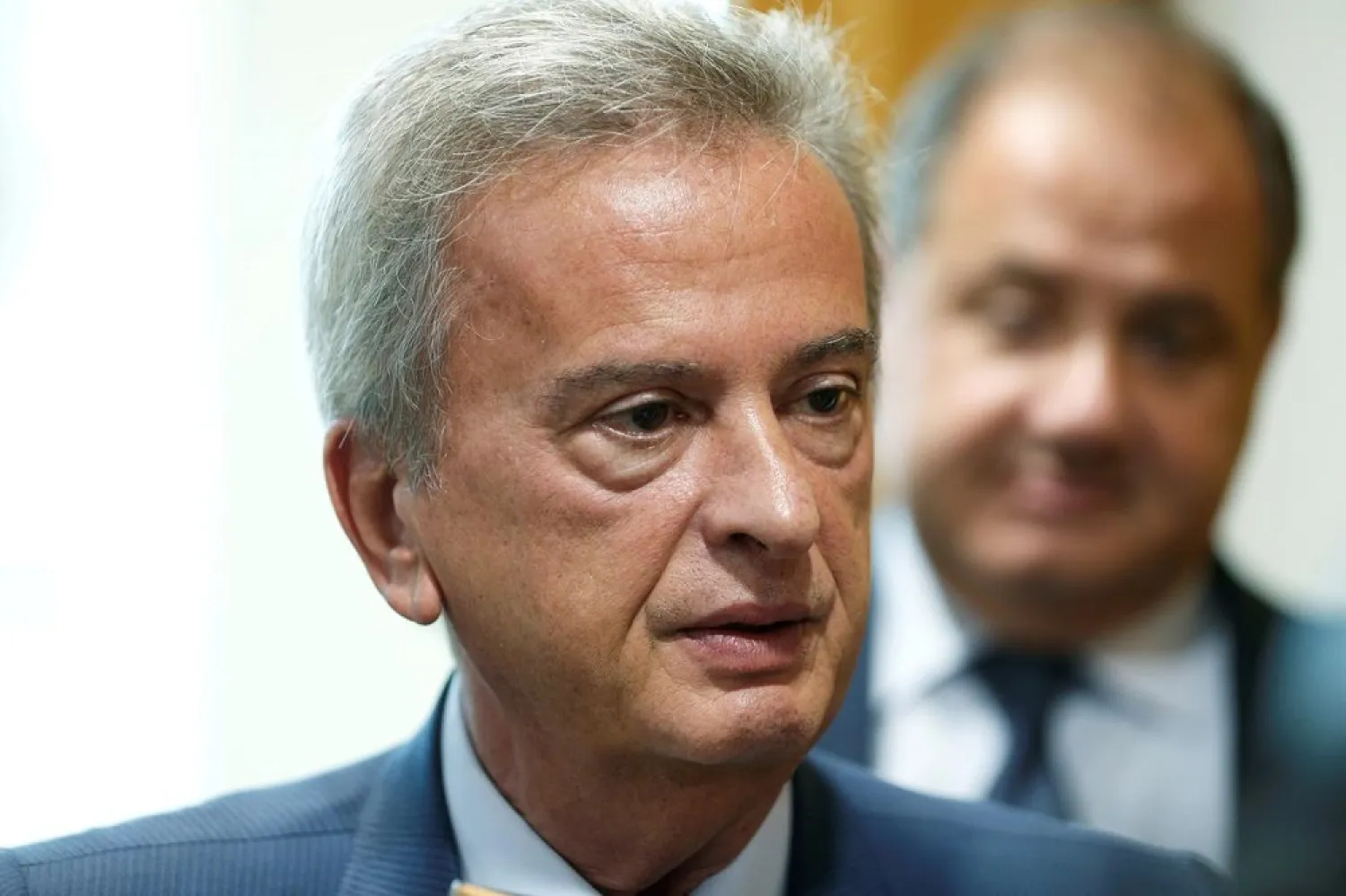
Lebanon's Central Bank Governor Riad Salameh meets with the government's social and economic council in Beirut, Lebanon September 27, 2018. (Reuters)
TT

'Fresh Paint on Crumbling Building': Lebanon Bank Clean-up Raises Doubts

Lebanon's Central Bank Governor Riad Salameh meets with the government's social and economic council in Beirut, Lebanon September 27, 2018. (Reuters)

Bankers and analysts have voiced skepticism about attempts by Lebanon’s central bank to clean up the country’s banks, warning they must form part of a wider rescue plan to fix its broken financial and economic system.

In a series of circulars on Thursday, the central bank told domestic banks to raise fresh capital, urge their big depositors to move funds back to the country and provision for a 45% loss on their Eurobond holdings.

The move follows a further downward spiral in Lebanon’s fortunes since an explosion this month at Beirut’s port. Even before the blast, which led to the government’s resignation, Beirut was grappling with its worst financial crisis in the wake of protests and a default on its foreign currency debt in March.

“These ad-hoc policy decisions will add to Lebanon’s credit and banking woes and risk undermining the little progress made in talks with the IMF,” said Alia Moubayed, managing director at Jefferies, referring to already stalled negotiations with the International Monetary Fund over a bailout.

“Nor are they anchored in a revised macro-fiscal and debt restructuring plan that factors in the deteriorating socio-economic context and worsening debt dynamics after the blast.”

The bank’s initiative comes ahead of a visit next week by French President Emmanuel Macron, who is pressing Lebanese leaders to make political and financial reforms to unlock foreign aid and ease the economic crisis, including by making a full audit of state finances and the central bank.

Lebanon’s banks, at the center of the crisis because of their large holdings of the government’s debt, were told by the central bank to raise their capital by 20% by the end of February 2021 or leave the market.

Reforms
“The necessity to have a cleaning in the banks after the default is there because we want banks to resume their role and activity,” Central Bank Governor Riad Salameh told Reuters when asked about the purpose of the circulars.

But lenders wouldn’t be able to resume activity without sufficient funds with their correspondent banks, he said.

Several analysts reacted cautiously.

“It is difficult to see why the private sector would pump fresh equity capital into the banking system unless a full asset clean-up has first taken place,” said Rahul Shah, head of financials equity research at Tellimer.

Analysts also questioned how the requirement for banks to take a 45% loss on Eurobond holdings tallies with a rescue plan released earlier this year by the now-caretaker government that proposed 75% haircuts on external debt and 40% on domestic debt.

The 45% loss also does not reflect the current market value of the bonds, which plummeted deeper below 20 cents in the dollar on Thursday, in the wake of the circulars and comments from French government officials that aid will not be forthcoming without reforms.

“We do not know how the negotiation between Lebanon and the creditors will end up but we have taken the normal provision that follows such a default,” Salameh said, adding the 45% level could be readjusted “in both ways”, depending on negotiations.

The provision level could signal a desire to pursue smaller haircuts or treat bank holdings differently from foreign holdings of Eurobonds, said Patrick Curran, senior economist at Tellimer.

Banks were told that the provisions, which also included a 1.89% loss on their hard currency deposits with the central bank, should be in place within five years, but were extendable to 10 years with the approval of the central bank.

The timetable was likely an effort to ensure that banks, already struggling to remain solvent, did not flout international regulatory capital floors, said analysts.

“It’s camouflage,” said a former senior central bank official. “They’re trying to dress things up, to put a fresh coat of paint on a crumbling building.”

There was also wariness about attempts by the central bank to require large depositors to return some of their funds from overseas, with analysts viewing it a precursor to some depositors having to share financial losses.

Incentives
Banks were told to urge depositors who transferred more than $500,000 abroad as of July 1, 2017 to deposit funds in a special account in Lebanon that will be frozen for five years and would be equivalent to 15% of the transferred amount. The equivalent deposit amount is raised to 30% for “politically exposed persons”.

The directive was causing panic among some bank customers with large overseas holdings, said one financial services source, while other industry sources questioned what incentives would be offered to convince people to return funds.

“This is not the right way to do things,” said the financial services source. “The government, not the central bank, has to take decisions on this as this is a legal issue.

“Asking normal citizens to transfer some of their money back doesn’t seem fair, and if there is concern about politically exposed persons then an audit should first be carried out on their accounts to determine if they’ve benefited from financial engineering.”

The source was referring to a practice of Lebanon’s central bank that involved siphoning dollars from local banks at high interest rates to keep the government’s finances afloat.



Egypt, Qatar's Al Mana Holding Sign $200 Million Sustainable Aviation Fuel Deal

A worker fills an Airbus jet with aviation fuel at Fuhlsbuettel airport in Hamburg, March 14, 2012. REUTERS/Fabian Bimmer/File Photo
TT

Egypt, Qatar's Al Mana Holding Sign $200 Million Sustainable Aviation Fuel Deal

A worker fills an Airbus jet with aviation fuel at Fuhlsbuettel airport in Hamburg, March 14, 2012. REUTERS/Fabian Bimmer/File Photo

Egypt signed a contract with Qatar's Al Mana Holding for a first-phase investment of $200 million to produce sustainable aviation fuel from used cooking oil in the Suez Canal Economic Zone at Ain Sokhna, Egypt's cabinet said on Sunday.

The project will be developed in three phases and will span 100,000 square metres in the Integrated Sokhna Zone on Egypt's Red Sea coast. The first phase will have an estimated annual production capacity of 200,000 tonnes, Reuters quoted the cabinet as saying in a statement.

The deal marks the first Qatari industrial investment in the Suez Canal Economic Zone, Egypt said.

Prime Minister Mostafa Madbouly said the project "reflects the positive momentum in relations between Cairo and Doha, driven by the shared political will to advance bilateral cooperation through joint investments and increased trade."

Last month, the real estate arm of Qatar's sovereign wealth fund said it would invest $29.7 billion to develop a luxury real estate and tourism project on Egypt's Mediterranean coast.


Saudi Arabia Prepares to Allow Foreign Property Ownership in January

Riyadh, Saudi Arabia (Reuters)
TT

Saudi Arabia Prepares to Allow Foreign Property Ownership in January

Riyadh, Saudi Arabia (Reuters)

Saudi Arabia is preparing to enter a new phase of economic openness in the real estate sector, with the updated law regulating property ownership by non-Saudis set to take effect in January.

The law, approved by the Saudi cabinet in July, is a strategic step to regulate real estate ownership by non-Saudis, both individuals and entities. Its main objective is to boost the real estate sector’s contribution to gross domestic product and diversify national income sources away from oil, in line with Vision 2030 goals.

The General Authority for Real Estate, the body responsible for implementation, is currently drafting the executive regulations and defining the geographic scope of areas where foreigners will be allowed to own and invest in property. These details are expected to be announced before the law comes into force.

The new legislation also aims to retain global talent by enabling long term residency and improving urban and housing quality.

Scope of ownership

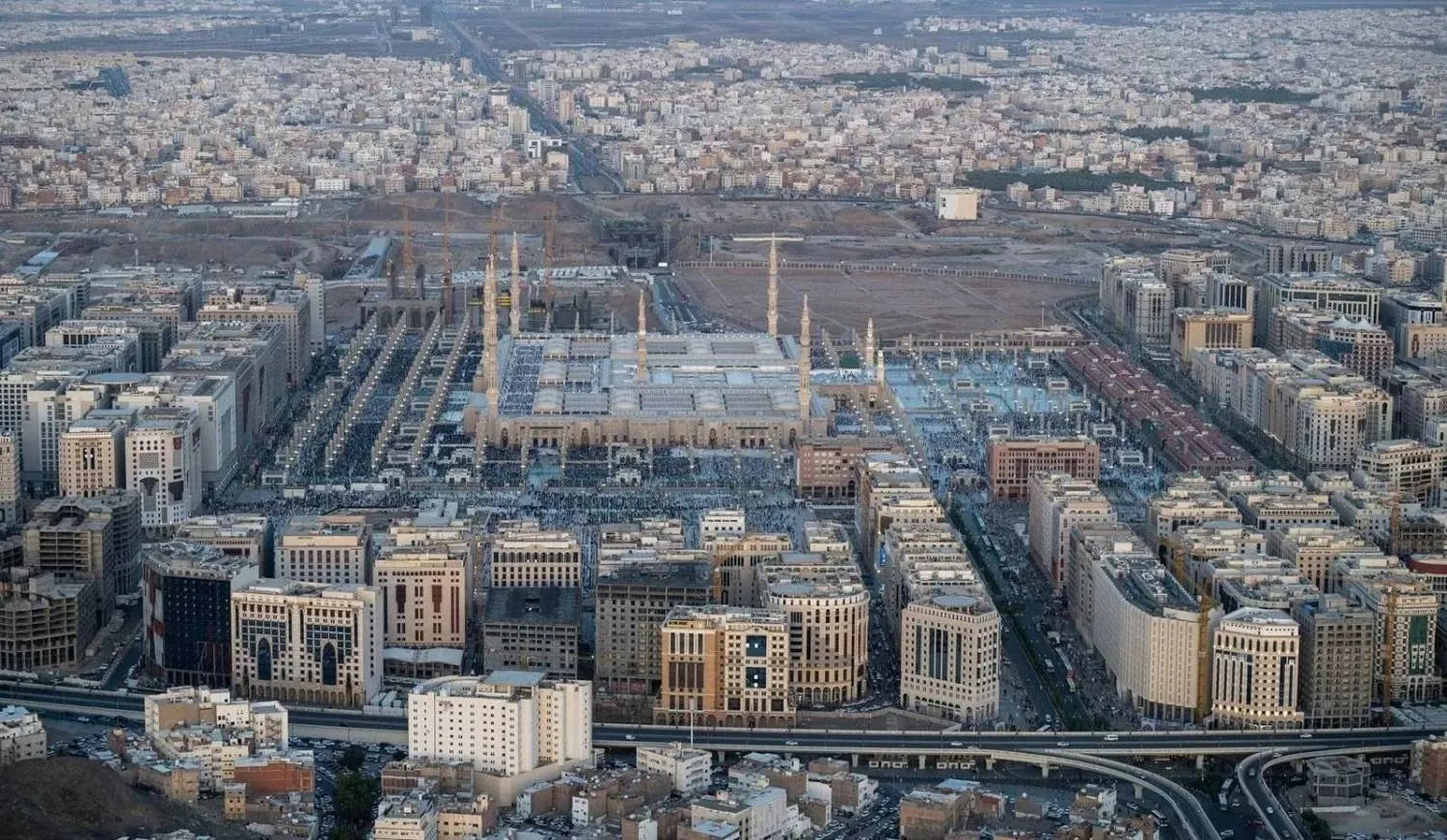
Saudi Minister of Municipalities and Housing Majed Al-Hogail said in a televised interview last week that the system allowing foreigners to own residential property would be implemented next month across all Saudi cities, except for four, Makkah, Madinah, Jeddah and Riyadh.

In those cities, ownership will be permitted in specific designated areas. Resident expatriates will be allowed to own one residential unit.

In contrast, the system offers broader flexibility in other economic sectors, with foreign ownership open across all Saudi cities without exception in the commercial, industrial and agricultural sectors.

Fahd bin Suleiman, executive director of non-Saudi property ownership at the authority, said in November that areas designated for foreign ownership in Riyadh, Jeddah and the holy cities of Makkah and Madinah were still under review and would be announced “very soon” alongside the executive regulations governing the new rules.

He said those areas would be “very wide” and include what are known as mega projects, with foreign ownership ratios expected to range between 70 percent and 90 percent.

Bin Suleiman added that buyers would be required to be Muslim to purchase property in the two holy cities, but would otherwise face limited restrictions.

“In general, there are no major conditions, and we do not want to impose constraints. When comparing the current law with the updated one, the difference will be clear,” he said.

Market expectations

Commenting on the imminent implementation of the updated system, several real estate experts told Asharq Al-Awsat that the law would generate additional demand for ready built housing units and increase liquidity in the property market.

They said it would also encourage international companies to establish headquarters and projects in the Kingdom, supporting economic activity and laying the foundation for a more stable and growing real estate sector.

They expect the positive impact to be most evident in Riyadh, Jeddah, Makkah, Taif and Madinah, as well as cities near tourist destinations, with initial effects emerging in the third and fourth quarters of 2026 and extending into 2027.

Real estate expert and marketer Saqr Al-Zahrani said the system’s implementation would mark a turning point for the Saudi property market by expanding the base of market participants and prompting many expatriates to move from renting to ownership, particularly in permitted cities.

This shift, he said, would create additional demand for ready built units and planned residential communities, boosting sales activity and market liquidity.

Raising property quality

Al-Zahrani added that opening commercial, industrial and agricultural ownership to foreigners across all cities would give international companies stronger incentives to establish operations in Saudi Arabia, supporting economic growth and long term real estate sector stability.

He said one of the first expected changes would be an improvement in property quality, as developers move toward higher specifications and better planning to meet the needs of a broader buyer base.

The market is also likely to see an increase in organized supply, driven by the entry of local and international investors and developers targeting new demand.

The updated system, he said, would support price stability, as ownership by expatriates and foreigners tends to be long term, reducing short term speculation.

It would also enhance transparency and governance through accompanying legal and regulatory controls, while creating wider opportunities for the financing sector to develop tailored products for expatriates and foreigners, boosting lending activity and liquidity.

Al-Zahrani said the announcement of the system’s implementation would trigger immediate inquiries and interest, but the real impact on transaction volumes would emerge gradually, with initial signs expected in the second quarter of 2026, as the first deals are completed.

Clear indicators such as higher trading volumes, faster project delivery and increased foreign investor participation are likely to materialize in the third and fourth quarters, once the market has absorbed the executive regulations and begun to interact with them in a stable manner.

He said the first year of implementation would be a transition period, with the strongest effects becoming evident in the second half of 2026 and beyond.

Varying impact by geography

Real estate expert Ahmed Al Faqih said the system’s impact would vary by location, with the strongest positive effects expected in the Makkah region and its cities, including Jeddah and Taif, as well as Madinah. Riyadh, he said, would also play a prominent role in attracting non-Saudi capital for both ownership and investment.

Al Faqih said capital targeting tourism investment would likely focus on cities near tourist areas, such as Taif, Abha and Jazan, as well as Tabuk due to its proximity to the Neom project.

He expects the first year of implementation to serve as a testing and evaluation phase, with the system’s impact becoming more evident in 2027. He said the law would support key Vision 2030 objectives, including income diversification and reducing reliance on oil, while creating hundreds of thousands of job opportunities for Saudi men and women.

System incentives

The updated law aims to regulate real estate ownership by non-Saudis in line with Vision 2030, attract foreign direct investment into the Saudi property market and increase the sector’s contribution to the economy.

It also seeks to retain global talent by enabling long term settlement, raise the contribution of non-oil sectors, support sustainable economic growth and improve urban living standards.

Under the law, non-Saudis are permitted to own property or acquire rights within geographic areas designated by the cabinet, based on a proposal from the Real Estate General Authority and approval by the Council of Economic and Development Affairs. This includes specifying eligible rights, maximum ownership ratios and related controls.

The law also allows a non-Saudi resident natural person to own one residential property outside the designated geographic scope, excluding Makkah and Madinah. Ownership in those two cities requires the buyer to be Muslim.

Non listed companies partly owned by non-Saudis are permitted to own property within the designated areas, including Makkah and Madinah, provided they are established under Saudi company law. They may also own property outside those areas for operational purposes or employee housing, as defined by the regulations.

Listed companies, investment funds and special purpose entities are allowed to own property across the Kingdom, including Makkah and Madinah, in accordance with rules issued by the Capital Market Authority in coordination with the real estate authority and other relevant bodies.

The law stipulates that its application does not affect rights granted under other systems, such as the Premium Residency Program or Gulf Cooperation Council agreements, and that foreign ownership does not confer any additional privileges beyond legal rights.

It also introduces a fee of up to 5 percent of the property transaction value for non-Saudi ownership, with details to be set out in the executive regulations.

Violations may result in fines or warnings, while providing misleading information can lead to fines of up to 10 million riyals and, in some cases, court ordered sale of the violating property.


China Urges Stronger Coordination Between Business, Finance Systems to Spur Consumption

People walk past a second hand market for luxury cars in Beijing, Tuesday, Nov. 25, 2025. (AP Photo/Andy Wong)
TT

China Urges Stronger Coordination Between Business, Finance Systems to Spur Consumption

People walk past a second hand market for luxury cars in Beijing, Tuesday, Nov. 25, 2025. (AP Photo/Andy Wong)

China's commerce ministry and financial regulators have urged local authorities to promote stronger coordination between business and financial systems to boost consumption, a joint statement showed on Sunday.

Local commerce departments are encouraged to tap existing funding channels for consumption-boosting campaigns and work with financial institutions to unlock spending potential, the Ministry of Commerce, People's Bank of China and National Financial Regulatory Administration said in a joint statement.

Regions with resources are encouraged to use digital yuan smart-contract "red packets" to improve policy efficiency.

The trio also called for measures such as financing guarantees, interest subsidies and risk compensation to strengthen policy synergy and guide more credit into key consumption sectors.

In other economic news, Chinese demand for foreign luxury cars is waning as customers opt for more affordable Chinese brand models, often sold at big discounts, catering to their taste for fancy electronics and comfort.

That is bad news for European carmakers like Porsche, Aston Martin, Mercedes-Benz and BMW that have long dominated the upper reaches of the world's largest auto market.

A prolonged property downturn in China has left many consumers with little appetite for big purchases.

Meanwhile, the well-to-do are becoming increasingly shy about publicly displaying their wealth, said Paul Gong, UBS head of China Automotive Industry Research.

Many car buyers have been swayed by a 20,000 yuan ($2,830) trade-in subsidy offered by the Chinese government for purchasing electric and plug-in hybrid vehicles. People tended to purchase cheaper, entry-level cars where the discount will count more and those cars are mostly Chinese made, Gong said.

“Slowing economic growth is one key driver behind weaker demand for premium cars,” said Claire Yuan, director of corporate ratings for China autos at S&P Global Ratings, referring to a segment that typically counts car brands such as Mercedes-Benz and BMW.

The market share of premium car sales in China, usually priced above 300,000 yuan ($42,400), more than doubled between 2017 and 2023 to about 15% of total sales, S&P said.

That trend is now reversing. The share of premium cars sales fell to 14% in 2024 and to 13% in the first nine months of 2025, S&P said.