
UN Expresses Concern over 'Dramatic Turn' in Libya Crisis

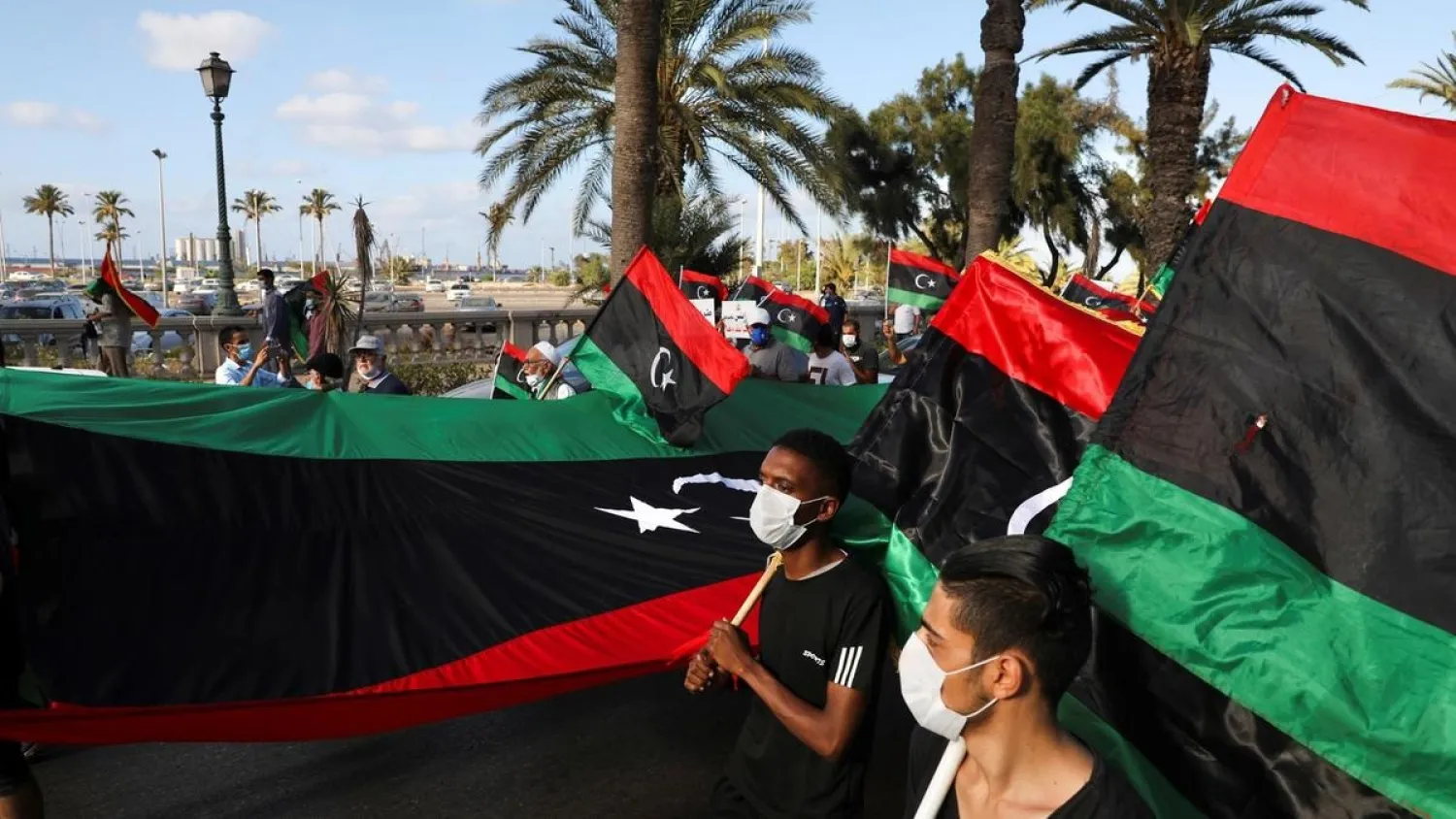
Demonstrators march during an anti-government protest in Tripoli, Libya, August 25, 2020, (Reuters)
TT

UN Expresses Concern over 'Dramatic Turn' in Libya Crisis

Demonstrators march during an anti-government protest in Tripoli, Libya, August 25, 2020, (Reuters)

The United Nations on Saturday voiced alarm over what it called “a dramatic turn of events” in Libya's conflict, after a power struggle between leaders of the Tripoli-based government surfaced in the wake of anti-corruption protests.

Protests over deteriorating economic conditions erupted earlier this week in the capital and elsewhere in western Libya, which is controlled by the Government of National Accord (GNA), headed by Fayez al-Sarraj.

In Tripoli, pro-GNA militias opened fire on demonstrators with rifles and truck-mounted guns and abducted some of the protesters.

“Libya is witnessing a dramatic turn of events that underlines the urgent need to return to a full and inclusive political process,” the UN support mission in Libya said.

Sarraj and his interior minister, Fathi Bashaga, initially accused “outlawed infiltrators” of instigating the violence. Sarraj also said protesters “did not obtain necessary permits” for their rally and described their demonstrations as “riots.”

However, on Friday, Sarraj suspended Bashaga and initiated an administrative investigation after Bashaga accused a pro-GNA militia of attacking the peaceful protesters in Tripoli this week.

Bashaga, who was excluded from two high-profile military and security meetings in the capital over the past few days, quickly responded. He said in a statement he accepted Sarraj’s decision but demanded a public and live questioning “to expose the facts” to the Libyan people. He did not elaborate.

Following the suspension of the interior minister, militias in Tripoli celebrated the decision by firing weapons into the air, while others in Bashaga's hometown of Misrata took to the streets to show support for the minister.

The UN mission in Libya, known as UNSMIL, said it was still concerned about “the excessive use of force against demonstrators as well as the arbitrary arrest of a number of civilians.” It did not say how many people were detained.

Retweeting the UNSMIL’s statement, the US Embassy in Libya urged Sarraj and Bashaga toward “cooperation" in the interests "the Libyan people.”

Over the past two days, militias sealed off main streets and roads to prevent the demonstrators from reaching Tripoli’s Martyrs Square, the epicenter of the protests, according to two residents who spoke on condition of anonymity for fear reprisals.

A group of women however protested in the city center before being dispersed. Two women were wounded and four others were arrested, according to the protest movement, known as “Hirak Aug. 23.”

The movement called for civil disobedience until achieving their demands that include handing over power to the Supreme Judicial Council to work towards presidential and parliamentary elections.

The Libyan Crimes Watch, a local rights group monitoring the conflict, said Saturday a protester died of his wounds after he was shot Friday when a militia dispersed the protesters in the city center.


Hamas Hopes Pressure Will Amend Gaza Disarmament Plan

Gunmen from Hamas’ Izz al-Din al-Qassam Brigades in Nuseirat refugee camp, central Gaza, February 2025 (EPA)
TT

Hamas Hopes Pressure Will Amend Gaza Disarmament Plan

Gunmen from Hamas’ Izz al-Din al-Qassam Brigades in Nuseirat refugee camp, central Gaza, February 2025 (EPA)

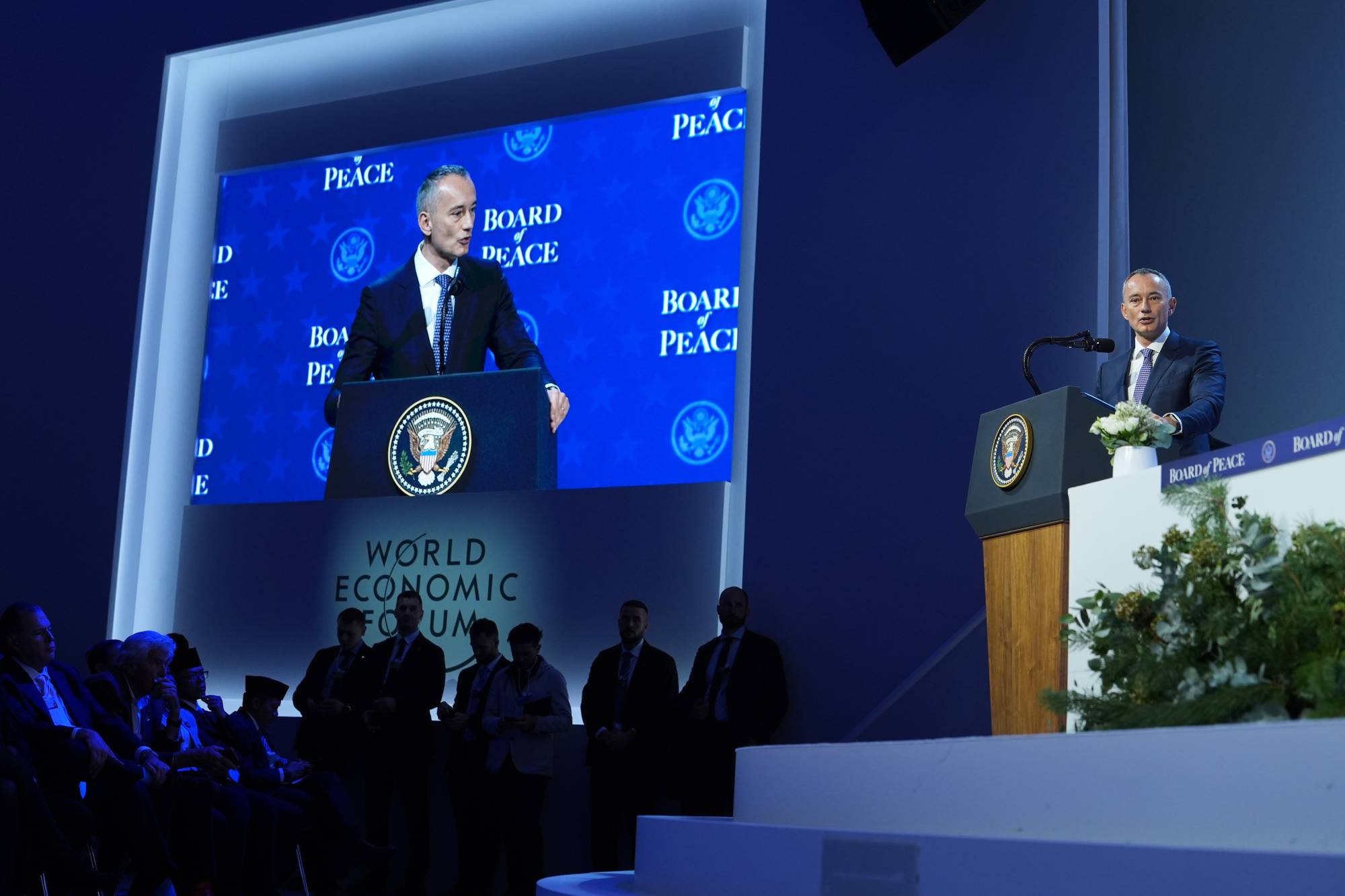
Hamas is pressing mediators to secure changes to a plan presented more than a week ago by Nikolay Mladenov, the High Representative of the “Board of Peace,” which calls for the full disarmament of Gaza without exception.

A Hamas delegation in Cairo is holding intensive talks with Palestinian factions and Egyptian officials, alongside meetings with representatives of the Board of Peace, including Mladenov, who has already met the group again, Asharq Al-Awsat has learned.

A senior Hamas official in Cairo said the movement has delivered a clear message to mediators: the proposal in its current form is unacceptable to Palestinians.

The official said amendments must bind Israel to complete the remaining terms of the first phase of the ceasefire agreement and commit to the second phase, particularly a full and immediate withdrawal, in line with the 20-point plan presented by US President Donald Trump during negotiations last September.

Hamas, they said, is still consulting internally and with other factions, with no final position yet on disarmament. Any response will depend on changes to the plan, especially guarantees of Israeli withdrawal and an end to what the official described as repeated ceasefire violations.

The official also accused Israel of restricting aid and goods, engineering shortages, tightening movement through the Rafah crossing, and using armed groups to search and humiliate travelers.

They said talks with mediators are focused on forcing revisions to the proposal.

A second Palestinian faction source said the plan is unjust and requires major changes, not only on weapons but also on withdrawal mechanisms, reconstruction, and governance, which he said must remain purely Palestinian without foreign oversight.

Linking disarmament to second-phase measures, including reconstruction limited to disarmed areas, amounts to blackmail, he said, adding that all Palestinian factions reject such conditions.

Reuters cited three sources, two Egyptian and one Palestinian, as saying Hamas has told mediators it will not discuss disarmament without guarantees of a full Israeli withdrawal from Gaza, as outlined in the Board of Peace proposal.

Hamas has also demanded an end to Israeli violations, full implementation of all provisions, and clarification over Israel’s expanding control in the enclave.

Two Hamas officials declined to comment, while the Israeli government and Board of Peace representatives did not respond to requests for comment, Reuters reported.

Israel insists on full disarmament of Gaza, including light and heavy weapons. The Board of Peace plan calls for dismantling tunnel networks and surrendering weapons in stages over eight months, with a full Israeli withdrawal only after Gaza is verified to be free of weapons.

Trump’s top Board of Peace envoy in the Middle East, Mladenov, said on X that all mediators had endorsed the plan and helped shape it before presenting it to Hamas.

"(The) international community has supported it, now is the time to agree to the framework for its implementation. For the sake of both Palestinians and Israelis, there is not time to lose," he said in the post.


Baghdad Says Faction Attacks are ‘Individual Attempts’

Members of the Popular Mobilization Forces stand guard during a pro-Iran rally in Tahrir Square on April 2, 2026 (AFP)
TT

Baghdad Says Faction Attacks are ‘Individual Attempts’

Members of the Popular Mobilization Forces stand guard during a pro-Iran rally in Tahrir Square on April 2, 2026 (AFP)

The Iraqi government moved on Friday to contain the fallout from an escalating regional war, after the US issued sharp warnings of possible attacks on its interests inside Iraq.

Prime Minister Mohammed Shia al-Sudani vowed to pursue those behind attacks and the kidnapping of foreigners, saying the law would be enforced “without red lines.”

The move comes as the confrontation between the US and Israel on one side, and Iran on the other, spills further into Iraq, through rocket and drone attacks and mounting humanitarian and economic strains, including an extended closure of Iraqi airspace.

Iraq’s foreign ministry, responding to a US Embassy statement urging American citizens to leave immediately, said Iraq “is not a party to the conflict and does not wish to be part of it,” reaffirming a policy of distancing itself from the crisis.

The embassy warned that “Iran-aligned militias” could carry out attacks in the near term, underscoring fears that the conflict could spread into Iraq.

The foreign ministry said such incidents were “individual attempts” that do not reflect state policy, adding that some actors may take unilateral steps “contrary to the state’s direction.”

It described the actions as “illegal” and said holding the state responsible amounted to “unjustified generalization,” as Iraq faces growing pressure given its geography and ties with both Washington and Tehran.

Security push

Sudani chaired a security meeting at the Interior Ministry’s intelligence headquarters with senior officials to address threats to diplomatic missions, vital facilities, and the kidnapping of foreigners.

He called for “maximum measures” to pursue those responsible and stressed that enforcing the law would face “no red lines,” regardless of the party involved. He also ordered stronger intelligence efforts and higher readiness as regional tensions intensified.

This comes as uncertainty persists over the fate of American journalist Shelly Kittleson kidnapped in Baghdad, with no group claiming responsibility, highlighting ongoing challenges in securing foreign interests.

Observers say Baghdad’s description of the attacks as “individual” aims to avoid direct responsibility and preserve a delicate balance in relations with Washington and Tehran.

Unclear strike

A security source said an airstrike hit a gravel plant in al-Rutba district in western Anbar province. “Unknown” warplanes carried out the strike early Friday, with no casualties or significant damage reported. Authorities have opened an investigation.

Local data showed the Kurdistan region has been hit by 614 rockets and drones since Feb. 28 through midday Friday.

The attacks killed 14 people and wounded 93, with Erbil accounting for 484 projectiles, Sulaymaniyah 103, Duhok 25, and Halabja two.

The figures underscore mounting pressure on the region as it remains within the wider theater of confrontation.

Displacement rises

A report by the International Organization for Migration said regional tensions have begun to drive internal displacement.

It recorded 90 families displaced in Sulaymaniyah province by March 24 due to fears of drone strikes.

Baghdad and Erbil also saw limited displacement, with residents leaving affected areas to stay with relatives or in rented homes in rural areas.

Iraq’s civil aviation authority extended the suspension of air traffic for seven more days, from 12 p.m. Friday to the same time on April 10, describing the move as a temporary precaution based on ongoing security assessments.

The extension reflects fears of a wider escalation or the use of Iraqi airspace in further military action, leaving Baghdad to navigate a difficult balance: preventing the country from becoming an open conflict arena while maintaining ties with regional and international powers.


Israeli Army: Hezbollah Disarmament Needs Full Occupation of Lebanon

An Israeli military truck transports a tank in the Upper Galilee in northern Israel near the Lebanese border (AFP)
TT

Israeli Army: Hezbollah Disarmament Needs Full Occupation of Lebanon

An Israeli military truck transports a tank in the Upper Galilee in northern Israel near the Lebanese border (AFP)

A senior Israeli military commander said on Friday that disarming Hezbollah was not part of the current war objectives, and that the army’s plan instead focused on razing entire villages in southern Lebanon and forcibly displacing residents to create a buffer zone imposing a new border reality.

Defense Minister Israel Katz said the war aimed to achieve what he called the “top objective” of disarming Hezbollah and that the government remained committed to it.

The spokesperson for the Israeli army later walked back the commander’s remarks, saying the military remained committed to the long-term goal of disarming Hezbollah through a broad, gradual effort.

The current operation weakens Hezbollah and will contribute to its disarmament over time, the spokesperson noted.

A military source said Israel would act if the Lebanese government failed to disarm the group, adding that Hezbollah Secretary-General Naim Qassem was within the scope of Israeli assassination plans.

Former general Yom-Tov Samia said dismantling Hezbollah would require targeting the Lebanese state itself, including its infrastructure, to pressure the public against the group.

Despite the clarification, the initial remarks continued to reverberate. Military analysts and reserve generals said they reflected a blunt reality: the current war cannot destroy Hezbollah.

They said such a goal would require full occupation of Lebanon and sweeping searches across all towns and villages, which would exceed the scope of the current operation.

Amid the visible rift, Prime Minister Benjamin Netanyahu postponed a cabinet meeting scheduled for Friday, replacing it with limited consultations before rescheduling it for Saturday evening.

A military source said the army would present a plan to the cabinet to completely destroy Lebanese border villages and establish a depopulated security zone, barring residents from returning to areas along what Israel calls the “contact line,” with 20 Christian villages exempted.

The army says Hezbollah has tried over the past year to rebuild its infrastructure along the border. It proposes turning a 3-4 km strip into a forward defensive zone.

The plan calls for the total destruction of dozens of villages near Israeli towns, from Kfarkela opposite Metula to Naqoura opposite Shlomi, including the demolition of all infrastructure and a permanent ban on residents returning.

The military says the plan has received legal approvals, arguing that villages used by Hezbollah constitute “incriminated” infrastructure and that their existence would enable the group to rebuild in the future.

It added that after a November 2024 ceasefire, Hezbollah fighters returned to border villages and attempted to rebuild underground infrastructure and deploy weapons not previously detected.

The army said it would be impossible after the current operation to revert to the existing border, as Hezbollah would return, requiring a new line.

The proposed model mirrors what the army calls the “yellow line” in the Gaza Strip, a 2-4 km strip cleared of locals and controlled by Israeli forces with forward positions.

A senior Israeli officer said the plan differs from Israel’s past security zone in southern Lebanon, stressing that civilians would not be allowed to return.

The officer acknowledged that setting Hezbollah’s disarmament as a war goal had been “overly ambitious,” saying current constraints, including a prolonged war and the need to focus on Iran, prevent making it an immediate objective.