
Ryan Gauld: 'Being Called Mini Messi Didn't Bother Me but People Expected More'

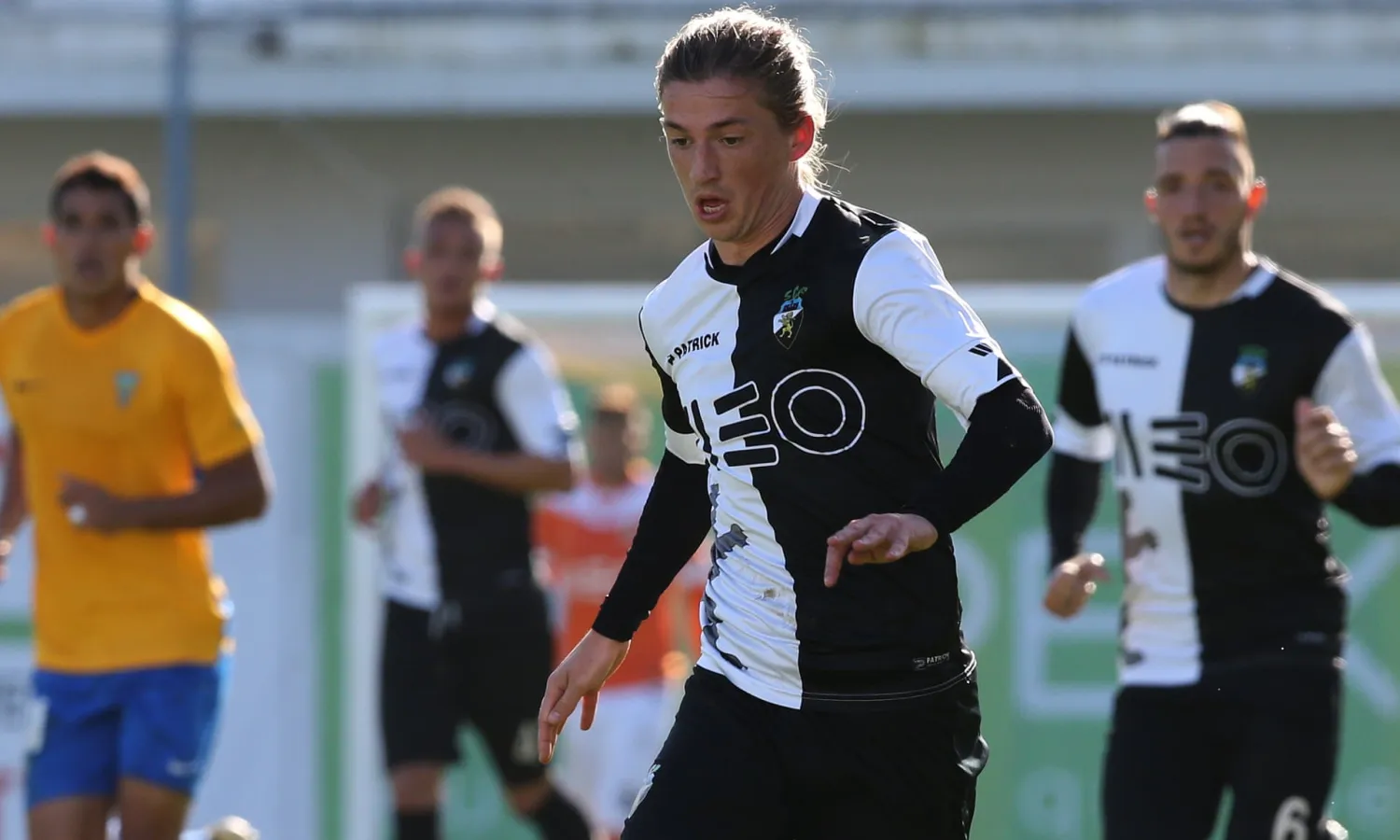
Ryan Gauld in action last December for Farense, who were on course for promotion to Portugal’s top flight when the season was halted.
Photograph: Gualter Fatia/Getty Images
Ryan Gauld in action last December for Farense, who were on course for promotion to Portugal’s top flight when the season was halted. Photograph: Gualter Fatia/Getty Images
TT

Ryan Gauld: 'Being Called Mini Messi Didn't Bother Me but People Expected More'

Ryan Gauld in action last December for Farense, who were on course for promotion to Portugal’s top flight when the season was halted.
Photograph: Gualter Fatia/Getty Images
Ryan Gauld in action last December for Farense, who were on course for promotion to Portugal’s top flight when the season was halted. Photograph: Gualter Fatia/Getty Images

Ryan Gauld wasn’t short of suitors when seeking a transfer from Sporting Lisbon last summer, proving reputations such as his linger. The Scot dubbed “Mini Messi” as a teenager might have been expected to board the first flight out of Portugal but he had other ideas. Gauld took the path to Farense, a little-fancied club in the second tier who have defied consensus by earning promotion courtesy of a season abandonment confirmed on Tuesday.

“I felt like I hadn’t accomplished everything I wanted to here,” Gauld says from his home in Vilamoura. “I would have been leaving without showing to everyone what I can do. I wanted to stick around and prove myself.

“I think I’m looked at as a player who had talent but hasn’t really shown it yet. They have reason to think that because there were high expectations when I went to Sporting; I was destined for great things. I have always done all I could to make things work out but they didn’t go as planned. I’m a bit young yet to write myself off – there is still time. I wanted to get back to the first division here to prove a point.”

Perhaps most importantly, Gauld sounds comfortable in his own skin and happy. “I’ve managed 23-24 games on the trot without injury. It’s my longest spell of consecutive 90 minutes, most goals, longest time with no injuries and that’s exactly what I was needing.”

Gauld’s earlier rise makes “rapid” appear an understatement. The Messi comparisons came after he broke through at Dundee United as a 16-year-old in 2012. Sporting paid £3m for him two years later on a six‑year deal with a €60m exit clause. After a promising start in Lisbon – Gauld played 90 minutes for the first team in December 2014 – things turned sour. Still only 24, Gauld is up to speed with the ugliness of the beautiful game.

“There’s a good side and a bad side, that people don’t really see,” he says of Sporting. “One thing I came away from Sporting having not enjoyed was the way I was dealt with. The positive side is they are a huge club, known all over Europe, and to be a part of that for a few years was an honor.”

Was the Messi moniker, for one so young, a burden? “I wasn’t bothered by it but it’s when you see it on social media: ‘This guy was meant to be Mini Messi, look at him now.’ All that kind of nonsense. The actual name didn’t bother me, it was just when people read that they judged me a little quicker and expected more.

“The first time I read it I was laughing; John and Andy cut it out the paper and stuck it in my room. I was 17, delighted to be playing football every day and in such a good United team. I had nothing to complain about.”

Of those flatmates John is Souttar, now of Hearts; Andy is a certain Robertson, who needs no introduction. Gauld laughs when contemplating whether he envisaged Robertson’s journey to Champions League winner with Liverpool. “To begin with probably not because he was this wee quiet boy who came in for a pre-season. We didn’t have a left-back, Barry Douglas had just left, so [United manager] Jackie McNamara took in Andy and Graham Carey on trial.

“We all thought: ‘Graham Carey is quite a well-known player in the SPL, as long as he does well he’ll be signing.’ Graham had a good pre‑season but we went to Germany, played a couple of games and Jackie told Andy he would be our left-back. He developed incredibly from the start of that season to the end and has just kept rising. It’s as if he will never stop developing. There isn’t much else for him to accomplish in his career but nothing would change the boy he is. We still keep in touch.”

Gauld’s experience doesn’t look especially unusual: injuries, competition for places, changes of coach and ineffectual loans hampered his development. The difference with him was simple; people in Scotland, desperate for a global star, noted every setback.

“There was still a lot of expectation over here because it wasn’t often Sporting would pay a lot of money for a young player. So people expected big things. I soon realized the B team and junior team was full of brilliant 17‑ and 18‑year‑olds. They already have that level of in-house talent.

“The hardest thing was people in Scotland and England expected things to happen straight away, that I would walk into the team. Sporting’s midfield three at the time all won the 2016 Euros with Portugal – Adrien Silva, William Carvalho, João Mário – and played big parts in that. I don’t think people understood how hard it would be for me but I gave it all I could; I have no regrets.

“My first season was my best. At 18 I was playing the League Cup games, got a few goals, coming off the bench. At the time I thought it was a great start but there was a change of manager that summer and the new one didn’t fancy me.

“It was a gradual thing. I spent two years in the B team, then was out on loan but got called back because Sporting took the huff with the team I was at. Then I was chucked back into the B team and started thinking: ‘It’s maybe not going to work here.’ The next pre‑season, I was quickly sent to the group that wasn’t needed or wanted by the manager.”

If Messi was Gauld’s supposed parallel, Cristiano Ronaldo is the Lisbon poster boy. Sporting developed the forward before his sale to Manchester United. “Any time a young boy breaks into the first team, they don’t want to say anything but they are hoping it can happen again,” Gauld says. “You can’t put that pressure on a kid – trying to play catch-up with a guy like Ronaldo won’t do you much good.”

Nowadays Gauld can typically be found as a narrow left-sided midfielder – “not a winger” – in a 4-4-2. Lockdown has afforded him a chance to assess how his game has improved since leaving Scotland. “I’m more of a complete player, certainly without the ball. United have been putting up old games on YouTube and I’ve been watching. I feel sorry for John Rankin and Paul Paton, having to do all my defending.”

Farense, now defined as runners-up in LigaPro, have enjoyed the benefits of Gauld’s maturity and hunger. He finished the season as their top scorer. “Personally and collectively this [stoppage] came at a bad time. Not that it was a good time for anyone, but it was frustrating,” he says. For him you sense the 2020-21 campaign cannot come soon enough.

(The Guardian)


Shakhtar Boss Pays Ukrainian Racer $200,000 After Games Disqualification

Ukrainian President Volodymyr Zelenskiy holds helmet as he meets with a Ukrainian skeleton racer Vladyslav Heraskevych , who was disqualified from the Olympic skeleton competition over his "helmet of remembrance" depicting athletes killed since Russia's invasion and his father and coach, Mykhailo Heraskevych, amid Russia's attack on Ukraine, in Munich, Germany February 13, 2026. (Ukrainian Presidential Press Service/Handout via Reuters)
TT

Shakhtar Boss Pays Ukrainian Racer $200,000 After Games Disqualification

Ukrainian President Volodymyr Zelenskiy holds helmet as he meets with a Ukrainian skeleton racer Vladyslav Heraskevych , who was disqualified from the Olympic skeleton competition over his "helmet of remembrance" depicting athletes killed since Russia's invasion and his father and coach, Mykhailo Heraskevych, amid Russia's attack on Ukraine, in Munich, Germany February 13, 2026. (Ukrainian Presidential Press Service/Handout via Reuters)

The owner of ‌Ukrainian football club Shakhtar Donetsk has donated more than $200,000 to skeleton racer Vladyslav Heraskevych after the athlete was disqualified from the Milano Cortina Winter Games before competing over the use of a helmet depicting Ukrainian athletes killed in the war with Russia, the club said on Tuesday.

The 27-year-old Heraskevych was disqualified last week when the International Bobsleigh and Skeleton Federation jury ruled that imagery on the helmet — depicting athletes killed since Russia invaded Ukraine in 2022 — breached rules on athletes' expression at ‌the Games.

He ‌then lost an appeal at the Court ‌of ⁠Arbitration for Sport hours ⁠before the final two runs of his competition, having missed the first two runs due to his disqualification.

Heraskevych had been allowed to train with the helmet that displayed the faces of 24 dead Ukrainian athletes for several days in Cortina d'Ampezzo where the sliding center is, but the International Olympic Committee then ⁠warned him a day before his competition ‌started that he could not wear ‌it there.

“Vlad Heraskevych was denied the opportunity to compete for victory ‌at the Olympic Games, yet he returns to Ukraine a ‌true winner," Shakhtar President Rinat Akhmetov said in a club statement.

"The respect and pride he has earned among Ukrainians through his actions are the highest reward. At the same time, I want him to ‌have enough energy and resources to continue his sporting career, as well as to fight ⁠for truth, freedom ⁠and the remembrance of those who gave their lives for Ukraine," he said.

The amount is equal to the prize money Ukraine pays athletes who win a gold medal at the Games.

The case dominated headlines early on at the Olympics, with IOC President Kirsty Coventry meeting Heraskevych on Thursday morning at the sliding venue in a failed last-minute attempt to broker a compromise.

The IOC suggested he wear a black armband and display the helmet before and after the race, but said using it in competition breached rules on keeping politics off fields of play. Heraskevych also earned praise from Ukraine President Volodymyr Zelenskiy.


Speed Skating-Italy Clinch Shock Men’s Team Pursuit Gold, Canada Successfully Defend Women’s Title

 Team Italy with Davide Ghiotto, Andrea Giovannini, Michele Malfatti, celebrate winning the gold medal on the podium of the men's team pursuit speed skating race at the 2026 Winter Olympics, in Milan, Italy, Tuesday, Feb. 17, 2026. (AP)
Team Italy with Davide Ghiotto, Andrea Giovannini, Michele Malfatti, celebrate winning the gold medal on the podium of the men's team pursuit speed skating race at the 2026 Winter Olympics, in Milan, Italy, Tuesday, Feb. 17, 2026. (AP)
TT

Speed Skating-Italy Clinch Shock Men’s Team Pursuit Gold, Canada Successfully Defend Women’s Title

 Team Italy with Davide Ghiotto, Andrea Giovannini, Michele Malfatti, celebrate winning the gold medal on the podium of the men's team pursuit speed skating race at the 2026 Winter Olympics, in Milan, Italy, Tuesday, Feb. 17, 2026. (AP)
Team Italy with Davide Ghiotto, Andrea Giovannini, Michele Malfatti, celebrate winning the gold medal on the podium of the men's team pursuit speed skating race at the 2026 Winter Olympics, in Milan, Italy, Tuesday, Feb. 17, 2026. (AP)

An inspired Italy delighted the home crowd with a stunning victory in the Olympic men's team pursuit final as

Canada's Ivanie Blondin, Valerie Maltais and Isabelle Weidemann delivered another seamless performance to beat the Netherlands in the women's event and retain their title ‌on Tuesday.

Italy's ‌men upset the US who ‌arrived ⁠at the Games ⁠as world champions and gold medal favorites.

Spurred on by double Olympic champion Francesca Lollobrigida, the Italian team of Davide Ghiotto, Andrea Giovannini and Michele Malfatti electrified a frenzied arena as they stormed ⁠to a time of three ‌minutes 39.20 seconds - ‌a commanding 4.51 seconds clear of the ‌Americans with China taking bronze.

The roar inside ‌the venue as Italy powered home was thunderous as the crowd rose to their feet, cheering the host nation to one ‌of their most special golds of a highly successful Games.

Canada's women ⁠crossed ⁠the line 0.96 seconds ahead of the Netherlands, stopping the clock at two minutes 55.81 seconds, and

Japan rounded out the women's podium by beating the US in the Final B.

It was only Canada's third gold medal of the Games, following Mikael Kingsbury's win in men's dual moguls and Megan Oldham's victory in women's freeski big air.


Lindsey Vonn Back in US Following Crash in Olympic Downhill 

Milano Cortina 2026 Olympics - Alpine Skiing - Women's Downhill 3rd Official Training - Tofane Alpine Skiing Centre, Belluno, Italy - February 07, 2026. Lindsey Vonn of United States in action during training. (Reuters)
TT

Lindsey Vonn Back in US Following Crash in Olympic Downhill 

Milano Cortina 2026 Olympics - Alpine Skiing - Women's Downhill 3rd Official Training - Tofane Alpine Skiing Centre, Belluno, Italy - February 07, 2026. Lindsey Vonn of United States in action during training. (Reuters)

Lindsey Vonn is back home in the US following a week of treatment at a hospital in Italy after breaking her left leg in the Olympic downhill at the Milan Cortina Games.

“Haven’t stood on my feet in over a week... been in a hospital bed immobile since my race. And although I’m not yet able to stand, being back on home soil feels amazing,” Vonn posted on X with an American flag emoji. “Huge thank you to everyone in Italy for taking good care of me.”

The 41-year-old Vonn suffered a complex tibia fracture that has already been operated on multiple times following her Feb. 8 crash. She has said she'll need more surgery in the US.

Nine days before her fall in Cortina d'Ampezzo, Italy, Vonn ruptured the ACL in her left knee in another crash in Switzerland.

Even before then, all eyes had been on her as the feel-good story heading into the Olympics for her comeback after nearly six years of retirement.