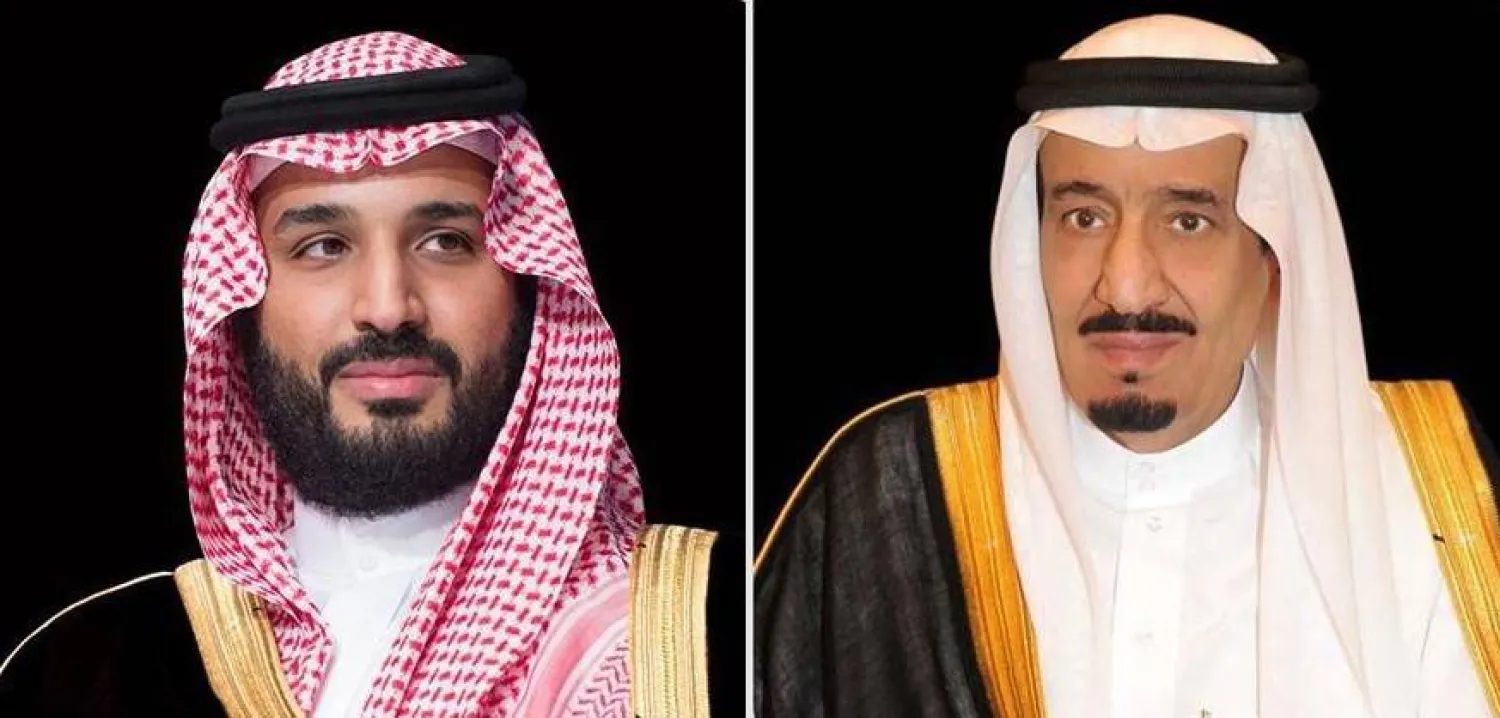
Saudi Arabia stressed on Wednesday the world is facing a tremendous challenge in the form of COVID-19 pandemic.
The health, humanitarian, and economic repercussions of the pandemic demand that “we stand united to confront common challenges in the world,” declared Custodian of the Two Holy Mosques King Salman bin Abdulaziz before the 75th session of the United Nations General Assembly in New York.
The Kingdom, as President of the G20, continues to promote global response efforts to confront this pandemic and its impact, he noted, while highlighting Riyadh’s pledge earlier this year of $500 million to fight COVID-19 and reinforce emergency preparedness and responses.
On the regional and international level, it supports a policy that relies on respect for international laws and principles, and continues to work on achieving security, stability, and prosperity, while promoting political solutions to conflicts and combating extremism in all of its forms and manifestations, he stated.
“My country, ever since the foundation of this organization, has been in the forefront among the nations working to achieve international peace and security. It has been consistently working to mediate and reach peaceful solutions to disputes, as well as seeking to prevent conflict and support security, stability, development, and prosperity,” King Salman said.
“However, the Middle East has been afflicted with major security and political challenges that undermine the security of its peoples and the stability of its countries.”
“Our region has been suffering for many decades by attempts of the forces of extremism and chaos, which seek to impose their malign views and policies in order to hijack these countries' present and future, paying no heed to the aspirations of the peoples of the region for development, prosperity, and peace,” he noted.
“In the Kingdom, we choose a path for the future through our Vision 2030, which aspires to create a robust economy and a community which interacts with its surrounding and contributes actively to the progress and civilization of humankind,” he continued.
'Appeasement does not deter Iran'
“The Kingdom's hands were extended to Iran in peace with a positive and open attitude over the past decades, but to no avail. Saudi Arabia received several of Iran's presidents and other senior officials, among the Kingdom's efforts to seek ways to build relations based on good neighborliness and mutual respect,” he stressed.
“The Kingdom welcomed the international efforts to deal with Iran's nuclear program, but time and again, the entire world witnessed how the Iranian regime exploited these efforts in order to intensify its expansionist activates, create its terrorist networks, and use terrorism, and in the process squandering the resources and wealth of the Iranian people for the purpose of its expansionist projects which produced nothing but chaos, extremism and sectarianism,” King Salman lamented.
“The Iranian regime, in line with its hostile attitude, targeted oil facilities in the Kingdom last year in blatant violation of international laws. By doing so, it violated international peace and security and proved its disregard for the stability of the global economy and the security of oil supplies to the international markets,” he noted.
“The Iranian regime also continues, through its proxies, to target the Kingdom, launching, to date, over 300 ballistic missiles and more than 400 armed drones in flagrant violation to UN Security Council resolutions 2216 and 2231,” he said. “Our experience with the Iranian regime has taught us that partial solutions and appeasement did not stop its threats to international peace and security.”
“A comprehensive solution and a firm international position are required to ensure fundamental solutions to the Iranian regime's attempt to obtain weapons of mass destructions, and its ballistic missile program, and its interference in the internal affairs of other countries, and its sponsorship of terrorism,” demanded King Salman.
“The Iranian regime interfered in Yemen by supporting the coup carried out by its proxy, the Houthi militia, against the legitimate government. The coup is a threat to the security of the countries of the region and the sea lanes vital to the global economy. Furthermore, the Houthis impeded the flow of humanitarian aid to the Yemeni people,” he added.
“The Kingdom will not hesitate to defend its national security, nor will it abandon the fraternal people of Yemen until they regain their complete sovereignty and independence from Iranian hegemony. The Kingdom will continue to provide humanitarian support for the people of Yemen, and it will continue to support the efforts of the UN Secretary General's Special Envoy for Yemen in accord with the Gulf initiative, the outcomes of the national dialogue, and resolution 2216,” he stressed.
'Terrorist Hezbollah must disarm'
“We also stand by the people of Lebanon who are experiencing a humanitarian catastrophe as a result of the Beirut port, which occurred as a result of the hegemony of Hezbollah, a terrorist organization affiliated with Iran, over the decision-making process in Lebanon due to its weapons,” said King Salman.
“This led to obstruction the constitutional state institutions in Lebanon. In order for the Lebanese people to achieve their aspirations of security, stability and prosperity, this terrorist organization must be disarmed,” he demanded.
“Peace in the Middle East is our strategic option. Our duty is to spare no effort to work together towards achieving a bright future where peace, stability, prosperity, and coexistence among all the peoples prevail. The Kingdom supports all efforts to advance the peace process,” he continued.
“The 2002 Arab peace initiative provides the basis for a comprehensive and just solution to the Arab-Israeli conflict that ensures that the Palestinian people obtain their legitimate rights, starting with establishing their independent state with East Jerusalem as its capital,” he said.
“We support the efforts of the current US administration to achieve peace in the Middle East by bringing the Palestinians and the Israelis to the negotiation table to reach a fair and comprehensive agreement,” he added.