


Constitutional Vote for 'New Republic' Splits Algeria

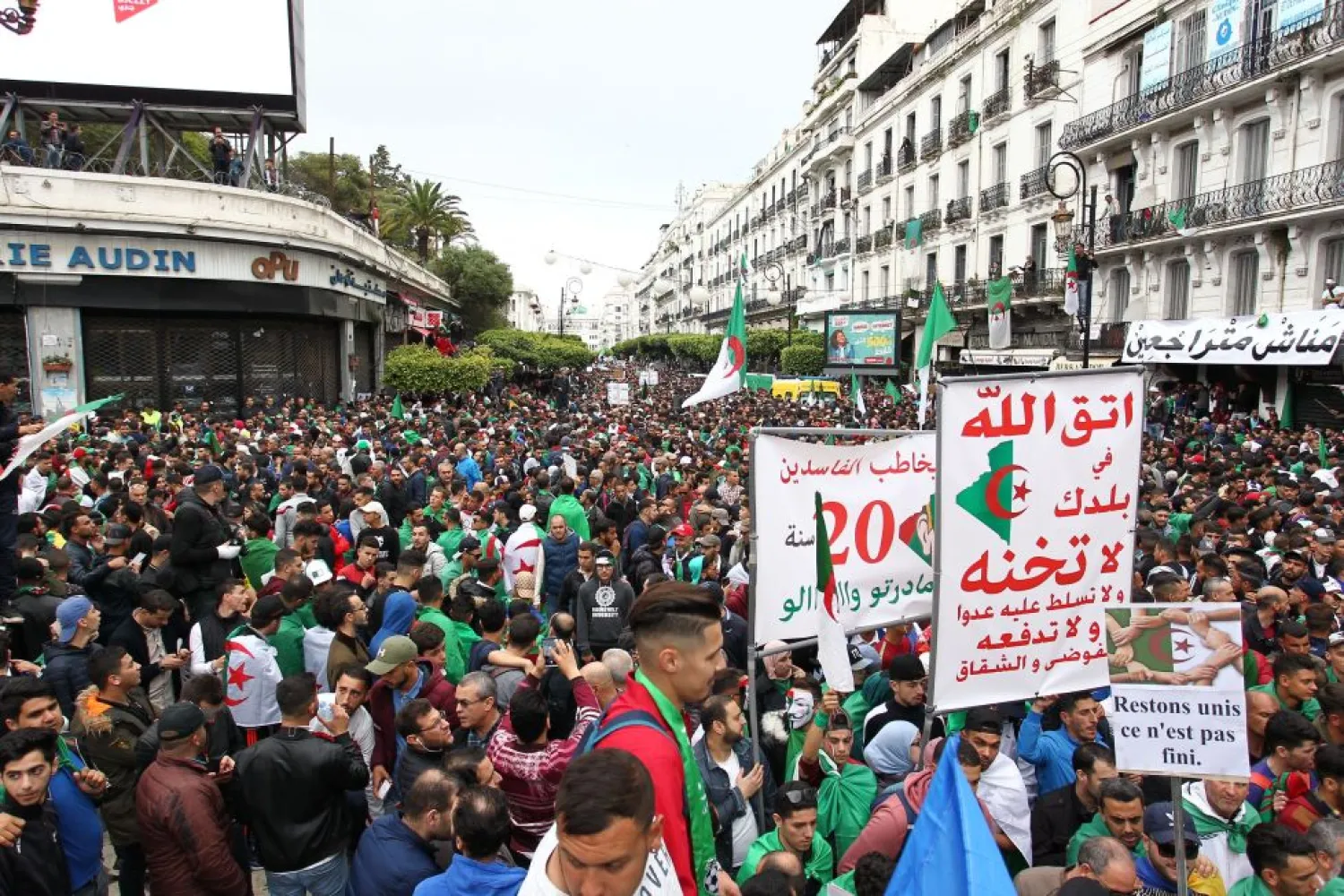
Algerians took to the streets in their hundreds of thousands to demand Abdelaziz Bouteflika's resignation last year, but many were disappointed that a presidential election to choose his successor merely reinforced the status quo | AFP
TT

Constitutional Vote for 'New Republic' Splits Algeria

Algerians took to the streets in their hundreds of thousands to demand Abdelaziz Bouteflika's resignation last year, but many were disappointed that a presidential election to choose his successor merely reinforced the status quo | AFP

Algeria is readying for a constitutional referendum that the establishment says will usher in a "New Republic" and boost freedoms, but the opposition dismisses as window-dressing by a repressive regime.

With a month to go before the November 1 vote, many ordinary Algerians -- struggling during a deep economic crisis that has seen unemployment soar -- appear unaware of the technical details of the government's proposals.

And opposition leaders say President Abdelmadjid Tebboune's flagship initiative fails to provide meaningful political change in the North African nation.

"It is yet another coup against popular sovereignty," said Djamal Bahloul, of the Front of Socialist Forces (FFS), Algeria's oldest opposition party.

"The authorities continue to concoct constitutions through technical commissions or experts -- while ignoring the people."

An unprecedented protest movement, known as "Hirak", mobilized from February 2019 and in April that year people massed in their hundreds of thousands to force veteran ruler Abdelaziz Bouteflika to resign after two decades in power.

Tebboune won a presidential election in December, but the protest movement boycotted a vote it derided as a sham and even the official turnout was less than 40 percent.

Tebboune served as prime minister under Bouteflika and is seen by protesters as emblematic of an old regime that they want to dismantle.

Peaceful demonstrations continued, until the need to social distance brought a curtain down on street mobilizations earlier this year.

- 'Radical change' -

In a bid to shore up his mandate, Tebboune pledged to revise the constitution -- which Bouteflika modified for his needs -- and allow people to approve or reject proposals in a referendum.

In January, the president appointed a commission of constitutional experts, who held consultations with political parties and civil society leaders.

The commission submitted its proposals in March, and the draft changes were adopted without debate by parliament in early September.

The government claims it offers "radical change in the mode of governance" by better separating powers and boosting transparency.

Critics point out that parliament remains dominated by two allied parties who held power under the old regime.

They are the National Liberation Front (FLN), Bouteflika's party, and the Democratic National Rally (RND).

FLN secretary general Abou El Fadhl Baadji touts the constitutional changes as a "qualitative leap" that gives birth to a "New Republic where justice, law and the equitable distribution of the country's wealth reign".

Tayeb Zitouni, the RND's secretary-general, is similarly enthusiastic.

- Opposition fragmented -

But many opposition supporters see the referendum as a cynical way for the government to appear to bring change while maintaining its power.

"This constitutional revision is only there to safeguard the system," said Ramdane Taazibt, a leader of the leftist Workers' Party, lamenting a continued "concentration of powers in the hands of the president."

Athmane Mazzouz, spokesman for the Rally for Culture and Democracy (RCD) party, said the reforms would change little for ordinary people.

"Each head of state who comes to power tries to carve out his own constitution to give himself more power," Mazzouz said.

"We call on Algerians not to go and vote," he added.

But the opposition are themselves fragmented.

Other factions include the Movement for the Society of Peace (MSP), an Islamist party close to the Muslim Brotherhood, and the Pact for the Democratic Alternative (PAD), a party close to the Hirak movement.

Some parties have proposed a direct vote to elect a constituent assembly.

The MSP, the opposition party with the largest number of seats in parliament -- 34 out of 462 -- has called on its members to take part in the referendum, but vote to reject the proposals.

The party condemns "secular" elements of the reform, including a provision that would shield mosques from "political or ideological influence", fearing this could undermine the influence of religion.

It also objects to proposals to ensure women are protected "against all forms of violence in all places and in all circumstances", on the basis that this would "threaten the private family sphere".

The reforms are set to be put to a referendum on November 1, the anniversary of the start of Algeria's 1954-1962 war of independence from France.



Israeli Strikes Damage Hospital in Lebanon

File photo: Destroyed houses that were hit in an Israeli airstrike in Saksakiyeh village, south Lebanon, Friday, April 3, 2026. (AP Photo/Hussein Malla)
TT

Israeli Strikes Damage Hospital in Lebanon

File photo: Destroyed houses that were hit in an Israeli airstrike in Saksakiyeh village, south Lebanon, Friday, April 3, 2026. (AP Photo/Hussein Malla)

A hospital in the coastal Lebanese city of Tyre was damaged by Israeli airstrikes on nearby buildings that wounded 11 people, the health ministry said on Saturday.

The director of the Lebanese Italian Hospital told the state-run National News Agency (NNA) that it would "remain open to provide the necessary medical care" despite the damage.

Strikes destroyed two buildings nearby, an AFP correspondent saw, shattering windows and causing suspended ceilings to collapse in the hospital, the facility's management said.

A series of attacks hit the Tyre region on Saturday, including one on its port that struck a small boat and damaged others moored nearby, the AFP correspondent said.

Israel has been carrying out strikes across Lebanon and launched a ground invasion in the south after Hezbollah entered the war in the Middle East on the side of its backer Iran on March 2.

Tens of thousands of people have left Tyre, but around 20,000 remain, including 15,000 displaced from surrounding villages, despite Israeli evacuation warnings covering most of the city and a broad swathe of southern Lebanon.

The NNA also reported that Israeli forces abducted a man in Shebaa, near the Israeli border in the east, at around 3:00 am on Saturday.


Indonesia Slams 'Unacceptable' Peacekeeper Casualties in Lebanon

FILE PHOTO: UNIFIL vehicles drive on a main road in Qlayaa, amid escalating hostilities between Israel and Hezbollah, as the US-Israel conflict with Iran continues, in Qlayaa, southern Lebanon, March 27, 2026. REUTERS/Karamallah Daher/File Photo
TT

Indonesia Slams 'Unacceptable' Peacekeeper Casualties in Lebanon

FILE PHOTO: UNIFIL vehicles drive on a main road in Qlayaa, amid escalating hostilities between Israel and Hezbollah, as the US-Israel conflict with Iran continues, in Qlayaa, southern Lebanon, March 27, 2026. REUTERS/Karamallah Daher/File Photo

The Indonesian government on Saturday slammed as "unacceptable" an explosion that injured three of its peacekeepers in Lebanon within days of three other blue helmets from the Southeast Asian nation being killed.

The United Nations Interim Force in Lebanon (UNIFIL) said three peacekeepers were wounded in a blast that occurred inside a UN facility near Adaisseh on Friday afternoon, and rushed to hospital.

Two were seriously wounded.

The UN Information Center in Jakarta said the "origin of the explosion" was unknown but identified the injured soldiers as Indonesian.

"Repeated attacks or incidents of this kind are unacceptable," the Indonesian foreign ministry said in a statement.

"Regardless of their cause, these events underscore the urgent need to strengthen protection for UN peacekeeping forces amid an increasingly dangerous conflict situation."

The government urged the UN Security Council to investigate the events and "to immediately convene a meeting of troop-contributing countries to UNIFIL to conduct a review and take measures to enhance the protection of personnel serving with UNIFIL".

Friday's incident came just days after an Indonesian peacekeeper died when a projectile exploded on March 29 in southern Lebanon, where Israel and Hezbollah have been fighting since Lebanon was drawn into the Middle East war.

A UN security source told AFP on condition of anonymity Tuesday that fire from an Israeli tank was responsible for that attack.

A day later, two more Indonesian peacekeepers died after an explosion struck a UNIFIL logistics convoy, also in southern Lebanon.

The father of one of the two fallen soldiers, 33-year-old Zulmi Aditya Iskandar, said this week he was shocked that peacekeepers were losing their lives in the conflict.

"We were really sad and regretful, because this is a UN troop, a peacekeeping troop, not deployed for war," 60-year-old Iskandarudin told reporters at his house in West Java province.

The bodies of the three peacekeepers are scheduled to arrive in Jakarta on Saturday evening, according to the military.

The Indonesian National Armed Forces has said it will deploy more than 750 personnel to Lebanon next month as part of the scheduled UNIFIL peacekeeping troop rotation.


Strike Kills One Iraqi Fighter near Syria Border

Mourners attend the funeral of members of Iraq's Hashed al-Shaabi, who were killed in an airstrike in the town of al‑Qaim near the Syrian border, amid heightened regional tensions due to the US-Israel conflict with Iran, in Baghdad, Iraq, March 12, 2026. REUTERS/Stringer
TT

Strike Kills One Iraqi Fighter near Syria Border

Mourners attend the funeral of members of Iraq's Hashed al-Shaabi, who were killed in an airstrike in the town of al‑Qaim near the Syrian border, amid heightened regional tensions due to the US-Israel conflict with Iran, in Baghdad, Iraq, March 12, 2026. REUTERS/Stringer

An attack killed one fighter from the former paramilitary coalition Hashed al-Shaabi on Saturday, the alliance said, blaming the US and Israel.

Iraq has been dragged into the war between the United States, Israel and Iran, with strikes targeting both US interests and pro-Iran groups in the country, reported AFP.

"This treacherous attack resulted in the martyrdom of one PMF fighter and the wounding of four others, as well as a member of the ministry of defense," said a short statement from the group, which is also known as the Popular Mobilization Forces (PMF), adding it was a "Zionist-American attack".

The PMF is a coalition of armed groups -- formed in 2014 to fight extremists-- that is now part of Iraq's regular army, but also contains pro-Iran factions who have a reputation for acting independently.

PMF positions have been repeatedly targeted since the outbreak of war, with the group consistently blaming the attacks on the US and Israel.

According to the group's statement, the latest attack targeted a position in western Anbar province of the 45th Brigade, which belongs to the US-blacklisted, pro-Iran Kataeb Hezbollah group.

Kataeb Hezbollah is part of the umbrella movement known as the Islamic Resistance in Iraq, which has been claiming daily attacks since the start of the war on US interests in Iraq and the region.

The Pentagon has said helicopters have carried out strikes against pro-Iran armed groups in Iraq during the war.

Washington has strongly denied claims it has targeted Iraqi security forces.