


UNHCR Chief Tests Positive for Covid-19

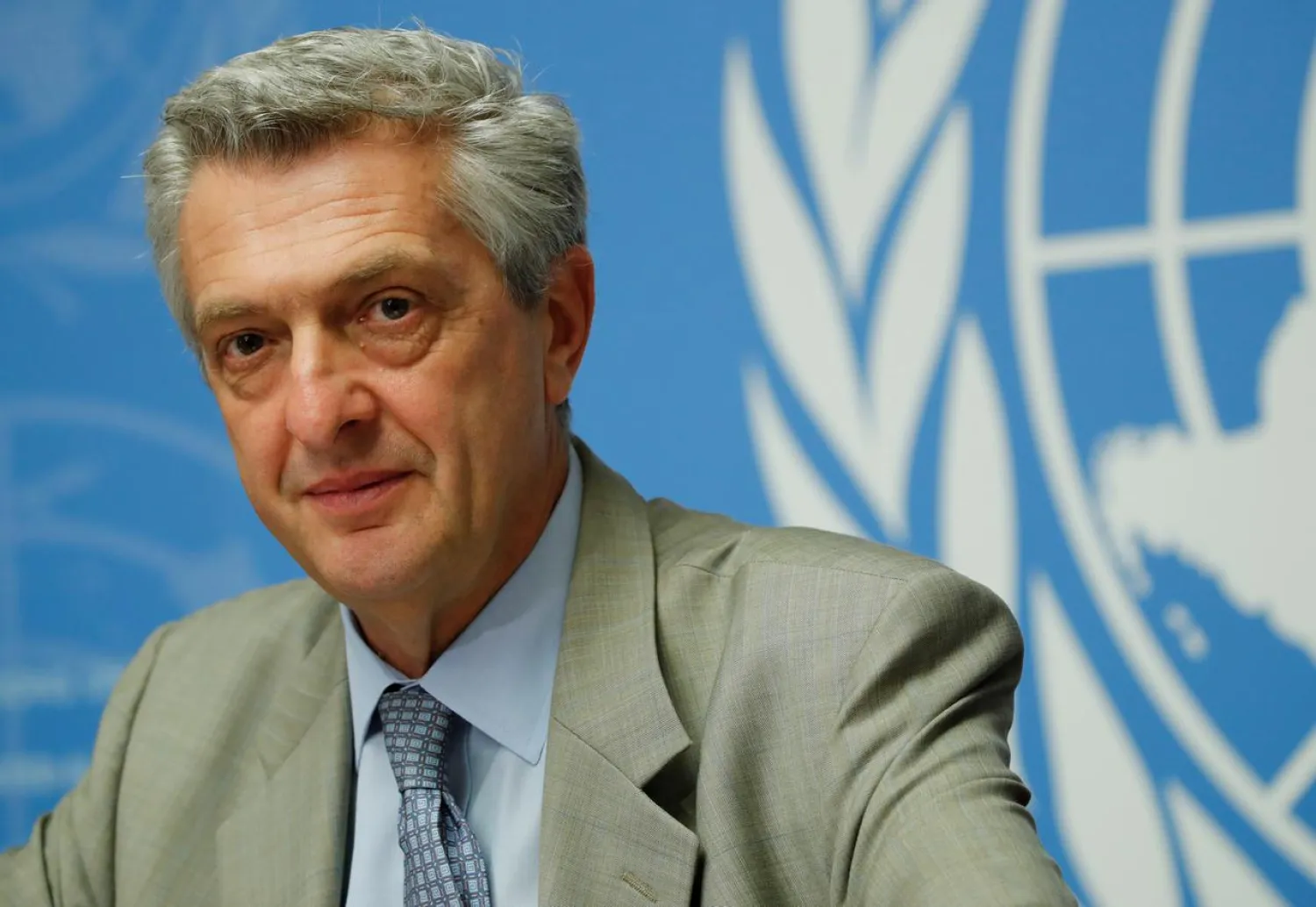
UN refugee chief Filippo Grandi attends a news conference in Geneva, Switzerland. Reuters file photo
TT

UNHCR Chief Tests Positive for Covid-19

UN refugee chief Filippo Grandi attends a news conference in Geneva, Switzerland. Reuters file photo

The UN refugee chief said Wednesday that he had tested positive for the coronavirus, after leading the first two days of the agency's main annual meeting in person.

Filippo Grandi, who kicked off UNHCR's week-long Executive Committee meeting in Geneva Monday, told participants via video-link that he would need to continue following the event from home.

"I am engaging with UNHCR's Executive Committee from home as I have to isolate after testing positive to #COVID19," he said in a tweet.

"I only have mild symptoms and hope to recover soon," he added.

Grandi had for the past two days addressed delegates from the podium in the UN Assembly Hall in Geneva.

UNHCR's executive committee is for the first time being held as a hybrid event this year due to the coronavirus pandemic.

Only limited numbers of delegates are allowed to attend physically, and distancing restrictions and mask requirements are in place.




China Reiterates Demand That Japanese PM Retract Taiwan Remarks 

Japan's Prime Minister Sanae Takaichi answers questions during a session of the House of Councillors budget committee in the National Diet in Tokyo on December 15, 2025. (AFP)
TT

China Reiterates Demand That Japanese PM Retract Taiwan Remarks 

Japan's Prime Minister Sanae Takaichi answers questions during a session of the House of Councillors budget committee in the National Diet in Tokyo on December 15, 2025. (AFP)

China on Tuesday reiterated its demand that Japan retract Prime Minister Sanae Takaichi's remarks about Taiwan, more than a month after Takaichi said an attack on the democratically governed island could be deemed an existential threat to Japan.

"On key issues, Japan is still 'squeezing toothpaste' and 'burying nails,' attempting to obfuscate and muddle through," Chinese foreign ministry spokesperson Guo Jiakun said during a regular press briefing, adding that Beijing is "firmly opposed to this."

Diplomatic relations between Tokyo and Beijing have been at their lowest in years after Takaichi suggested a hypothetical Chinese attack on Taiwan could trigger a military response from Tokyo.


Iran: IAEA Has No Right to Inspect Nuclear Sites Attacked in June 

A photo released by the Atomic Energy Organization of Iran (AEOI) shows its chief Mohammad Eslami, and IAEA director Raphael Grossi in Tehran last month.
TT

Iran: IAEA Has No Right to Inspect Nuclear Sites Attacked in June 

A photo released by the Atomic Energy Organization of Iran (AEOI) shows its chief Mohammad Eslami, and IAEA director Raphael Grossi in Tehran last month.

The UN atomic watchdog has no right to demand inspections of sites attacked by the United States and Israel during the June war, said head of the Atomic Energy Organization of Iran (AEOI), Mohammad Eslami, stressing the need for a clear protocol to allow UN inspectors in such facilities.

Speaking to reporters in Tehran, Eslami criticized the International Atomic Energy Agency’s (IAEA) call for renewed inspections of three nuclear sites hit during the 12-day war, saying Tehran had already allowed inspectors to visit undamaged sites.

On Monday, IAEA chief Rafael Grossi reiterated that Iran must allow inspectors access to the three key nuclear facilities that enrich uranium and that were hit by the US and Israel.

Speaking to RIA Novosti, Grossi said: “The agency’s activities in Iran are very limited. We are only allowed to access sites that were not hit.”

“The other three sites, Natanz, Fordow, and Isfahan, are even more significant since they still contain substantial amount of nuclear material and equipment, and we need to return there,” he urged.

In another interview with Radio France International (RFI), Grossi said: “Contact with Iran remains in place. We haven’t yet been able to restore cooperation to the required level, but I believe it is critically important.”

The dialogue continues through behind-the-scenes negotiations and confidential contacts, he added.

In response to Grossi’s demands, Eslami emphasized that inspections of facilities hit during the June war require a clear and defined protocol, reported the state-run ISNA agency.

“The UN agency, which has issued no condemnation [regarding Israel and US attacks on Iran in June] and has no established guidelines, has no right to claim it intends to conduct inspections,” he added.

“Pressure exerted on us under the influence of Israel, three European countries, and the United States has no impact on Iran. It is the agency that must answer to Iran and to the world,” he stressed.

Eslami also said that all of Iran’s nuclear facilities are fully registered with and have been under IAEA supervision.

“The current situation demands accountability from the agency, not further questioning of Iran,” he said, calling on the IAEA to clarify its position, explain why no condemnation was issued, and specify what procedures it intends to follow.

Also in Tehran, AEOI spokesperson Behrouz Kamalvandi said there are currently no IAEA inspections under way, adding that inspections carried out in recent weeks were conducted with the permission of the Supreme National Security Council of Iran and in line with the law on suspending cooperation with the IAEA.

He said all of those inspections were related to industrial matters at the sites that had not been attacked in June.

“Measures must definitely be considered regarding facilities that have been attacked,” he said, stressing that the safeguards agreement does not contain provisions for wartime conditions, and therefore, an understanding must be reached on this issue.

In such circumstances, he added, security becomes the most important matter and negotiations must be conducted with a security-oriented approach.


Taiwan Says Its Military Can Respond Rapidly to Any Sudden Chinese Attack 

People walk past a Taiwanese flag in New Taipei City. (AFP/Jiji Press)
TT

Taiwan Says Its Military Can Respond Rapidly to Any Sudden Chinese Attack 

People walk past a Taiwanese flag in New Taipei City. (AFP/Jiji Press)

Taiwan's military can respond rapidly to any sudden Chinese attack with all units able to operate under a decentralized mode of command without awaiting orders from above, Taipei's defense ministry said in a report to lawmakers.

Democratically-governed Taiwan, which Beijing views as its own territory, has repeatedly warned that China could try to suddenly shift its regular drills into active combat mode to catch Taiwan and its international supporters off guard.

China's military operates around Taiwan on an almost daily basis, in what Taipei says is part of a "grey zone" harassment and pressure campaign that stops short of actual combat but is designed to wear out Taiwan's armed forces by putting them constantly on alert.

The defense ministry said in its report that the frequency and scale of China's military activities have increased year by year, including their regular "joint combat readiness patrols".

The military has a standard operating practice on how to raise its combat alert level in case Chinese exercises move "from drill to war", the ministry added.

"If the enemy suddenly launches an attack, all units are to implement 'distributed control' without waiting for orders and, under a 'decentralized' mode of command, carry out their combat missions," it said, without giving details.

Defense Minister Wellington Koo is scheduled to take questions from lawmakers on the report on Wednesday.

PRACTICE ATTACKS

China has also been practicing how to attack Taiwan, and sending its warships further and further out into the Pacific and down towards Australia and New Zealand, the ministry added.

"The Chinese communists have never renounced the use of force to annex Taiwan and continue to intensify joint training across services, shifting from purely military drills to routine, multi-service, real-combat-oriented exercises."

Taiwan's government rejects Beijing's sovereignty claims, saying only the island's people can decide their future.

On Monday, China's defense ministry said Taiwan President Lai Ching-te was "hyping up" the threat from China and "peddling war anxiety".

"We hope that the broad mass of Taiwan compatriots will clearly recognize the extreme danger and harmfulness of the Lai authorities' frantic 'preparing for war to seek independence'," the ministry said in a statement.