


Less Money but Lots of Ideas: How the Pandemic Transfer Window Unfolded

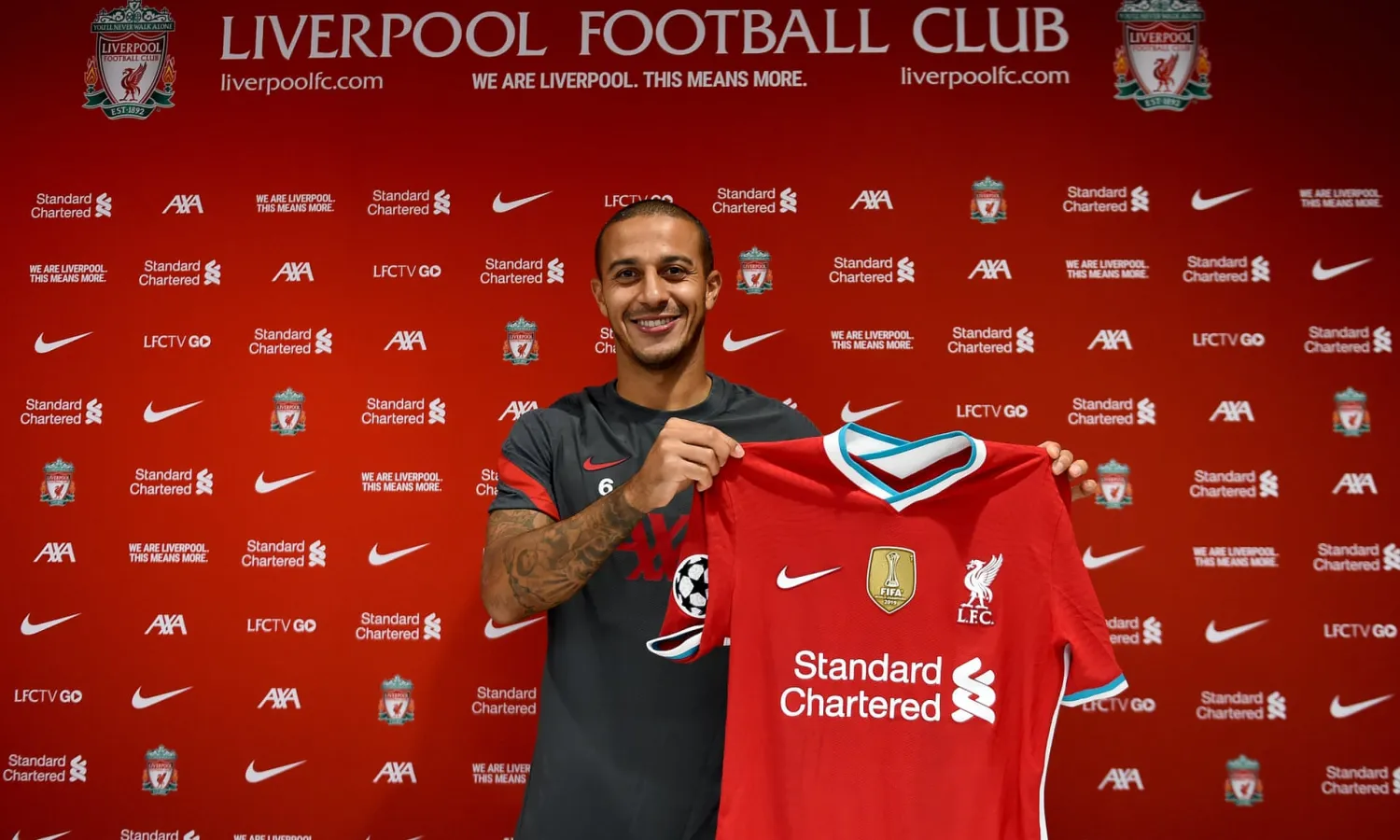
Liverpool pulled off a coup in signing Thiago Alcântara Photograph: Andrew Powell/Liverpool FC/Getty Images
TT

Less Money but Lots of Ideas: How the Pandemic Transfer Window Unfolded

Liverpool pulled off a coup in signing Thiago Alcântara Photograph: Andrew Powell/Liverpool FC/Getty Images

It was the end of April and Juventus’s sporting director, Fabio Paratici, was talking about the upcoming transfer window for the first time: “We will have to be creative, imaginative.” He was absolutely right. More ideas, less money.

Five months have passed since then and we have just been through an extremely long and intense transfer window. It was unique because the circumstances had changed. There were some great ideas, although not all of them came through. It was a stop-start window, at times coming to a complete standstill, at others exhilarating. Above all, it was a window in line with the summer of a pandemic – it changed the world and therefore the transfer market.

Many clubs’ resources were limited by La Liga’s strict economic control and salary caps applied to every club, all of which found their income heavily hit by the coronavirus crisis. Barcelona, who on the final day of the window announced losses of €97m (£88m) over the financial year, needed to move players on and reduce their wage bill in order to bring new signings in.

The Spanish giants could only get Sergiño Dest once they had sold Nélson Semedo and unable to force Ousmane Dembélé or Samuel Umtiti out or to raise greater funds on those who departed were forced to abandon negotiations for Eric García and Memphis Depay on the final day. Real Madrid have given the world the concept of galácticos but this time they did not sign a single player, determined as they were to reduce costs, stabilize and consolidate. Real were hoping for a discounted fee because of Covid-19 and maybe thought that they could sign Jadon Sancho for €90m plus bonuses in late September. “It was so close to being done, the player was disappointed,” someone close to the England international kept saying for months. But Dortmund were never going to give a discount to anyone.

Manchester City managed the money available well, Arsenal landed Thomas Partey by paying the release clause of €50m in one installment, which surprised Atlético Madrid, who had not expected this to happen five hours before the window closed. The Partey deal in many ways reflect the way transfers are seen on social media these days. Simply reporting that Atlético were unimpressed seemed to anger some Arsenal fans, but then the transfer window on social media is also like this: dreams, intoxicating moments, collapses, and even some insults.

In the end no one could deny the Arsenal fans their wildest dream. The club paid the full clause out of the blue, without any negotiations. That made the dream a reality. Atlético’s directors were upset, but Arsenal’s top-secret strategy had been perfect: ingenuity and creativity is what made the difference in this window.

Chelsea were the exception globally, conducting an impressive transfer window despite the pandemic, planned well in advance. Roman Abramovich was clear: we only buy the top targets, no plan B thank you very much. It was a good year to buy high-quality players – as there was less competition – to bridge the gap to the other top teams in England.

No one shopped like the Blues and an array of sporting directors across the world were amazed when talking about Abramovich’s spending: not only signing Hakim Ziyech, Timo Werner, Kai Havertz, Ben Chilwell, Thiago Silva, and Édouard Mendy but also blocking the offer from Bayern Munich to sign Callum Hudson-Odoi late in the window. It was a significant offer but the player decided to stay with his manager, Frank Lampard, who asked the board not to sell him.

This was another feature of the transfer window, calls in the middle of the night, such as the one about the Havertz deal being concluded at half-time of the Champions League final between Bayern Munich and Paris Saint-Germain. Yes, at that moment Bayer Leverkusen’s directors did call Roma: “We sold Havertz to Chelsea, it’s all done, we want Patrik Schick.” Two weeks later both deals were official.

But it was Liverpool who made the deal of the year. In June, Thiago Alcântara had shown up at Bayern Munich’s offices to sign an extension with a club photographer present. Instead he surprised everyone by saying: “I want to think about it, I need to talk about it with my family, I’ll update you all tomorrow.”

Twenty-four hours later, he turned up at Säbener Strasse again to talk to Bayern’s directors and with tears in his eyes said that he wanted to leave. Video calls with Jürgen Klopp had convinced and enthralled him, much more than Barcelona’s last-minute attempts. When I had the numbers of the Thiago deal confirmed to me I couldn’t quite believe it. Once the details were out there my iPhone exploded with joyous Liverpool fans: the transfer window on social media is – thankfully – also like this.

Acquiring a player of Thiago’s quality for €25m plus bonuses is extraordinary. Taking advantage of opportunities was decisive this window. Real Madrid had to sell because of substantial losses and Tottenham pounced, signing Sergio Reguilón, a left-back with fantastic potential. Antonio Conte’s Internazionale also benefited, acquiring Achraf Hakimi for €40m. The Moroccan already has a goal and two assists in 120 minutes of Serie A football.

Ingenuity and winning strategies – that was the transfer window in the time of Covid. There were very few cash investments, even top clubs in the Premier League and La Liga were forced to sign players with options to buy next summer, when they have been used to spending €200m or €300m in one pre-season. Juventus, for example, signed Federico Chiesa from Fiorentina for a €2m loan fee to be paid now, €8m payable for the second year of the loan in June 2021, as well as €40m as an obligation to buy in 2022 and another €10m in bonuses to be paid over four years.

An eye-catching payment schedule, but necessary in a market so devoid of cash that Gareth Bale returned to Spurs on loan and Luis Suárez signed for Atlético Madrid from Barcelona on a free transfer. A year ago, those deals would have been unthinkable. Without the virus, Juventus would have offered €100m to Manchester United for Paul Pogba. They had put the money aside but could not invest it in one installment and so had to give up on the deal.

Other special mentions must go to Juve and Manchester United. The bianconeri acquired the Swedish jewel Dejan Kulusevski in a deal from Atalanta. He was born in 2000, has an incredible future ahead of him and cost €45m with add-ons included. He is so good that Cristiano Ronaldo has already fallen in love with him.

Manchester United, meanwhile, signed the 18-year-old Amad Traoré from Atalanta by investing €30m plus €10m in add-ons. On the morning of deadline day, the United manager, Ole Gunnar Solskjær, told him: “You are a talent for the future, we’ll wait for you.”

Traoré will arrive in Manchester in January. United’s scouting team considers him to be one of the top-three talents born in 2002 in the world despite playing only 25 minutes of Serie A football (during which time he scored).

Everton also deserve to be praised – a manager with not so much money but lots of ideas made a difference. Carlo Ancelotti bombarded players such as James Rodríguez and Allan with phone calls and messages to convince them to join him. He managed to and now he is dreaming of achieving big things with Everton. The Carlo factor made a difference.

All in all, it was a difficult market and very hard for everyone involved. The next summer one could be even worse for those clubs who could lose players on Bosman deals at the end of their contracts. Like a certain Lionel Messi, free to sign a pre-contract with any club in January. They are getting ready in Manchester, just as they are in Paris, but that is a whole different story.

(The Guardian)


Shakhtar Boss Pays Ukrainian Racer $200,000 After Games Disqualification

Ukrainian President Volodymyr Zelenskiy holds helmet as he meets with a Ukrainian skeleton racer Vladyslav Heraskevych , who was disqualified from the Olympic skeleton competition over his "helmet of remembrance" depicting athletes killed since Russia's invasion and his father and coach, Mykhailo Heraskevych, amid Russia's attack on Ukraine, in Munich, Germany February 13, 2026. (Ukrainian Presidential Press Service/Handout via Reuters)
TT

Shakhtar Boss Pays Ukrainian Racer $200,000 After Games Disqualification

Ukrainian President Volodymyr Zelenskiy holds helmet as he meets with a Ukrainian skeleton racer Vladyslav Heraskevych , who was disqualified from the Olympic skeleton competition over his "helmet of remembrance" depicting athletes killed since Russia's invasion and his father and coach, Mykhailo Heraskevych, amid Russia's attack on Ukraine, in Munich, Germany February 13, 2026. (Ukrainian Presidential Press Service/Handout via Reuters)

The owner of ‌Ukrainian football club Shakhtar Donetsk has donated more than $200,000 to skeleton racer Vladyslav Heraskevych after the athlete was disqualified from the Milano Cortina Winter Games before competing over the use of a helmet depicting Ukrainian athletes killed in the war with Russia, the club said on Tuesday.

The 27-year-old Heraskevych was disqualified last week when the International Bobsleigh and Skeleton Federation jury ruled that imagery on the helmet — depicting athletes killed since Russia invaded Ukraine in 2022 — breached rules on athletes' expression at ‌the Games.

He ‌then lost an appeal at the Court ‌of ⁠Arbitration for Sport hours ⁠before the final two runs of his competition, having missed the first two runs due to his disqualification.

Heraskevych had been allowed to train with the helmet that displayed the faces of 24 dead Ukrainian athletes for several days in Cortina d'Ampezzo where the sliding center is, but the International Olympic Committee then ⁠warned him a day before his competition ‌started that he could not wear ‌it there.

“Vlad Heraskevych was denied the opportunity to compete for victory ‌at the Olympic Games, yet he returns to Ukraine a ‌true winner," Shakhtar President Rinat Akhmetov said in a club statement.

"The respect and pride he has earned among Ukrainians through his actions are the highest reward. At the same time, I want him to ‌have enough energy and resources to continue his sporting career, as well as to fight ⁠for truth, freedom ⁠and the remembrance of those who gave their lives for Ukraine," he said.

The amount is equal to the prize money Ukraine pays athletes who win a gold medal at the Games.

The case dominated headlines early on at the Olympics, with IOC President Kirsty Coventry meeting Heraskevych on Thursday morning at the sliding venue in a failed last-minute attempt to broker a compromise.

The IOC suggested he wear a black armband and display the helmet before and after the race, but said using it in competition breached rules on keeping politics off fields of play. Heraskevych also earned praise from Ukraine President Volodymyr Zelenskiy.


Speed Skating-Italy Clinch Shock Men’s Team Pursuit Gold, Canada Successfully Defend Women’s Title

 Team Italy with Davide Ghiotto, Andrea Giovannini, Michele Malfatti, celebrate winning the gold medal on the podium of the men's team pursuit speed skating race at the 2026 Winter Olympics, in Milan, Italy, Tuesday, Feb. 17, 2026. (AP)
Team Italy with Davide Ghiotto, Andrea Giovannini, Michele Malfatti, celebrate winning the gold medal on the podium of the men's team pursuit speed skating race at the 2026 Winter Olympics, in Milan, Italy, Tuesday, Feb. 17, 2026. (AP)
TT

Speed Skating-Italy Clinch Shock Men’s Team Pursuit Gold, Canada Successfully Defend Women’s Title

 Team Italy with Davide Ghiotto, Andrea Giovannini, Michele Malfatti, celebrate winning the gold medal on the podium of the men's team pursuit speed skating race at the 2026 Winter Olympics, in Milan, Italy, Tuesday, Feb. 17, 2026. (AP)
Team Italy with Davide Ghiotto, Andrea Giovannini, Michele Malfatti, celebrate winning the gold medal on the podium of the men's team pursuit speed skating race at the 2026 Winter Olympics, in Milan, Italy, Tuesday, Feb. 17, 2026. (AP)

An inspired Italy delighted the home crowd with a stunning victory in the Olympic men's team pursuit final as

Canada's Ivanie Blondin, Valerie Maltais and Isabelle Weidemann delivered another seamless performance to beat the Netherlands in the women's event and retain their title ‌on Tuesday.

Italy's ‌men upset the US who ‌arrived ⁠at the Games ⁠as world champions and gold medal favorites.

Spurred on by double Olympic champion Francesca Lollobrigida, the Italian team of Davide Ghiotto, Andrea Giovannini and Michele Malfatti electrified a frenzied arena as they stormed ⁠to a time of three ‌minutes 39.20 seconds - ‌a commanding 4.51 seconds clear of the ‌Americans with China taking bronze.

The roar inside ‌the venue as Italy powered home was thunderous as the crowd rose to their feet, cheering the host nation to one ‌of their most special golds of a highly successful Games.

Canada's women ⁠crossed ⁠the line 0.96 seconds ahead of the Netherlands, stopping the clock at two minutes 55.81 seconds, and

Japan rounded out the women's podium by beating the US in the Final B.

It was only Canada's third gold medal of the Games, following Mikael Kingsbury's win in men's dual moguls and Megan Oldham's victory in women's freeski big air.


Lindsey Vonn Back in US Following Crash in Olympic Downhill 

Milano Cortina 2026 Olympics - Alpine Skiing - Women's Downhill 3rd Official Training - Tofane Alpine Skiing Centre, Belluno, Italy - February 07, 2026. Lindsey Vonn of United States in action during training. (Reuters)
TT

Lindsey Vonn Back in US Following Crash in Olympic Downhill 

Milano Cortina 2026 Olympics - Alpine Skiing - Women's Downhill 3rd Official Training - Tofane Alpine Skiing Centre, Belluno, Italy - February 07, 2026. Lindsey Vonn of United States in action during training. (Reuters)

Lindsey Vonn is back home in the US following a week of treatment at a hospital in Italy after breaking her left leg in the Olympic downhill at the Milan Cortina Games.

“Haven’t stood on my feet in over a week... been in a hospital bed immobile since my race. And although I’m not yet able to stand, being back on home soil feels amazing,” Vonn posted on X with an American flag emoji. “Huge thank you to everyone in Italy for taking good care of me.”

The 41-year-old Vonn suffered a complex tibia fracture that has already been operated on multiple times following her Feb. 8 crash. She has said she'll need more surgery in the US.

Nine days before her fall in Cortina d'Ampezzo, Italy, Vonn ruptured the ACL in her left knee in another crash in Switzerland.

Even before then, all eyes had been on her as the feel-good story heading into the Olympics for her comeback after nearly six years of retirement.
