


Spy Agency Ducks Questions About 'Back Doors' in Tech Products

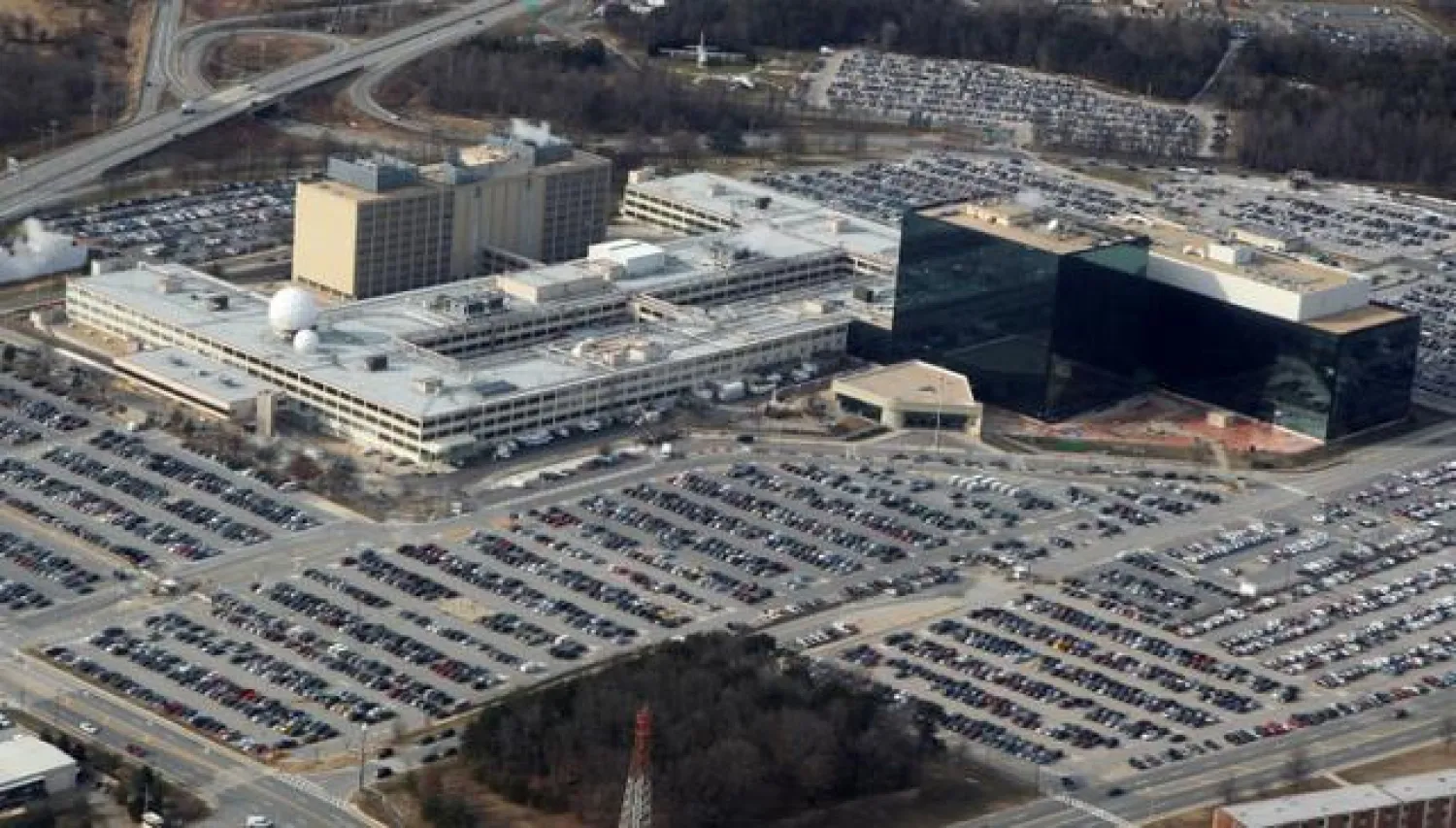
FILE PHOTO: FILE PHOTO: An aerial view of the National Security Agency (NSA) headquarters in Ft. Meade, Maryland, US January 29, 2010. REUTERS/Larry Downing/File Photo/File Photo
TT

Spy Agency Ducks Questions About 'Back Doors' in Tech Products

FILE PHOTO: FILE PHOTO: An aerial view of the National Security Agency (NSA) headquarters in Ft. Meade, Maryland, US January 29, 2010. REUTERS/Larry Downing/File Photo/File Photo

The NSA has long sought agreements with technology companies under which they would build special access for the spy agency into their products, according to disclosures by former NSA contractor Edward Snowden, Reuters reported.

These so-called back doors enable the NSA and other agencies to scan large amounts of traffic without a warrant. Agency advocates said the practice has eased collection of vital intelligence in other countries, including interception of terrorist communications.

The agency developed new rules for such practices after the Snowden leaks in order to reduce the chances of exposure and compromise, three former intelligence officials told Reuters. But aides to Senator Ron Wyden, a leading Democrat on the Senate Intelligence Committee, say the NSA has stonewalled on providing even the gist of the new guidelines.

“Secret encryption back doors are a threat to national security and the safety of our families – it’s only a matter of time before foreign hackers or criminals exploit them in ways that undermine American national security,” Wyden told Reuters.

“The government shouldn’t have any role in planting secret back doors in encryption technology used by Americans.”

Three former senior intelligence agency figures also told Reuters that the NSA now requires that before a back door is sought, the agency must weigh the potential fallout and arrange for some kind of warning if the back door gets discovered and manipulated by adversaries.

The continuing quest for hidden access comes as governments in the United States, the United Kingdom and elsewhere seek laws that would require tech companies to let governments see unencrypted traffic. Defenders of strong encryption said the NSA’s sometimes-botched efforts to install back doors in commercial products show the dangers of such requirements.

Critics of the NSA’s practices said they create targets for adversaries, undermine trust in US technology and compromise efforts to persuade allies to reject Chinese technology that could be used for espionage, since US gear can also be turned to such purposes.

In at least one instance, a foreign adversary was able to take advantage of a back door invented by US intelligence, according to Juniper Networks Inc, which said in 2015 its equipment had been compromised.

In a previously unreported statement to members of Congress in July seen by Reuters, Juniper said an unnamed national government had converted the mechanism first created by the NSA. The NSA told Wyden staffers in 2018 that there was a “lessons learned” report about the Juniper incident and others, according to Wyden spokesman Keith Chu.

“NSA now asserts that it cannot locate this document,” Chu told Reuters. NSA and Juniper declined to comment on the matter.

The NSA has pursued many means for getting inside equipment, sometimes striking commercial deals to induce companies to insert back doors, and in other cases manipulating standards - namely by setting processes so that companies unknowingly adopt software that NSA experts can break, according to reports from Reuters and other media outlets.

The tactics drew widespread attention starting in 2013, when Snowden leaked documents referencing these practices.

Tech companies that were later exposed for having cut deals that allowed backdoor access, including security pioneer RSA, lost credibility and customers. Other US firms lost business overseas as customers grew wary of the NSA’s reach.

According to Reuters, all of that prompted a White House policy review.

“There were all sorts of ‘lessons learned’ processes,” said former White House cybersecurity coordinator Michael Daniel, who was advising then-president Barack Obama when the Snowden files erupted. A special commission appointed by Obama said the government should never “subvert” or “weaken” tech products or compromise standards.

The White House did not publicly embrace that recommendation, instead beefing up review procedures for whether to use newly discovered software flaws for offensive cyber operations or get them fixed to improve defense, Daniel and others said.

The secret government contracts for special access remained outside of the formal review.

“The NSA had contracts with companies across the board to help them out, but that’s extremely protected,” said an intelligence community lawyer.

The starkest example of the risks inherent in the NSA’s approach involved an encryption-system component known as Dual Elliptic Curve, or Dual EC. The intelligence agency worked with the Commerce Department to get the technology accepted as a global standard, but cryptographers later showed that the NSA could exploit Dual EC to access encrypted data.

RSA accepted a $10 million contract to incorporate Dual EC into a widely used web security system, Reuters reported in 2013. RSA said publicly that it would not have knowingly installed a back door, but its reputation was tarnished and the company was sold.

Juniper Networks got into hot water over Dual EC two years later. At the end of 2015, the maker of internet switches disclosed that it had detected malicious code in some firewall products. Researchers later determined that hackers had turned the firewalls into their own spy tool by altering Juniper’s version of Dual EC.

Juniper said little about the incident. But the company acknowledged to security researcher Andy Isaacson in 2016 that it had installed Dual EC as part of a “customer requirement,” according to a previously undisclosed contemporaneous message seen by Reuters. Isaacson and other researchers believe that customer was a US government agency, since only the US is known to have insisted on Dual EC elsewhere.

Juniper has never identified the customer, and declined to comment for this story.

Likewise, the company never identified the hackers. But two people familiar with the case told Reuters that investigators concluded the Chinese government was behind it. They declined to detail the evidence they used.

The Chinese government has long denied involvement in hacking of any kind. In a statement to Reuters, the Chinese foreign ministry said that cyberspace is “highly virtual and difficult to trace. It is extremely irresponsible to make accusations of hacker attacks without complete and conclusive evidence. At the same time, we also noticed that the report mentioned that it was the US intelligence agency - the National Security Agency - that created this backdoor technology.”

Wyden remains determined to find out exactly what happened at Juniper and what has changed since as the encryption wars heat up.

This July, in previously unreported responses to questions from Wyden and allies in Congress, Juniper said that an unidentified nation was believed to be behind the hack into its firewall code but that it had never investigated why it installed Dual EC in the first place.

“We understand that there is a vigorous policy debate about whether and how to provide government access to encrypted content,” it said in a July letter.

“Juniper does not and will not insert back doors into its products and we oppose any legislation mandating back doors.”

A former senior NSA official told Reuters that many tech companies remain nervous about working covertly with the government. But the agencies’ efforts continue, the person said, because special access is seen as too valuable to give up.



India Eyes $200B in Data Center Investments as It Ramps Up Its AI Hub Ambitions

FILE -Google CEO Sundar Pichai, right, interacts with India's Minister for Information and Technology Ashwini Vaishnaw during Google for India 2022 event in New Delhi, Dec. 19, 2022. (AP Photo/Manish Swarup), File)
TT

India Eyes $200B in Data Center Investments as It Ramps Up Its AI Hub Ambitions

FILE -Google CEO Sundar Pichai, right, interacts with India's Minister for Information and Technology Ashwini Vaishnaw during Google for India 2022 event in New Delhi, Dec. 19, 2022. (AP Photo/Manish Swarup), File)

India is hoping to garner as much as $200 billion in investments for data centers over the next few years as it scales up its ambitions to become a hub for artificial intelligence, the country’s minister for electronics and information technology said Tuesday.

The investments underscore the reliance of tech titans on India as a key technology and talent base in the global race for AI dominance. For New Delhi, they bring in high-value infrastructure and foreign capital at a scale that can accelerate its digital transformation ambitions.

The push comes as governments worldwide race to harness AI's economic potential while grappling with job disruption, regulation and the growing concentration of computing power in a few rich countries and companies.

“Today, India is being seen as a trusted AI partner to the Global South nations seeking open, affordable and development-focused solutions,” Ashwini Vaishnaw told The Associated Press in an email interview, as New Delhi hosts a major AI Impact Summit this week drawing participation from at least 20 global leaders and a who’s who of the tech industry.

In October, Google announced a $15 billion investment plan in India over the next five years to establish its first artificial intelligence hub in the South Asian country. Microsoft followed two months later with its biggest-ever Asia investment announcement of $17.5 billion to advance India’s cloud and artificial intelligence infrastructure over the next four years.

Amazon too has committed $35 billion investment in India by 2030 to expand its business, specifically targeting AI-driven digitization. The cumulative investments are part of $200 billion in investments that are in the pipeline and New Delhi hopes would flow in.

Vaishnaw said India’s pitch is that artificial intelligence must deliver measurable impacts at scale rather than remain an elite technology.

“A trusted AI ecosystem will attract investment and accelerate adoption,” he said, adding that a central pillar of India’s strategy to capitalize on the use of AI is building infrastructure.

The government recently announced a long-term tax holiday for data centers as it hopes to provide policy certainty and attract global capital.

Vaishnaw said the government has already operationalized a shared computing facility with more than 38,000 graphics processing units, or GPUs, allowing startups, researchers and public institutions to access high-end computing without heavy upfront costs.

“AI must not become exclusive. It must remain widely accessible,” he said.

Alongside the infrastructure drive, India is backing the development of sovereign foundational AI models trained on Indian languages and local contexts. Some of these models meet global benchmarks and in certain tasks rival widely used large language models, Vaishnaw said.

India is also seeking a larger role in shaping how AI is built and deployed globally as the country doesn’t see itself strictly as a “rule maker or rule taker,” according to Vaishnaw, but an active participant in setting practical, workable norms while expanding its AI services footprint worldwide.

“India will become a major provider of AI services in the near future,” he said, describing a strategy that is “self-reliant yet globally integrated” across applications, models, chips, infrastructure and energy.

Investor confidence is another focus area for New Delhi as global tech funding becomes more cautious.

Vaishnaw said the technology’s push is backed by execution, pointing to the Indian government's AI Mission program which emphasizes sector specific solutions through public-private partnerships.

The government is also betting on reskilling its workforce as global concerns grow that AI could disrupt white collar and technology jobs. New Delhi is scaling AI education across universities, skilling programs and online platforms to build a large AI-ready talent pool, the minister said.

Widespread 5G connectivity across the country and a young, tech-savvy population are expected to help with the adoption of AI at a faster pace, he added.

Balancing innovation with safeguards remains a challenge though, as AI expands into sensitive sectors such as governance, health care and finance.

Vaishnaw outlined a fourfold strategy that includes implementable global frameworks, trusted AI infrastructure, regulation of harmful misinformation and stronger human and technical capacity to hedge the impact.

“The future of AI should be inclusive, distributed and development-focused,” he said.


Report: SpaceX Competing to Produce Autonomous Drone Tech for Pentagon 

The SpaceX logo is seen in this illustration taken, March 10, 2025. (Reuters)
TT

Report: SpaceX Competing to Produce Autonomous Drone Tech for Pentagon 

The SpaceX logo is seen in this illustration taken, March 10, 2025. (Reuters)

Elon Musk's SpaceX and its wholly-owned subsidiary xAI are competing in a secret new Pentagon contest to produce voice-controlled, autonomous drone swarming technology, Bloomberg News reported on Monday, citing people familiar with the matter.

SpaceX, xAI and the Pentagon's defense innovation unit did not immediately respond to requests for comment. Reuters could not independently verify the report.

Texas-based SpaceX recently acquired xAI in a deal that combined Musk's major space and defense contractor with the billionaire entrepreneur's artificial intelligence startup. It occurred ahead of SpaceX's planned initial public offering this year.

Musk's companies are reportedly among a select few chosen to participate in the $100 million prize challenge initiated in January, according to the Bloomberg report.

The six-month competition aims to produce advanced swarming technology that can translate voice commands into digital instructions and run multiple drones, the report said.

Musk was among a group of AI and robotics researchers who wrote an open letter in 2015 that advocated a global ban on “offensive autonomous weapons,” arguing against making “new tools for killing people.”

The US also has been seeking safe and cost-effective ways to neutralize drones, particularly around airports and large sporting events - a concern that has become more urgent ahead of the FIFA World Cup and America250 anniversary celebrations this summer.

The US military, along with its allies, is now racing to deploy the so-called “loyal wingman” drones, an AI-powered aircraft designed to integrate with manned aircraft and anti-drone systems to neutralize enemy drones.

In June 2025, US President Donald Trump issued the Executive Order (EO) “Unleashing American Drone Dominance” which accelerated the development and commercialization of drone and AI technologies.


SVC Develops AI Intelligence Platform to Strengthen Private Capital Ecosystem

The platform offers customizable analytical dashboards that deliver frequent updates and predictive insights- SPA
TT

SVC Develops AI Intelligence Platform to Strengthen Private Capital Ecosystem

The platform offers customizable analytical dashboards that deliver frequent updates and predictive insights- SPA

Saudi Venture Capital Company (SVC) announced the launch of its proprietary intelligence platform, Aian, developed in-house using Saudi national expertise to enhance its institutional role in developing the Kingdom’s private capital ecosystem and supporting its mandate as a market maker guided by data-driven growth principles.

According to a press release issued by the SVC today, Aian is a custom-built AI-powered market intelligence capability that transforms SVC’s accumulated institutional expertise and detailed private market data into structured, actionable insights on market dynamics, sector evolution, and capital formation. The platform converts institutional memory into compounding intelligence, enabling decisions that integrate both current market signals and long-term historical trends, SPA reported.

Deputy CEO and Chief Investment Officer Nora Alsarhan stated that as Saudi Arabia’s private capital market expands, clarity, transparency, and data integrity become as critical as capital itself. She noted that Aian represents a new layer of national market infrastructure, strengthening institutional confidence, enabling evidence-based decision-making, and supporting sustainable growth.

By transforming data into actionable intelligence, she said, the platform reinforces the Kingdom’s position as a leading regional private capital hub under Vision 2030.

She added that market making extends beyond capital deployment to shaping the conditions under which capital flows efficiently, emphasizing that the next phase of market development will be driven by intelligence and analytical insight alongside investment.

Through Aian, SVC is building the knowledge backbone of Saudi Arabia’s private capital ecosystem, enabling clearer visibility, greater precision in decision-making, and capital formation guided by insight rather than assumption.

Chief Strategy Officer Athary Almubarak said that in private capital markets, access to reliable insight increasingly represents the primary constraint, particularly in emerging and fast-scaling markets where disclosures vary and institutional knowledge is fragmented.

She explained that for development-focused investment institutions, inconsistent data presents a structural challenge that directly impacts capital allocation efficiency and the ability to crowd in private investment at scale.

She noted that SVC was established to address such market frictions and that, as a government-backed investor with an explicit market-making mandate, its role extends beyond financing to building the enabling environment in which private capital can grow sustainably.

By integrating SVC’s proprietary portfolio data with selected external market sources, Aian enables continuous consolidation and validation of market activity, producing a dynamic representation of capital deployment over time rather than relying solely on static reporting.

The platform offers customizable analytical dashboards that deliver frequent updates and predictive insights, enabling SVC to identify priority market gaps, recalibrate capital allocation, design targeted ecosystem interventions, and anchor policy dialogue in evidence.

The release added that Aian also features predictive analytics capabilities that anticipate upcoming funding activity, including projected investment rounds and estimated ticket sizes. In addition, it incorporates institutional benchmarking tools that enable structured comparisons across peers, sectors, and interventions, supporting more precise, data-driven ecosystem development.