
Brash and Pugnacious, Trump Has Presided over a Tumultuous Presidency

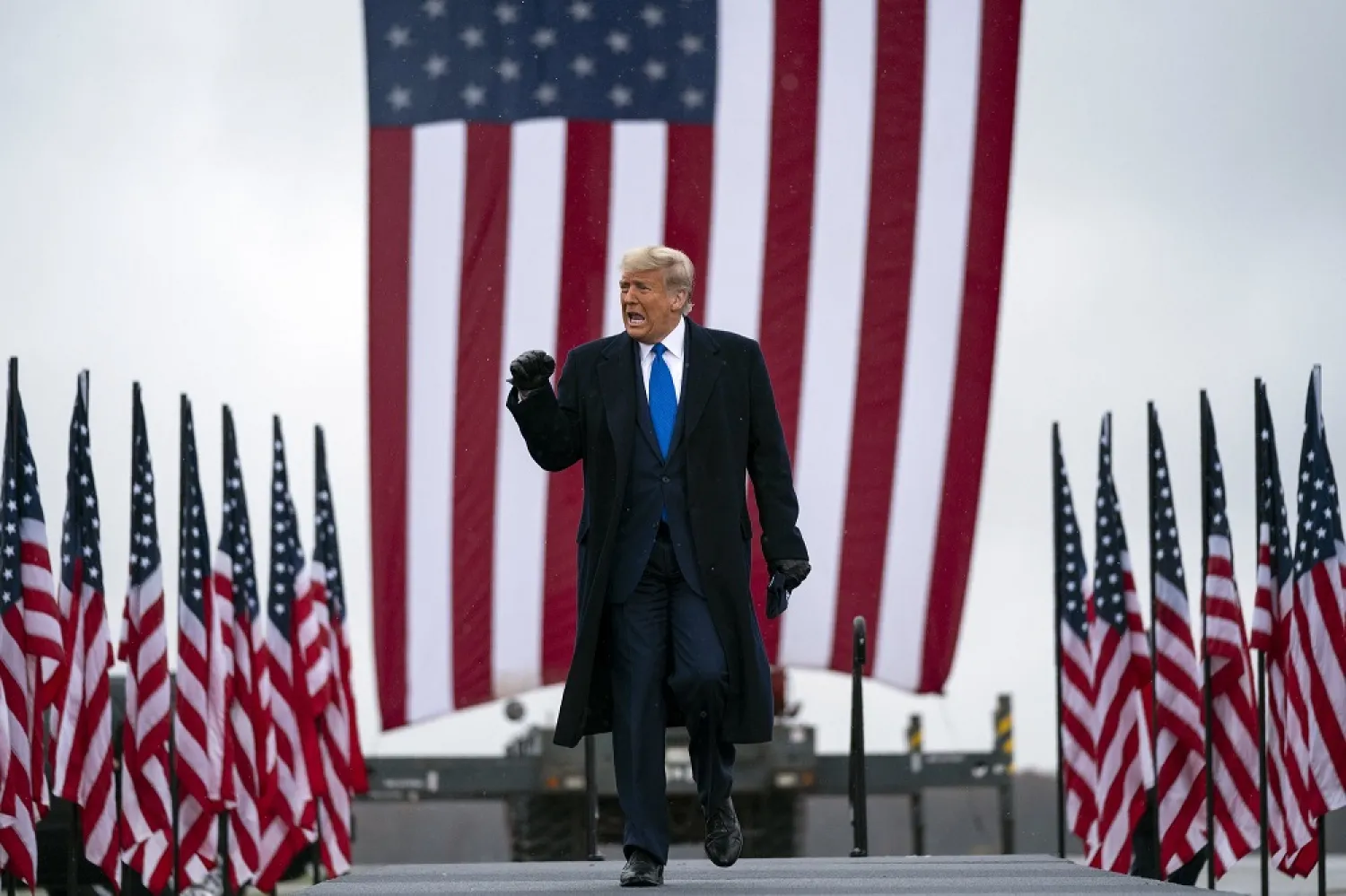
President Donald Trump arrives at Capital Region International Airport for a campaign rally, Oct. 27, 2020, in Lansing, Mich. (AP)
TT

Brash and Pugnacious, Trump Has Presided over a Tumultuous Presidency

President Donald Trump arrives at Capital Region International Airport for a campaign rally, Oct. 27, 2020, in Lansing, Mich. (AP)

Businessman-turned-politician Donald Trump has promoted “America First” nationalism, withstood impeachment and a bout with COVID-19, and taken contentious stands on race and immigration during a turbulent presidency that detractors say has flouted US democratic norms.

After decades of fame first as a brash and media-savvy New York real estate developer and then as a reality TV personality, the pugnacious Trump tapped into discontent among many Americans to become a political phenomenon unique in the country’s 244 years.

Seeking re-election on Tuesday against Democratic challenger Joe Biden, Trump initially encountered fierce resistance within the Republican Party but managed to remake it in his own image and won loyalty even among some Republicans who had once denounced him.

On Twitter and in raucous rallies, Trump eviscerated opposition Democrats and the news media as well as some fellow Republicans, Cabinet members and other officials he appointed.

“If I don’t sound like a typical Washington politician, it’s because I’m not a politician,” Trump told an Oct. 26 rally in Pennsylvania.

Trump, 74, assumed the presidency in January 2017 after his surprise victory over Democrat Hillary Clinton in November 2016. He lost the nationwide popular vote by about 3 million ballots but prevailed in pivotal battleground states to amass an Electoral College majority.

His 2016 victory made him the first US president with no prior political or military experience as he pursued a right-wing populist approach. Trump’s ascent was part of a populist wave extending from Britain’s European Union “Brexit” to the election of Brazilian far-right leader Jair Bolsonaro. Trump denounced “globalism” and focused US foreign policy around an “America First” world view.

His presidency came at a time of deep polarization in the United States and political dysfunction in Washington.

At home, Trump curtailed legal and illegal immigration and slashed the number of people admitted as refugees and asylum seekers, secured sweeping tax cuts, moved the federal judiciary including the Supreme Court dramatically rightward and rolled back environmental regulations that he called burdensome.

Abroad, Trump helped broker deals between close US ally Israel and three Arab states, abandoned international agreements that he portrayed as unfair to the United States, alienated longtime allies and praised authoritarian foreign leaders.

He showed deference to longtime US adversary Russia and its president, Vladimir Putin. US intelligence agencies concluded that Russia used a campaign of hacking and propaganda to boost Trump’s 2016 candidacy and that Moscow was interfering again during the 2020 campaign to try to denigrate Biden.

Critics including senior Democrats and former members of his own administration portrayed Trump as a peril to democracy with autocratic tendencies.

“I believe that the president is literally an existential threat to America,” Biden said of Trump last year in Iowa. “This is a guy who does everything to separate and frighten people. It’s about fear and loathing.”

“Donald Trump is the first president in my lifetime who does not try to unite the American people - does not even pretend to try,” Jim Mattis, a retired four-star Marine Corps general who served as Trump’s first defense secretary, said in June. “Instead he tries to divide us.”

But even through a parade of controversies, the passionate support of many Americans - especially white men, Christian conservatives, rural residents and people without a college education - seemed undimmed.

“I have joined the political arena so that the powerful can no longer beat up on people that cannot defend themselves,” Trump said in accepting the 2016 Republican presidential nomination. “Nobody knows the system better than me, which is why I alone can fix it.”

Democrats accused Trump of placing himself above the law and disregarding constitutional constraints on presidential powers as he ignored congressional subpoenas, complained about a “rigged” American voting system, refused to commit to a peaceful transition of power if he lost to Biden, and assailed figures in the FBI and US intelligence agencies.

Critics also denounced Trump for employing falsehoods; fact-checkers listed thousands of them during his presidency.

He pushed back at questions about his mental state.

“Actually, throughout my life, my two greatest assets have been mental stability and being, like, really smart,” Trump wrote on Twitter in 2018, describing himself as “a very stable genius.”

At rallies as a candidate and president sporting carefully coiffed golden hair, Trump soaked in the adulation of supporters, many wearing red baseball caps emblazoned with his slogan, “Make America Great Again.” They cheered his taunts against Democrats, liberals and elites, and his attacks on journalists as “the enemy of the people” and “fake news.”

Pandemic and impeachment
The coronavirus pandemic presented a challenge to Trump.

He cast doubt on protective masks, promoted unproven medicines and predicted the pathogen’s disappearance “like a miracle” - actions that many public health experts said cost lives and contributed to an economic cataclysm. About 230,000 million Americans have died from COVID-19.

Trump, who often ignored mask-wearing and social-distancing advice, disclosed on Oct. 2 that he had tested positive for the virus and then spent three days hospitalized receiving multiple COVID-19 treatments before returning to the White House.

Congressional Democrats unsuccessfully tried to remove him from office over Trump’s invitation of foreign interference in an American election. Trump last year asked Ukraine, a vulnerable US ally facing Russian aggression, to pursue an investigation into Biden and Biden’s son Hunter into unsubstantiated corruption allegations.

Trump became only the third US president to be impeached when the Democratic-led House of Representatives voted to charge him with abuse of power and obstruction of Congress over the Ukraine matter. The Republican-led Senate kept Trump in office by acquitting him at a trial in February.

Trump bristled at investigations into Russia’s role in the 2016 election. A special counsel appointed by the Justice Department, Robert Mueller, documented Russian election interference to sow discord in the United States, disparage Clinton and help Trump. Mueller detailed numerous contacts between Trump campaign figures and Russians.

Trump called the investigation a “witch hunt” and declared “complete and total exoneration” in 2019 after Mueller’s report did not accuse him or his campaign of a criminal conspiracy with Russia.

Mueller did not exonerate Trump of committing obstruction of justice in trying to impede the investigation, but Attorney General William Barr, a Trump appointee, subsequently cleared him.

Trump avoided condemning Moscow, publicly giving credence to Putin’s denials of election interference while doubting US intelligence conclusions. Trump praised Putin for his strength, part of a pattern of complimenting authoritarian leaders including North Korea’s Kim Jong Un and Rodrigo Duterte of the Philippines.

Race in America
Racial tensions simmered during Trump’s presidency.

Protests against racism and police brutality spread to many cities, sometimes accompanied by violence and looting, after incidents such as the police killing in May of George Floyd, a Black man in Minneapolis. Trump called demonstrators “thugs,” promised to maintain “law and order” and sent federal personnel onto the streets of some cities.

Critics accused Trump of pursuing policies built around “white grievance” in a nation with a growing non-white population. Even some fellow Republicans expressed unease over Trump’s failure to disavow white supremacists.

Having succeeded the first Black US president, Barack Obama, Trump erased many parts of his Democratic predecessor’s legacy. Trump walked away from an international treaty over Iran’s nuclear program and a global accord to battle climate change, reversed environmental protections and rolled back warmer ties with Cuba.

Trump’s hardline stance toward immigration was a hallmark of his presidency.

When he launched his presidential run in 2015, he promised a wall along the US-Mexican border, paid for by Mexico. Mexico refused to pay. One of the first policies he pursued as president was a travel ban on people from several Muslim-majority countries. He implemented a policy of separating some detained immigrant children from their parents.

Trump cultivated an image of a flourishing businessman and deal-maker, though he had a history of financial losses, bankruptcies and business failures. Tax documents uncovered by the New York Times in September showed Trump paid just $750 in federal income taxes in 2016 and again in 2017 - and no income taxes in 10 of the previous 15 years - mostly because he reported losing much more money than he made.

First Ramadan After Truce Brings Flicker of Joy in Devastated Gaza 

Worshippers perform evening Tarawih prayer on the first night of the holy fasting month of Ramadan at the Al-Kanz Mosque, which was damaged during the Israel-Hamas war, in Gaza City, Tuesday, Feb. 17, 2026. (AP)
TT

First Ramadan After Truce Brings Flicker of Joy in Devastated Gaza 

Worshippers perform evening Tarawih prayer on the first night of the holy fasting month of Ramadan at the Al-Kanz Mosque, which was damaged during the Israel-Hamas war, in Gaza City, Tuesday, Feb. 17, 2026. (AP)

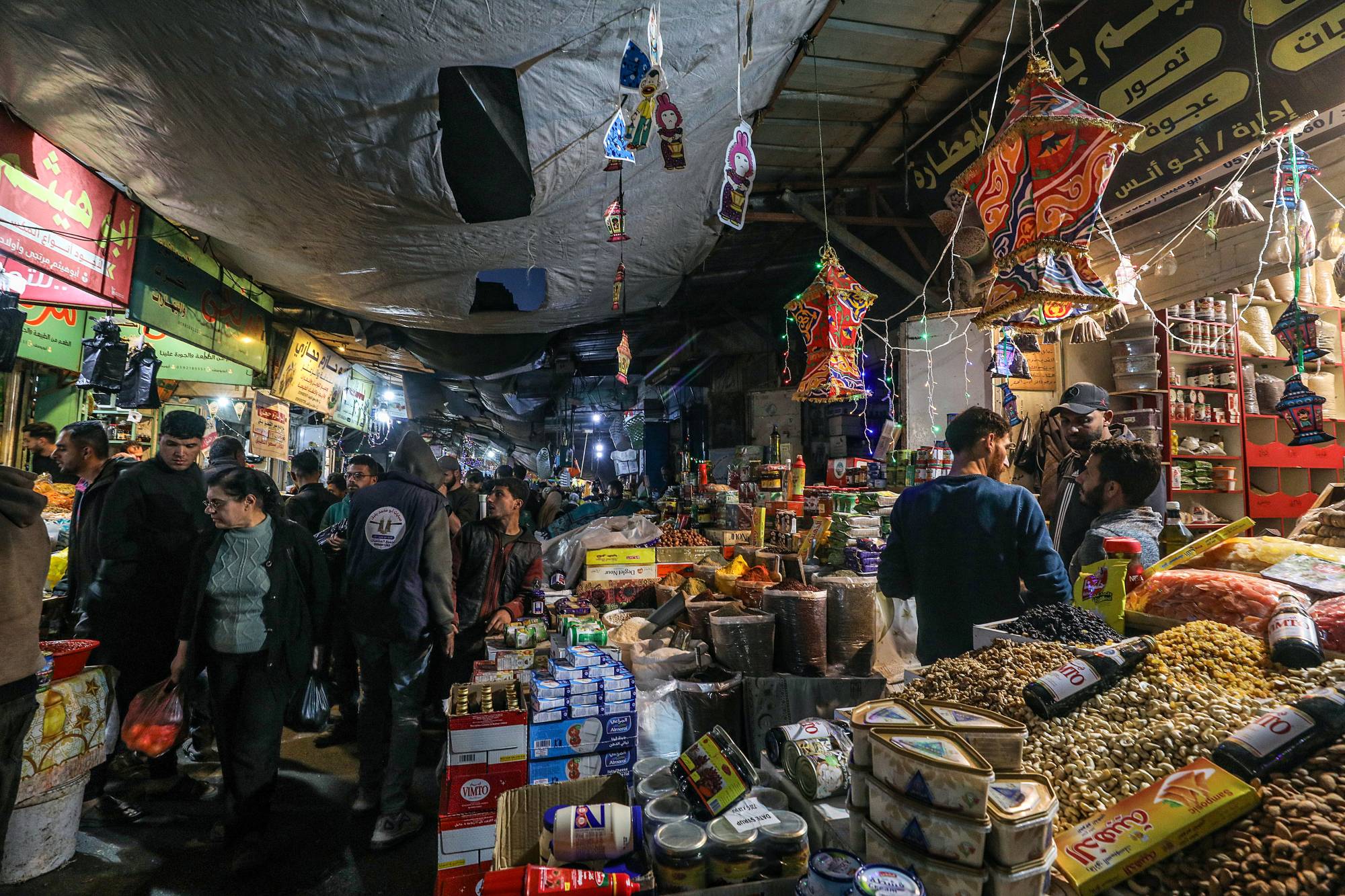
Little Ramadan lanterns and string lights appeared on streets lined with collapsed buildings and piles of rubble in Gaza City, bringing joy and respite as Islam's holiest month began -- the first since October's ceasefire.

In the Omari mosque, dozens of worshippers performed the first Ramadan morning prayer, fajr, bare feet on the carpet but donning heavy jackets to stave off the winter cold.

"Despite the occupation, the destruction of mosques and schools, and the demolition of our homes... we came in spite of these harsh conditions," Abu Adam, a resident of Gaza City who came to pray, told AFP.

"Even last night, when the area was targeted, we remained determined to head to the mosque to worship God," he said.

A security source in Gaza told AFP Wednesday that artillery shelling targeted the eastern parts of Gaza City that morning.

The source added that artillery shelling also targeted a refugee camp in central Gaza.

Israel does not allow international journalists to enter the Gaza Strip, preventing AFP and other news organizations from independently verifying casualty figures.

A Palestinian vendor sells food in a market ahead of the holy month of Ramadan in Gaza City, 17 February 2026. (EPA)

- 'Stifled joy' -

In Gaza's south, tens of thousands of people still live in tents and makeshift shelters as they wait for the territory's reconstruction after a US-brokered ceasefire took hold in October.

Nivin Ahmed, who lives in a tent in the area known as Al-Mawasi, told AFP this first Ramadan without war brought "mixed and varied feelings".

"The joy is stifled. We miss people who were martyred, are still missing, detained, or even travelled," he said.

"The Ramadan table used to be full of the most delicious dishes and bring together all our loved ones," the 50-year-old said.

"Today, I can barely prepare a main dish and a side dish. Everything is expensive. I can't invite anyone for Iftar or suhoor," he said, referring to the meals eaten before and after the daily fast of Ramadan.

Despite the ceasefire, shortages remain in Gaza, whose battered economy and material damage have rendered most residents at least partly dependent on humanitarian aid for their basic needs.

But with all entries into the tiny territory under Israeli control, not enough goods are able to enter to bring prices down, according to the United Nations and aid groups.

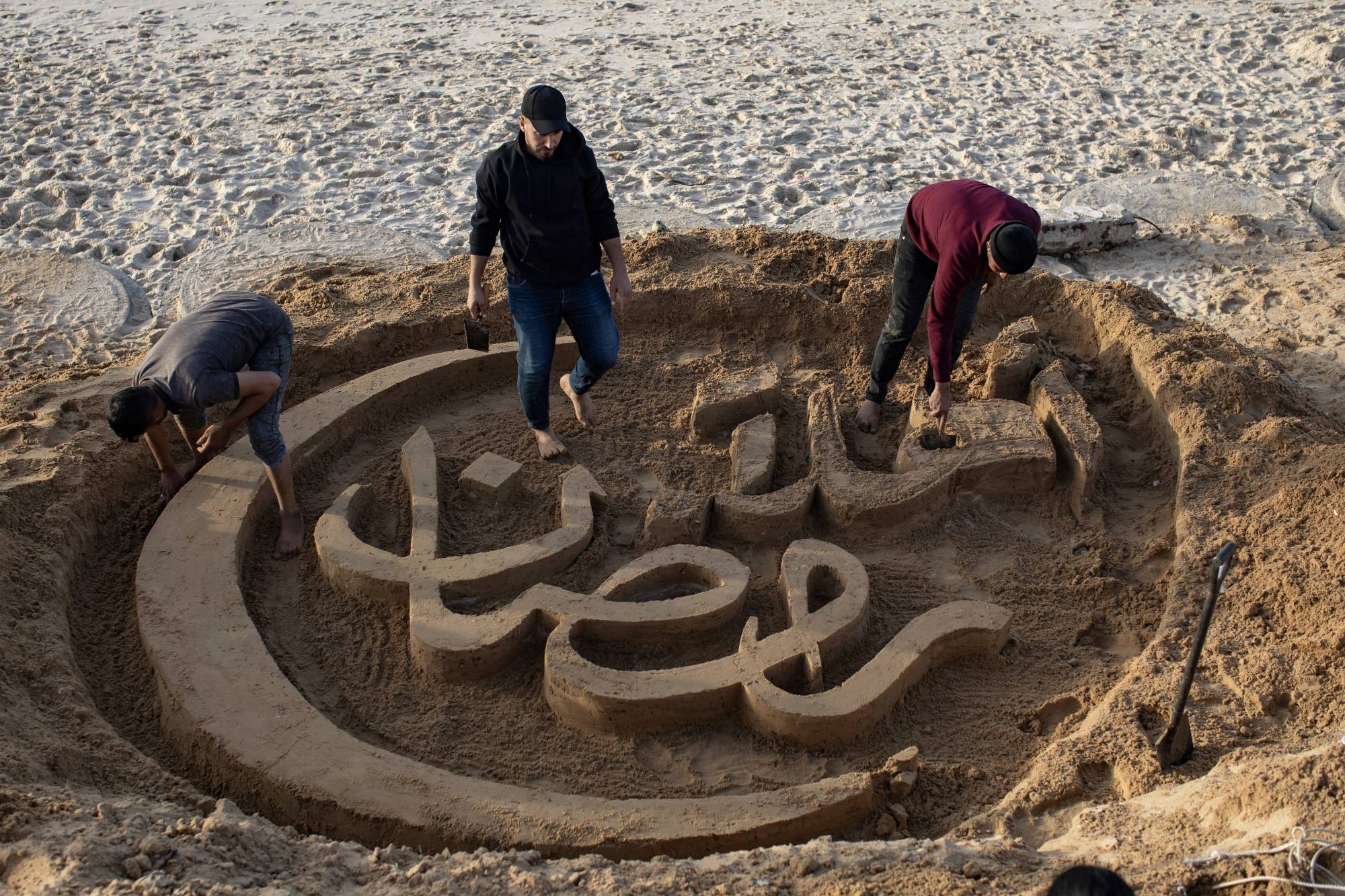
A sand sculpture bearing the phrase "Welcome, Ramadan," created by Palestinian artist Yazeed Abu Jarad, on a beach in Khan Younis, southern Gaza Strip, 17 February 2026, amid a ceasefire between Israel and Hamas. (EPA)

- 'Still special' -

Maha Fathi, 37, was displaced from Gaza City and lives in a tent west of the city.

"Despite all the destruction and suffering in Gaza, Ramadan is still special," she told AFP.

"People have begun to empathize with each other's suffering again after everyone was preoccupied with themselves during the war."

She said that her family and neighbors were able to share moments of joy as they prepared food for suhoor and set up Ramadan decorations.

"Everyone longs for the atmosphere of Ramadan. Seeing the decorations and the activity in the markets fills us with hope for a return to stability," she added.

On the beach at central Gaza's Deir al-Balah, Palestinian artist Yazeed Abu Jarad contributed to the holiday spirit with his art.

In the sand near the Mediterranean Sea, he sculpted "Welcome Ramadan" in ornate Arabic calligraphy, under the curious eye of children from a nearby tent camp.

Nearly all of Gaza's 2.2 million residents were displaced at least once during the more than two years of war between Israel and Hamas, sparked by the latter's unprecedented October 7 attack on Israel.

Mohammed al-Madhoun, 43, also lives in a tent west of Gaza City, and hoped for brighter days ahead.

"I hope this is the last Ramadan we spend in tents. I feel helpless in front of my children when they ask me to buy lanterns and dream of an Iftar table with all their favorite foods."

"We try to find joy despite everything", he said, describing his first Ramadan night out with the neighbors, eating the pre-fast meal and praying.


Bleak Future for West Bank Pupils as Budget Cuts Bite

Private tutoring makes up some, but not all of the teaching shortfall for the Hajj twins. Jaafar ASHTIYEH / AFP
TT

Bleak Future for West Bank Pupils as Budget Cuts Bite

Private tutoring makes up some, but not all of the teaching shortfall for the Hajj twins. Jaafar ASHTIYEH / AFP

At an hour when Ahmad and Mohammed should have been in the classroom, the two brothers sat idle at home in the northern West Bank city of Nablus.

The 10-year-old twins are part of a generation abruptly cut adrift by a fiscal crisis that has slashed public schooling from five days a week to three across the Israeli-occupied Palestinian territory.

The Ramallah-based Palestinian Authority's deepening budget shortfall is cutting through every layer of society across the West Bank.

But nowhere are the consequences more stark than in its schools, where reduced salaries for teachers, shortened weeks and mounting uncertainty are reshaping the future of around 630,000 pupils.

Unable to meet its wage bill in full, the Palestinian Authority has cut teachers' pay to 60 percent, with public schools now operating at less than two-thirds capacity.

"Without proper education, there is no university. That means their future could be lost," Ibrahim al-Hajj, father of the twins, told AFP.

The budget shortfall stems in part from Israel's decision to withhold customs tax revenues it collects on the Palestinian Authority's behalf, a measure taken after the war in Gaza erupted in October 2023.

The West Bank's economy has also been hammered by a halt to permits for Palestinians seeking work in Israel and the proliferation of checkpoints and other movement controls.

- 'No foundation' for learning -

"Educational opportunities we had were much better than what this generation has today," said Aisha Khatib, 57, headmistress of the brothers' school in Nablus.

"Salaries are cut, working days are reduced, and students are not receiving enough education to become properly educated adults," she said, adding that many teachers had left for other work, while some students had begun working to help support their families during prolonged school closures.

Hajj said he worried about the time his sons were losing.

When classes are cancelled, he and his wife must leave the boys alone at home, where they spend much of the day on their phones or watching television.

Part of the time, the brothers attend private tutoring.

"We go downstairs to the teacher and she teaches us. Then we go back home," said Mohammad, who enjoys English lessons and hopes to become a carpenter.

But the extra lessons are costly, and Hajj, a farmer, said he cannot indefinitely compensate for what he sees as a steady academic decline.

Tamara Shtayyeh, a teacher in Nablus, said she had seen the impact firsthand in her own household.

Her 16-year-old daughter Zeena, who is due to sit the Palestinian high school exam, Tawjihi, next year, has seen her average grades drop by six percentage points since classroom hours were reduced, Shtayyeh said.

Younger pupils, however, may face the gravest consequences.

"In the basic stage, there is no proper foundation," she said. "Especially from first to fourth grade, there is no solid grounding in writing or reading."

Irregular attendance, with pupils out of school more often than in, has eroded attention spans and discipline, she added.

"There is a clear decline in students' levels -- lower grades, tension, laziness," Shtayyeh said.

- 'Systemic emergency' -

For UN-run schools teaching around 48,000 students in refugee camps across the West Bank, the picture is equally bleak.

The territory has shifted from "a learning poverty crisis to a full-scale systemic emergency," said Jonathan Fowler, spokesman for the UN agency for Palestinian refugees, UNRWA.

UNRWA schools are widely regarded as offering comparatively high educational standards.

But Fowler said proficiency in Arabic and mathematics had plummeted in recent years, driven not only by the budget crisis but also by Israeli military incursions and the lingering effects of the Covid-19 pandemic.

"The combination of hybrid schooling, trauma and over 2,000 documented incidents of military or settler interference in 2024-25 has resulted in a landscape of lost learning for thousands of Palestinian refugee students," he said.

UNRWA itself is weighing a shorter school week as it grapples with its own funding shortfall, after key donor countries - including the United States under President Donald Trump - halted contributions to the agency, the main provider of health and education services in West Bank refugee camps.

In the northern West Bank, where Israeli military operations in refugee camps displaced around 35,000 people in 2025, some pupils have lost up to 45 percent of learning days, Fowler said.

Elsewhere, schools face demolition orders from Israeli authorities or outright closure, including six UNRWA schools in annexed east Jerusalem.

Teachers say the cumulative toll is profound.

"We are supposed to look toward a bright and successful future," Shtayyeh said. "But what we are seeing is things getting worse and worse."


Security Issues Complicate Tasks of ‘Technocratic Committee’ in Gaza Strip

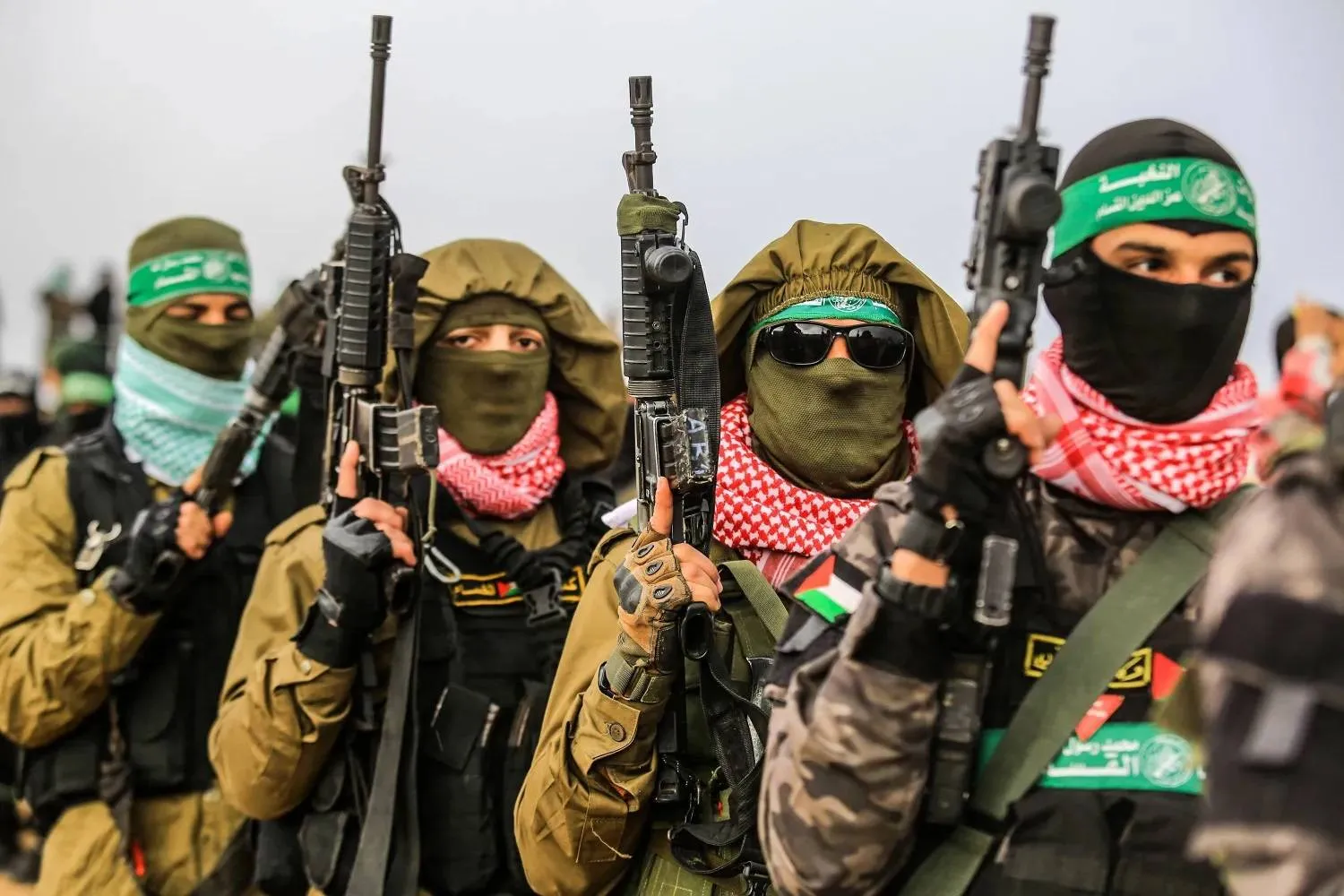
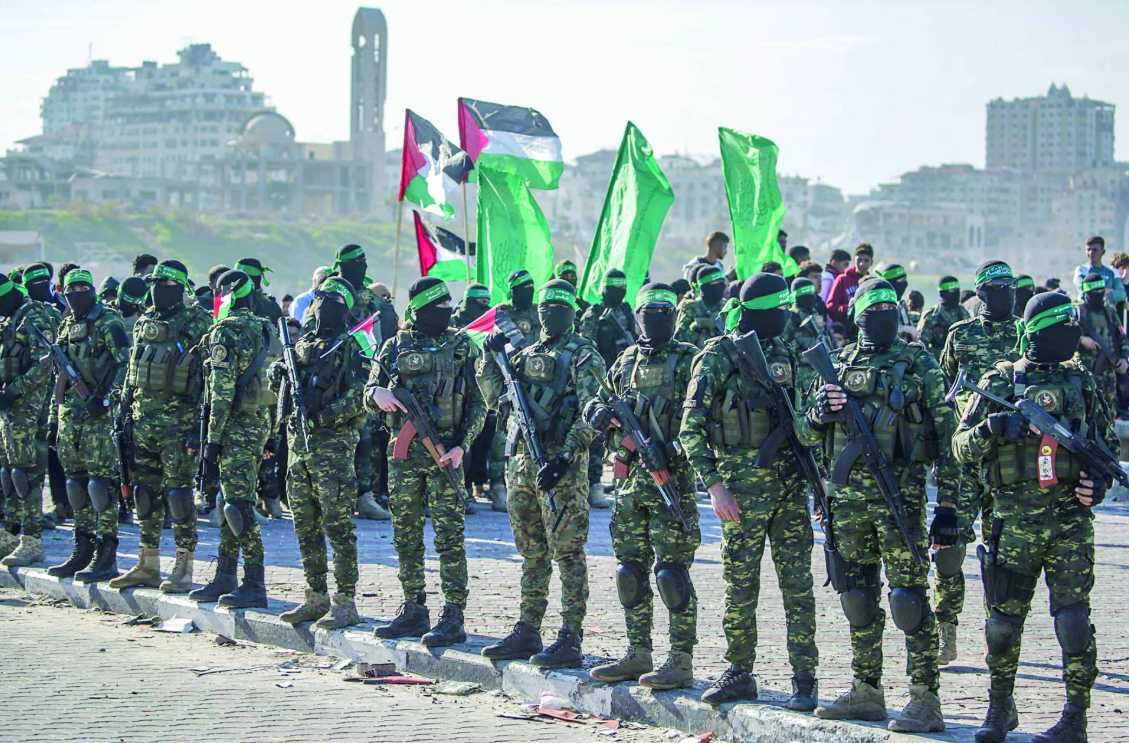
Fighters from the Izz ad-Din al-Qassam Brigades, the armed wing of Hamas, in Khan Younis, Gaza Strip, Feb. 20, 2025. (dpa)
TT

Security Issues Complicate Tasks of ‘Technocratic Committee’ in Gaza Strip

Fighters from the Izz ad-Din al-Qassam Brigades, the armed wing of Hamas, in Khan Younis, Gaza Strip, Feb. 20, 2025. (dpa)

The Palestinian National Committee tasked with administering the Gaza Strip is facing a number of challenges that go beyond Israel’s continued veto on its entry into the enclave via the Rafah crossing. These challenges extend to several issues related to the handover of authority from Hamas, foremost among them the security file.

Nasman and the Interior Ministry File

During talks held to form the committee, and even after its members were selected, Hamas repeatedly sought to exclude retired Palestinian intelligence officer Sami Nasman from the interior portfolio, which would be responsible for security conditions inside the Gaza Strip. Those efforts failed amid insistence by mediators and the United States that Nasman remain in his post, after Rami Hilles, who had been assigned the religious endowments and religious affairs portfolio, was removed in response to Hamas’s demands, as well as those of other Palestinian factions.

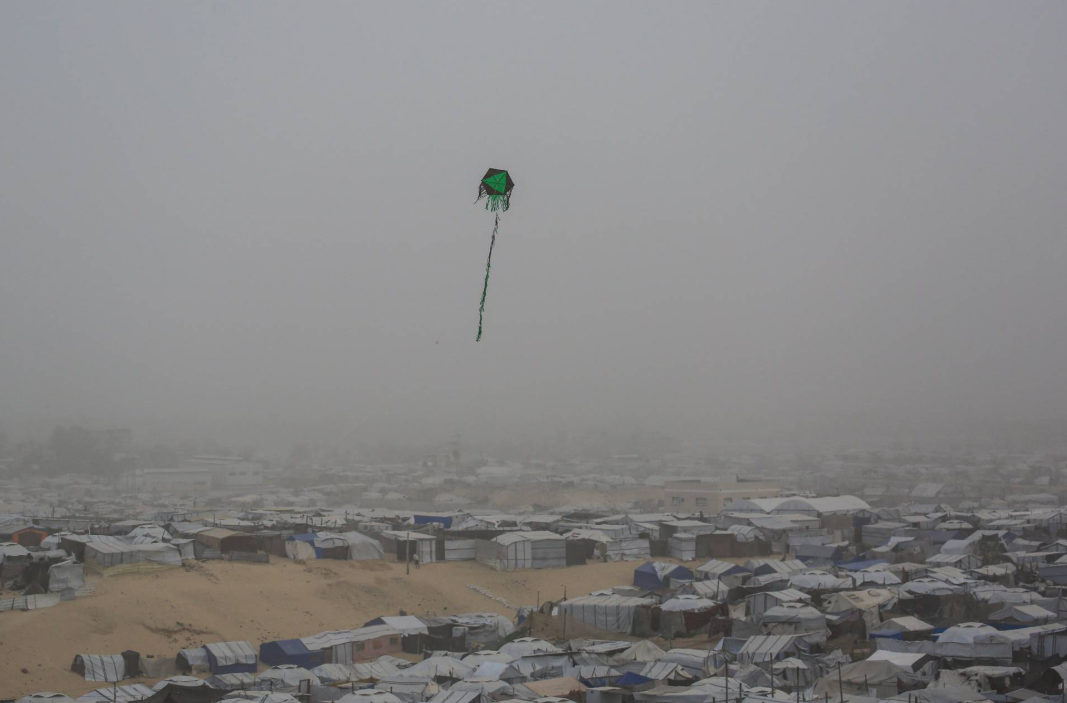
A kite flies over a camp for displaced people in Khan Younis, in the Gaza Strip, on Saturday. (AFP)

Sources close to the committee told Asharq Al-Awsat that Hamas continues to insist that its security personnel remain in service within the agencies that will operate under the committee’s supervision. This position is rejected not only by the committee’s leadership, but also by the executive body of the Peace Council, as well as other parties including the United States and Israel.

The sources said this issue further complicates the committee’s ability to assume its duties in an orderly manner, explaining that Hamas, by insisting on certain demands related to its security employees and police forces, seeks to impose its presence in one way or another within the committee’s work.

The sources added that there is a prevailing sense within the committee and among other parties that Hamas is determined, by all means, to keep its members within the new administrative framework overseeing the Gaza Strip. They noted that Hamas has continued to make new appointments within the leadership ranks of its security services, describing this as part of attempts to undermine plans prepared by Sami Nasman for managing security.

The new logo of the National Committee for the Administration of Gaza, published on its page on X.

Hamas Denies the Allegations

Sources within Hamas denied those accusations. They told Asharq Al-Awsat that Sami Nasman, “as we understand from multiple parties, does not plan to come to Gaza at this time, which raises serious questions about his commitment to managing the Interior portfolio. Without his presence inside the enclave, he cannot exercise his authority, and that would amount to failure.”

The sources said the movement had many reservations about Nasman, who had previously been convicted by Hamas-run courts over what it described as “sabotage” plots. However, given the current reality, Hamas has no objection to his assumption of those responsibilities.

The sources said government institutions in Gaza are ready to hand over authority, noting that each ministry has detailed procedures and a complete framework in place to ensure a smooth transfer without obstacles. They stressed that Hamas is keen on ensuring the success of the National Committee for the Administration of Gaza.

The sources did not rule out the possibility that overarching policies could be imposed on the committee, which would affect its work and responsibilities inside the Gaza Strip, reducing it to merely an instrument for implementing those policies.

Hamas has repeatedly welcomed the committee’s work in public statements, saying it will fully facilitate its mission.

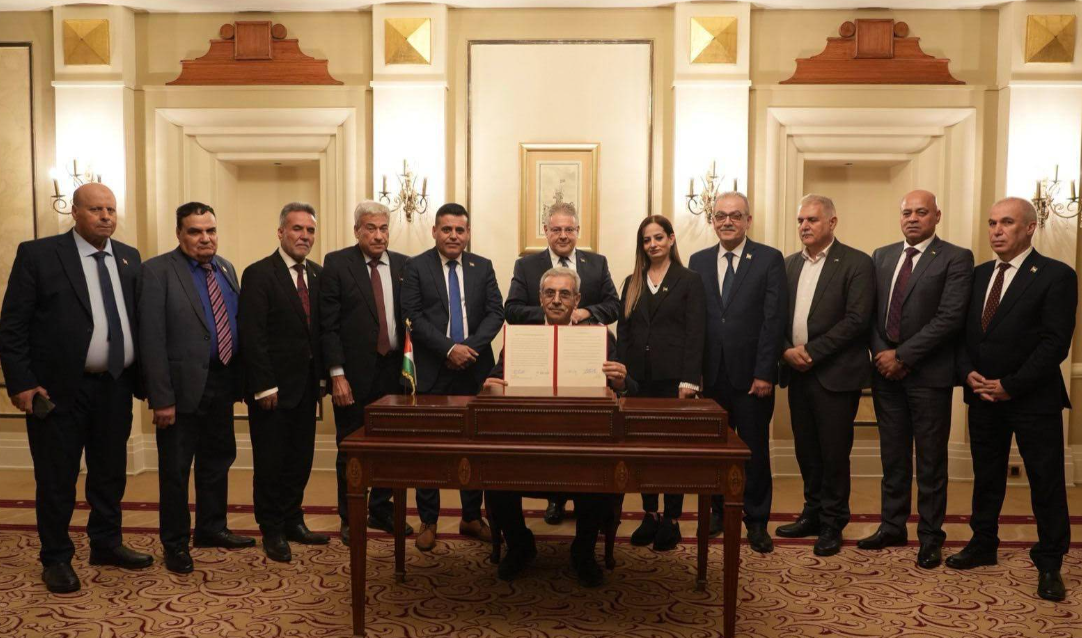
A meeting of the Gaza Administration Committee in Cairo. (File Photo – Egyptian State Information Service)

The Committee’s Position

In a statement issued on Saturday, the National Committee for the Administration of Gaza said that statements and declarations from inside the enclave regarding readiness to transfer the management of all institutions and public facilities represent a step in the interest of citizens and pave the way for the committee to fully assume its responsibilities during the transitional phase.

The committee said that the announcement of readiness for an orderly transition constitutes a pivotal moment for the start of its work as the interim administration of the Gaza Strip, and a real opportunity to halt the humanitarian deterioration and preserve the resilience of residents who have endured severe suffering over the past period, according to the text of the statement.

“Our current priority is to ensure the unimpeded flow of aid, launch the reconstruction process, and create the conditions necessary to strengthen the unity of our people,” the committee said. “This path must be based on clear and defined understandings characterized by transparency and implementability, and aligned with the 20-point plan and UN Security Council Resolution 2803.”

Fighters from Hamas ahead of a prisoner exchange, Feb. 1, 2025. (EPA)

The committee stressed that it cannot effectively assume its responsibilities unless it is granted full administrative and civilian authority necessary to carry out its duties, in addition to policing responsibilities.

“Responsibility requires genuine empowerment that enables it to operate efficiently and independently. This would open the door to serious international support for reconstruction efforts, pave the way for a full Israeli withdrawal, and help restore daily life to normal,” it said.

The committee affirmed its commitment to carrying out this task with a sense of responsibility and professional discipline, and with the highest standards of transparency and accountability, calling on mediators and all relevant parties to expedite the resolution of outstanding issues without delay.

Armed Men in Hospitals

In a related development, the Hamas-run Ministry of Interior and National Security said in a statement on Saturday that it is making continuous and intensive efforts to ensure there are no armed presences within hospitals, particularly involving members of certain families who enter them. The ministry said this is aimed at preserving the sanctity of medical facilities and protecting them as purely humanitarian zones that must remain free of any tensions or armed displays.

The ministry said it has deployed a dedicated police force for field monitoring and enforcement, and to take legal action against violators. It acknowledged facing on-the-ground challenges, particularly in light of repeated Israeli strikes on its personnel while carrying out their duties, which it said has affected the speed of addressing some cases. It said it will continue to carry out its responsibilities with firmness.

Local Palestinian media reported late Friday that Doctors Without Borders decided to suspend all non-urgent medical procedures at Nasser Hospital in Khan Younis starting Jan. 20, 2026, due to concerns related to the management of the facility and the preservation of its neutrality, as well as security breaches inside the hospital complex.

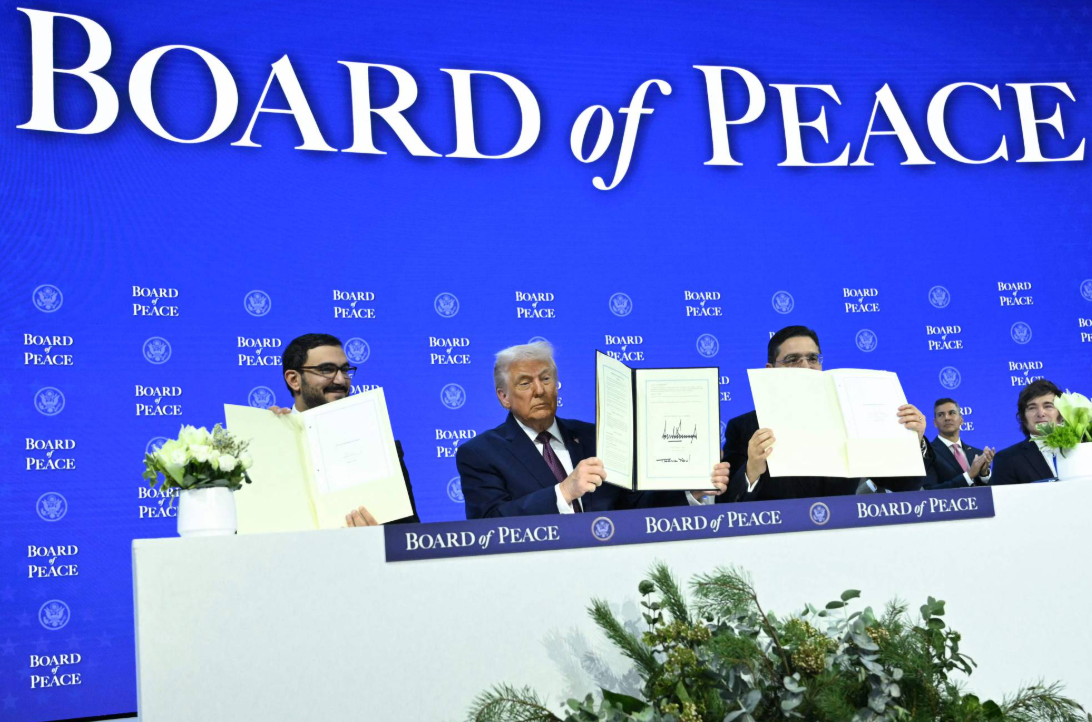
US President Donald Trump holds a document establishing the Peace Council for Gaza in Davos, Switzerland, Jan. 27, 2026. (Reuters)

The organization said in a statement attributed to it, not published on its official platforms or website, that its staff and patients had, in recent months, observed the presence of armed men, some masked, in various areas of the complex, along with incidents of intimidation, arbitrary arrests of patients, and suspected weapons transfers. It said this posed a direct threat to the safety of staff and patients.

Asharq Al-Awsat attempted to obtain confirmation from the organization regarding the authenticity of the statement but received no response.

Field Developments

On the ground, Israeli violations in the Gaza Strip continued. Gunfire from military vehicles and drones, along with artillery shelling, caused injuries in Khan Younis in the south and north of Nuseirat in central Gaza.

Daily demolition operations targeting infrastructure and homes also continued in areas along both sides of the so-called yellow line, across various parts of the enclave.