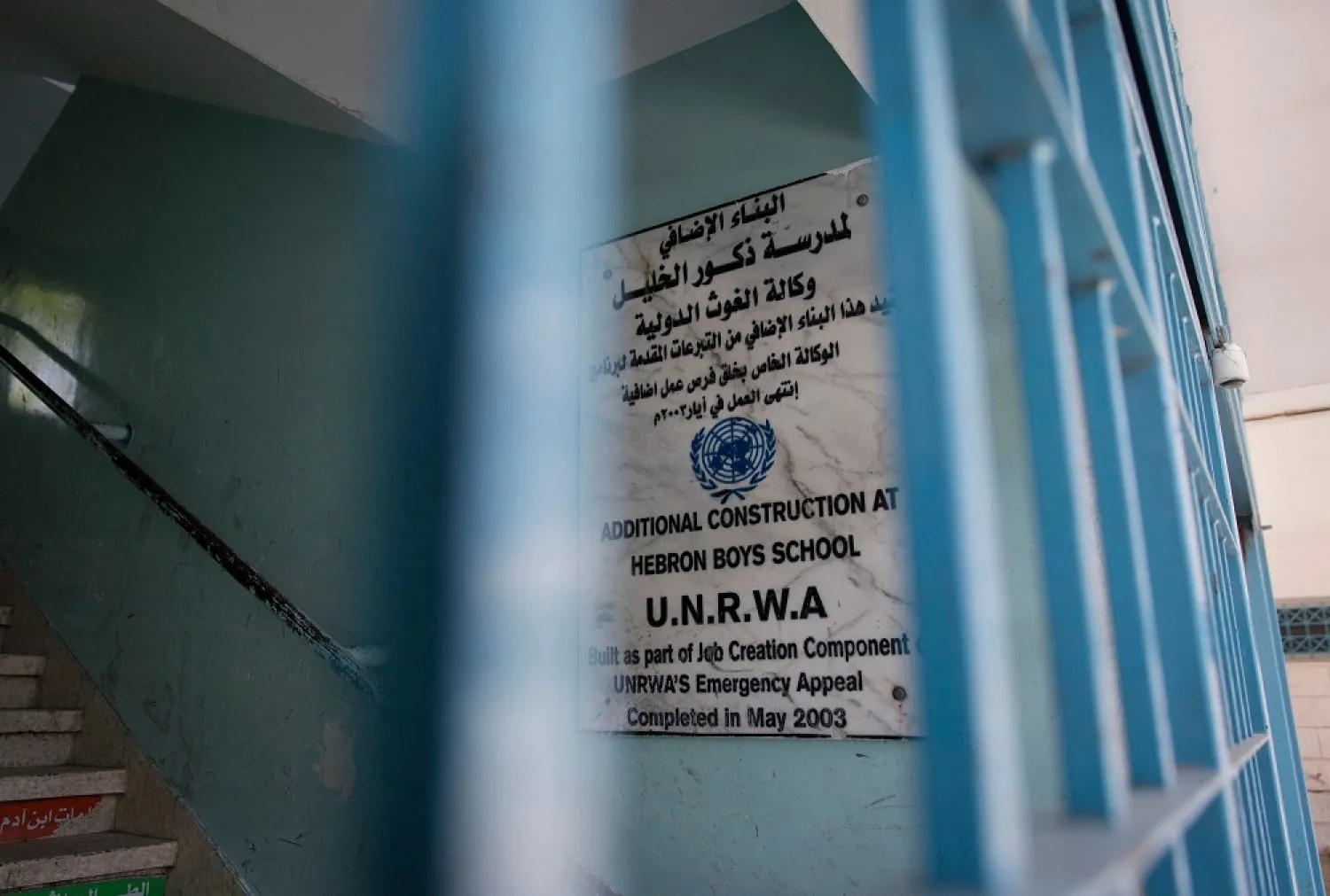
UN Agency for Palestinians May Cut Salaries amid Cash Crunch

UNRWA said it needs to raise $70 million by the end of the month or it will not be able to pay the full salaries of thousands of employees through the end of the year. (AP)
TT

UN Agency for Palestinians May Cut Salaries amid Cash Crunch

UNRWA said it needs to raise $70 million by the end of the month or it will not be able to pay the full salaries of thousands of employees through the end of the year. (AP)

The UN agency for Palestinian refugees said Monday it needs to raise $70 million by the end of the month or it will not be able to pay the full salaries of thousands of employees through the end of the year.

The UN Relief and Works Agency, known as UNRWA, said it has notified its entire workforce of 28,000 that it will be forced to defer their salaries for the rest of the year. The agency said most of the workers affected are refugees themselves and the cuts will impact employees in countries across the Middle East.

“If additional funding is not pledged in the next weeks, UNRWA will be forced to defer partial salaries to all staff,” said the agency’s commissioner-general, Philippe Lazzarini.

“I am deeply saddened to know that the earned salaries of our fearless, resilient social, sanitation and healthcare workers on the front lines and our teachers working to ensure students’ education continue during this emergency health crisis are at risk.”

The agency said in a statement that its funding had run out on Monday and that the cuts would be “major.” Tamara Alrifai, a spokeswoman, said it was not immediately known how severe the cuts would be.

UNRWA was established to aid the 700,000 Palestinians who fled or were forced from their homes during the war surrounding Israel’s establishment in 1948.

It provides education, health care, food and other assistance to some 5.5 million refugees and their descendants in the West Bank and Gaza Strip, as well as Jordan, Syria and Lebanon. Alrifai said those services would not be affected by the cash crunch.

The agency’s finances have been ravaged by a decision by the Trump administration to slash hundreds of millions of dollars of aid as well as a crisis in confidence after its previous commissioner was accused of abusing his authority. President-elect Joe Biden has said he plans on restoring aid to the Palestinians.

Alrifai said that although the agency was hopeful Biden’s election might lead to a resumption of funding from the US, the current crisis required an immediate response.


Lebanon Army Says Soldiers Loyal after US Sanctions One over Alleged Hezbollah Links

Lebanese army members stand on a military vehicle during a Lebanese army media tour, to review the army's operations in the southern Litani sector, in Alma Al-Shaab, near the border with Israel, southern Lebanon, November 28, 2025. (Reuters)
TT

Lebanon Army Says Soldiers Loyal after US Sanctions One over Alleged Hezbollah Links

Lebanese army members stand on a military vehicle during a Lebanese army media tour, to review the army's operations in the southern Litani sector, in Alma Al-Shaab, near the border with Israel, southern Lebanon, November 28, 2025. (Reuters)

Lebanon's military said Friday its soldiers were loyal to the institution after the US announced sanctions that included, for the first time, an army officer accused of sharing information with Hezbollah.

In a statement, the army said it "affirms that all officers and members of the military institution are performing their national duties with utmost professionalism, responsibility, and discipline, in accordance with the decisions and directives issued by the army command".

It emphasized that "the loyalty of military personnel is solely to the military institution and the nation, and that they are committed to fulfilling their national duties without any other considerations or pressures", also saying it was not informed of the sanctions beforehand.

Washington on Thursday sanctioned what it called nine Hezbollah-linked individuals in Lebanon, including army colonel Samir Hamadi, and Khattar Nasser Eldin, an officer at another state security service.

The US said Hamadi and Nasser Eldin "shared important intelligence" with Hezbollah over the past year.

It marked the first time Lebanese officers have been sanctioned by the United States.

Hezbollah on Thursday condemned the sanctions, calling them "an attempt to intimidate the free Lebanese people in order to bolster the Zionist aggression against our country".


Israel Ignores Lebanon’s Ceasefire Request as US Imposes New Sanctions

Children inside a tent at a camp for displaced people set up along Beirut’s seafront (Reuters) 
TT

Israel Ignores Lebanon’s Ceasefire Request as US Imposes New Sanctions

Children inside a tent at a camp for displaced people set up along Beirut’s seafront (Reuters) 

Washington moved ahead of the Lebanese-Israeli security negotiations scheduled for May 29 by imposing sanctions on two officers from the Lebanese Army and General Security, marking the first time US measures have targeted Lebanese security officials alongside figures affiliated with or accused of cooperating with Hezbollah.

The sanctions, announced Thursday, targeted nine individuals, including Mohammad Fneish, head of Hezbollah’s Executive Council; Iranian Ambassador to Beirut Mohammad Reza Sheibani; and three Hezbollah lawmakers: Hassan Fadlallah, Ibrahim al-Moussawi, and Hussein Hajj Hassan. Also sanctioned were Ahmad Baalbaki and Ali Safawi, both considered close to Parliament Speaker Nabih Berri.

In a notable development, the measures also targeted Colonel Samer Hamadeh, head of Army Intelligence in Beirut’s southern suburbs, and Brigadier General Khattar Nassereddine, head of the Analysis Department at General Security.

Meanwhile, Lebanese ministerial sources told Asharq Al-Awsat that Beirut is awaiting an Israeli response, through the United States, to its request that Washington pressure Israel to comply with the ceasefire agreement. According to the sources, Tel Aviv has neither responded nor adhered to the terms of the deal. “Lebanon is still waiting for a response that the United States will convey from Israel,” the sources said.

Last week, Lebanon held its first direct negotiation session with Israel in Washington, while the ceasefire agreement was extended for an additional six weeks. The extension, however, appears limited to Beirut and its southern suburbs, excluding southern Lebanon, where exchanges of fire between Hezbollah and the Israeli military continue.

A Lebanese military delegation is due to participate on May 29 in security talks with Israeli army representatives at the US Department of Defense headquarters.

The Lebanese sources said Beirut had finalized the composition of its military delegation, which will consist of four officers, though the Army Command has yet to issue the official order naming them.

Responding to media speculation over the delegation’s makeup, the Lebanese Army Command said in a statement that discussion of the “sectarian distribution” of the officers “has no connection whatsoever to the principles of the military institution.”

The command stressed that the delegation, regardless of its composition, “remains committed to national constants,” adding that the officers assigned to the mission represent the nation and remain bound by the army’s doctrine and national duty.

Since the truce was announced on April 17 - and its 45-day extension took effect Monday - Israel has continued carrying out strikes it says target Hezbollah operatives and infrastructure, while also conducting demolition operations in border areas occupied by its forces.

The Israeli military has also continued issuing near-daily evacuation warnings for villages and towns, with the affected areas often extending far beyond the border region and including communities hosting displaced residents from elsewhere in the country.

French Warning

French President Emmanuel Macron’s special envoy to Lebanon, Jean-Yves Le Drian, warned Thursday that Lebanon is “in a dangerous situation.”

In an interview with BFM TV and RMC Radio, Le Drian said Lebanon faces “a dangerous situation regarding its unity and territorial integrity,” citing divisions among Lebanese factions over Hezbollah and Israel.

“Lebanon’s territorial integrity is under threat,” he stated, adding that Israel occupies part of Lebanese territory while Hezbollah operates in another “in service of Iranian interests — the interests of a foreign power.”

Despite that, Le Drian welcomed the continuation of the truce, saying it opens “a 45-day horizon for continuing discussions.”

He also praised Lebanese leaders engaged in the process as “high-level” and “courageous,” referring to their request for direct negotiations with Israel aimed at freeing Lebanon “from this stranglehold” and restoring the Lebanese state’s ability “to function and exist.”

Le Drian further described US involvement in the negotiations as “a positive thing,” even though, he noted, Israel has rejected French participation in the talks despite Lebanon’s request for it.



Australian Women Linked to ISIS Leave Syrian Camp

Members of Australian families believed to be linked to the ISIS militants wait to leave Roj camp near Derik, Syria April 24, 2026. REUTERS/Orhan Qereman/File Photo
TT

Australian Women Linked to ISIS Leave Syrian Camp

Members of Australian families believed to be linked to the ISIS militants wait to leave Roj camp near Derik, Syria April 24, 2026. REUTERS/Orhan Qereman/File Photo

A second group of Australian women and children linked to the ISIS extremist group have departed a refugee camp in northeast Syria and may be returning to Australia, the Australian Broadcasting Corporation reported on Friday.

The broadcaster said a bus carrying the group left the Al-Roj camp on Thursday afternoon under escort by a convoy of Syrian government officials. The group is expected to reach Damascus, though it remains unclear when they might travel ‌to Australia, the report ‌said.

Home Affairs Minister Tony Burke said ‌Australia's ⁠security and intelligence agencies ⁠had been preparing for the return of women linked to ISIS for more than a decade, reported Reuters.

"This is not a coherent group, there is a spectrum in terms of the actions of the individuals while they have been away from Australia," Burke said by email.

He did not ⁠provide details about the group's travel ‌to Australia.

The Australian government has previously ‌ruled out providing direct assistance for the return of Australian ‌families linked to ISIS but has acknowledged "very serious limits" ‌to preventing citizens from re-entering the country. Earlier this month, four women and nine children linked to ISIS returned to Australia after spending seven years in detention camps. Upon arrival, Kawsar Ahmad, 54, ‌and her daughter Zeinab Ahmad, 31, were charged with slavery offences, while 32-year-old Janai Safar ⁠faced terror-related ⁠charges.

The return of the women drew criticism, with opponents accusing Australia's center-left government of failing to prevent their repatriation.

Between 2012 and 2016, some Australian women travelled to Syria to join their husbands who were allegedly members of ISIS. Following the collapse of the “caliphate” in 2019, many were detained in camps, while others returned home. In January, the United States began moving detained ISIS members out of Syria after the collapse of the Kurdish-led Syrian Democratic Forces, which had been guarding several detention facilities housing ISIS fighters and affiliated civilians, including foreigners.