


Italy's Moncler Adds Stone Island to Collection in $1.4 Bln Deal

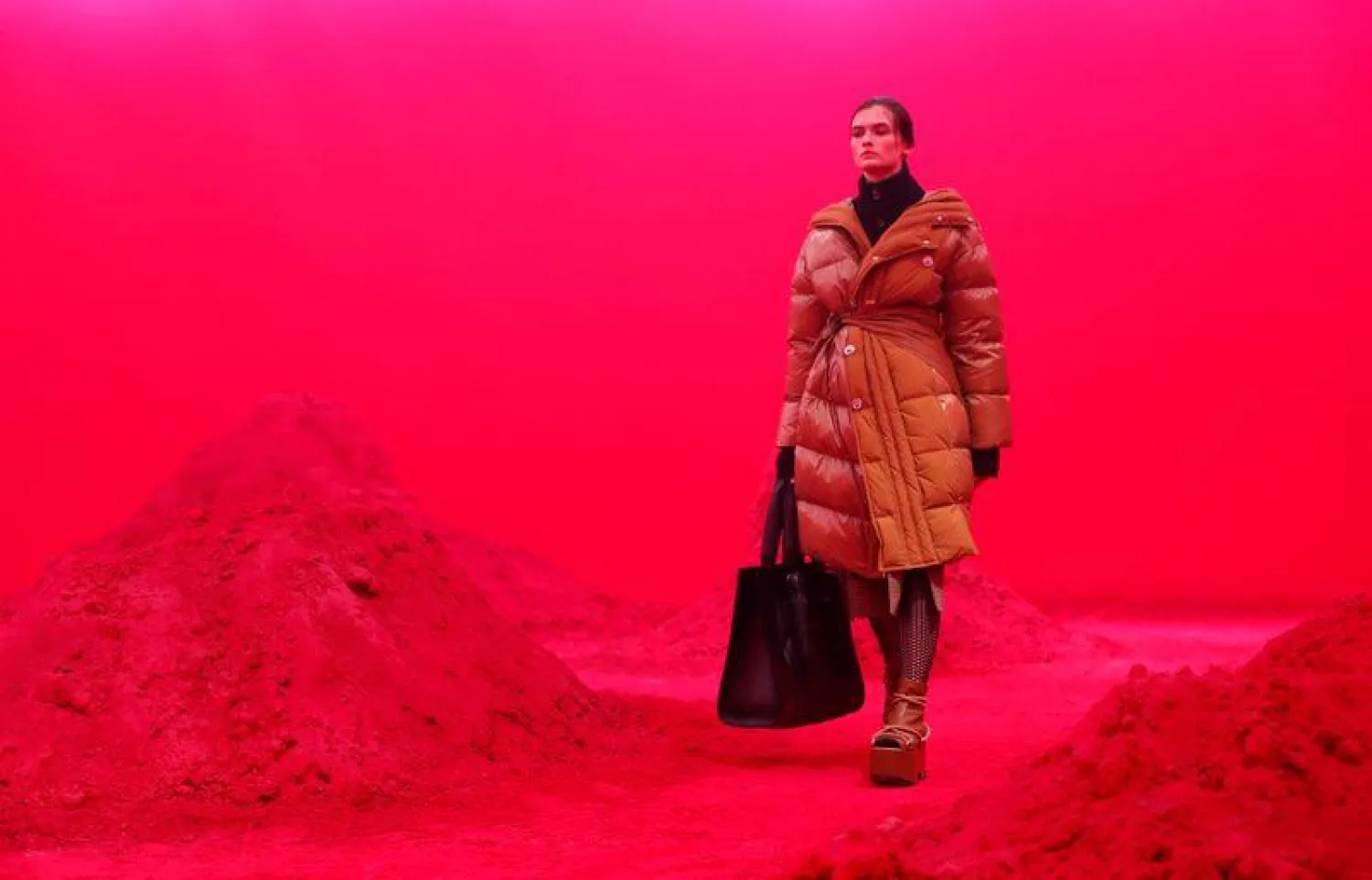
A model presents a creation from the Moncler Autumn/Winter 2020 collection during Milan Fashion Week in Milan, Italy February 19, 2020. REUTERS/Alessandro Garofalo/File Photo
TT

Italy's Moncler Adds Stone Island to Collection in $1.4 Bln Deal

A model presents a creation from the Moncler Autumn/Winter 2020 collection during Milan Fashion Week in Milan, Italy February 19, 2020. REUTERS/Alessandro Garofalo/File Photo

Down jacket maker Moncler is buying smaller Italian high-end streetwear and fashion brand Stone Island in a 1.15 billion euro ($1.4 billion) deal which could signal an intention to consolidate rather than be acquired.

Moncler, which has become a luxury industry darling in recent years after a makeover under Chief Executive Remo Ruffini, has long been regarded by the market as a potential takeover target by large overseas players.

And as high-end brands have come under intense pressure with the crisis triggered by the coronavirus pandemic decimating demand and exposing the sector’s reliance on Chinese tourists, they are being forced to find new ways to gain customers.

“It is the right moment, because at such a difficult time it underscores the resilience of Italy,” Moncler Chief Executive Remo Ruffini told a call with analysts on Monday.

A person close to the deal said it could mark the first step towards the creation of an Italian luxury hub in an industry dominated by French luxury conglomerates LVMH and Kering, which have snapped up a string of family-owned Italian labels in recent years.

Monday’s share-and-cash acquisition of Stone Island, Moncler’s first-ever purchase, was seen by Bernstein analyst Luca Solca as a “Chapter 2” for the puff jacket maker, heralding the possible creation of a multi-brand group.

The Moncler brand was created in 1952 in a village in the mountains near Grenoble, focusing on highland sports clothing. Ruffini bought the then-struggling label in 2003 and transformed its puffer jackets into luxury status symbols.

Moncler, which Ruffini listed in 2013, has a market value of 11 billion euros and last year had sales of 1.6 billion euros, before a big downturn caused by the pandemic.

Stone Island’s high-end streetwear and sporty style is popular with generation Z shoppers who are seen driving future growth in the luxury sector. It is known in Italy and Europe but lacks a presence in the key Chinese market and in the United States.

Chinese consumers are forecast to account for almost half of global luxury goods purchases by 2025.

The label, which has a lower entry point than Moncler, has seen double-digit revenue growth in recent years and expects a 1% rise in sales to almost 240 million euros in 2020 - no small feat in a year when global luxury goods sales are expected to fall by 23% on average.

“It reminds me a lot of what Moncler was 10 years ago, I believe it has great potential to grow,” said Ruffini, who aims to double Stone Island’s sales in 5 years.

Shares in Moncler were up 4% in Milan at 1220 GMT after the announcement of the agreement, which will see Moncler buy just over 50% of outerwear brand Stone Island from owner and CEO Carlo Rivetti and a further 19.9% from other family members.

Moncler will pay half in cash and half in its own shares for Stone Island, giving the Rivetti family 10.7 million new Moncler shares at a set price of 37.51 euros per share.

It then aims to buy the remaining 30% held by Singapore’s state investor Temasek, which owns a small stake in Moncler.

The deal is expected to close by the first half of 2021.

Moncler was advised by Citi and Stone Island by Rothschild.

($1 = 0.8249 euros)


Cartier Owner Richemont Beats Sales Forecasts as China Recovery Continues

The Swiss-based company said sales in its fourth quarter to end-March rose to 5.17 billion euros ($5.80 billion). (AFP)
TT

Cartier Owner Richemont Beats Sales Forecasts as China Recovery Continues

The Swiss-based company said sales in its fourth quarter to end-March rose to 5.17 billion euros ($5.80 billion). (AFP)

Cartier owner Richemont reported sales ahead of market expectations on Thursday, buoyed by strong global demand for jewelry and a continued recovery in greater China, its second-biggest market and a bellwether for the luxury sector.

The Swiss company's shares rose 3% on the reading with investors looking for signs the luxury goods industry can return to stable growth in a year already marked by geopolitical turmoil and the bankruptcy of one of the sector's largest retail groups, Saks Global.

The world's second-largest luxury company, which also owns Van Cleef & Arpels and Buccellati, said sales in its September-to-December third quarter rose to 6.4 billion euros ($7.45 billion), a 4% year-on-year increase in reported currencies.

That beats an analyst consensus of 6.28 billion euros cited by Visible Alpha and represents an ‌11% increase when ‌measured in constant currencies, Reuters said.

Richemont's trading update provides the first clues on demand for ‌luxury ⁠goods going into ‌2026. LVMH is due to report its annual results later this month, followed by Hermes and Gucci-owner Kering in February. Smaller Italian cashmere brand Brunello Cucinelli was the first luxury brand to report quarterly sales this week.

Shares of sector peers, including watch company Swatch and Birkin-bag maker Hermes, rose in early trade following Richemont's results announcement.

CHINESE MARKET CONTINUES GROWTH REBOUND

Richemont highlighted continued improvement in China, Hong Kong and Macau, where its sales rose by 2%. China accounts for just under 20% of the company's sales, according to a Bank Vontobel estimate, ranking second behind the United States.

The greater China performance "mostly led by ⁠solid activity in Hong Kong" was the second quarter in a row that Richemont has reported improved sales in the region, following a 7% rise ‌in the previous three months.

China has been luxury's main growth engine in ‍recent years, but has been struggling with a sticky ‍real estate crisis and a shift in consumer appetite that have weighed on demand for Western brands.

Richemont's reported ‍trends from China "may be regarded as a pivotal moment", RBC analyst Piral Dadhania said in a note, adding that its performance is a positive signal for the wider luxury sector.

Demand in China, where most European houses saw their sales decline heavily last year, is seen as a decisive factor for the luxury industry to return to sustained growth.

"The Chinese consumer holds the key to luxury and is thus the critical sector theme for 2026," Berenberg analyst Nick Anderson said in a recent note to clients.

JEWELLERY UP BUT GOLD PRICES, STRONG FRANC PRESSURE MARGINS

Following two ⁠years of stagnation, analysts are beginning to turn more optimistic on the $400 billion luxury industry, with jewelry seen as a critical growth driver since inflation-wary shoppers view it as an investment rather than a mere treat.

Richemont's jewelry sales were up 14% helped by the launch of novelty items such as bracelets and pendants, which tended to be slightly cheaper and were popular during the gifting season.

"Jewelry is in strong shape, and Richemont dominates it with its brands," Bernstein analysts said.

The company's watchmaking business, which includes the IWC and Jaeger-LeCoultre brands, lifted sales by 7%.

Pressures on Richemont's margins due to record-high gold prices and the strong Swiss franc, however, will likely persist and could impact the group's profit outlook for the next business year if not countered by more price increases, analysts from Deutsche Bank said.

A company spokesperson declined to comment on the bankruptcy of Saks Global, the owner of US department stores Saks Fifth Avenue, Bergdorf Goodman and Neiman Marcus.

Richemont ‌is among the retailer's top unsecured creditors. Saks owes about $3.4 billion to creditors, while claims by the top 30 unsecured creditors are worth a total of $712 million, bankruptcy filings show.


Globes Red Carpet: Chic Black, Elegant Dresses and a Bit of Politics

Ariana Grande is a nominee for her turn as Glinda in 'Wicked: For Good'. Frederic J. Brown / AFP
TT

Globes Red Carpet: Chic Black, Elegant Dresses and a Bit of Politics

Ariana Grande is a nominee for her turn as Glinda in 'Wicked: For Good'. Frederic J. Brown / AFP

Hollywood's top stars hit the red carpet on Sunday for the Golden Globes, the first major event on the road to the Oscars, and they delivered lots of old-school glamour.

Here is a glance at some of the looks seen at the Beverly Hilton Hotel:

Ever-chic black

Selena Gomez is a newlywed and her happiness shows. The best comedy actress nominee for her work on "Only Murders in the Building" radiated joy as she arrived on the arm of her husband Benny Blanco.

She oozed sophistication in a black Chanel column gown with a frothy white feathered strapless neckline, her black bob swept into soft waves.

Gomez was not alone in striking an understated pose, with lots of stars opting for black or dark, wintry hues.

Teyana Taylor, a winner for her searing turn as a leftist revolutionary in hotly-tipped film "One Battle After Another," scorched the carpet in a cut-out backless black Schiaparelli gown with a halter neckline -- and a cheeky crystal bow on her backside.

Ariana Grande ("Wicked: For Good"), who competed with Taylor for the award for best supporting actress, turned heads in a black textured Vivienne Westwood ballgown with an asymmetrical neckline and a bubble silhouette before trailing to the floor.

Her hair was swept into her signature ponytail, and she kept the jewelry simple with a diamond choker.

Amy Madigan, also in their category for her villainous turn in "Weapons," went for a tuxedo look with cropped pants and patent leather boots.

Nominee Jenna Ortega embraced the goth chic of her title character in "Wednesday" in a black high-neck Dilara Findikoglu gown with glittering epaulets and cut-offs that revealed a bit of side boob... and part of her hip bone.

Among the male stars in attendance, Colman Domingo was as usual a standout, wearing head-to-toe black Valentino, with silvery appliques scattered from his left shoulder down his lapel to his waist.

Jennifer Lopez is no stranger to strong fashion statements. Her plunging green Versace gown at the Grammys in 2000 is still a reference for winning the red carpet by adopting the "less is more" rule.

On Sunday, Lopez -- whose turn in "Kiss of the Spider Woman" was overlooked by Globes voters -- wore a figure-hugging sheer gown with bronze patterns snaking over her body, ending in a mermaid fishtail.

Jennifer Lawrence --nominated for best drama actress in a film for "Die My Love" -- got the memo as well, rocking a barely-there sheer nude Givenchy gown with only a smattering of strategically placed flowers.

- Stars slam deadly ICE shooting -

Hollywood never quite has a night out without a bit of politics coming into play.

On Sunday, some of the stars including nominee Mark Ruffalo wore pins with the messages "BE GOOD" -- a reference to Renee Good, the Minneapolis woman who was shot and killed by a federal immigration agent.

Comedian Wanda Sykes wore the same pin on her lapel, while actress Natasha Lyonne, a nominee for her TV show "Poker Face," attached one to her clutch handbag.

The campaign is endorsed by the American Civil Liberties Union (ACLU), one of the country's most prominent civil rights organizations.


UK's Next Edges Up Profit Outlook after Christmas Sales Beat Expectations

FILE PHOTO: Shoppers walk past a NEXT retail store on Oxford Street in London, Britain, December 28, 2025. REUTERS/Isabel Infante/File Photo
TT

UK's Next Edges Up Profit Outlook after Christmas Sales Beat Expectations

FILE PHOTO: Shoppers walk past a NEXT retail store on Oxford Street in London, Britain, December 28, 2025. REUTERS/Isabel Infante/File Photo

British fashion retailer Next on Tuesday reported a better-than-expected 10.6% increase in full-price sales for the nine weeks to December 27 and edged up its annual profit guidance for the fifth time over the last year.

Subdued UK ⁠consumer confidence ahead of Christmas coupled with unseasonably mild weather had left analysts cautious about clothing retailers' festive trading prospects.

However, Next reported a 5.9% increase in UK ⁠sales year-on-year, with international sales up 38.3%.

According to Reuters, the group said it now expected to report a pretax profit of 1.15 billion pounds ($1.56 billion) for its year to January 2026, up from previous guidance of 1.135 billion pounds and the 1.011 billion pounds it made in ⁠2024/25 when it breached the 1 billion pounds mark for the first time.

Next forecast a further 4.5% increase in profit to 1.202 billion pounds for its 2026/27 year, on full-price sales up 4.5%.

Shares in Next have risen 43% over the last year.
