


Israel Sells F-16 Jets Used to Destroy Iraq Nuclear Reactor to Canadian Company

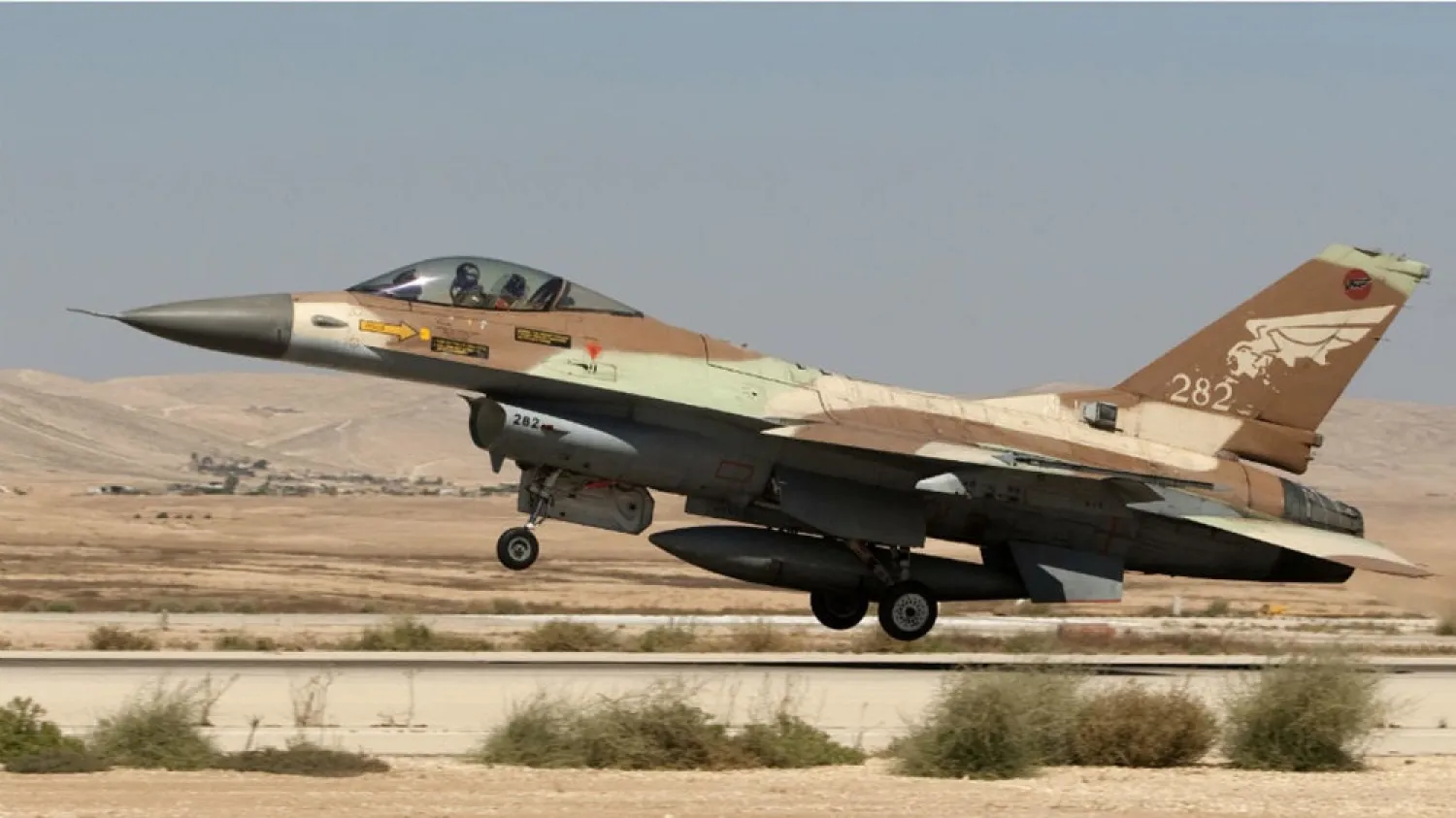
An Israeli F-16 fighter jet takes off at the Nevatim air force base near the southern Israeli city of Beersheva on October 6, 2010.
TT

Israel Sells F-16 Jets Used to Destroy Iraq Nuclear Reactor to Canadian Company

An Israeli F-16 fighter jet takes off at the Nevatim air force base near the southern Israeli city of Beersheva on October 6, 2010.

The Israeli Ministry of Security concluded a deal to sell its old F-16 fighter jets to a private Canadian company, which will be used for training.

The deal included four fighter jets that took part in the 1981 attack on the Iraqi nuclear reactor and in the 1982 invasion of Lebanon, but were retired from active service once more advanced versions of the F-16 came into use.

The deal comprises of 29 jets that were retired in 2016, valued at $100 million, and is set to be the largest of its kind ever.

The planes were sold to the Canadian company, Top Aces Inc, which maintains a large fleet of training jets that it leases for the US Army and other militaries in the world.

It turned out that some of these aircraft were kept in Israeli warehouses, as part of an internal museum, and include the jets that participated in Operation Opera, also known as Operation Babylon, during which they destroyed the Iraqi nuclear reactor in southeast Baghdad.

Iraq built the reactor with French expertise for “peaceful scientific research,” which Iran bombed nine months prior to the Israeli attack, but only caused minor damages.

The attack was considered an “Israeli-Iranian collaboration against Iraq.”

According to the Israeli army archive, the Israeli aircraft were intended for the Iranian air force, but the Khomeini revolution prevented their delivery to Tehran.

At that time, Israeli Prime Minister, Menachem Begin, recorded a new war doctrine, in which he indicated that this was not an exceptional attack, rather a precedent for every future government in Israel.

“We will not allow any of our enemies to acquire weapons of mass destruction.”

The doctrine prompted Ehud Olmert's government to destroy the nuclear reactor under construction in Deir Ezzor in Syria in 2007, and to later fight Iran's nuclear activity.


As Iran War Strains Ties with Trump’s US, UK Looks to Europe

Britain's Prime Minister Keir Starmer speaks during a joint press conference following an international summit on efforts to reopen the Strait of Hormuz at the Elysee Presidential Palace in Paris on April 17, 2026. (AFP)
TT

As Iran War Strains Ties with Trump’s US, UK Looks to Europe

Britain's Prime Minister Keir Starmer speaks during a joint press conference following an international summit on efforts to reopen the Strait of Hormuz at the Elysee Presidential Palace in Paris on April 17, 2026. (AFP)

Britain's government is set to announce legislation next month to move the country closer to the European Union, as the Iran war sours the UK's so-called special relationship with the United States.

President Donald Trump's unpredictability and stream of insults towards America's historic ally is adding impetus to Prime Minister Keir Starmer's bid to deepen ties with the 27-nation bloc, a decade after Britons narrowly voted to leave the EU.

"We have a government that is already eager to move closer towards the EU, and the events in Iran provide an opportunity to speed up that process," Evie Aspinall, director of the British Foreign Policy Group think-tank, told AFP.

Starmer's administration is preparing an EU "reset" bill that will give ministers powers to align UK standards with EU single market rules as they evolve -- something called "dynamic alignment".

King Charles III will announce the legislation on May 13 when he reads out Starmer's legislative plans for the coming months, a government official told AFP on condition of anonymity.

Starmer has repeatedly called for a deeper economic and security relationship with Europe since his Labour party won the 2024 general election, ousting the Conservatives, who had implemented the 2016 Brexit referendum.

He has upped those calls in recent days, telling Dutch leader Rob Jetten on Tuesday that "he believed the partnership between the UK and the bloc needed to be fit for the challenges we were facing today".

The EU is Britain's biggest trading partner, while the International Monetary Fund warned this week that the UK will be the advanced economy hardest hit by the Iran conflict.

"Certainly Iran has made it (the reset) more prescient," said the UK official.

"We need to build economic resilience across the continent," they added.

Starmer refused to involve Britain in the US and Israel's initial strikes on February 28, angering Trump, although he has since allowed American forces to use UK bases for a "limited defensive purpose".

Under pressure at home for his disastrous decision to appoint former Jeffrey Epstein associate Peter Mandelson as ambassador to Washington, Starmer has received plaudits for standing up to Trump in the face of repeated taunts from the US president.

Days ago, Trump threatened in a phone interview with Sky News to scrap a US-UK trade deal that limited the impact on Britain of his tariffs blitz.

"There's no doubt that there is now momentum in the UK-EU relationship partly as a result of Trump's unreliable behavior," David Henig, an expert on UK's post-Brexit trade policy, told AFP.

"Independent UK trade policy looks much harder, the prospects of working with the EU much brighter."

- Brexit regret -

Starmer's administration hopes to table the EU legislation in the next few months, meaning it could come around the time of the 10th anniversary of the Brexit referendum, held in June 2016.

MPs will get to approve whether to provide the government with a mechanism to adopt EU rules -- sometimes without a full parliamentary vote -- in areas where it has already signed deals with the bloc.

They include a trade agreement designed to ease red tape on food and plant exports and plans for an electricity deal that would integrate the UK into the EU's internal electricity market.

Britain and the EU are also aiming to finalize negotiations on a youth mobility scheme in time for a joint summit in Brussels expected in late June or early July.

Starmer has ruled out rejoining the single market or returning to free movement.

The Liberal Democrats, Britain's traditional third party, wants him to cross one of his other red lines by negotiating a customs union with the EU.

"We need to be doubling down on relations with reliable partners who share our interests and values," the Liberal Democrats foreign affairs spokesman Calum Miller told AFP.

But Brexit remains a toxic issue and the hard-right Reform UK party, leading opinion polls and headed by Euroskeptic firebrand Nigel Farage, have branded the legislation "a betrayal" of the referendum's narrow result.

Surveys regularly now show, however, that most Britons regret the vote to leave the EU, something Starmer hopes to capitalize on.

Rising cost-of-living pressures on family households, which UK finance minister Rachel Reeves has blamed on Trump for starting the war "without a clear exit plan", could also influence minds.

"When the relationship with the United States is fracturing, it means there's reduced opposition to a closer relationship with the EU among the public," said Aspinall.


Ukraine’s Military Says It Hit a Drone Plant in Russia’s Taganrog

Russian conscripts called up for military service board a truck as they depart for garrisons, in Bataysk in the Rostov region, Russia April 10, 2026. (Reuters)
TT

Ukraine’s Military Says It Hit a Drone Plant in Russia’s Taganrog

Russian conscripts called up for military service board a truck as they depart for garrisons, in Bataysk in the Rostov region, Russia April 10, 2026. (Reuters)

Ukraine's military hit a drone manufacturing plant in the city of Taganrog in ‌Russia's Rostov ‌region overnight, ‌the ⁠military said on Sunday.

"The ⁠destruction of this facility will reduce the ⁠enemy's capacity to ‌produce ‌drones and ‌weaken the ‌Russian aggressor's ability to carry out strikes ‌against civilian targets in Ukraine," the ⁠military ⁠said on the Telegram messenger.

Reuters could not independently verify the report.


Lukashenko Says Meeting with Trump Possible Once ‘Big Deal’ Is Ready

27 January 2024, Russia, St. Petersburg: Belarus' President Alexander Lukashenko attends an event at the Gazprom Arena stadium in Saint Petersburg. (Vyacheslav Prokofiev/Kremlin/dpa)
TT

Lukashenko Says Meeting with Trump Possible Once ‘Big Deal’ Is Ready

27 January 2024, Russia, St. Petersburg: Belarus' President Alexander Lukashenko attends an event at the Gazprom Arena stadium in Saint Petersburg. (Vyacheslav Prokofiev/Kremlin/dpa)

Belarusian President ‌Alexander Lukashenko said he would be ready to meet US President Donald Trump once a "big deal" between the two countries has been prepared.

"We are ready for a deal, but it needs to be prepared in a way that reflects the interests of both the United States and Belarus," Lukashenko ‌said in ‌an interview with Russian ‌TV network ⁠RT, excerpts of ⁠which were published on Sunday.

Lukashenko is a close ally of Russian President Vladimir Putin and has supported Russia's invasion of Ukraine, although without sending Belarusian troops to fight there.

In ⁠March, Trump's envoy John ‌Coale said that ‌the Belarusian president may soon visit the ‌United States, a trip that would signal ‌a breakthrough for the veteran authoritarian leader after years of being treated as a pariah because of human rights abuses ‌and his backing for Putin in the war.

Lukashenko said in ⁠the ⁠RT interview that Minsk had adapted to Western sanctions and that any potential deal with Washington should go beyond sanction relief.

"We have far more issues to resolve, and that's the subject of a big deal," he said without specifying these issues. "Once we finalize this at a lower level, we're ready to meet with Donald and sign the agreement."