


In a Year Dominated by Pandemic, Many Other Dramas Unfolded

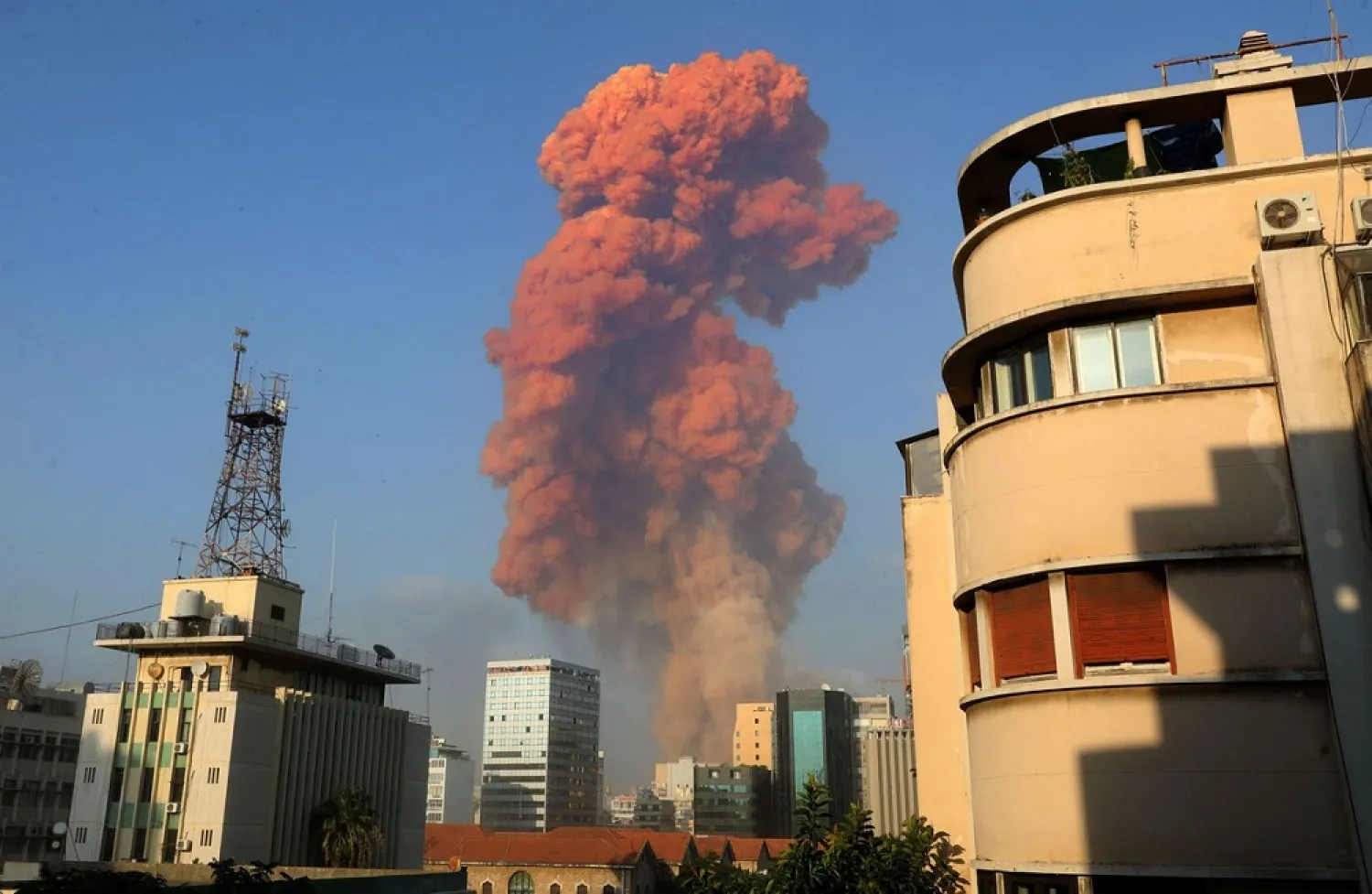
Smoke rises after the explosion at Beirut port, Beirut, Lebanon, on August 4, 2020. (Getty Images)
TT

In a Year Dominated by Pandemic, Many Other Dramas Unfolded

Smoke rises after the explosion at Beirut port, Beirut, Lebanon, on August 4, 2020. (Getty Images)

Not since World War II has a single phenomenon dominated the news worldwide as the COVID-19 pandemic has in 2020. In the United States, a tumultuous presidential election and a wave of protests over racial injustice also drew relentless coverage.

Overshadowed, to an extent, were other dramatic developments. Among them: China’s crackdown on Hong Kong’s democracy; an apocalyptic explosion in Beirut; the shocking helicopter-crash death of basketball icon Kobe Bryant and his daughter.

Some seemingly epic events early in the year now seem distant, like President Donald Trump’s impeachment trial and the January announcement by Prince Harry and Meghan Markle that they were exiting their prominent roles in Britain’s royal family. Just a few weeks later came the long-awaited Brexit, Britain’s formal withdrawal from the European Union.

As most of the world battled COVID, armed conflicts broke out between Armenia and Azerbaijan and in Ethiopia's Tigray region. Afghanistan's seemingly endless war dragged on, even as the warring sides warily edged into peace talks. Massive protests challenged the ruling powers in Belarus and Thailand.

Due to past instances of sexual assault and sexual abuse, Hollywood mogul Harvey Weinstein received a 23-year prison sentence and the Boy Scouts of America filed for bankruptcy protection.

Some other major events of 2020:

Iran: The year ended as it began with tensions between Iran and the US inflamed by the killing of a top official. On Jan. 3, a US drone strike killed Revolutionary Guard Gen. Qassem Soleimani. Iran responded with a missile attack that injured dozens of US troops in Iraq. In December, a mysterious attack near Tehran killed a nuclear scientist whom the US and others had identified as organizing Iran’s effort to seek nuclear weapons two decades ago. Iran blamed that attack on Israel.

Beirut Explosion: Lebanon’s capital was devastated in August by one of the largest non-nuclear explosions ever recorded. A fire detonated a stockpile of nearly 3,000 tons of ammonium nitrates left to rot at a port warehouse. The explosion tore through Beirut, sucking in the air and blowing up homes as windows shattered for miles around. More than 200 people were killed and thousands injured, compounding the woes of a nation already beset by mass protests and economic meltdown.

Hong Kong: China imposed a sweeping national security law in Hong Kong. The ensuing crackdown on dissent effectively voided China’s pledge to allow the city to maintain rights promised for 50 years following the 1997 handover from British colonial rule. The arrests of leading opposition figures and the expulsion of local lawmakers -- prompting the entire opposition camp to resign — led numerous countries to curtail legal cooperation with Hong Kong. The US imposed travel bans and financial sanctions.

Opioids: Purdue Pharma, the maker of OxyContin, pleaded guilty to three criminal charges, formally taking responsibility for its part in an opioid epidemic that has contributed to the deaths of more than 470,000 Americans over two decades. Purdue admitted impeding efforts to combat the addiction crisis. The pleas arose from a settlement that includes $8.3 billion in penalties and forfeitures, but victims’ advocates worried that Purdue’s owners, the Sackler family, might emerge with their fortune largely intact.

Notable Deaths: For sports fans worldwide, 2020 was sadly bookended by the deaths of two popular superstars — basketball’s Kobe Bryant, 41, and football’s Diego Maradona, 60. Among those killed along with Bryant in the helicopter crash was his 13-year-old daughter Gianna, herself a promising athlete. Other revered figures who died included US civil rights leader John Lewis, guitarist Eddie Van Halen, and actors Chadwick Boseman and Sean Connery. Many admirers of liberal US Supreme Court Justice Ruth Bader Ginsburg not only mourned her death, but deplored her replacement by a conservative, Amy Coney Barrett.

France-Muslims: The October beheading of a teacher by an 18-year-old Chechen outside Paris, followed by the killing of three people in Nice by a Tunisian migrant, prompted France to declare its highest-level security alert. The attacks came amid a trial over the 2015 massacre at the satiric newspaper Charlie Hebdo, which had published offensive cartoons of the Prophet Mohammed. The teacher had showed the cartoons to his class while discussing freedom of expression. The move was vigorously defended by President Emmanuel Macron. The caricatures and Macron’s stance fueled calls from Muslim nations to boycott French products; and some French Muslims resented the security crackdown.

Hurricanes: It was such a historically busy hurricane season that forecasters had to turn to the Greek alphabet after running out of assigned names. In the US, Louisiana took the brunt of the onslaught: three hurricanes and two tropical storms. The worst to hit the state was Hurricane Laura, which swept ashore in August. In November, several Central American countries were ravaged by two Category 4 hurricanes. In Tennessee, an outbreak of tornadoes in March killed 25 people.

Israel-Diplomacy: Israeli Prime Minister Benjamin Netanyahu scored a diplomatic coup in September by signing historic accords with the United Arab Emirates and Bahrain at the White House. It was Israel’s first normalization deal with Arab countries in more than 25 years. Later, Sudan and Morocco also pledged warmer official relations with Israel. The moves enabled Netanyahu to deliver welcome accomplishments to his electorate while under fire for his handling of the coronavirus crisis and his ongoing corruption trial.

Wildfires: Thousands of wildfires raged throughout the western US, claiming dozens of lives, destroying thousands of homes, and bringing apocalyptic scenes of orange skies and hazardous air. Months before the usual start of the wildfire season, drought, extreme warm temperatures and winds gusting up to 100 mph fueled some of the most destructive blazes in the region’s history. Scientists say climate change is responsible for more intense and frequent extreme events such as storms, droughts, flooding and wildfires -- including massive brush fires that raged for months in Australia.



Risk of ‘Escalation’ if Iran Attacked, Warns Deputy Foreign Minister

Iranians walk past shops selling food ahead of Iftar, the Ramadan fast-breaking meal, in northern Tehran on February 23, 2026. (AFP)
TT

Risk of ‘Escalation’ if Iran Attacked, Warns Deputy Foreign Minister

Iranians walk past shops selling food ahead of Iftar, the Ramadan fast-breaking meal, in northern Tehran on February 23, 2026. (AFP)

Iran's deputy foreign minister Kazem Gharibabadi warned of a wider escalation if his country was attacked, after US President Donald Trump raised the threat of strikes.

Trump has sent a major deployment of air and sea power to the Middle East and has threatened to strike Iran if it does not reach a deal on key concerns starting with its nuclear program.

"We call upon all nations committed to peace and justice to take meaningful steps to prevent further escalation," Gharibabadi said at the Conference on Disarmament in Geneva.

"The consequences of any renewed aggression wouldn't remain confined to one country -- and responsibility would rest with those who initiate or support such actions."

Iranian and US negotiators held indirect talks in Geneva last week on Tehran's nuclear program, hosted by Oman.

A fresh round of talks in the Swiss city this Thursday has been confirmed by Muscat, though not by Washington.

"Iran remains committed to diplomacy and dialogue as the most effective path towards de-escalation and sustainable security," Gharibabadi said.

"Recent diplomatic engagement here in Geneva, which will continue this Thursday, demonstrates that a new window of opportunity exists for negotiations to address differences and build confidence -- provided that they uphold mutual respect, equitable treatment and non-selective application of international norms.

"Any sustainable and credible negotiation must respect the legitimate rights of all states under international law, and deliver tangible security benefits without coercion, unilateral demands or threats of force."

- 'Chaos and change' -

The United States and Israel threatened new military action against Iran after mass protests in the regime, which the Iranian authorities crushed at a cost of thousands of lives.

After last week's indirect talks with Washington through Omani mediators in Geneva, Tehran said they had reached broad agreement on a set of guiding principles.

Gharibabadi said that while Tehran sought the path of diplomacy, it was prepared to defend its sovereignty, territory and people, insisting it would exercise its right to self-defense "if necessary".

He said meaningful progress in disarmament and non-proliferation could only be achieved through mutual, balanced and legally-binding commitments.

He called upon nuclear weapons states to engage constructively in talks towards a comprehensive nuclear weapons convention, plus offer legally-binding security assurances for countries without nuclear weapons.

Speaking just before, UN Secretary-General Antonio Guterres said the world was living through a period of "chaos and change", with international law being brazenly violated.

"The international order that defined security relations for nearly eight decades is shifting rapidly. The reckless use of force in many regions is fomenting mistrust," he warned.


Netanyahu Says Israel Facing ‘Challenging Days’ with Iran-US Tensions

Israeli Prime Minister Benjamin Netanyahu delivers a speech during a plenary session of the Knesset, the Israeli parliament, in Jerusalem, 23 February 2026. (EPA)
TT

Netanyahu Says Israel Facing ‘Challenging Days’ with Iran-US Tensions

Israeli Prime Minister Benjamin Netanyahu delivers a speech during a plenary session of the Knesset, the Israeli parliament, in Jerusalem, 23 February 2026. (EPA)

Prime Minister Benjamin Netanyahu said Monday that Israel was facing "complex and challenging days" as tensions escalate between the United States and Iran following President Donald Trump's threat of strikes should Tehran refuse to accept a new nuclear agreement.

"We are in very complex and challenging days," Netanyahu told lawmakers in a brief address to parliament. "We are keeping our eyes open and are prepared for any scenario."

He also reiterated a warning to Iran's leadership: "I have conveyed to the Iranian regime that if they make the gravest mistake in their history and attack the State of Israel, we will respond with a force they cannot even imagine."

The premier further highlighted Israel's close military cooperation with the US, as Washington continues to build up its military presence near Iran and in the Middle East.

"The alliance with the United States has never been closer," Netanyahu said.

"Between the Israel forces and the United States military, between our security agencies and their security services, there has never been anything like this," he added.

Arch-foes Israel and Iran faced each other in a first direct confrontation last June during a 12-day war in which the Israeli military targeted Tehran's nuclear facilities and ballistic missile arsenal.

Iran responded with drone and missile strikes on Israel. Later on in the war, the United States joined Israel in targeting Iran's underground nuclear facilities.


Iranian Students Protest for Third Day as US Pressure Mounts

Iranians drive along a street in Tehran, Iran, 23 February 2026. (EPA)
TT

Iranian Students Protest for Third Day as US Pressure Mounts

Iranians drive along a street in Tehran, Iran, 23 February 2026. (EPA)

Iranian students ‌defied authorities with protests for a third day on Monday, weeks after security forces crushed mass unrest with thousands killed and as the United States weighs possible air strikes against the country.

State media outlets reported students chanting anti-government slogans at Tehran University, burning flags at the all-women al-Zahra University, and scuffles at Amir Kabir University, all located in the capital.

Reuters also verified video showing students at al-Zahra University chanting slogans including "we'll reclaim Iran", but was not able ‌to confirm ‌when it was recorded.

In a new ‌sign ⁠of the mounting ⁠tension in the Middle East, the United States began pulling non-essential personnel and family members from the embassy in Beirut, a senior State Department official said.

US President Donald Trump has repeatedly threatened Iran since major nationwide protests across the country in January, saying on Thursday that "really bad things will ⁠happen" if talks between the countries fail ‌to produce a deal.

Washington wants ‌Iran to give up much of its nuclear program, which ‌it believes is aimed at building a bomb, limit the ‌range of its missiles to short distances and stop supporting groups it backs in the Middle East.

It has built up forces across the Middle East, putting increased pressure on Iran ‌as it weighs its response to US demands amid ongoing talks.

Iranian Supreme Leader Ali ⁠Khamenei ⁠already faces the gravest crisis of his 36-year tenure, with an economy struggling under the weight of international sanctions and growing unrest that broke out into major protests in January.

On Sunday Iranian President Masoud Pezeshkian said negotiations with the US had "yielded encouraging signals" even as a second US aircraft carrier headed towards the Middle East.

Trump has not laid out in detail his thinking on any possible Iran strike. A senior White House official told Reuters last week there was still no "unified support" within the administration to go ahead with an attack.