


Oil Prices Hit 9-Month High

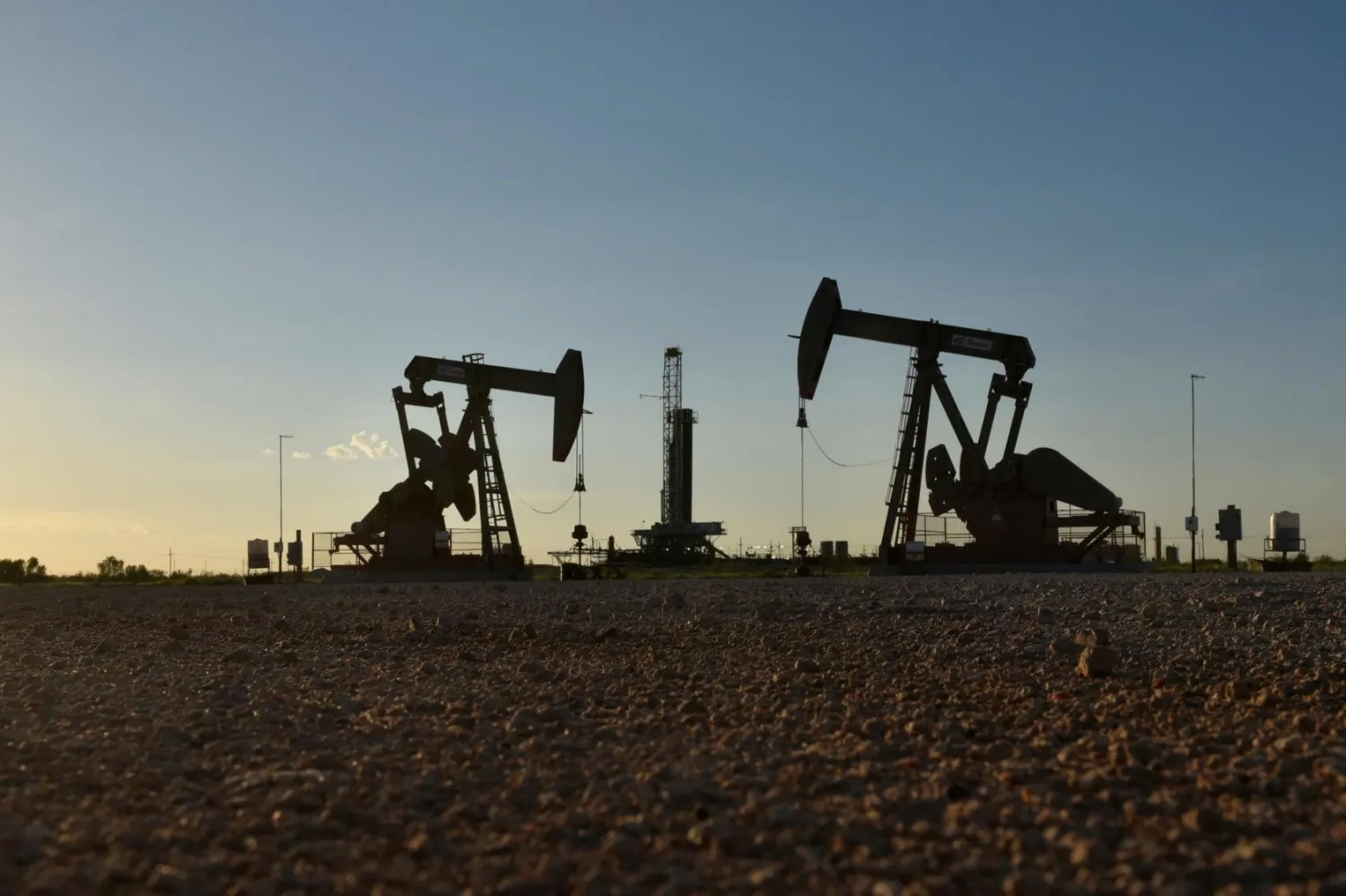
FILE PHOTO: Pump jacks operate in front of a drilling rig in an oil field in Midland, Texas US August 22, 2018. REUTERS/Nick Oxford/File Photo
TT

Oil Prices Hit 9-Month High

FILE PHOTO: Pump jacks operate in front of a drilling rig in an oil field in Midland, Texas US August 22, 2018. REUTERS/Nick Oxford/File Photo

Oil climbed to a nine-month high on Thursday after government data showed a fall in US crude stockpiles last week, while progress towards a US fiscal stimulus deal and strong Asian demand also buoyed prices.

The US dollar also set a 2-1/2-year low against major rivals on Thursday. Oil prices generally rise when the dollar falls because crude priced in the greenback becomes cheaper for buyers holding other currencies.

Brent crude futures was up 14 cents at $51.22 a barrel by 1110 GMT, having traded as high as $51.90.

US West Texas Intermediate (WTI) crude futures rose by 20 cents to $48.02 a barrel, having traded as high as $48.59.

Both benchmarks hit their highest since early March, Reuters reported.

"All the headlines have been bullish for oil prices," said Edward Moya, senior market analyst at OANDA in New York.

"US stockpiles posted a larger-than-expected draw, three of India's refiners are operating almost at 100% capacity, indicating crude demand remains strong, and it seems the US will continue to deliver more monetary and fiscal stimulus, sending the dollar lower and most commodities higher."

US crude inventories fell by 3.1 million barrels in the week to Dec. 11, the Energy Information Administration said, far more than analysts' expectations of a 1.9-million-barrel drop.

Also boosting oil prices, US lawmakers edged closer to agreement on a $900 billion virus-relief spending package on Wednesday.

The United States on Thursday also expanded its campaign to deliver COVID-19 vaccine shots.

"It seems to be a much better festive season than most bullish traders could expect for. But whether oil prices can remain as high and keep these gains is still questionable amid the demand destruction lockdowns are causing," said Bjornar Tonhaugen at Rystad Energy.



World Bank Sees Saudi Budget Deficit Halving, Current Account Surplus of 3.3% in 2026

 Riyadh, Saudi Arabia (Reuters)
Riyadh, Saudi Arabia (Reuters)
TT

World Bank Sees Saudi Budget Deficit Halving, Current Account Surplus of 3.3% in 2026

 Riyadh, Saudi Arabia (Reuters)
Riyadh, Saudi Arabia (Reuters)

As regional economies reel from a complex and uncertain geopolitical landscape, with shipping disruptions through the Strait of Hormuz adding pressure, the latest World Bank report points to standout resilience in Saudi Arabia’s economy.

The data show the kingdom on a fiscal consolidation path to strengthen its fiscal position, with the budget deficit set to halve and the current account shifting from deficit to surplus.

April data from the World Bank indicate Saudi Arabia has not only built solid “economic buffers,” but is also leveraging geopolitical pressures to advance structural reforms.

While much of the region faces sharp fiscal strain and negative growth, the kingdom is moving steadily ahead, recording the strongest growth among regional peers and reinforcing its role as a pillar of regional stability.

Despite broad downward revisions, Saudi Arabia remains the region’s top performer. Growth forecasts for the wider region have been cut to 1.8%, while the kingdom is expected to expand by 3.1%.

Current account shifts to a 3.3% surplus

World Bank data point to a shift in Saudi Arabia’s current account. After a projected deficit of 2.7% of GDP in 2025, forecasts for 2026 point to a surplus of 3.3%.

A current account surplus means exports of goods and services exceed imports, strengthening the balance of payments. It also reflects rising net foreign assets and stronger financing capacity, supported by solid export performance and moderate domestic demand.

The shift carries broader weight. Moving from deficit to surplus positions, Saudi Arabia becomes a net lender to the global economy, with oil export revenues, fast-growing non-oil sectors, and returns on foreign investments outpacing spending on imports and services.

Beyond the headline figures, the surplus acts as an external buffer, supporting currency stability and generating strong liquidity flows. This gives financial institutions and sovereign funds greater room to sustain investment in major development projects, while helping shield the economy from disruptions in global supply chains and shipping routes.

Deficit set to halve

Fiscal data show improved expenditure control and revenue growth. The World Bank expects the deficit to narrow from 6.4% of GDP in 2025 to 3.0% in 2026, below the Finance Ministry’s estimate of 3.3%.

The shift reflects tighter fiscal discipline. Despite the cost of regional tensions, the gap between revenue and spending is set to shrink by half in one year.

This reflects effective fiscal policy, including stronger tax collection and public financial management, rising non-oil revenues that reduce reliance on energy price swings, and more efficient public spending focused on high-impact development projects, limiting the need for external borrowing and supporting long-term fiscal balance.

Saudi Arabia leads per capita growth

The April 2026 report also shows a sharp divergence in per capita growth across the region. While countries such as Kuwait (-7.7%) and Qatar (-7.4%) face steep contractions, Saudi Arabia stands out with an expected per capita growth rate of 1.4%.

Inflation remains contained at 2.8%, helping preserve purchasing power despite global increases in energy and shipping costs driven by maritime disruptions. This stability protects the broader economy from imported inflation pressures.


European Development Bank Unveils 5 Bn Euros for War-hit Economies

A Lebanese man walks past destruction at the site of an Israeli airstrike the day before that targeted a building in Beirut on April 9, 2026. (Photo by Ibrahim AMRO / AFP)
TT

European Development Bank Unveils 5 Bn Euros for War-hit Economies

A Lebanese man walks past destruction at the site of an Israeli airstrike the day before that targeted a building in Beirut on April 9, 2026. (Photo by Ibrahim AMRO / AFP)

The European development bank said Thursday it was unlocking five billion euros ($5.9 bn) to help shore up economies hit by the Middle East war.

The European Bank for Reconstruction and Development (EBRD) said it will "deploy EUR5 billion in 2026 in economies impacted by Middle East conflict".

The funds would be focused on Iraq, Jordan, Lebanon, the West Bank and Gaza "and affected neighboring economies" including Egypt, Türkiye, Armenia and Azerbaijan, the bank said in a statement.

"The economic and social impact of the conflict is already being felt across many of the bank's economies in the form of disrupted trade routes, energy and commodity shocks, weakened investor confidence and broader costs to the population," it added.

Established in 1991 to help former Soviet bloc nations embrace free-market economies, the bank later extended its reach to the Middle East and Africa.

"In a time of rising uncertainty, we are stepping up where others may pull back," said EBRD president Odile Renaud Basso.

"We are here to support economies, clients and people in our countries of operation in tough times," she added.

The bank said "the volume of conflict response investment will be demand driven due to the fast-changing nature of the situation".

The funds will provide immediate relief "by supporting economic activity" and "fostering financial sector stabilization".

EBRD will aim to strengthen energy security and aid state-owned enterprises to "ensure the uninterrupted provision of essential goods and services".

On Thursday it had approved "a project to support Lebanon's retail chain," it said, adding it also aimed to safeguard access to jobs, finance and essential services.

Since starting operations in the southern and eastern Mediterranean in 2012, the EBRD has invested more than EUR26.5 billion in 489 projects in the region.

In Türkiye alone, the lender has committed more than 23 billion euros since 2009.


Saudia to Partially Resume Flights To, From Dubai, Abu Dhabi, and Amman on Saturday

One of Saudia’s aircraft (company website)
TT

Saudia to Partially Resume Flights To, From Dubai, Abu Dhabi, and Amman on Saturday

One of Saudia’s aircraft (company website)

Saudia announced on Thursday the partial resumption of its operations to and from Dubai, Abu Dhabi, and Amman starting Saturday, April 11.

In a post on its official account on the social media platform X, the airline said the resumption will be carried out through the operation of exceptional daily flights to and from those destinations.

Saudia advised passengers to check the status of their flights before heading to the airport, noting that further updates will be published through its official channels.