When Scotland Last Beat England at Twickenham – and Billie Jean Was No 1

Roy Laidlaw evades a tackle from Huw Davies on the way to scoring his superb solo try. Photograph: Colorsport/Rex/Shutterstock
TT

When Scotland Last Beat England at Twickenham – and Billie Jean Was No 1

Roy Laidlaw evades a tackle from Huw Davies on the way to scoring his superb solo try. Photograph: Colorsport/Rex/Shutterstock

Michael Jackson was No 1 with Billie Jean; Britain was slowly getting used to waking up to breakfast TV; compact discs went on sale for the first time; the press were extremely excited that Prince William had two new teeth; and Arthur Scargill’s call for a miners’ strike was rejected by NUM members. March 1983 feels like a million years ago. It is also the last time Scotland won a game of rugby at Twickenham.

The ground has never been a happy hunting ground for Scotland. Before their victory in 1983, Scotland had only won there three times: in 1926, 1938, and 1971. Despite their appalling record and the fact they had already lost all three of their other matches in the 1983 Five Nations, Scotland’s trip to Twickenham offered them a brilliant opportunity to beat England.

The build-up

England had been installed as pre-tournament favorites but they lost at home to France in their opening match and then drew 13-13 in Cardiff, a result that led to skipper Steve Smith being dropped from the squad. Chief selector Budge Rogers announced that Nigel Melville would take Smith’s place at scrum-half. “I’m not bitter but I’m sad, because leading England is a great honor,” said Smith. “I’m certainly not retiring and will be available whenever my country needs me.”

It was a good job Smith left the door open. Melville broke down in training and Smith was recalled to the team, with Nick Youngs – who had been named in the original squad – ignored completely. Smith didn’t resume his captaincy; that honor had already been handed to John Scott.

Scotland had been progressing under coach Jim Telfer. Since his appointment in 1980, Telfer had led them to five victories in 12 Five Nations matches, which was a big improvement considering they had not won a single game in 1978 or 1979. So losing their opening three matches (15-13 to Ireland, 19-15 to France, and 19-15 to Wales) was hugely disappointing. The wooden spoon was looming on the horizon.

Scotland’s scrum-half had also lost the captaincy, but the talented Roy Laidlaw kept his place in the team, with prop Jim Aitken asked to become the fourth Scot to skipper a team to victory at Twickenham. “My career has hit an unexpected new high,” said Aitken, who wasn’t even picked for Scotland’s opening fixture in the tournament. His new status as pack leader made him an ideal candidate for the captaincy and the move freed up Laidlaw to concentrate on his own game with stunning effect.

Scotland were also handed a huge boost with the return of fly-half John Rutherford, who had recovered from a shoulder operation and was able to resume his sublime partnership with Laidlaw. The half-backs would play a crucial part in the victory at Twickenham, as would locks Tom Smith and Iain Paxton.

With changes aplenty, the press struggled to pick the likely winners. “England versus Scotland is just about the biggest home banker in modern sport. I expect the sporrans to be at half-mast again,” wrote Tony Bodley in the Express, but Richard Streeton saw it differently, concluding in the Times: “Reservations about England’s effectiveness as an attacking unit and respect for Scotland’s potential lead me to expect a narrow Scottish win.”

The match

England drew first blood in the match, when the recalled fly-half John Horton scored a drop goal after just two minutes. It was to be one of the few highlights for the home team. Peter Dods and Dusty Hare exchanged a series of penalties to make it 9-9 at the break – the score clearly visible on the two new screens installed at Twickenham.

Laidlaw scored the first of Scotland’s two tries after the restart. He picked the ball inside England’s 22, went on a jinking run and evaded four men before touching down. Laidlaw was putting in a captain’s performance one match too late – to borrow Fred Trueman’s tribute to Ian Botham at Headingley in 1981. Dods’ conversion pushed Scotland 15-9 in front and, after another penalty for England and a second drop goal for Scotland, Smith scored a try to give Scotland a fully deserved 22-12 win.

The fallout

There was no doubting who had been the star of the show. “Scotland’s individual hero was their scrum-half, Laidlaw, who deserves a statue on the Forth Bridge,” wrote Streeton in the Times. “His quicksilver forays in attack, splendid passing and defensive work were the hinge on which all Scotland’s efforts turned.”

For England, the criticism came thick and fast. Rogers was quick to blame the players he had selected, saying: “Some looked as if they didn’t want the ball. They looked tired and lethargic from the opening stages. Our midfield play was predictable. When we did work an overlap, we didn’t use the extra man. We chipped the ball away, or the man in possession turned inside.”

Tony Swift, Huw Davies and Smith were all dropped for the next match against Ireland. Smith would never play for England again, but he didn’t leave without airing his own opinion. “I’m not frightened to say what most of us have been thinking since the draw against the Welsh. We were on a high note after achieving England’s best result in Cardiff for 20 years. That was the time when selectors and players needed to pull together. But other players and myself were publicly criticized. The team’s confidence has been destroyed since Cardiff. It’s a great pity after all the work over the past three years.”

The aftermath

Unsurprisingly, England went to Dublin and put in an insipid performance, losing 25-15 and once again failing to score a try. Mike Davis’s time as coach ended with the wooden spoon and Rogers followed him out the door in June. In the next four years England would win just five matches in the Five Nations.

Scotland, however, went from strength to strength, their Grand Slam triumph in 1984 completing a turnaround in fortunes for a team that had struggled at the start of the decade. The victory at Twickenham in 1983 undoubtedly gave Telfer and his players belief. However, even in their successful years, Scotland never repeated that victory. After making long trips back and forth to London for 38 years hoping to see another victory, it would be a bittersweet occasion for Scotland fans if their team finally won at Twickenham on Saturday and none of them were there to witness it.

The Guardian Sport


IOC Boss Coventry Hails Milano Cortina Games a Success

 20 February 2026, Italy, Milan: President of the International Olympic Committee (IOC) Kirsty Coventry holds a press conference. (dpa)
20 February 2026, Italy, Milan: President of the International Olympic Committee (IOC) Kirsty Coventry holds a press conference. (dpa)
TT

IOC Boss Coventry Hails Milano Cortina Games a Success

 20 February 2026, Italy, Milan: President of the International Olympic Committee (IOC) Kirsty Coventry holds a press conference. (dpa)
20 February 2026, Italy, Milan: President of the International Olympic Committee (IOC) Kirsty Coventry holds a press conference. (dpa)

The Milano Cortina Olympics exceeded expectations despite a shaky build-up, IOC President Kirsty Coventry said on Friday, hailing the first spread-out Winter Games a success.

"These Games are truly ... successful in a new way of doing things, in a sustainable way of doing things, in a way that I think many people thought maybe we couldn't do, or couldn't be done well, and it's been done extremely well, and it's surpassed everyone's expectations," Coventry told a press conference.

It was the International Olympic Committee chief's clearest endorsement yet of a format that split events across several Alpine clusters rather than concentrating them in one host city.

Her assessment came after two weeks in which organizers sought to prove that a geographically dispersed Games could still deliver a consistent athlete experience.

The smooth delivery ‌comes after years ‌of logistical and political challenges, including construction delays at Milan’s Santagiulia Arena ‌and ⁠controversy over building ⁠a new sliding center in Cortina against IOC advice.

Organizers have also faced isolated disruptions during the Games, such as suspected sabotage on rail lines and protests in Milan over housing and environmental issues.

Transport concerns across the dispersed venues have been mitigated by limited cross-regional travel among spectators, though some competitors had to walk to the Cortina Curling Olympic Stadium in heavy snowfall that stopped traffic.

Central to the success of the Games, Coventry argued, was the effort to standardize conditions across multiple athlete villages despite the distances separating venues from Cortina d’Ampezzo to ⁠Livigno and Bormio.

Italian athletes’ performances also helped ticket sales, which amounted to ‌about 1.4 million.

"And the athletes are extremely happy. And they're happy ‌because the experiences that the MiCo (Milano Cortina) team and my team delivered to them have been the same," she ‌said.

Mixed relay silver medalist Tommaso Giacomel did, however, lament the fact there was no Olympic village near ‌the Antholz-Anterselva Biathlon Arena and that competitors were dotted around different hotels near the venue instead of in one place.

TWO OPENING CEREMONIES

Two opening ceremonies were held - the main one at Milan’s San Siro stadium and a more low-key parade on Cortina d’Ampezzo's Corso Italia, where athletes and spectators were within touching distance.

Feedback from competitors suggested the more intimate ‌settings had in some cases enhanced the Olympic atmosphere, Coventry said, taking the Cortina opening ceremony as an example.

The Zimbabwean, presiding over her first Games ⁠as IOC chief after elections in ⁠2025, framed Milano Cortina as proof of concept for future hosts grappling with rising costs and climate constraints, while acknowledging adjustments would follow.

"It allows us to really look at ourselves and look at the things that we have in place and how we're then going to make certain adjustments for the future," she said.

Beyond logistics, Coventry pointed to the broader impact of the Games, highlighting gender balance - with women making up 47% of competitors - and global engagement as marks of progress.

"But it's been an incredible experience and we're all very proud to have gender equity playing a big role in the delivery of the Games," she said, describing a "tremendous Games" in which athletes have "come together and shared in their passion".

With the closing ceremony in Verona approaching, Coventry said the focus would soon shift to a formal evaluation process, but insisted the headline conclusion was already clear.

"So we look forward to doing that and to learning from all the incredible experiences that I think all of the stakeholders have had across these Games, across these past two weeks," she said.


‘A Huge Mistake.’ Kompany Hits Out at Mourinho for Vinícius Júnior Comments

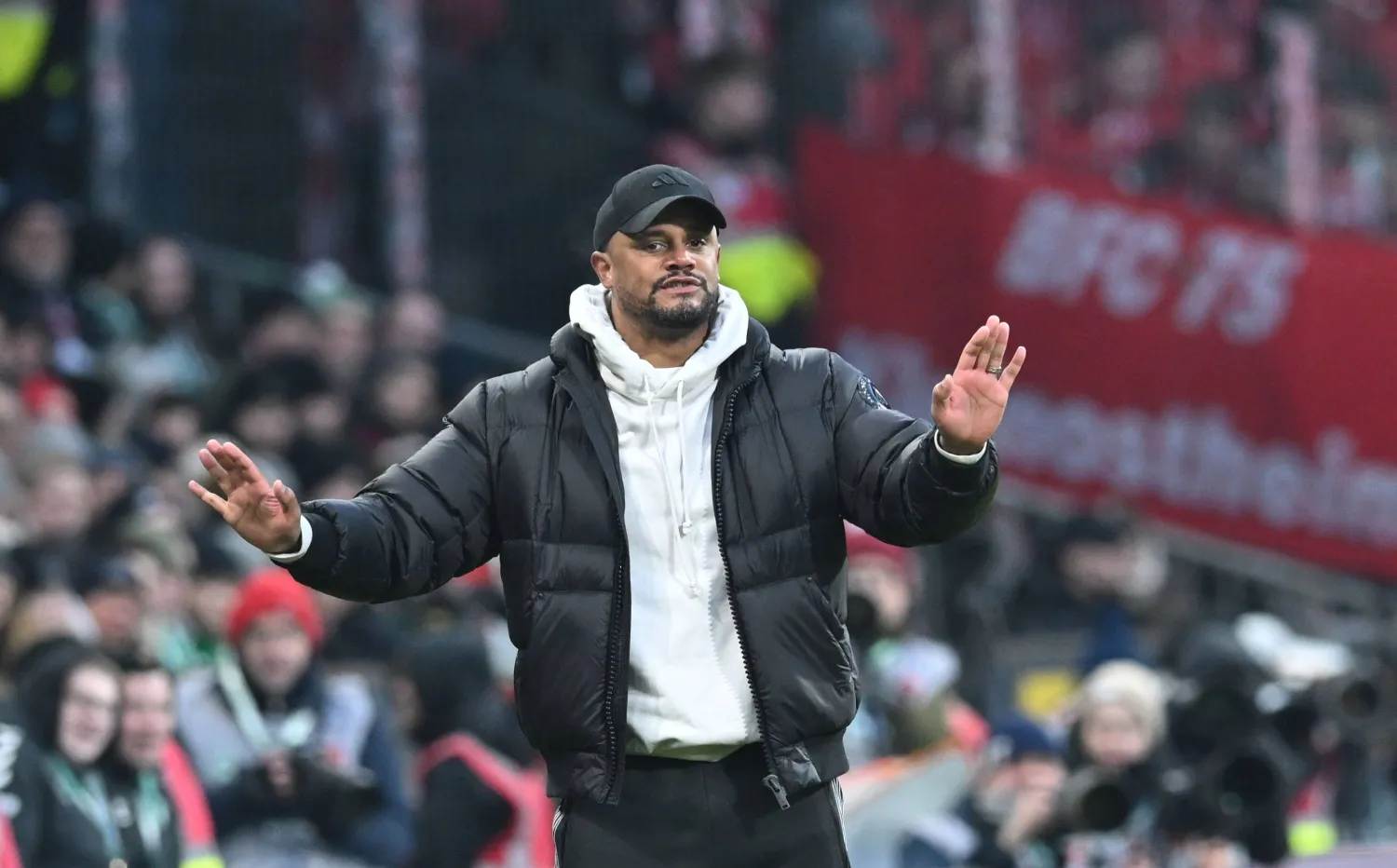
14 February 2026, Bremen: Bayern Munich coach Vincent Kompany gestures during the German Bundesliga soccer match between Werder Bremen and Bayern Munich at Weserstation. (dpa)
TT

‘A Huge Mistake.’ Kompany Hits Out at Mourinho for Vinícius Júnior Comments

14 February 2026, Bremen: Bayern Munich coach Vincent Kompany gestures during the German Bundesliga soccer match between Werder Bremen and Bayern Munich at Weserstation. (dpa)

Bayern Munich coach Vincent Kompany has criticized José Mourinho for attacking the character of Vinícius Júnior after the Real Madrid star accused an opponent of racially insulting him during a Champions League match.

Benfica coach Mourinho suggested that Brazil forward Vinícius had incited Benfica's players with his celebrations after scoring the only goal in Tuesday's playoff match.

Vinícius accused Benfica's Gianluca Prestianni of calling him "monkey" during a confrontation after his goal.

Mourinho also questioned why Vinícius, who is Black and has been subjected to repeated racist insults in Spain, was so frequently targeted.

"There is something wrong because it happens in every stadium," Mourinho said. "The stadium where Vinícius played something happened. Always."

Speaking on Friday, Kompany condemned Mourinho's comments.

"So after the game you have the leader of an organization, José Mourinho, who attacks the character of Vinícius Júnior by bringing in the type of celebration to discredit what Vinícius is doing in this moment," Kompany said. "And for me in terms of leadership, it’s a huge mistake and it’s something that we should not accept."

Mourinho’s celebrations

UEFA appointed a special investigator on Wednesday to gather evidence about what happened in Lisbon in Madrid’s 1-0 win in the first leg of the Champions League playoffs. Madrid said it had sent "all available evidence" of the alleged incident to European soccer's governing body.

Referring to Vinícius' celebrations after curling a shot into the top corner, Mourinho said he should "celebrate in a respectful way."

Kompany pointed out Mourinho's own history of exuberant celebrations — such as when he ran down the sideline to cheer when his Porto team beat Manchester United in the Champions League.

Kompany said Mourinho's former players "love him" and added "I know he’s a good person."

"I don’t need to judge him as a person, but I know what I’ve heard. I understand maybe what he’s done, but he’s made a mistake and it’s something that hopefully in the future won’t happen like this again," he said.

Prestianni denied racially insulting Vinícius. Benfica said the Argentine player was the victim of a "defamation campaign."

‘Right thing to do’

Kompany said Vinícius' reaction "cannot be faked."

"You can see it — his reaction is an emotional reaction. I don’t see any benefit for him to go to the referee and put all this misery on his shoulders," he said. "There is absolutely no reason for Vini Junior to go and do this.

"I think in his mind he’s doing it more because it’s the right thing to do in that moment."

Kompany added: "You have a player who’s complaining. You have a player who says he didn’t do it. And I think unless the player himself comes forward, it’s difficult. It’s a difficult case."


FIFA to Lead $75m Palestinian Soccer Rebuilding Fund

President of FIFA Gianni Infantino attended the inaugural meeting of US President Donald Trump's 'Board of Peace'. CHIP SOMODEVILLA / GETTY IMAGES NORTH AMERICA/AFP
TT

FIFA to Lead $75m Palestinian Soccer Rebuilding Fund

President of FIFA Gianni Infantino attended the inaugural meeting of US President Donald Trump's 'Board of Peace'. CHIP SOMODEVILLA / GETTY IMAGES NORTH AMERICA/AFP

FIFA will spearhead a $75 million fund to rebuild soccer facilities in Gaza that were destroyed by the war between Israel and Hamas, President Donald Trump and the sport's governing body said Thursday.

Trump made the announcement in Washington at the first meeting of his "Board of Peace," an amorphous institution that features two dozen of the US president's close allies and is initially focused on rebuilding the Gaza strip, said AFP.

"I'm also pleased to announce that FIFA will be helping to raise a total of $75 million for projects in Gaza," said Trump.

"And I think they're soccer related, where you're doing fields and you're getting the greatest stars in the world to go there -- people that are bigger stars than you and I, Gianni," he added, referring to FIFA president Gianni Infantino, who was present at the event.

"So it's really something. We'll soon be detailing the announcement, and if I can do I'll get over there with you," Trump said.

Later Thursday, FIFA issued a statement providing more details, including plans to construct a football academy, a new 20,000-seat national stadium and dozens of pitches.

The FIFA communique did not mention Trump's $75 million figure, and said funds would be raised "from international leaders and institutions."

Infantino has fostered close ties with Trump, awarding him an inaugural FIFA "Peace Prize" at the World Cup draw in December.

At Thursday's meeting, the FIFA president donned a red baseball cap emblazoned with "USA" and "45-47," the latter a reference to Trump's two terms in the White House.

In FIFA's statement, Infantino hailed "a landmark partnership agreement that will foster investment into football for the purpose of helping the recovery process in post conflict areas."

The "Board of Peace" came together after the Trump administration, teaming up with Qatar and Egypt, negotiated a ceasefire in October to halt two years of devastating war in Gaza.

The United States says it is now focused on disarming Hamas -- the Palestinian group whose unprecedented October 7, 2023, attack on Israel triggered the massive offensive.