
UK's Chief Mouser Celebrates 10 Years on the Prowl

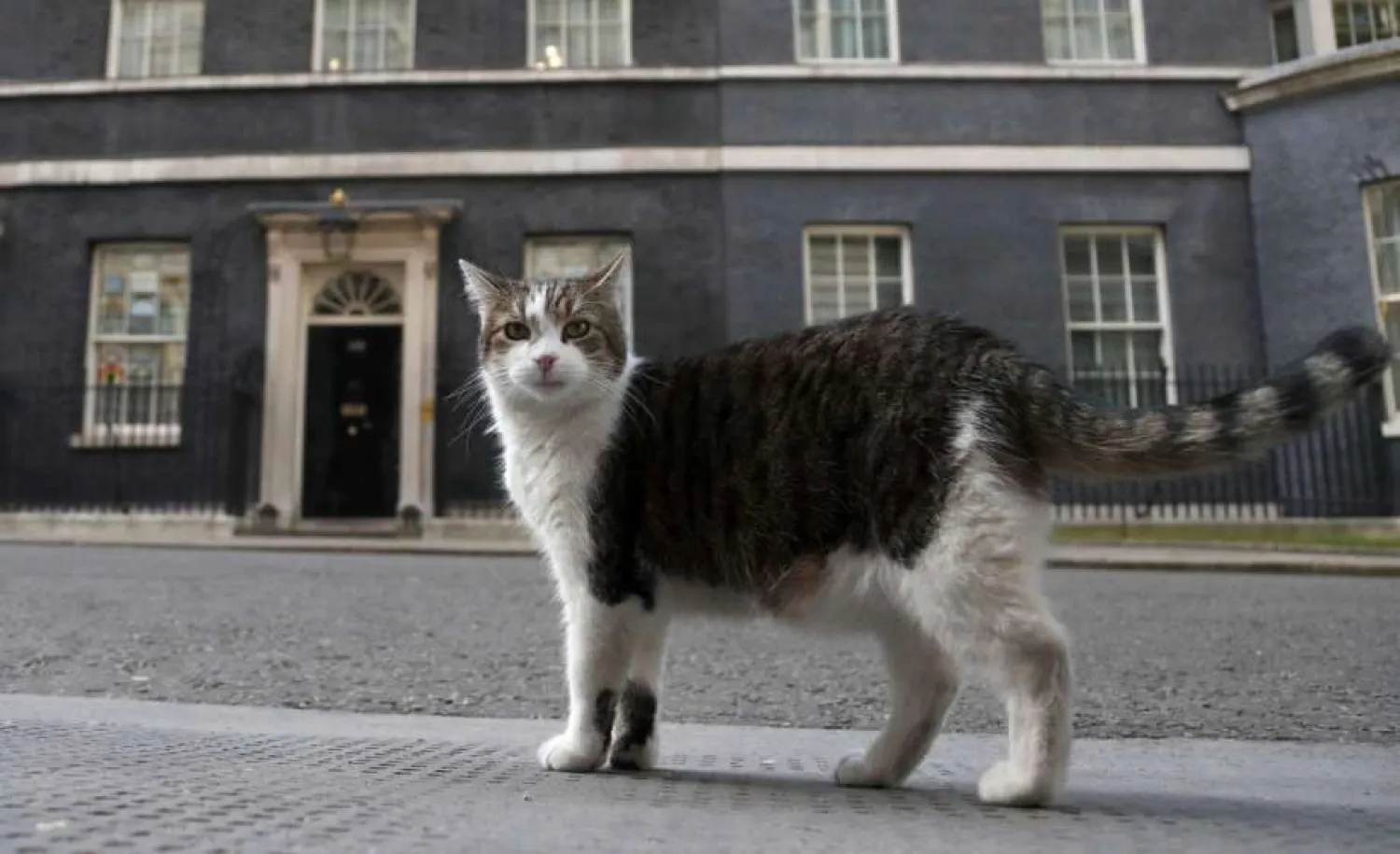
In this Thursday, May 21, 2020 file photo, Larry, the official 10 Downing Street cat walks outside 10 Downing Street before the nationwide Clap for Carers to recognize and support National Health Service (NHS) workers and carers fighting the coronavirus pandemic, in London. Monday, Feb. 15, 2021 marks the 10th anniversary of rescue cat Larry becoming Chief Mouser to the Cabinet Office in a bid to deal with a rat problem at 10 Downing Street. (AP Photo/Frank Augstein, file)
TT

UK's Chief Mouser Celebrates 10 Years on the Prowl

In this Thursday, May 21, 2020 file photo, Larry, the official 10 Downing Street cat walks outside 10 Downing Street before the nationwide Clap for Carers to recognize and support National Health Service (NHS) workers and carers fighting the coronavirus pandemic, in London. Monday, Feb. 15, 2021 marks the 10th anniversary of rescue cat Larry becoming Chief Mouser to the Cabinet Office in a bid to deal with a rat problem at 10 Downing Street. (AP Photo/Frank Augstein, file)

Larry the cat, a four-legged inhabitant of London´s 10 Downing St., is marking a decade as Britain´s mouse-catcher in chief on Monday.

The tabby cat was recruited by then-Prime Minister David Cameron to deal with a pack of rats seen scuttling close to the British leader´s official residence, and entered Downing Street on Feb. 15, 2011.

The former stray, adopted from London´s Battersea Dogs and Cats Home, was given the title Chief Mouser to the Cabinet Office, an unofficial pest control post. He was the first cat to hold the rat-catching portfolio since the retirement of Humphrey in 1997, and has loyally served three prime ministers.

But it seems like yesterday that Larry was just another cat - as opposed to a media superstar - said Lindsey Quinlan, the head of cattery of Battersea.

"Throughout his time at Number 10, Larry has proven himself to not only be a brilliant ambassador for Battersea but also demonstrated to millions of people around the world how incredible rescue cats are,´´ she said. "His rags to riches tale is yet more proof of why all animals deserve a second chance - one minute they may be an overlooked stray on the streets, the next they could become one of the nation´s beloved political figures, with fans around the world."

Larry, who has met a number of world leaders, has been largely unfriendly to men but took a liking to former US President Barack Obama. When former President Donald Trump visited in 2019, Larry took a nap under his car.

His grip on the public imagination is clear - and political leaders know better than to ignore that popularity. The tomcat was a sentimental topic of conversation in Cameron´s final appearance in Parliament as prime minister when he said he wanted to quash a rumor that - perish the thought - he didn´t like Larry.

And just to prove it, he whipped out evidence: a picture of Larry lying on his lap.

"He belongs to the house and the staff love him very much - as do I," he said at the time, explaining why he wasn't taking Larry with him after leaving office.

After the December 2019 election, rumors swirled that Larry might be headed for retirement with the news that the new prime minister, Boris Johnson, was a dog man. However, despite the prime minister moving Jack Russell cross Dilyn into Downing Street, Larry remained in office.

Reports of his rodent-killing abilities vary. Larry became known for his occasional scraps with neighboring cats -- especially Palmerston, chief mouser to the Foreign Office across the street -- and fondness for sleep. Palmerston has retired to the country, so things have been a bit quieter of late.

These days Larry, now 14, is often seen by photographers patrolling his turf. Visitors to the building can sometimes find him napping on a ledge above a radiator or sleeping on a floor, where dignitaries occasionally have to step over him.

At the heart of government, he specializes in power naps.


EU Nations Want Reduced Protection for Bears

19 June 2026, Berlin: A brown bear sits on a rock in its enclosure at the Berlin Zoo during a heat wave. Photo: Sven Kaeuler/dpa
TT

EU Nations Want Reduced Protection for Bears

19 June 2026, Berlin: A brown bear sits on a rock in its enclosure at the Berlin Zoo during a heat wave. Photo: Sven Kaeuler/dpa

A group of EU countries pushed Monday to lower the protection status of bears in Europe and relax hunting restrictions, citing an increase in attacks against humans and livestock.

In a letter to fellow European Union members, Romania and Slovakia said rapidly expanding bear numbers were to blame for a spree of incidents.

Bears killed 18 people and seriously injured more than 200 in the two countries over the past five years, AFP reported.

They also accounted for a good part of the more than 2,000 domestic animals, including horses, cattle, sheep, goats and pigs mauled to death by large carnivores at a hefty economic cost since 2023, they said.

"As an apex predator with no natural predators of its own, the species urgently requires effective management," they wrote in the letter which was backed also by Croatia, the Czech Republic and Finland.

The issue was discussed at a meeting of agriculture ministers in Luxembourg Monday.

The appeal follows a recent similar move against the wolf which proved successful, resulting last year in a lowering of the canine's protection status.

"Romania and Slovakia call for a similar approach to be applied to the brown bears," the countries wrote.

A majority of EU nations need to back any such proposal for the bloc to be able to initiate procedures to change bears' protection status -- a move opposed by environmental groups.

Bears are not the only species facing calls for a cull.

Last month, nine EU countries said the great cormorant's population might need a trim, for the bird was eating too much fish for the liking of human fishers.


First Confirmed Black-winged Kite Nesting Documented in Saudi Arabia’s King Abdulaziz Reserve

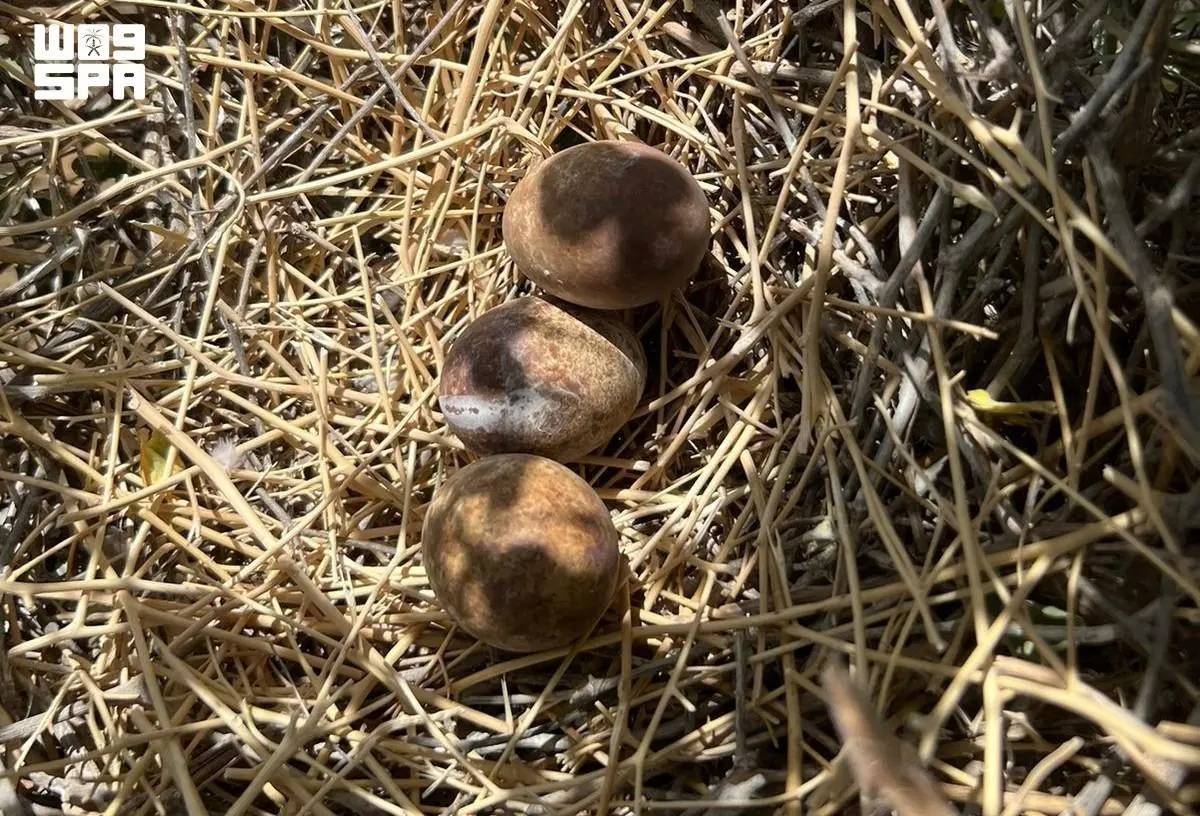
The Black-winged Kite is a bird of prey associated with open habitats that provide suitable nesting trees and reliable food sources. (SPA)
TT

First Confirmed Black-winged Kite Nesting Documented in Saudi Arabia’s King Abdulaziz Reserve

The Black-winged Kite is a bird of prey associated with open habitats that provide suitable nesting trees and reliable food sources. (SPA)

The King Abdulaziz Royal Reserve Development Authority announced the documentation of the first confirmed nesting record of Elanus caeruleus, commonly known as the Black-winged Kite, within the boundaries of the King Abdulaziz Royal Reserve, reported the Saudi Press Agency on Monday.

Providing new scientific evidence of the reserve's suitability as a natural habitat that supports wildlife settlement, breeding, and biodiversity conservation, the achievement aligns with the strategic objectives of the royal reserves and the Saudi Green Initiative in support of Saudi Vision 2030.

The nesting activity was recorded between January 20 and May 26, 2025, based on field surveys conducted in several natural meadows characterized by dense Sidr tree growth.

Adult and juvenile birds of the species were observed throughout the season, before researchers discovered an active nest on May 14, 2025, atop a Sidr tree approximately 2.9 meters high. The nest contained three eggs, providing direct evidence of local breeding within the reserve.

The Black-winged Kite is a bird of prey associated with open habitats that provide suitable nesting trees and reliable food sources.

Its documentation within the reserve reflects the authority’s efforts to protect and manage natural habitats and provide safe environments capable of supporting raptor populations, particularly in areas undergoing ecological recovery and improvements in vegetation cover.

The nesting activity was recorded between January 20 and May 26, 2025, based on field surveys conducted in several natural meadows characterized by dense Sidr tree growth. (SPA)

The authority also holds scientific records confirming the expansion of the species’ breeding range within Saudi Arabia through a combination of field observations in the reserve and national records published in a global biodiversity database.

These findings indicate a seasonal pattern of occurrence that supports the hypothesis of local breeding synchronized with seasonal movements and dispersal across several regions of the Kingdom.

The findings were published in a peer-reviewed study in the international journal Zoology and Ecology. The study was conducted by a joint research team comprising researchers from the King Abdulaziz Royal Reserve Development Authority and King Saud University as part of efforts to promote scientific research and document biodiversity within the reserve in accordance with internationally recognized scientific standards.

The authority underlined the importance of continuing environmental monitoring and surveillance programs in the reserve, identifying new nesting sites and incorporating them into conservation programs. These efforts contribute to protecting natural habitats, supporting wildlife, and advancing scientific knowledge of biodiversity in Saudi Arabia.


Interstellar Comet Likely Far Older Than Solar System, Say Astronomers

This handout photograph released by NASA on June 22, 2026, shows a view taken by Hubble of the interstellar comet 3I/ATLAS on July 21, 2025, when the comet was 277 million miles from Earth. "AFP photo / NASA / ESA / David Jewitt (UCLA)"
TT

Interstellar Comet Likely Far Older Than Solar System, Say Astronomers

This handout photograph released by NASA on June 22, 2026, shows a view taken by Hubble of the interstellar comet 3I/ATLAS on July 21, 2025, when the comet was 277 million miles from Earth. "AFP photo / NASA / ESA / David Jewitt (UCLA)"

An interstellar comet that blazed past the Sun last year could be nearly three times older than our Solar System and is unlike anything ever before seen in our cosmic backyard, astronomers said Monday.

The comet 3I/ATLAS is just the third visitor from beyond our Solar System that humanity has ever observed, its unusual brightness offering scientists an unprecedented opportunity to study something that came from elsewhere in the galaxy.

After being spotted in July last year, the space rock prompted excitement online, with one prominent Harvard researcher speculating it could be an alien spacecraft -- a theory that NASA shot down.

Now, observations by the world's most powerful telescopes are revealing more about the unique comet.

According to a new study published in the journal Nature, 3I/ATLAS could be up to 12 million years old. Our Solar System is believed to have formed around 4.5 billion years ago.

Lead study author Martin Cordiner of NASA's Goddard Space Flight Center told AFP that "maybe it's the oldest object to have been observed in our Solar System".

However, there could be "edge-case scenarios" that offer other explanations for the comet's unusual chemical composition, he added.

The new research is based on the comet's ratio of chemical elements called isotopes detected by the James Webb space telescope and the ALMA observatory in Chile.

These measurements "reveal an elemental composition unlike any Solar System body", the study said.

- Relic from 'cosmic noon'? -

Compared to comets in our Solar System, 3I/ATLAS has 10 times more deuterium, a type of hydrogen commonly seen in heavy water, according to the study.

"That high abundance of heavy water can only really happen, according to our understanding of astrochemistry, in a very cold environment," Cordiner explained.

This means the comet is also likely among the coldest objects ever seen in our Solar System, the isotopic evidence suggesting it formed in an environment that was minus 243 degrees Celsius.

Exactly where this comet came from within the Milky Way remains a mystery.

But these interstellar objects are thought to form in a similar way to the comets in our Solar System -- being flung out during the violent formation of a new planet.

Untethered to any star, 3I/ATLAS likely spent billions of years on "vast unimaginable trajectories around our galaxy," Cordiner said.

The scientists also detected a strange lack of chemical enrichment on the comet, which suggests it formed relatively close to stars being born.

It could even be a "relic" from an era called "cosmic noon" when many stars were forming around 10 billion years ago, Cordiner said.

The previous interstellar objects -- 1I/'Oumuamua, which was spotted in 2017, followed by 2I/Borisov in 2019 -- were not bright enough to gather isotopic evidence.

Harvard professor Avi Loeb, who had previously sparked controversy by suggesting 'Oumuamua could be an alien spacecraft, made similar suggestions about 3I/ATLAS.

However, NASA has dismissed this possibility. The Search for Extraterrestrial Intelligence Institute (SETI) said last month it had found "no evidence of extraterrestrial technology" on the comet.

- 'Just the beginning' -

Several astronomers who have studied 3I/ATLAS, but were not involved in the new research, hailed the "unprecedented" results.

"Until these measurements we could only really dream about" getting this kind of information for an interstellar object, Darryl Seligman of Michigan State University told AFP.

He cautioned that the comet's age remained uncertain, adding it was "a safe bet that it's older than anything that formed in the Solar System".

Astronomer Peter Veres, who was involved in identifying the comet at the International Astronomical Union's Minor Planet Center, called the research "exciting".

"The comet is now leaving the Solar System and will never return, so future observations will become increasingly difficult," he told AFP.

However, astronomers expect to spot many more interstellar objects in the coming years, particularly via the new Vera C. Rubin Observatory in Chile.

"This is just the beginning of an exciting new field, we've got a lot more to learn about these things -- and what they can tell us about our galaxy," Cordiner concluded.