


Why Should It Be Left to Players to Tackle Social Media's Failure?

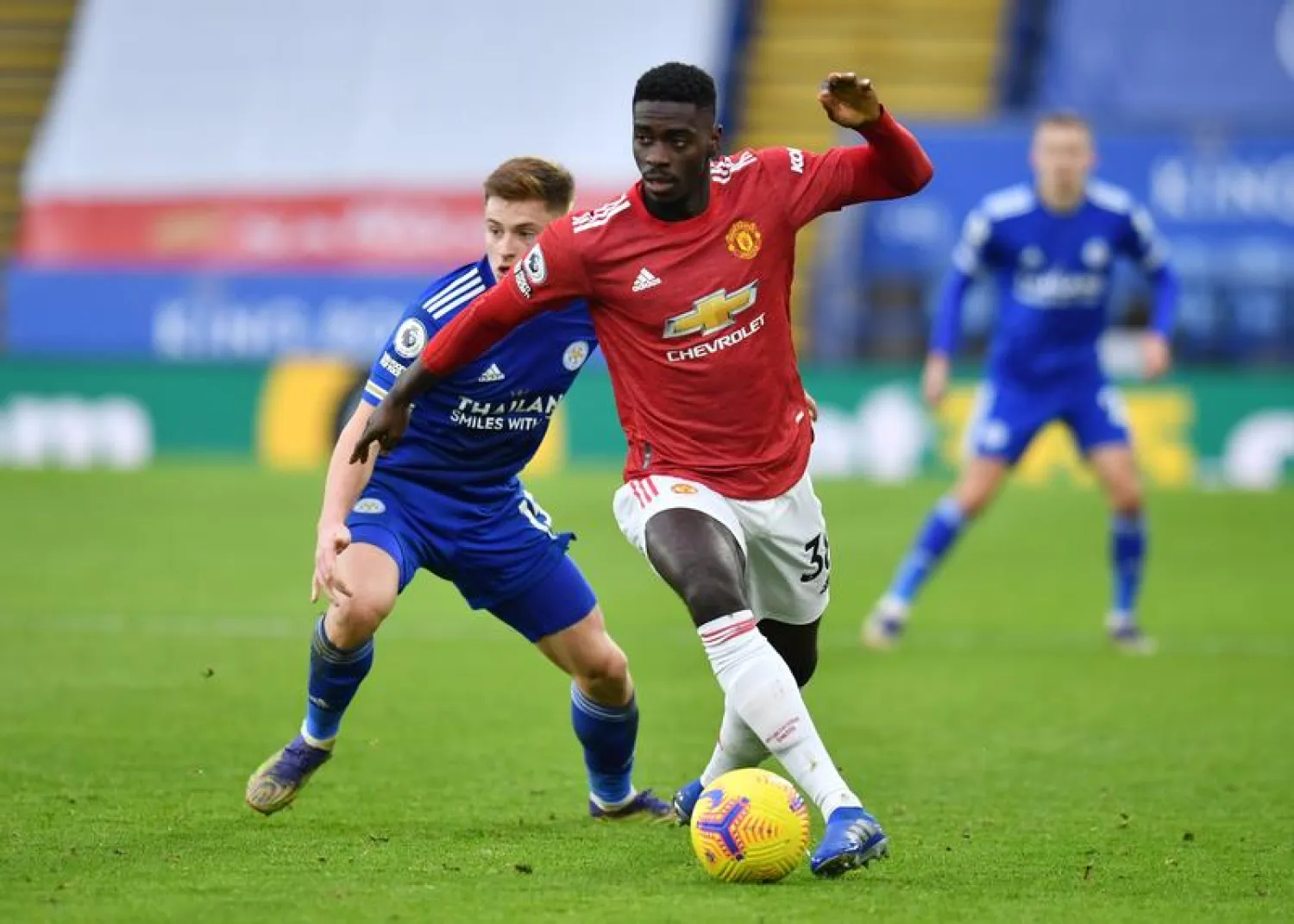
Soccer Football - Premier League - Leicester City v Manchester United - King Power Stadium, Leicester, Britain - December 26, 2020 Manchester United's Axel Tuanzebe in action with Leicester City's Harvey Barnes Pool via REUTERS/Glyn Kirk
TT

Why Should It Be Left to Players to Tackle Social Media's Failure?

Soccer Football - Premier League - Leicester City v Manchester United - King Power Stadium, Leicester, Britain - December 26, 2020 Manchester United's Axel Tuanzebe in action with Leicester City's Harvey Barnes Pool via REUTERS/Glyn Kirk

I haven't had that many death threats. Quite often they’re quite passive – trolls wishing I was dead but not even being bothered to do it themselves. “How the fuck u ain’t been fired is a miracle. You complete dry lunch bell end…DIE!!!”

Threats of violence seem slightly more proactive. “Not many things get to me but that wanker Max Rushden does. I’d love to smack him” or “Id like to wellie u with a polo mallet u absolute c**t”.

This week we’ve heard of death threats towards Steve Bruce and Mike Dean. The misogyny and threats of sexual violence aimed at female players, pundits, and journalists. And the racist emojis, pictures, and words that appear in the direct messages of players on Instagram on an almost daily basis. On Wednesday, Yan Dhanda, a 22-year-old Swansea player, was racially abused after his team lost to Manchester City. If a Swansea player is going be the victim of racism after losing to the best team in the country, then we are at the stage where every black, Asian or minority ethnic player is going to be racially abused whenever he or she is on the losing side of any football match. Who’ll be next after Dhanda, Tuanzebe, Rüdiger, Reece James, and Lauren James? And these are just a few of the ones we know about.

Anyone with any kind of following gets abuse. It has genuinely never bothered me. I’m in the fortunate position to have been confident and comfortable enough as a broadcaster – rightly or wrongly – before Twitter really took off. The abuse I receive is obviously incomparable with racism, sexism, and homophobia. That’s part of white male privilege – the stuff I receive is solely about my ability to do my job. Nothing about my background, my ethnicity, my gender.

But I have seen other broadcasters have to turn the message board off at TalkSport during a show because it affects them so much. And I’m pretty certain that if social media had the influence it has now when I began hosting Soccer AM on Sky Sports in 2008, I wouldn’t have lasted. I was nervous and inexperienced and the abuse I would have received would have been too much. It would have taken away the little confidence I had and I’m not sure I’d have been afforded the time that I was to get through what was a really hard couple of years.

There’s someone on Twitter who has made an account devoted to getting me fired. Sack Max Rushden. He or she has made a 10-point manifesto. I found it funny to begin with. I followed the account, retweeted it. But it became relentless – a real mission of unpleasantness and desperation – actually genuinely wanting me to lose all my income. Eventually I muted, and then blocked. Why am I wasting my time?

I have been guilty of fuelling this for years. You retweet one insult, more will follow. Bosses have often told me to stop. I’ve stubbornly persisted – almost to say I’m bigger than this, and your words mean nothing. But I don’t know if that is the right thing to do.

Andrew Stroehlein, from Human Rights Watch, posted an excellent thread about how to deal with trolls: don’t share the ugly stuff, don’t repeat the framing of hate-mongers, never share links to hateful headlines and clickbait, do share the good stuff, block early and often.

I have always muted and almost never blocked. I like the idea of someone shouting into the abyss – and that being blocked is somehow a badge of honor. “Blocking prevents trolls and propagandists from using your replies for their nonsense in the future,” says Stroehlein.

The trolls, racist or not, know they can get away with it. Does it help to keep reposting the abuse? Or does it encourage others to do the same? Would it be better to report racial hatred to the police but not give oxygen to those spreading hate?

Marcus Rashford tweeted: “I’m not sharing screenshots. It would be irresponsible to do so and as you can imagine there’s nothing original in them. I have beautiful children of all colors following me and they don’t need to read it. Beautiful colors that should only be celebrated.”

I interviewed the Mirror’s Darren Lewis on TalkSport. “People need to see the extent of what players are going through,” he said. “We only started to take it seriously when we started to see it. Unless you see it you can’t appreciate the extent of the abuse.”

On the Guardian Football Weekly podcast, the journalist Jordan Jarrett Bryan said: “I’m of the very unpopular opinion that if you are being racially abused online and it’s affecting you to the point where your mental health is being seriously affected, if it’s making you scared to open your phone, if it’s reducing you to tears, then come off it. The counterargument is: ‘Why should I come off social media if someone is abusing me?’ I get it, but we can keep saying that, but in the meantime, your mental health is suffering.”

Instagram says it is going to ban accounts that send racist abuse. The major stakeholders in the English game have written to Facebook’s Mark Zuckerberg and Twitter’s Jack Dorsey asking for them to take this seriously. If social media companies have dragged their feet over the spread of fake news and its contribution to democratic votes around the world, you suspect a few hundred footballers in the UK getting racially abused isn’t going to top their agenda. “There’s no money in fighting racism,” Jarrett Bryan says. “That is the harsh reality. This is not hard. And if they really care it would be done tomorrow.”

(The Guardian)


Shakhtar Boss Pays Ukrainian Racer $200,000 After Games Disqualification

Ukrainian President Volodymyr Zelenskiy holds helmet as he meets with a Ukrainian skeleton racer Vladyslav Heraskevych , who was disqualified from the Olympic skeleton competition over his "helmet of remembrance" depicting athletes killed since Russia's invasion and his father and coach, Mykhailo Heraskevych, amid Russia's attack on Ukraine, in Munich, Germany February 13, 2026. (Ukrainian Presidential Press Service/Handout via Reuters)
TT

Shakhtar Boss Pays Ukrainian Racer $200,000 After Games Disqualification

Ukrainian President Volodymyr Zelenskiy holds helmet as he meets with a Ukrainian skeleton racer Vladyslav Heraskevych , who was disqualified from the Olympic skeleton competition over his "helmet of remembrance" depicting athletes killed since Russia's invasion and his father and coach, Mykhailo Heraskevych, amid Russia's attack on Ukraine, in Munich, Germany February 13, 2026. (Ukrainian Presidential Press Service/Handout via Reuters)

The owner of ‌Ukrainian football club Shakhtar Donetsk has donated more than $200,000 to skeleton racer Vladyslav Heraskevych after the athlete was disqualified from the Milano Cortina Winter Games before competing over the use of a helmet depicting Ukrainian athletes killed in the war with Russia, the club said on Tuesday.

The 27-year-old Heraskevych was disqualified last week when the International Bobsleigh and Skeleton Federation jury ruled that imagery on the helmet — depicting athletes killed since Russia invaded Ukraine in 2022 — breached rules on athletes' expression at ‌the Games.

He ‌then lost an appeal at the Court ‌of ⁠Arbitration for Sport hours ⁠before the final two runs of his competition, having missed the first two runs due to his disqualification.

Heraskevych had been allowed to train with the helmet that displayed the faces of 24 dead Ukrainian athletes for several days in Cortina d'Ampezzo where the sliding center is, but the International Olympic Committee then ⁠warned him a day before his competition ‌started that he could not wear ‌it there.

“Vlad Heraskevych was denied the opportunity to compete for victory ‌at the Olympic Games, yet he returns to Ukraine a ‌true winner," Shakhtar President Rinat Akhmetov said in a club statement.

"The respect and pride he has earned among Ukrainians through his actions are the highest reward. At the same time, I want him to ‌have enough energy and resources to continue his sporting career, as well as to fight ⁠for truth, freedom ⁠and the remembrance of those who gave their lives for Ukraine," he said.

The amount is equal to the prize money Ukraine pays athletes who win a gold medal at the Games.

The case dominated headlines early on at the Olympics, with IOC President Kirsty Coventry meeting Heraskevych on Thursday morning at the sliding venue in a failed last-minute attempt to broker a compromise.

The IOC suggested he wear a black armband and display the helmet before and after the race, but said using it in competition breached rules on keeping politics off fields of play. Heraskevych also earned praise from Ukraine President Volodymyr Zelenskiy.


Speed Skating-Italy Clinch Shock Men’s Team Pursuit Gold, Canada Successfully Defend Women’s Title

 Team Italy with Davide Ghiotto, Andrea Giovannini, Michele Malfatti, celebrate winning the gold medal on the podium of the men's team pursuit speed skating race at the 2026 Winter Olympics, in Milan, Italy, Tuesday, Feb. 17, 2026. (AP)
Team Italy with Davide Ghiotto, Andrea Giovannini, Michele Malfatti, celebrate winning the gold medal on the podium of the men's team pursuit speed skating race at the 2026 Winter Olympics, in Milan, Italy, Tuesday, Feb. 17, 2026. (AP)
TT

Speed Skating-Italy Clinch Shock Men’s Team Pursuit Gold, Canada Successfully Defend Women’s Title

 Team Italy with Davide Ghiotto, Andrea Giovannini, Michele Malfatti, celebrate winning the gold medal on the podium of the men's team pursuit speed skating race at the 2026 Winter Olympics, in Milan, Italy, Tuesday, Feb. 17, 2026. (AP)
Team Italy with Davide Ghiotto, Andrea Giovannini, Michele Malfatti, celebrate winning the gold medal on the podium of the men's team pursuit speed skating race at the 2026 Winter Olympics, in Milan, Italy, Tuesday, Feb. 17, 2026. (AP)

An inspired Italy delighted the home crowd with a stunning victory in the Olympic men's team pursuit final as

Canada's Ivanie Blondin, Valerie Maltais and Isabelle Weidemann delivered another seamless performance to beat the Netherlands in the women's event and retain their title ‌on Tuesday.

Italy's ‌men upset the US who ‌arrived ⁠at the Games ⁠as world champions and gold medal favorites.

Spurred on by double Olympic champion Francesca Lollobrigida, the Italian team of Davide Ghiotto, Andrea Giovannini and Michele Malfatti electrified a frenzied arena as they stormed ⁠to a time of three ‌minutes 39.20 seconds - ‌a commanding 4.51 seconds clear of the ‌Americans with China taking bronze.

The roar inside ‌the venue as Italy powered home was thunderous as the crowd rose to their feet, cheering the host nation to one ‌of their most special golds of a highly successful Games.

Canada's women ⁠crossed ⁠the line 0.96 seconds ahead of the Netherlands, stopping the clock at two minutes 55.81 seconds, and

Japan rounded out the women's podium by beating the US in the Final B.

It was only Canada's third gold medal of the Games, following Mikael Kingsbury's win in men's dual moguls and Megan Oldham's victory in women's freeski big air.


Lindsey Vonn Back in US Following Crash in Olympic Downhill 

Milano Cortina 2026 Olympics - Alpine Skiing - Women's Downhill 3rd Official Training - Tofane Alpine Skiing Centre, Belluno, Italy - February 07, 2026. Lindsey Vonn of United States in action during training. (Reuters)
TT

Lindsey Vonn Back in US Following Crash in Olympic Downhill 

Milano Cortina 2026 Olympics - Alpine Skiing - Women's Downhill 3rd Official Training - Tofane Alpine Skiing Centre, Belluno, Italy - February 07, 2026. Lindsey Vonn of United States in action during training. (Reuters)

Lindsey Vonn is back home in the US following a week of treatment at a hospital in Italy after breaking her left leg in the Olympic downhill at the Milan Cortina Games.

“Haven’t stood on my feet in over a week... been in a hospital bed immobile since my race. And although I’m not yet able to stand, being back on home soil feels amazing,” Vonn posted on X with an American flag emoji. “Huge thank you to everyone in Italy for taking good care of me.”

The 41-year-old Vonn suffered a complex tibia fracture that has already been operated on multiple times following her Feb. 8 crash. She has said she'll need more surgery in the US.

Nine days before her fall in Cortina d'Ampezzo, Italy, Vonn ruptured the ACL in her left knee in another crash in Switzerland.

Even before then, all eyes had been on her as the feel-good story heading into the Olympics for her comeback after nearly six years of retirement.
