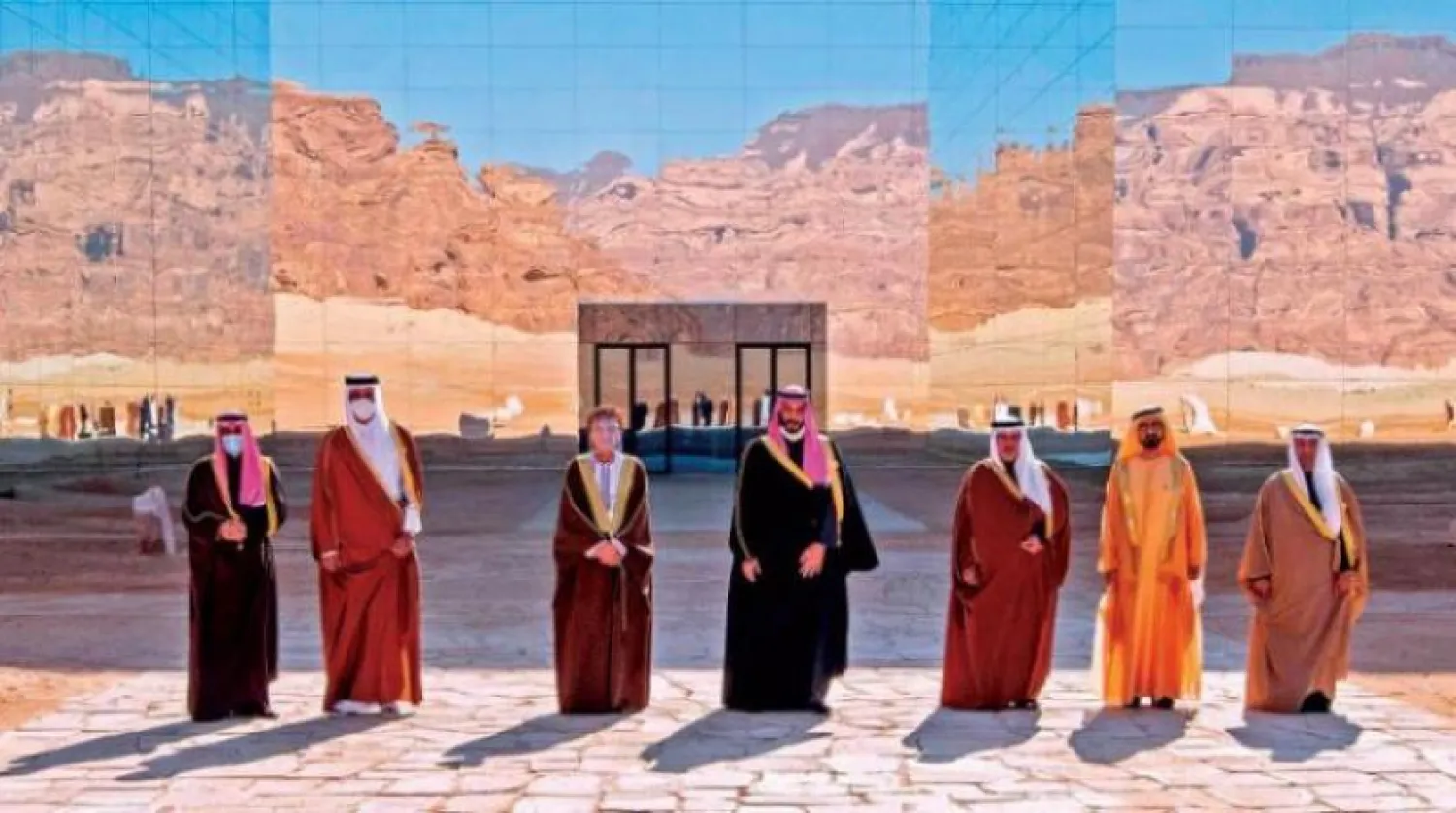
UAE, Qatari Delegations Meet to Discuss al-Ula Declaration

Delegations from the United Arab Emirates and Qatar met in Kuwait on Monday
TT

UAE, Qatari Delegations Meet to Discuss al-Ula Declaration

Delegations from the United Arab Emirates and Qatar met in Kuwait on Monday

Official delegations representing the United Arab Emirates and the State of Qatar met on Monday in Kuwait, in the first meeting between the two sides to follow up on the Al-Ula Declaration.

"The two sides discussed joint mechanisms and procedures to implement the Al-Ula Declaration and underscored the importance of preserving Gulf unity, developing joint action in the interest of Gulf Cooperation Council countries and their citizens, and achieving stability and prosperity in the region," " the UAE state news agency WAM said.

Furthermore, the two sides praised the efforts of the brotherly Kingdom of Saudi Arabia in hosting the last GCC Summit that resulted in the Al-Ula Declaration.

Finally, the two sides expressed their appreciation to His Highness Sheikh Nawaf Al-Ahmad Al-Jaber Al-Sabah, Emir of Kuwait, for the sincere efforts made by his country to heal the rift and support the Gulf Cooperation Council, in addition to hosting the first meeting between both countries.


GCC Secretary-General Expresses Condolences to Saudi Arabia Following Martyrdom of Two Officers in Helicopter Crash

Secretary-General of the Gulf Cooperation Council (GCC) Jasem Albudaiwi. SPA
TT

GCC Secretary-General Expresses Condolences to Saudi Arabia Following Martyrdom of Two Officers in Helicopter Crash

Secretary-General of the Gulf Cooperation Council (GCC) Jasem Albudaiwi. SPA

Gulf Cooperation Council (GCC) Secretary-General Jasem Albudaiwi has expressed his sincere condolences and deepest sympathy to the Kingdom of Saudi Arabia, its leadership, government, and people, following the martyrdom of two Ministry of National Guard officers in a reconnaissance helicopter crash in Najran Region caused by a technical malfunction, SPA reported.

He prayed to Allah to bestow His vast mercy and forgiveness upon the two martyrs, to grant patience and solace to their families, and to protect the Kingdom and its people from all harm.


Japanese Official: Cooperation with Saudi Arabia Extends Beyond Energy to Development, Regional Stability

The Saudi foreign minister and his Japanese counterpart during a strategic dialogue meeting between the two countries in Riyadh (SPA)
TT

Japanese Official: Cooperation with Saudi Arabia Extends Beyond Energy to Development, Regional Stability

The Saudi foreign minister and his Japanese counterpart during a strategic dialogue meeting between the two countries in Riyadh (SPA)

A senior Japanese official said relations between Riyadh and Tokyo are built on broad cooperation encompassing Saudi Vision 2030, energy security, maritime safety, and efforts to preserve regional stability and prosperity, helping safeguard international trade and create opportunities for joint development.

Tsukasa Uemura, Japan's Special Envoy for the Middle East Peace Process, stressed that the two countries share a commitment to stability in the Gulf and the security of maritime routes. He said their existing cooperation offers a strong foundation for further initiatives, with considerable scope for new ideas.

Speaking to Asharq Al-Awsat, Uemura explained that Japan's interest in the Middle East extends well beyond oil and gas, despite their importance to the country's energy security, noting that the region lies "at the heart of global trade."

He described the Strait of Hormuz, the Bab el-Mandeb Strait and the Suez Canal as "vital waterways for international trade," warning that any disruption would have repercussions far beyond the region.

These routes are particularly important to Japan, which depends on stable trade corridors and reliable energy supplies.

Uemura said Tokyo regards the Middle East as a global trading hub, in addition to recognizing its natural resources and human and cultural potential.

He emphasized that the region's security, stability and prosperity are important "not only to Japan, but to the entire world."

Cooperation Under Saudi Vision 2030

Turning to bilateral relations, Uemura recalled his tenure as Japan's ambassador to Saudi Arabia from 2017 to 2020, during which cooperation between the two countries expanded across multiple sectors under Saudi Vision 2030.

He explained that Japanese ministries are involved in areas such as education and industrial development, while the two countries have established a ministerial meeting mechanism that brings officials together to discuss matters of mutual interest.

Uemura said the mechanism represents one avenue of existing cooperation but does not exhaust the opportunities available to both countries, adding that there remains ample room for new initiatives.

Among his proposals was expanding trilateral cooperation, under which Japan and Saudi Arabia would jointly undertake development projects in third countries.

Riyadh could contribute its resources and capabilities, while Tokyo would provide its expertise and technical strengths, particularly in less-developed regions.

On Friday, the Saudi foreign minister received a telephone call from his Japanese counterpart, who reiterated Japan's opposition to attacks targeting civilians and civilian facilities and strongly condemned Houthi attacks.

The Japanese minister also expressed appreciation for Saudi Arabia's efforts to promote peace and stability in the Middle East, including Yemen.

Energy Security

On energy security, Uemura highlighted Japan's cooperation with Saudi Arabia and the United Arab Emirates in crude oil storage.

He explained that Japan has established large storage facilities on its territory, while ownership of the oil held in them remains with the two Gulf countries.

Under normal circumstances, the stored crude can be used for commercial purposes. However, in the event of a crisis or supply disruption, the oil can be released onto the Japanese market.

The Japanese diplomat described the arrangement as mutually beneficial, providing Japan with access to oil supplies during emergencies while giving Saudi Arabia and the UAE access to the Japanese market.

He added that Tokyo is considering financial assistance for Asian countries affected by the Gulf crisis, including those facing shortages of crude oil and natural gas, as well as support to help them develop crisis preparedness plans.

Maritime Security a Shared Interest

These areas of cooperation come as Japan has expressed concern over the widening confrontation between Iran and the United States and Iranian attacks on Gulf countries.

Uemura said Tokyo is following developments "with deep concern" and fears that the conflicts could spread to other countries and regions.

"We now see the crisis expanding to include the Houthis and the Bab el-Mandeb Strait," he said, calling for calm to be restored and tensions to be reduced.

He stressed that maritime security in the region is "a shared interest" for Japan, Saudi Arabia and all other concerned parties.

On Yemen, Uemura said Japan is calling for an end to escalation and hostilities, as well as a halt to attacks targeting countries in the region, including Saudi Arabia.

He explained that Japanese assistance to Yemen is currently delivered through international organizations, particularly the United Nations.

He also indicated that other forms of cooperation could be explored in the future, including trilateral projects involving East Asian countries.

Uemura concluded by stressing that stronger Japanese-Saudi relations and closer cooperation with Gulf countries serve a broader objective: preserving regional stability and prosperity, protecting international trade and creating opportunities for shared development.



Egypt Says It Will Provide Saudi Arabia with All Necessary Support

Egypt’s President Abdel Fattah al-Sisi attends a joint press conference with Indonesia’s President Prabowo Subianto at the Merdeka Palace in Jakarta on October 11, 2026. (AFP)
TT

Egypt Says It Will Provide Saudi Arabia with All Necessary Support

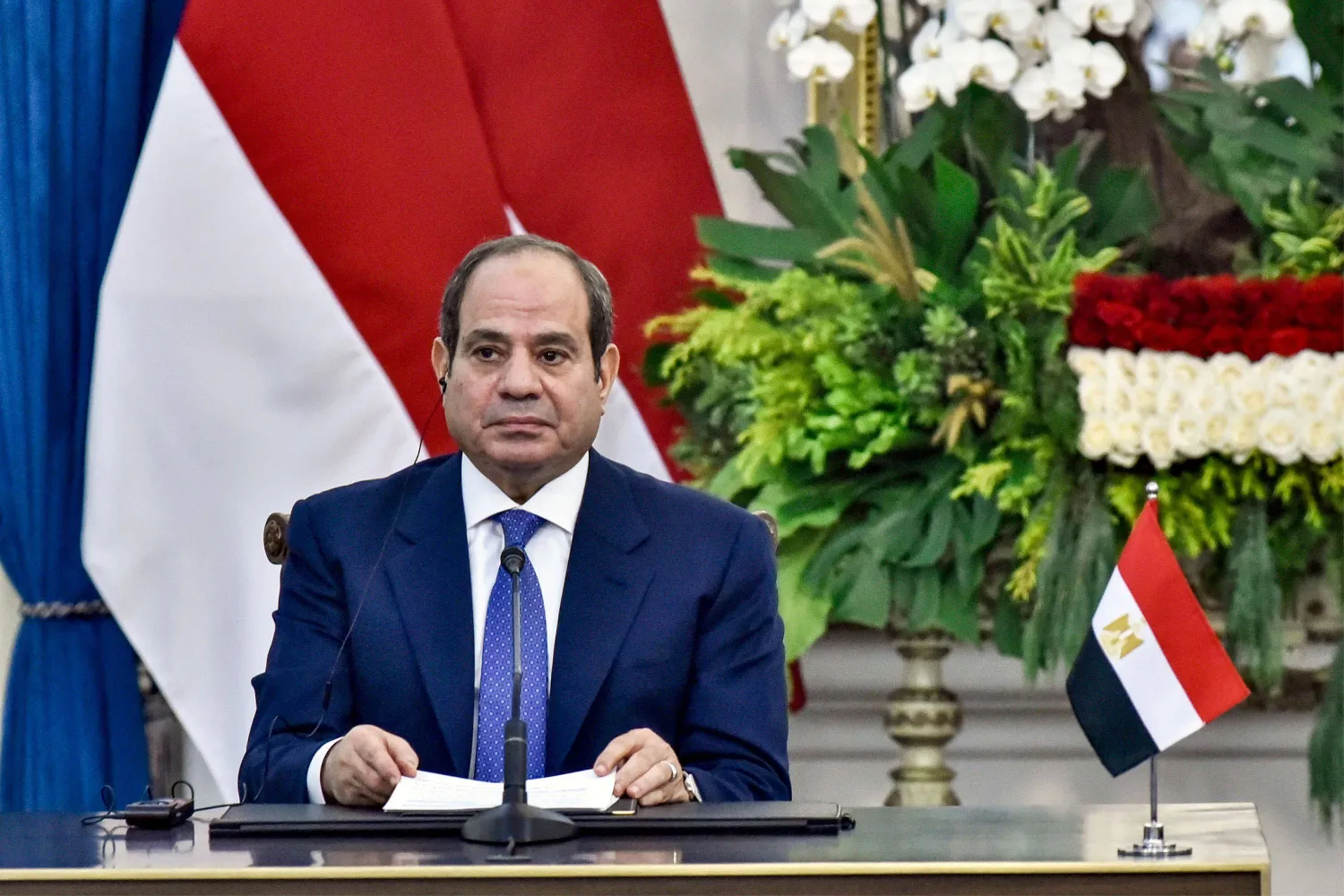
Egypt’s President Abdel Fattah al-Sisi attends a joint press conference with Indonesia’s President Prabowo Subianto at the Merdeka Palace in Jakarta on October 11, 2026. (AFP)

Egypt's National Defense Council decided on Sunday to provide all necessary and possible forms of support to Saudi Arabia to defend its security and stability, and to safeguard its capabilities, territorial integrity, and Islamic holy sites.

Egyptian President Abdel Fattah al-Sisi chaired a meeting of the National Defense Council at the Ittihadiya Palace in Cairo, said a statement the spokesperson for the Egyptian Presidency on Facebook.

The Council reviewed the overall current regional developments and the dangerous escalations unfolding in the region, particularly in light of the intensifying and unacceptable attacks targeting Saudi Arabia, he added.

Consequently, the Council decided on "complete alignment and full solidarity with the sisterly Kingdom of Saudi Arabia, stemming from the historical relations and solid bonds connecting the peoples of the two brotherly nations as the heart of the Arab nation, and out of the firm belief that Saudi national security is inextricably linked to Egyptian and Arab national security."

The Council also decided to "provide all necessary and possible forms of support to Saudi Arabia to defend its security and stability, and to safeguard its capabilities, territorial integrity, and Islamic holy sites," as well as to continue and intensify political and diplomatic efforts, in coordination with relevant regional and international parties, to contribute to de-escalation across the entire region and to peacefully resolve the crises unfolding within it.

The meeting was attended by the Speaker of the House of Representatives, Prime Minister, Commander-in-Chief of the Armed Forces, Chief of Staff of the Armed Forces, and the ministers of Interior, Finance, Foreign Affairs, International Cooperation and Emigration and Egyptian Expatriates' Affairs.

It was also attended by the head of the General Intelligence Service, commanders of the main branches of the Armed Forces, Chief of the Armed Forces Operations Authority, chief of Military Intelligence, and Secretary-General of the National Defense Council.